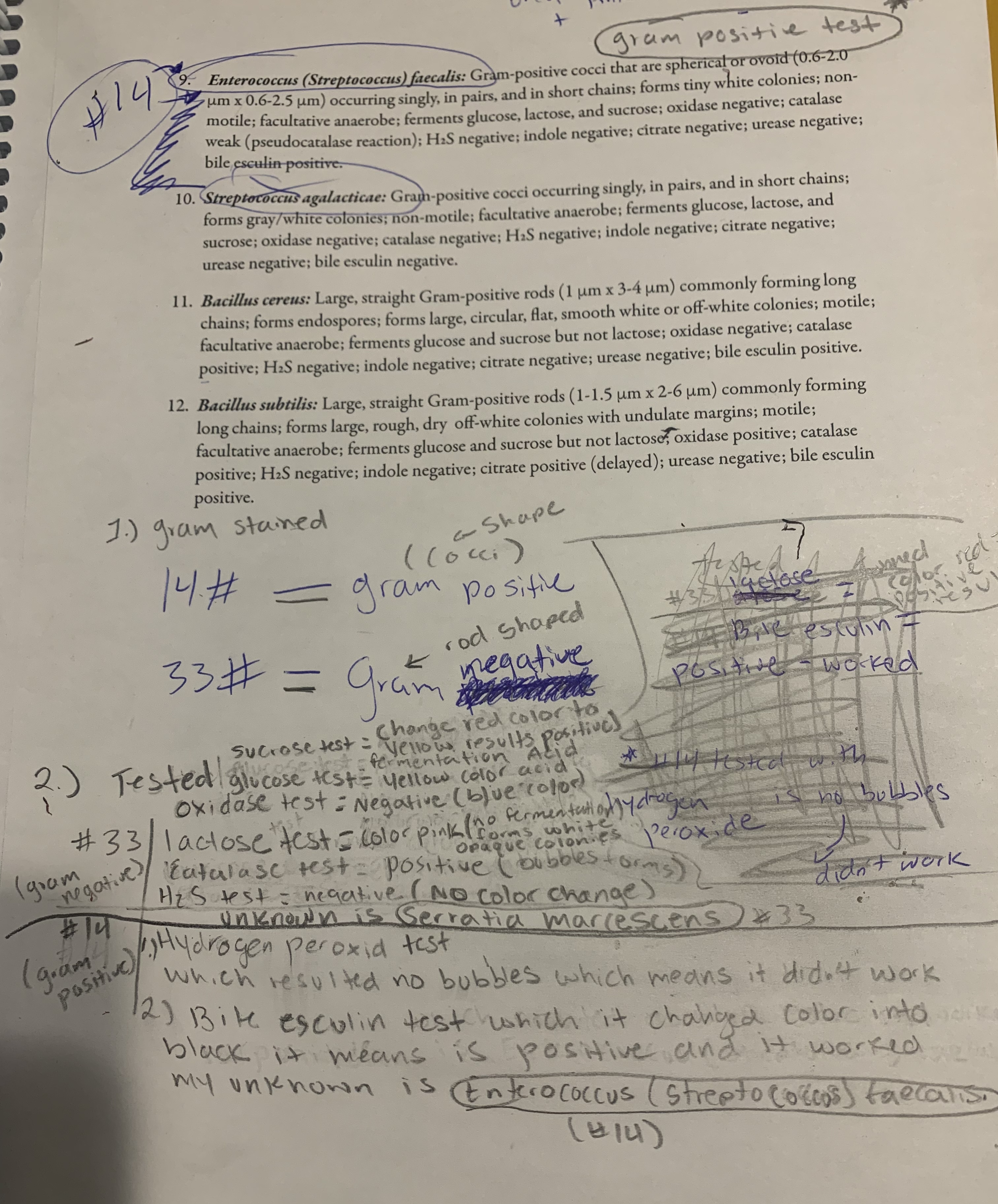
Question: (gram positive test # 14 Enterococcus (Streptococcus) faecalis: Gram-positive cocci that are spherical or ovoid (0.6-2.0 um x 0.6-2.5 um) occurring singly, in pairs, and
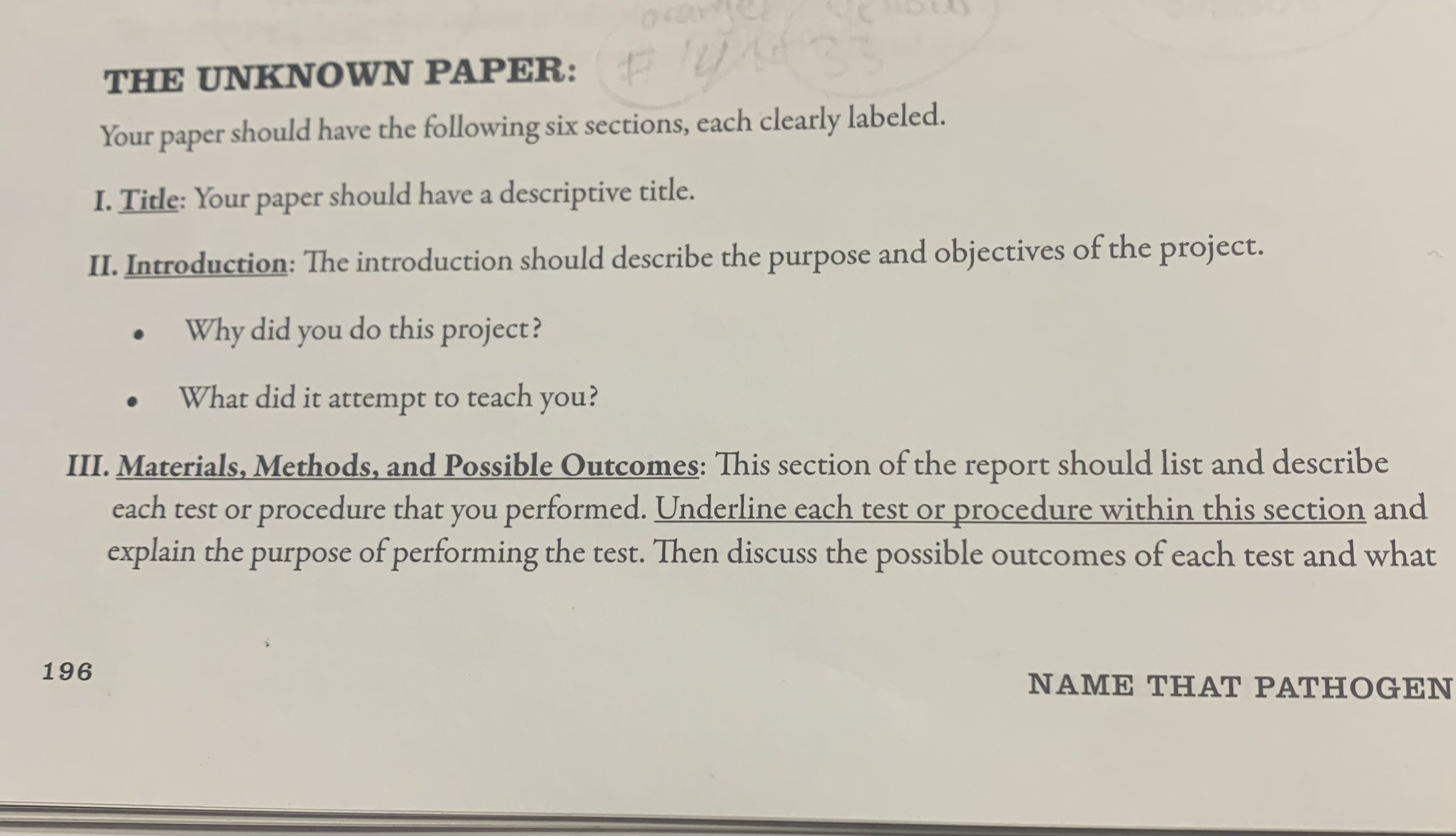
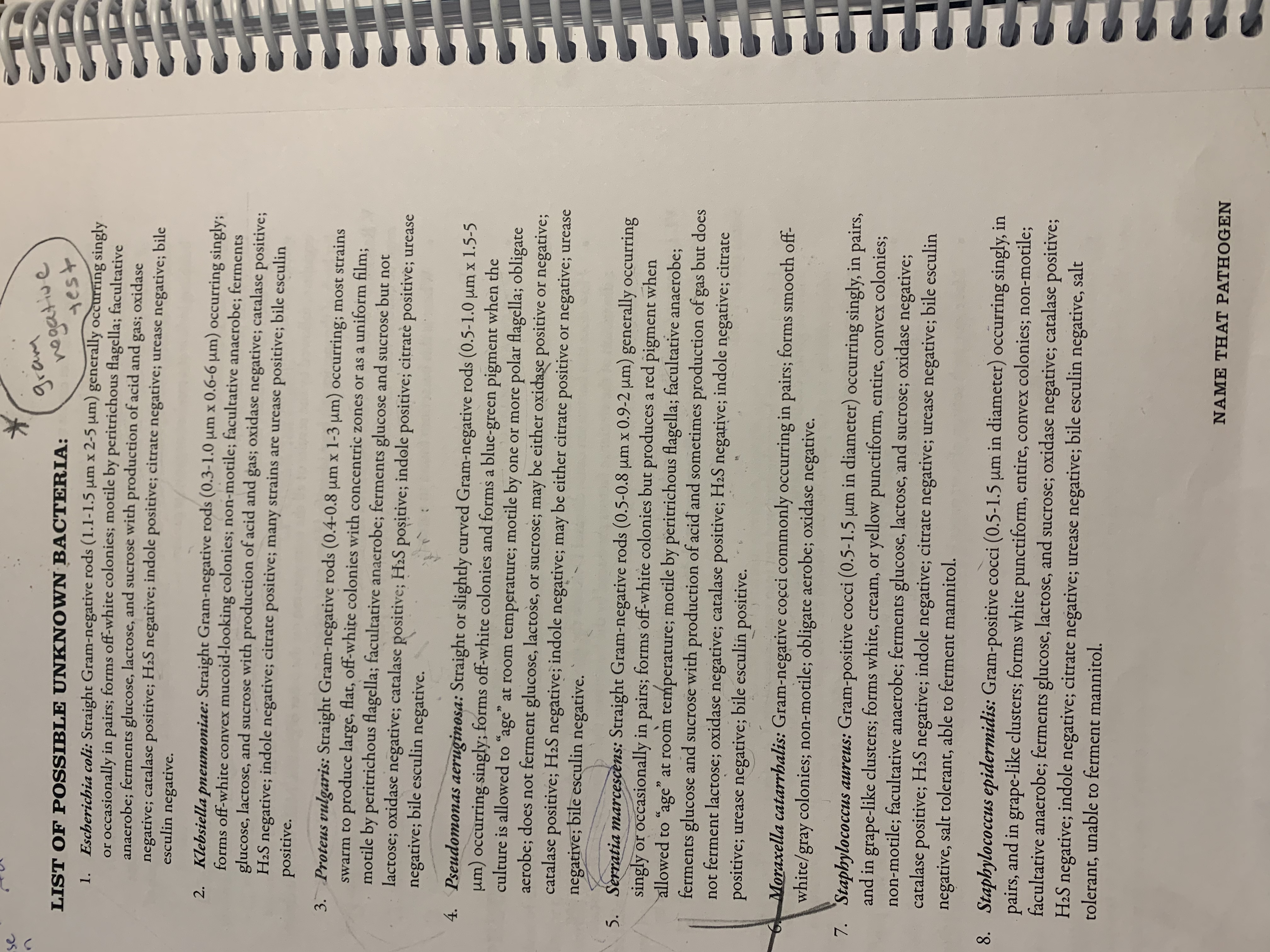
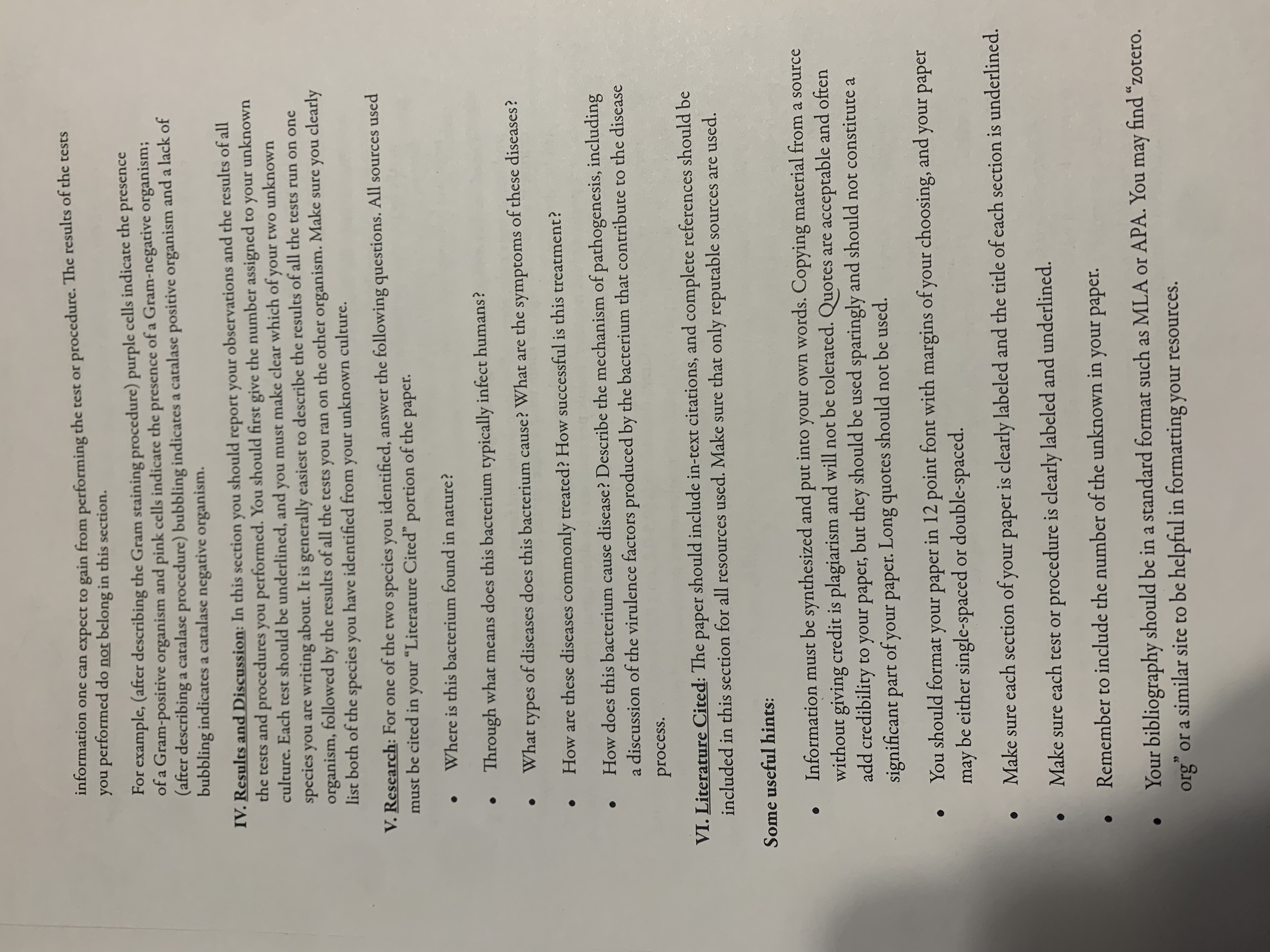
(gram positive test # 14 Enterococcus (Streptococcus) faecalis: Gram-positive cocci that are spherical or ovoid (0.6-2.0 um x 0.6-2.5 um) occurring singly, in pairs, and in short chains; forms tiny white colonies; non- motile; facultative anaerobe; ferments glucose, lactose, and sucrose; oxidase negative; catalase weak (pseudocatalase reaction); HaS negative; indole negative; citrate negative; urease negative; bile esculin positive. 10. Streptococcus agalacticae: Gram-positive cocci occurring singly, in pairs, and in short chains; forms gray/white colonies; non-motile; facultative anaerobe; ferments glucose, lactose, and sucrose; oxidase negative; catalase negative; HaS negative; indole negative; citrate negative; urease negative; bile esculin negative. 11. Bacillus cereus: Large, straight Gram-positive rods (1 um x 3-4 um) commonly forming long chains; forms endospores; forms large, circular, flat, smooth white or off-white colonies; motile; facultative anacrobe; ferments glucose and sucrose but not lactose; oxidase negative; catalase positive; HIS negative; indole negative; citrate negative; urease negative; bile esculin positive. 12. Bacillus subtilis: Large, straight Gram-positive rods (1-1.5 um x 2-6 um) commonly forming long chains; forms large, rough, dry off-white colonies with undulate margins; motile; facultative anaerobe; ferments glucose and sucrose but not lactose, oxidase positive; catalase positive; HIS negative; indole negative; citrate positive (delayed); urease negative; bile esculin positive. 1 . ) gram stained a Shape ( (occi ) 14.# = gram positive Higelose ipositive Firesu rod shaped BE Bale esculing negative 33 # = gram thus positive - worked sucrose test - change red colorto " yellow results positive) 2 . ) Tested glucose test= yellow color acid Acid oxidase test : Negative ative ( blue color ) # 33/ lactose test = color pink ( no fermentationly dragon Is no bubbles opaque colonies peroxide ( gram negatives/ Catalase test positive ( bubbles forms ) He's test - negative ( NO color change ) didn't work # 10 unknown is Serratia marcescens ) # 33 ( 9.am ") Hydrogen peroxidetest positive Which resulted no bubbles which means it didn't work (2 ) Bike esculin test which it changed color into ek black it means is positive and it worked my unknown is (Enterococcus ( Strepto coccus) faecalis.THE UNKNOWN PAPER: Your paper should have the following six sections, each clearly labeled. I. Title: Your paper should have a descriptive title. II. Introduction: The introduction should describe the purpose and objectives of the project. . Why did you do this project? . What did it attempt to teach you? III. Materials, Methods, and Possible Outcomes: This section of the report should list and describe each test or procedure that you performed. Underline each test or procedure within this section and explain the purpose of performing the test. Then discuss the possible outcomes of each test and what 196 NAME THAT PATHOGENgram negative LIST OF POSSIBLE UNKNOWN BACTERIA: test 1. Escherichia coli: Straight Gram-negative rods (1.1-1.5 um x 2-5 um) generally occurring singly or occasionally in pairs; forms off-white colonies; motile by peritrichous flagella; facultative anaerobe; ferments glucose, lactose, and sucrose with production of acid and gas; oxidase negative; catalase positive; HIS negative; indole positive; citrate negative; urease negative; bile esculin negative. 2 . Klebsiella pneumoniae: Straight Gram-negative rods (0.3-1.0 um x 0.6-6 um) occurring singly; forms off-white convex mucoid-looking colonies; non-motile; facultative anaerobe; ferments glucose, lactose, and sucrose with production of acid and gas; oxidase negative; catalase positive; HaS negative; indole negative; citrate positive; many strains are urease positive; bile esculin positive. 3. Proteus vulgaris: Straight Gram-negative rods (0.4-0.8 um x 1-3 um) occurring; most strains swarm to produce large, flat, off-white colonies with concentric zones or as a uniform film; motile by peritrichous flagella; facultative anaerobe; ferments glucose and sucrose but not lactose; oxidase negative; catalase positive; HIS positive; indole positive; citrate positive; urease negative; bile esculin negative. 4. Pseudomonas aeruginosa: Straight or slightly curved Gram-negative rods (0.5-1.0 um x 1.5-5 um) occurring singly; forms off-white colonies and forms a blue-green pigment when the culture is allowed to "age" at room temperature; motile by one or more polar flagella; obligate aerobe; does not ferment glucose, lactose, or sucrose; may be either oxidase positive or negative; catalase positive; H2S negative; indole negative; may be either citrate positive or negative; urease negative; bile esculin negative. 5. Serratia marcescens: Straight Gram-negative rods (0.5-0.8 um x 0.9-2 um) generally occurring singly or occasionally in pairs; forms off-white colonies but produces a red pigment when allowed to "age" at room temperature; motile by peritrichous flagella; facultative anaerobe; ferments glucose and sucrose with production of acid and sometimes production of gas but does not ferment lactose; oxidase negative; catalase positive; H2S negative; indole negative; citrate positive; urease negative; bile esculin positive. Moraxella catarrhalis: Gram-negative cocci commonly occurring in pairs; forms smooth off- white/gray colonies; non-motile; obligate aerobe; oxidase negative. 7. Staphylococcus aureus: Gram-positive cocci (0.5-1.5 um in diameter) occurring singly, in pairs, and in grape-like clusters; forms white, cream, or yellow punctiform, entire, convex colonies; non-motile; facultative anaerobe; ferments glucose, lactose, and sucrose; oxidase negative; catalase positive; H2S negative; indole negative; citrate negative; urease negative; bile esculin negative, salt tolerant, able to ferment mannitol. 8. Staphylococcus epidermidis: Gram-positive cocci (0.5-1.5 um in diameter) occurring singly, in pairs, and in grape-like clusters; forms white punctiform, entire, convex colonies; non-motile; facultative anaerobe; ferments glucose, lactose, and sucrose; oxidase negative; catalase positive; HaS negative; indole negative; citrate negative; urease negative; bile esculin negative, salt tolerant, unable to ferment mannitol. NAME THAT PATHOGENinformation one can expect to gain from performing the test or procedure. The results of the tests you performed do not belong in this section. For example, (after describing the Gram staining procedure) purple cells indicate the presence of a Gram-positive organism and pink cells indicate the presence of a Gram-negative organism; (after describing a catalase procedure) bubbling indicates a catalase positive organism and a lack of bubbling indicates a catalase negative organism. IV. Results and Discussion: In this section you should report your observations and the results of all the tests and procedures you performed. You should first give the number assigned to your unknown culture. Each test should be underlined, and you must make clear which of your two unknown species you are writing about. It is generally easiest to describe the results of all the tests run on one organism, followed by the results of all the tests you ran on the other organism. Make sure you clearly list both of the species you have identified from your unknown culture. V. Research: For one of the two species you identified, answer the following questions. All sources used must be cited in your "Literature Cited" portion of the paper. Where is this bacterium found in nature? . Through what means does this bacterium typically infect humans? . What types of diseases does this bacterium cause? What are the symptoms of these diseases? How are these diseases commonly treated? How successful is this treatment? How does this bacterium cause disease? Describe the mechanism of pathogenesis, including a discussion of the virulence factors produced by the bacterium that contribute to the disease process. VI. Literature Cited: The paper should include in-text citations, and complete references should be included in this section for all resources used. Make sure that only reputable sources are used. Some useful hints: . Information must be synthesized and put into your own words. Copying material from a source without giving credit is plagiarism and will not be tolerated. Quotes are acceptable and often add credibility to your paper, but they should be used sparingly and should not constitute a significant part of your paper. Long quotes should not be used. You should format your paper in 12 point font with margins of your choosing, and your paper may be either single-spaced or double-spaced. . Make sure each section of your paper is clearly labeled and the title of each section is underlined. . Make sure each test or procedure is clearly labeled and underlined. Remember to include the number of the unknown in your paper. . Your bibliography should be in a standard format such as MLA or APA. You may find "zotero. org" or a similar site to be helpful in formatting your resources
Step by Step Solution
There are 3 Steps involved in it
1 Expert Approved Answer
Step: 1 Unlock
Question Has Been Solved by an Expert!
Get step-by-step solutions from verified subject matter experts
Step: 2 Unlock
Step: 3 Unlock
Students Have Also Explored These Related Mathematics Questions!









 Study Help