







Question: H ng.cengage.com . s @ MindTap - Cengage Learning ; Rebecca v i: CENGAGE I MINDTAP Q Search this course My Home Problems: Chapters
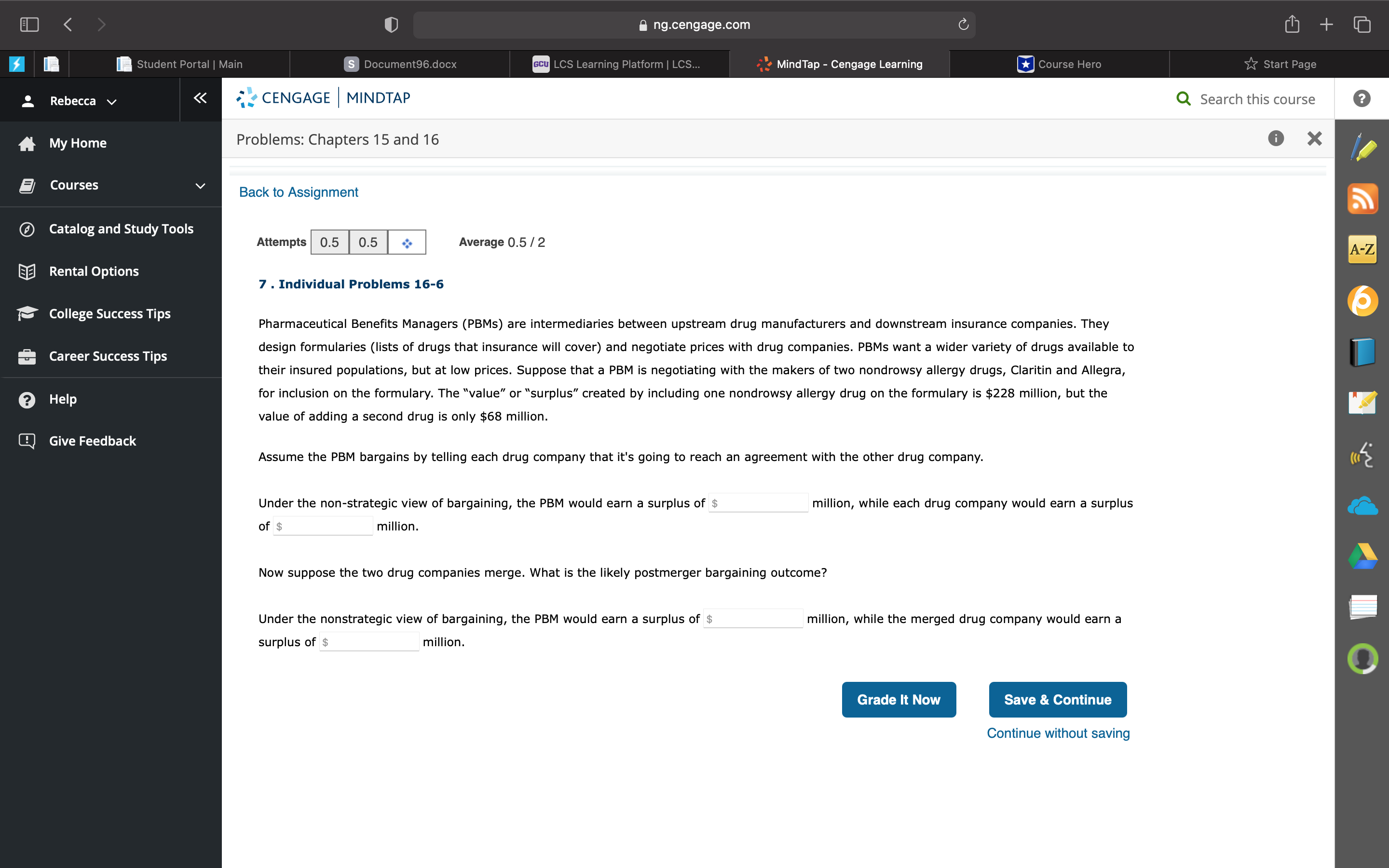
H ng.cengage.com " . s @ MindTap - Cengage Learning ; Rebecca v i: CENGAGE I MINDTAP Q Search this course My Home Problems: Chapters 15 and 16 o X Courses Back to Assignment Catalog and Study Tools Attempts 0.5 l 0.5 l .;. Average 0.5/ 2 Rental Options 7 . Individual Problems 16-6 College Success Tips Pharmaceutical Benets Managers (PBMs) are intermediaries between upstream drug manufacturers and downstream insurance companies. They . design formularies (lists of drugs that insurance will cover) and negotiate prices with drug companies. PBMs want a wider variety of drugs available to Career Success Tips their insured populations, but at low prices. Suppose that a PBM is negotiating with the makers of two nondrowsy allergy drugs, Claritin and Allegra, Help for inclusion on the formulary. The \"value" or \"surplus\" created by including one nondrowsy allergy drug on the formulary is $228 million, but the value of adding a second drug is only $68 million. Give Feedback Assume the FEM bargains by telling each drug company that it's going to reach an agreement with the other drug company. Under the non-strategic view of bargaining, the FEM would earn a surplus of $ million, while each drug company would earn a surplus of $ million. Now suppose the two drug companies merge. What is the likely postmerger bargaining outcome? Under the nonstrategic view of bargaining, the FEM would earn a surplus of $ million, while the merged drug company would earn a Grade It Now Save & Continue Continue without saving surplus of $ million
Step by Step Solution
There are 3 Steps involved in it
This problem involves the surplus allocation between Pharmaceutical Benefits Managers PBMs and drug manufacturers under different bargaining scenarios ... View full answer

Get step-by-step solutions from verified subject matter experts
 Study Help