



Question: hello, group 15 please. If there is anything not clear please let me know. We have to replace the numbers from the table in the
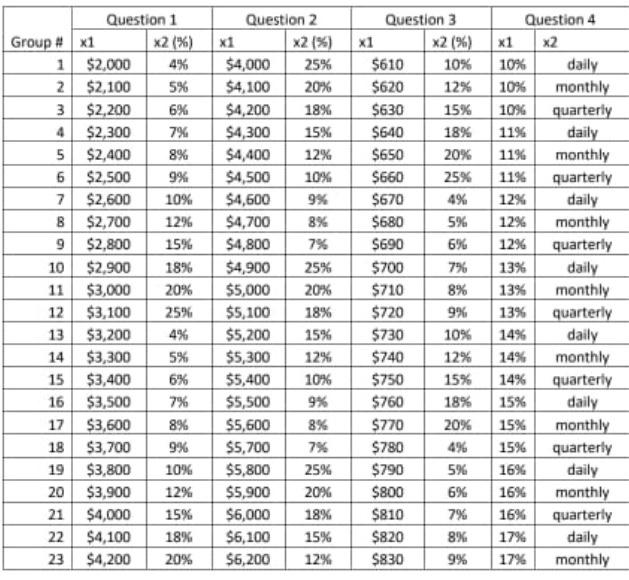
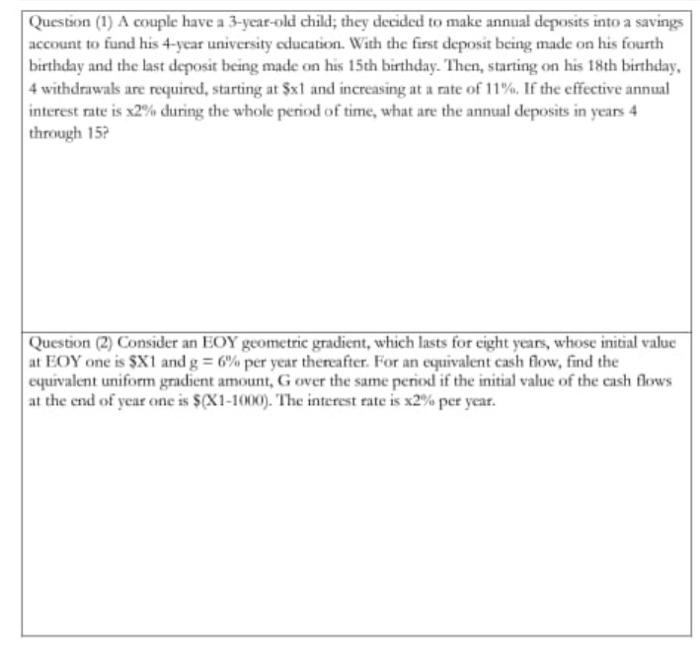
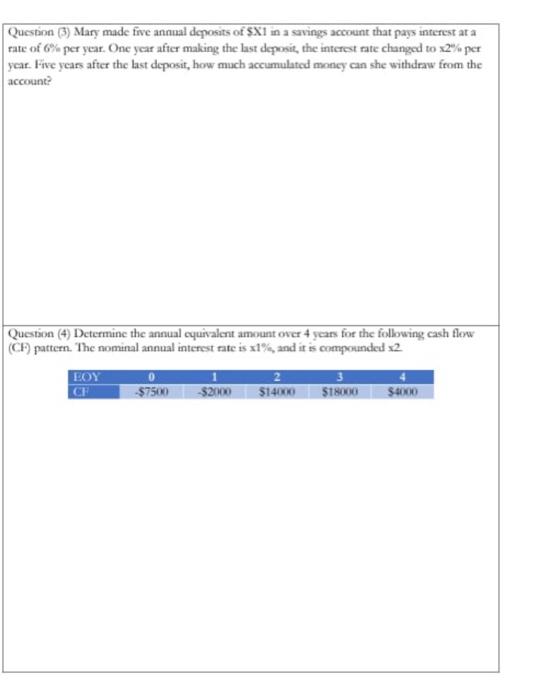
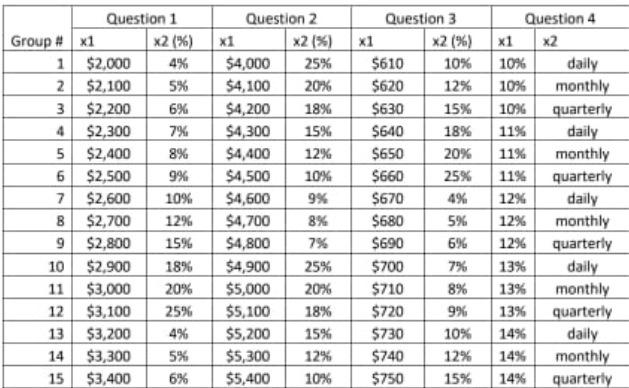
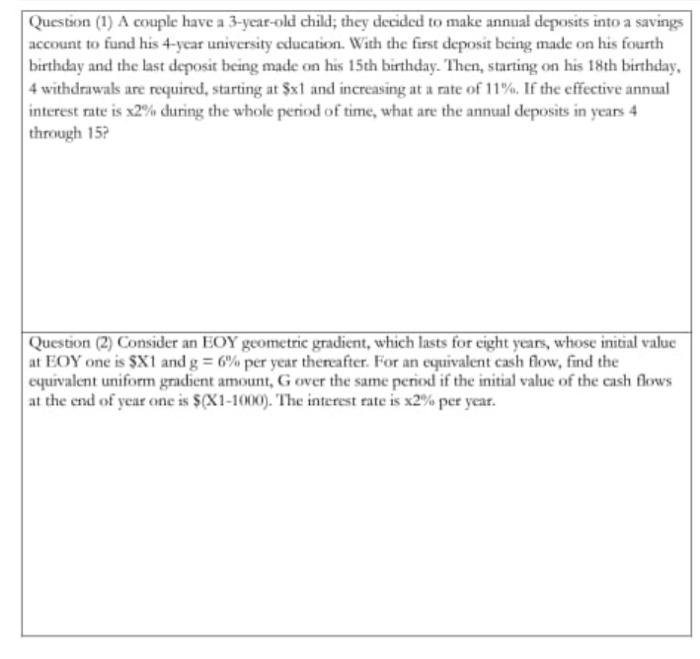
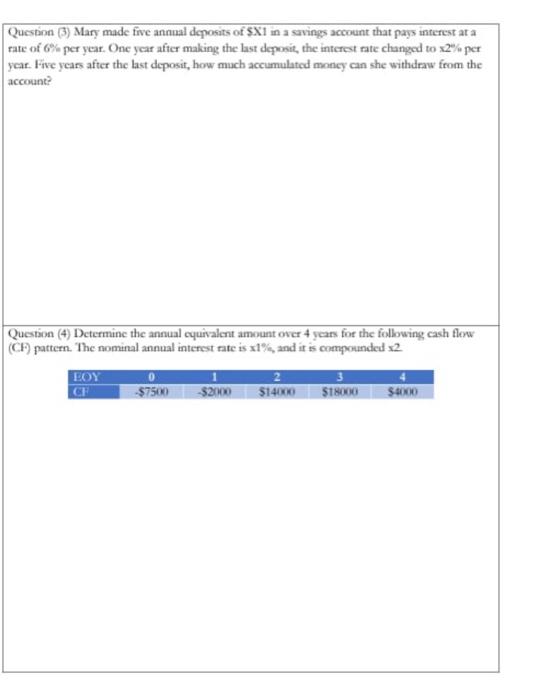
Question 1 Group # x1 X2%) 1 $2.000 2 $2,100 5% 3 $2,200 6% $2,300 7% 5 $2,400 8% 6 $2,500 9% 7 $2,600 10% $2,700 12% 9 $2,800 15% 10 $2,900 18% 11 $3,000 20% 12 $3,100 25% 13 $3,200 14 $3,300 5% 15 $3,400 6% 16 $3,500 7% 17 $3,600 8% 18 $3,700 9% 19 $3,800 10% 20 $3,900 12% 21 $4,000 15% 22 $4,100 18% 23 $4,200 20% Question 2 X1 x21%) $4,000 25% $4,100 20% $4,200 1896 $4,300 15% $4,400 12% $4,500 10% $4,600 9% $4,700 8% $4,800 7% $4,900 25% $5,000 20% $5,100 18% $5,200 15% $5,300 12% 55,400 10% $5,500 9% $5,600 8% $5,700 7% $5,800 25% $5,900 20% $6,000 18% $6,100 15% $6,200 12% Question 3 Question 4 x1 X2(%) x1 X2 $610 10% 10% daily $620 12% 10% monthly $630 15% 10% quarterly $640 18% 11% daily $650 20% 11% monthly $660 25% 11% quarterly $670 4% 12% daily $680 5% 12% monthly S690 6% 1296 quarterly $700 7% 13% daily $710 8% 13% monthly $720 9% 13% quarterly $730 10% 14% daily $740 12% 14% monthly $750 15% 14% quarterly $760 18% 15% daily $770 20% 15% monthly $780 496 15% quarterly $790 5% 16% daily $800 6% 16% monthly $810 7% 16% quarterly $820 8% 17% daily $830 9% 17% monthly Question (1) A couple have a 3-year-old child, they decided to make annual deposits into a savings account to fund his 4-year university education. With the first deposit being made on his fourth birthday and the last deposit being made on his 15th birthday. Then, starting on his 18th birthday, 4 withdrawals are required, starting at $xt and increasing at a rate of 11%. If the effective annual interest rate is x2% during the whole period of time, what are the annual deposits in years 4 through 152 Question (2) Consider an EOY geometric gradient, which lasts for eight years, whose initial value at EOY one is $X1 and g = 6% per year thereafter. For an equivalent cash flow, find the equivalent uniform gradient amount, Gover the same period if the initial value of the cash flows at the end of year one is $(X1-1000). The interest rate is x2% per year. Question (3) Mary made five annual deposits of $X1 in a savings account that pays interest at a rate of 6% per year. One year after making the last deposit, the interest rate changed to x2"% per year. Five years after the last deposit, how much accumulated money can she withdraw from the account? Question (4) Determine the annual equivalent amount over 4 years for the following cash flew (CF) pattern. The nominal annual interest rate is 1%, and it is compounded: 2 EOY 2 $7500 -$2000 $14.60 $18000 $40.00 6% Question 1 Group # x1 *2(%) 1 $2,000 2 $2,100 5% 3 $2,200 4 $2,300 7% 5 $2,400 8% 6 $2,500 9% 7 $2,600 10% B $2,700 12% 9 $2,800 15% 10 $2,900 18% 11 $3,000 20% 12 $3,100 25% 13 $3,200 14 $3,300 5% 15 $3,400 6% Question 2 x2 %) $4,000 25% $4,100 20% $4,200 18% $4,300 15% $4,400 12% $4,500 10% $4,600 9% $4,700 8% $4,800 7% $4,900 25% $5,000 20% $5,100 18% $5,200 15% $5,300 12% $5,400 10% Question 3 Question 4 X2(%) x1 x2 $610 10% 10% daily $620 12% 10% monthly $630 15% 10% quarterly $640 18% 11% daily $650 20% 11% monthly $660 25% 11% quarterly $670 4% 1296 daily $680 5% 12% monthly $690 6% 1296 quarterly $700 7% 13% daily $710 8% 13% monthly $720 9% 13% quarterly $730 10% 14% daily $740 12% 14% monthly $750 15% 14% quarterly Question (1) A couple have a 3-year-old child, they decided to make annual deposits into a savings account to fund his 4-year university education. With the first deposit being made on his fourth birthday and the last deposit being made on his 15th birthday. Then, starting on his 18th birthday, 4 withdrawals are required, starting at $xt and increasing at a rate of 11%. If the effective annual interest rate is x2% during the whole period of time, what are the annual deposits in years 4 through 152 Question (2) Consider an EOY geometric gradient, which lasts for eight years, whose initial value at EOY one is $X1 and g = 6% per year thereafter. For an equivalent cash flow, find the equivalent uniform gradient amount, Gover the same period if the initial value of the cash flows at the end of year one is $(X1-1000). The interest rate is x2% per year. Question (3) Mary made five annual deposits of $X1 in a savings account that pays interest at a rate of 6% per year. One year after making the last deposit, the interest rate changed to x2"% per year. Five years after the last deposit, how much accumulated money can she withdraw from the account? Question (4) Determine the annual equivalent amount over 4 years for the following cash flew (CF) pattern. The nominal annual interest rate is 1%, and it is compounded: 2 EOY 2 $7500 -$2000 $14.60 $18000 $40.00 Question 1 Group # x1 X2%) 1 $2.000 2 $2,100 5% 3 $2,200 6% $2,300 7% 5 $2,400 8% 6 $2,500 9% 7 $2,600 10% $2,700 12% 9 $2,800 15% 10 $2,900 18% 11 $3,000 20% 12 $3,100 25% 13 $3,200 14 $3,300 5% 15 $3,400 6% 16 $3,500 7% 17 $3,600 8% 18 $3,700 9% 19 $3,800 10% 20 $3,900 12% 21 $4,000 15% 22 $4,100 18% 23 $4,200 20% Question 2 X1 x21%) $4,000 25% $4,100 20% $4,200 1896 $4,300 15% $4,400 12% $4,500 10% $4,600 9% $4,700 8% $4,800 7% $4,900 25% $5,000 20% $5,100 18% $5,200 15% $5,300 12% 55,400 10% $5,500 9% $5,600 8% $5,700 7% $5,800 25% $5,900 20% $6,000 18% $6,100 15% $6,200 12% Question 3 Question 4 x1 X2(%) x1 X2 $610 10% 10% daily $620 12% 10% monthly $630 15% 10% quarterly $640 18% 11% daily $650 20% 11% monthly $660 25% 11% quarterly $670 4% 12% daily $680 5% 12% monthly S690 6% 1296 quarterly $700 7% 13% daily $710 8% 13% monthly $720 9% 13% quarterly $730 10% 14% daily $740 12% 14% monthly $750 15% 14% quarterly $760 18% 15% daily $770 20% 15% monthly $780 496 15% quarterly $790 5% 16% daily $800 6% 16% monthly $810 7% 16% quarterly $820 8% 17% daily $830 9% 17% monthly Question (1) A couple have a 3-year-old child, they decided to make annual deposits into a savings account to fund his 4-year university education. With the first deposit being made on his fourth birthday and the last deposit being made on his 15th birthday. Then, starting on his 18th birthday, 4 withdrawals are required, starting at $xt and increasing at a rate of 11%. If the effective annual interest rate is x2% during the whole period of time, what are the annual deposits in years 4 through 152 Question (2) Consider an EOY geometric gradient, which lasts for eight years, whose initial value at EOY one is $X1 and g = 6% per year thereafter. For an equivalent cash flow, find the equivalent uniform gradient amount, Gover the same period if the initial value of the cash flows at the end of year one is $(X1-1000). The interest rate is x2% per year. Question (3) Mary made five annual deposits of $X1 in a savings account that pays interest at a rate of 6% per year. One year after making the last deposit, the interest rate changed to x2"% per year. Five years after the last deposit, how much accumulated money can she withdraw from the account? Question (4) Determine the annual equivalent amount over 4 years for the following cash flew (CF) pattern. The nominal annual interest rate is 1%, and it is compounded: 2 EOY 2 $7500 -$2000 $14.60 $18000 $40.00 6% Question 1 Group # x1 *2(%) 1 $2,000 2 $2,100 5% 3 $2,200 4 $2,300 7% 5 $2,400 8% 6 $2,500 9% 7 $2,600 10% B $2,700 12% 9 $2,800 15% 10 $2,900 18% 11 $3,000 20% 12 $3,100 25% 13 $3,200 14 $3,300 5% 15 $3,400 6% Question 2 x2 %) $4,000 25% $4,100 20% $4,200 18% $4,300 15% $4,400 12% $4,500 10% $4,600 9% $4,700 8% $4,800 7% $4,900 25% $5,000 20% $5,100 18% $5,200 15% $5,300 12% $5,400 10% Question 3 Question 4 X2(%) x1 x2 $610 10% 10% daily $620 12% 10% monthly $630 15% 10% quarterly $640 18% 11% daily $650 20% 11% monthly $660 25% 11% quarterly $670 4% 1296 daily $680 5% 12% monthly $690 6% 1296 quarterly $700 7% 13% daily $710 8% 13% monthly $720 9% 13% quarterly $730 10% 14% daily $740 12% 14% monthly $750 15% 14% quarterly Question (1) A couple have a 3-year-old child, they decided to make annual deposits into a savings account to fund his 4-year university education. With the first deposit being made on his fourth birthday and the last deposit being made on his 15th birthday. Then, starting on his 18th birthday, 4 withdrawals are required, starting at $xt and increasing at a rate of 11%. If the effective annual interest rate is x2% during the whole period of time, what are the annual deposits in years 4 through 152 Question (2) Consider an EOY geometric gradient, which lasts for eight years, whose initial value at EOY one is $X1 and g = 6% per year thereafter. For an equivalent cash flow, find the equivalent uniform gradient amount, Gover the same period if the initial value of the cash flows at the end of year one is $(X1-1000). The interest rate is x2% per year. Question (3) Mary made five annual deposits of $X1 in a savings account that pays interest at a rate of 6% per year. One year after making the last deposit, the interest rate changed to x2"% per year. Five years after the last deposit, how much accumulated money can she withdraw from the account? Question (4) Determine the annual equivalent amount over 4 years for the following cash flew (CF) pattern. The nominal annual interest rate is 1%, and it is compounded: 2 EOY 2 $7500 -$2000 $14.60 $18000 $40.00
Step by Step Solution
There are 3 Steps involved in it

Get step-by-step solutions from verified subject matter experts