Question: Hello, i need help analysing this data using Microsoft Excel Using the experiment design information in PICTURE 3,4,5, use the information to analysis the data
Hello, i need help analysing this data using Microsoft Excel
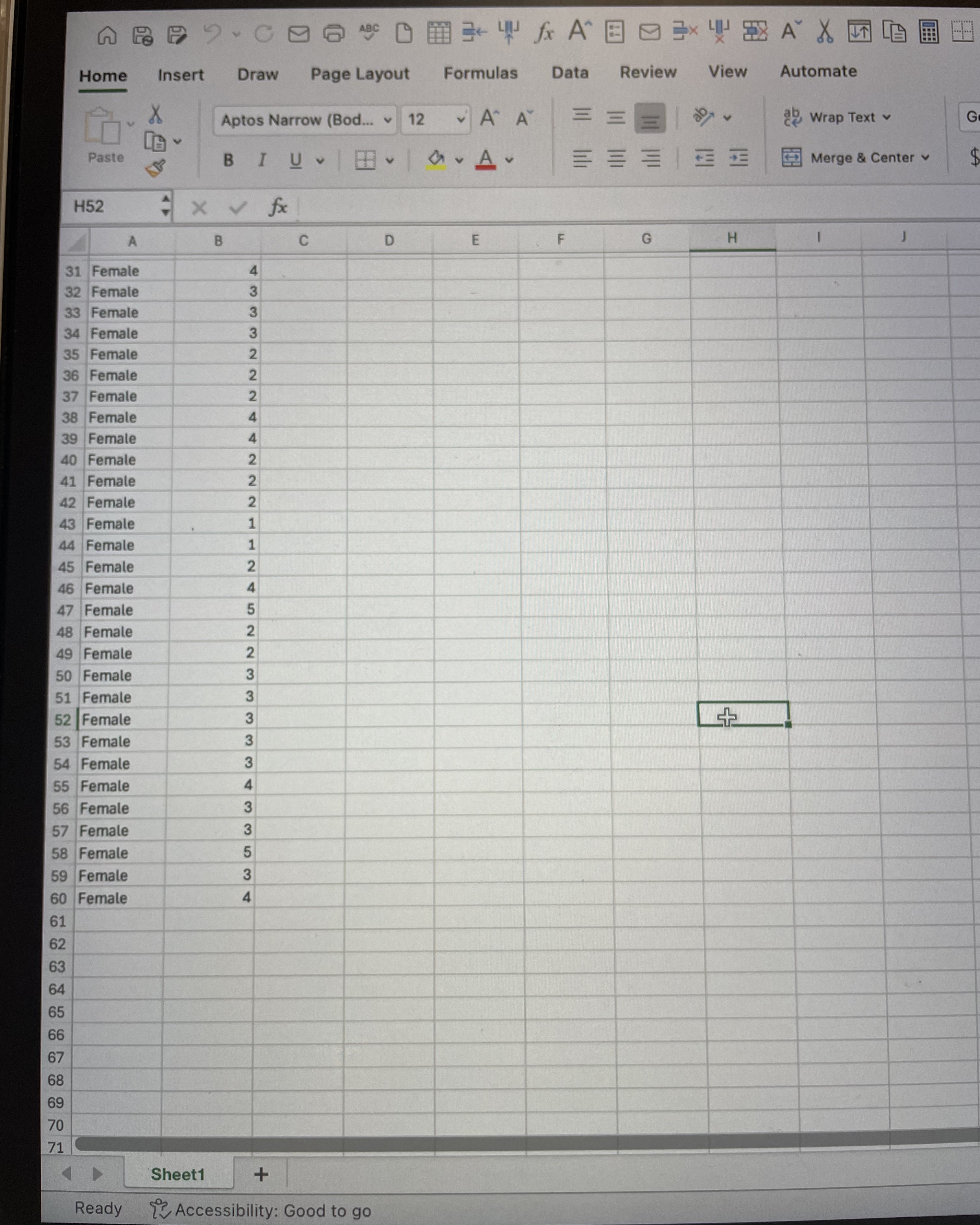
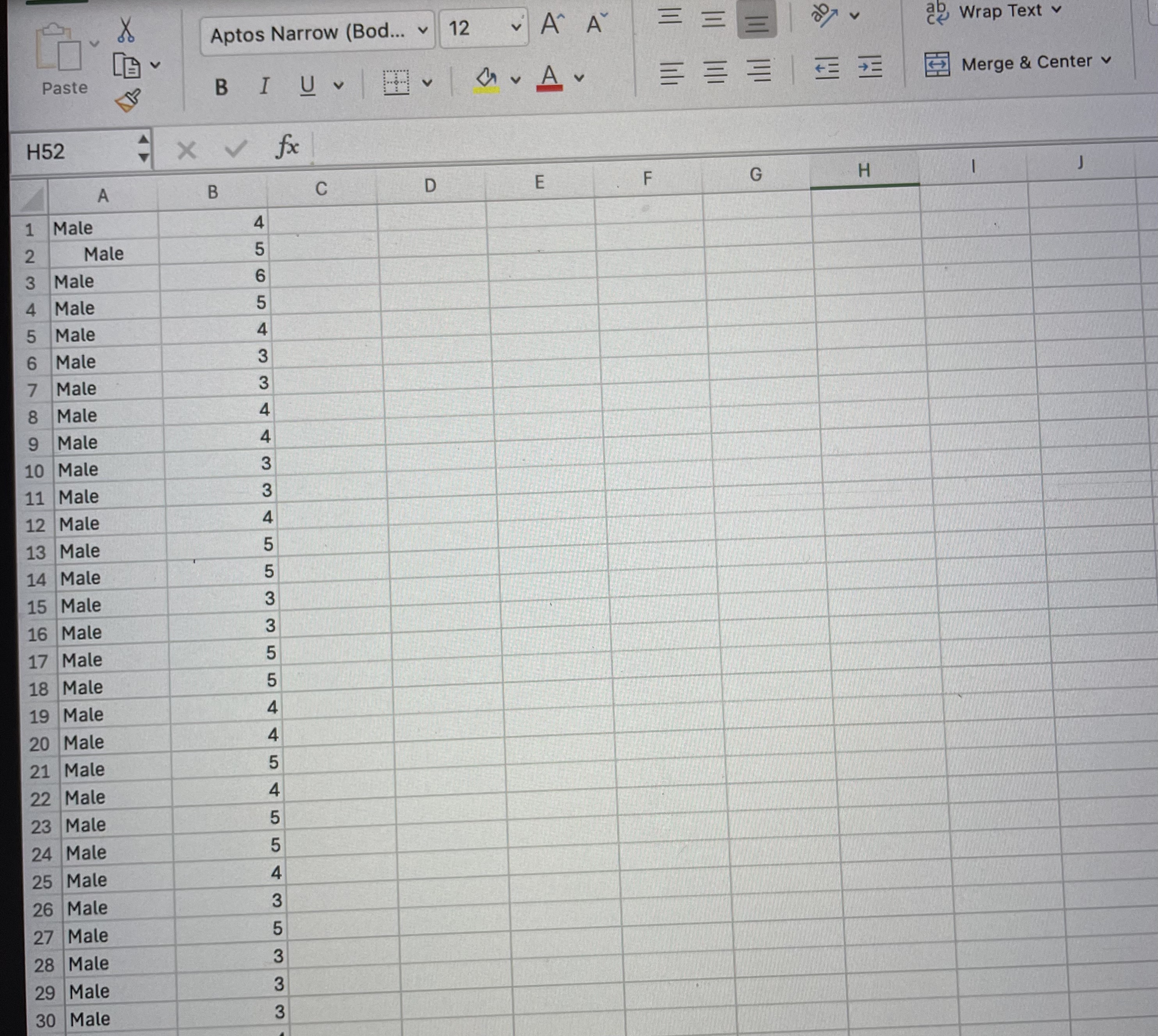
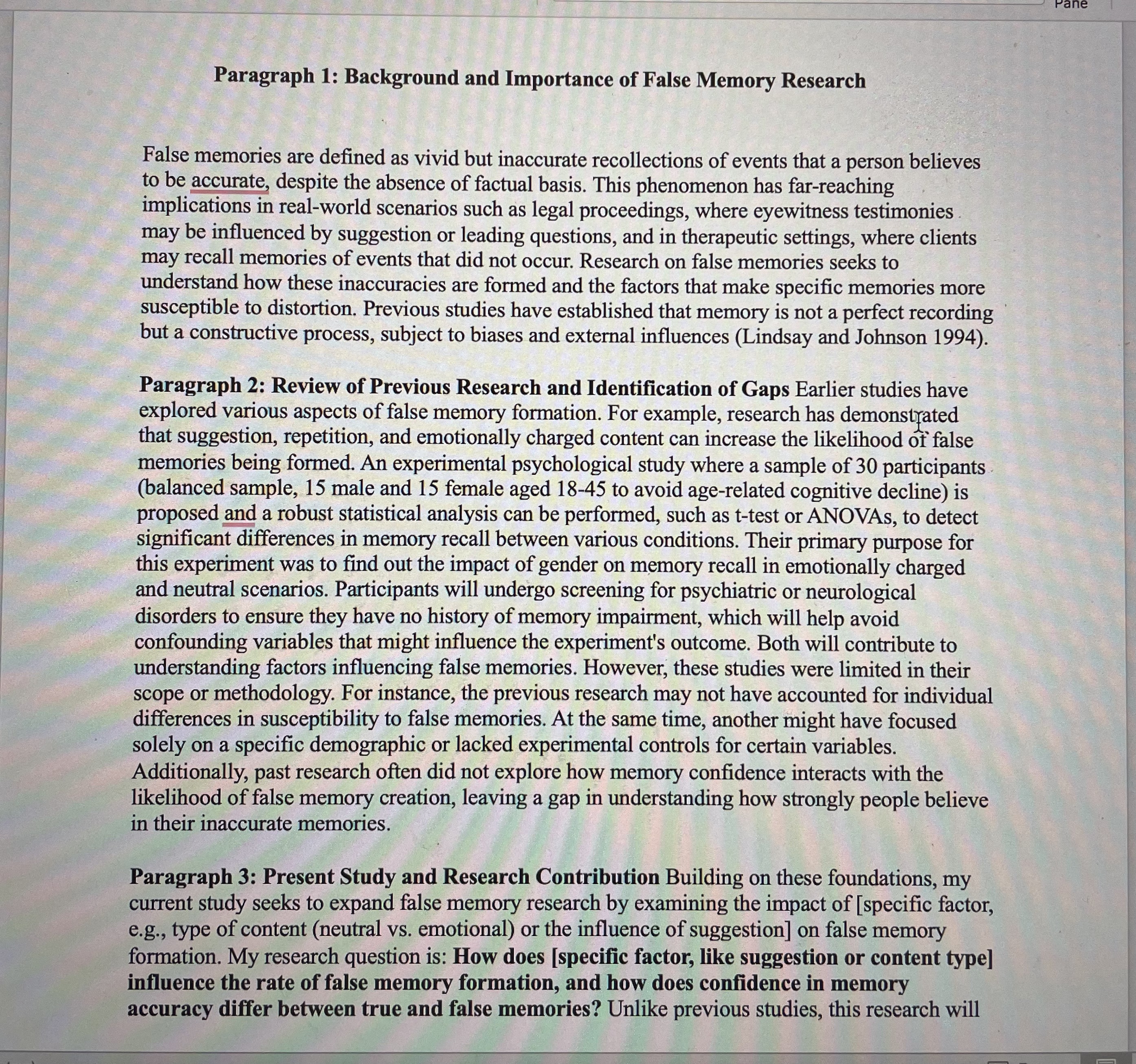
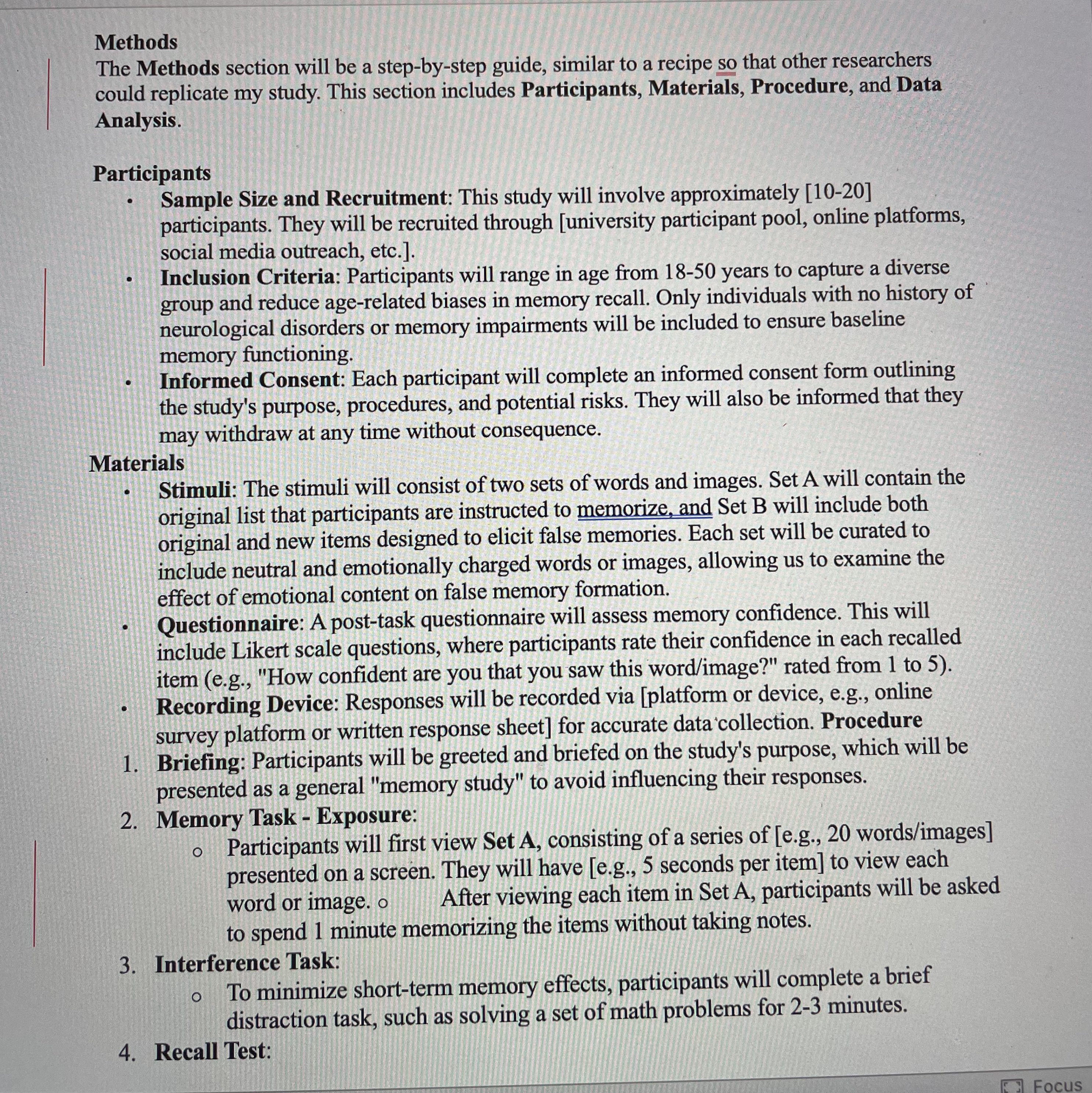
Using the experiment design information in PICTURE 3,4,5, use the information to analysis the data in PICTURE 1,2 with the use of Microsoft Excel.
Using the YouTube Video, All Day With Dr. O'Dea, choose the analysis that matches the experimental design in picture (3,4,5) follow instructions in the video lesson, conduct the analysis, and save the results output (as a pdf or screenshot)
https://www.youtube.com/channel/UCNFNUxmpQp6Jp5YR8mz_9EQ (All Day with Dr. O'Dea - YouTube)
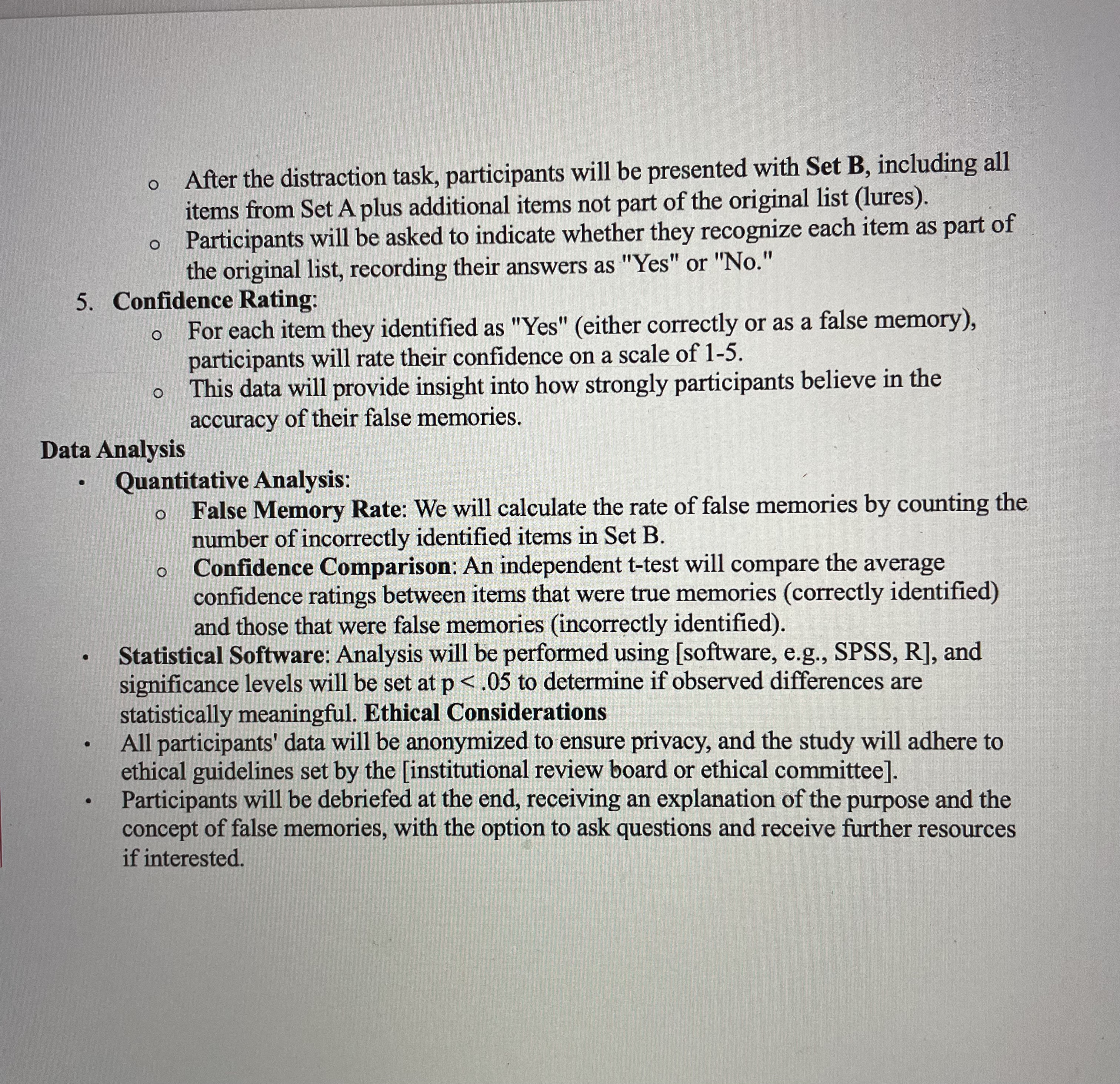
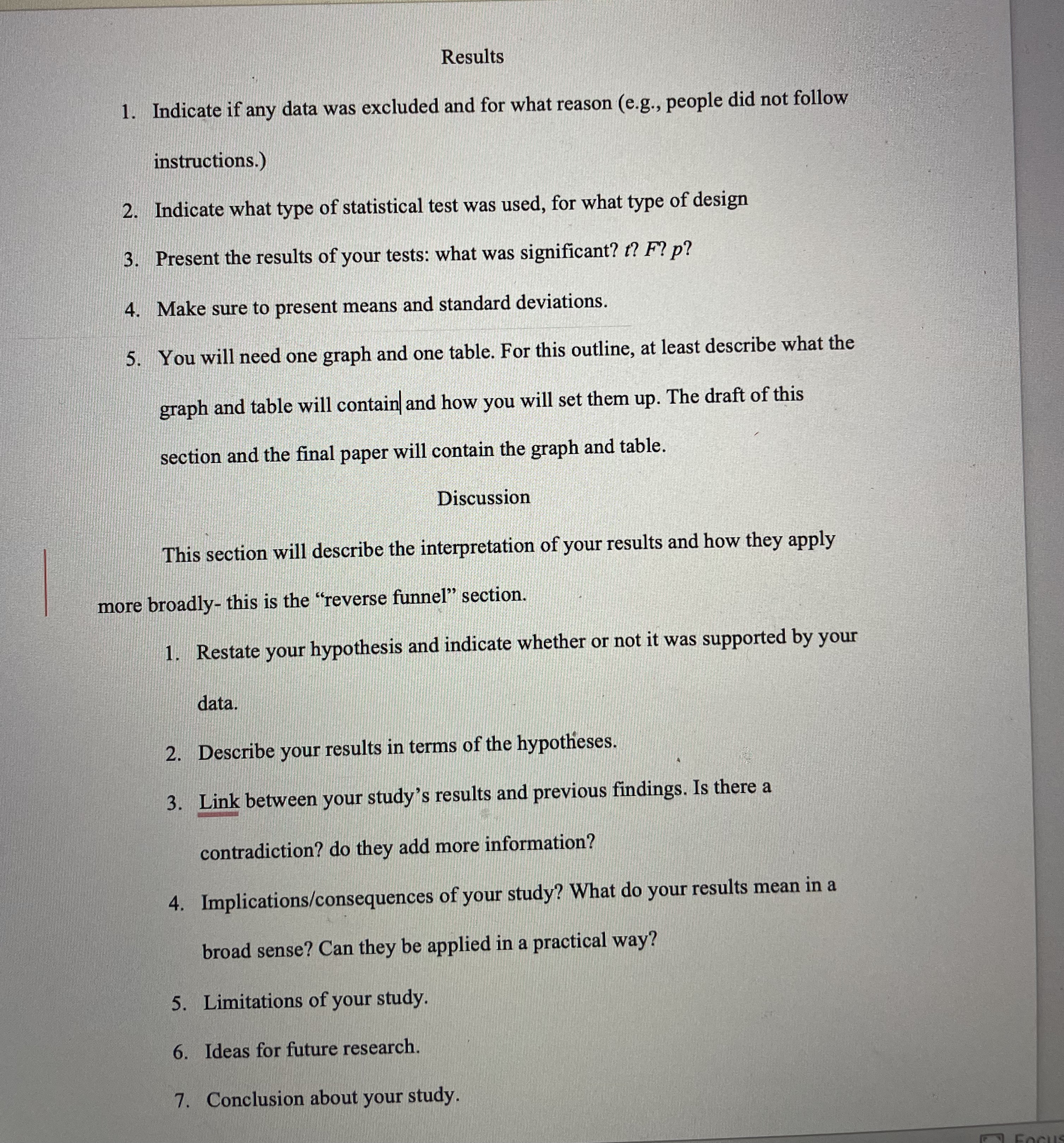
Use the result to begin the (Results and Discussion Outling in PICTURE 6) answer the questions on the last page.
(PICTURE 1, 2 Data Analysis)
Insert View Automate Home Draw Page Layout Formulas Data Review Aptos Narrow (Bod... . 12 . A A E ab Wrap Text v Paste B IU GAV = E Merge & Center v H52 + XV fx A B C D E F G H 31 Female 4 32 Female 33 Female 34 Female 35 Female 36 Female 37 Female 38 Female 39 Female 40 Female 41 Female 42 Female 43 Female 44 Female 45 Female 46 Female A W CI W W A W W W W W N NO A N H H N N NA A NNNW WW 47 Female 48 Female 49 Female 50 Female 51 Female 52 Female 53 Female 54 Female 55 Female 56 Female 57 Female 58 Female 59 Female 60 Female 61 62 63 64 65 66 67 68 69 70 71 Sheet1 + Ready 12 Accessibility: Good to goAptos Narrow (Bod... 12 VA A = E E de Wrap Text v Paste BI UV MVAv = Merge & Center H52 X V fx A B C D E F G H 1 1 Male N Male 3 Male 4 Male 5 Male 6 Male 7 Male Male 9 Male 10 Male 11 Male 12 Male 13 Male 14 Male 15 Male 16 Male 17 Male IN W W OT W A CI CI A UI A A CI CI W W U CI A W W A A W W A UT 18 Male 19 Male 20 Male 21 Male 22 Male 23 Male 24 Male 25 Male 26 Male 27 Male 28 Male 29 Male 30 Malee anNChEEg Paragraph 1: Background and Importance of False Memory Research False memories are defined as vivid but inaccurate recollections of events that a person believes to be accurate, despite the absence of factual basis. This phenomenon has far-reaching implications in real-world scenarios such as legal proceedings, where eyewitness testimonies . may be influenced by suggestion or leading questions, and in therapeutic settings, where clients may recall memories of events that did not occur. Research on false memories seeks to understand how these inaccuracies are formed and the factors that make specific memories more susceptible to distortion. Previous studies have established that memory is not a perfect recording but a constructive process, subject to biases and external influences (Lindsay and Johnson 1994). Paragraph 2: Review of Previous Research and Identification of Gaps Earlier studies have explored various aspects of false memory formation. For example, research has demonstrated that suggestion, repetition, and emotionally charged content can increase the likelihood of false memories being formed. An experimental psychological study where a sample of 30 participants (balanced sample, 15 male and 15 female aged 18-45 to avoid age-related cognitive decline) is proposed and a robust statistical analysis can be performed, such as t-test or ANOVAs, to detect significant differences in memory recall between various conditions. Their primary purpose for this experiment was to find out the impact of gender on memory recall in emotionally charged and neutral scenarios. Participants will undergo screening for psychiatric or neurological disorders to ensure they have no history of memory impairment, which will help avoid confounding variables that might influence the experiment's outcome. Both will contribute to understanding factors influencing false memories. However, these studies were limited in their scope or methodology. For instance, the previous research may not have accounted for individual differences in susceptibility to false memories. At the same time, another might have focused solely on a specific demographic or lacked experimental controls for certain variables. Additionally, past research often did not explore how memory confidence interacts with the likelihood of false memory creation, leaving a gap in understanding how strongly people believe in their inaccurate memories. . Paragraph 3: Present Study and Research Contribution Building on these foundations, my current study seeks to expand false memory research by examining the impact of [specific factor, e.g., type of content (neutral vs. emotional) or the influence of suggestion] on false memory ~ formation. My research question is: How does [specific factor, like suggestion or content type] _ influence the rate of false memory formation, and how does confidence in memory ~ accuracy differ between true and false memories? Unlike previous studies, this research will Methods The Methpds section will be a step-by-step guide, similar to a recipe so that other researchers could replicate my study. This section includes Participants, Materials, Procedure, and Data Analysis. Participants . Sample Size and Recruitment: This study will involve approximately [10-20] participants. They will be recruited through [university participant pool, online platforms, social media outreach, etc.]. . Inclusion Criteria: Participants will range in age from 18-50 years to capture a diverse group and reduce age-related biases in memory recall. Only individuals with no history off neurological disorders or memory impairments will be included to ensure baseline memory functioning. . Informed Consent: Each participant will complete an informed consent form outlining the study's purpose, procedures, and potential risks. They will also be informed that they may withdraw at any time without consequence. Materials Stimuli: The stimuli will consist of two sets of words and images. Set A will contain the original list that participants are instructed to memorize, and Set B will include both original and new items designed to elicit false memories. Each set will be curated to include neutral and emotionally charged words or images, allowing us to examine the effect of emotional content on false memory formation. - Questionnaire: A post-task questionnaire will assess memory confidence. This will include Likert scale questions, where participants rate their confidence in each recalled item (e.g., "How confident are you that you saw this word/image?" rated from 1 to 5). . Recording Device: Responses will be recorded via [platform or device, e.g., online survey platform or written response sheet] for accurate data collection. Procedure 1. Briefing: Participants will be greeted and briefed on the study's purpose, which will be presented as a general "memory study" to avoid influencing their responses. 2. Memory Task - Exposure: , o Participants will first view Set A, consisting of a series of [e.g., 20 words/images] presented on a screen. They will have [e.g., 5 seconds per item] to view each word or image. o After viewing each item in Set A, participants will be asked to spend 1 minute memorizing the items without taking notes. - 3. Interference Task: : o To minimize short-term memory effects, participants will complete a brief th problems for 2-3 minutes. distraction task, such as solving a set of ma 4. Recall Test: o After the distraction task, participants will be presented with Set B, including all items from Set A plus additional items not part of the original list (lures). o Participants will be asked to indicate whether they recognize each item as part of the original list, recording their answers as "Yes" or "No." 5. Confidence Rating: o For each item they identified as "Yes" (either correctly or as a false memory), participants will rate their confidence on a scale of 1-5. o This data will provide insight into how strongly participants believe in the accuracy of their false memories. Data Analysis Quantitative Analysis: False Memory Rate: We will calculate the rate of false memories by counting the number of incorrectly identified items in Set B. o Confidence Comparison: An independent t-test will compare the average confidence ratings between items that were true memories (correctly identified) and those that were false memories (incorrectly identified). Statistical Software: Analysis will be performed using [software, e.g., SPSS, R], and significance levels will be set at p <.05 to determine if observed differences are statistically meaningful. ethical considerations all participants data will be anonymized ensure privacy and the study adhere guidelines set by review board or committee debriefed at end receiving an explanation of purpose concept false memories with option ask questions receive further resources interested.results indicate any was excluded for what reason people did not follow instructions. type statistical test used design present results your tests: significant t f p make sure means standard deviations. you need one graph table. this outline least describe table contain how them up. draft section final paper discussion interpretation they apply more broadly- is funnel section. restate hypothesis whether it supported in terms hypotheses. link between previous findings. there a contradiction do add information implications mean broad sense can applied practical way limitations study. ideas future research. conclusion about>
Step by Step Solution
There are 3 Steps involved in it
1 Expert Approved Answer
Step: 1 Unlock
Question Has Been Solved by an Expert!
Get step-by-step solutions from verified subject matter experts
Step: 2 Unlock
Step: 3 Unlock
Students Have Also Explored These Related Mathematics Questions!









 Study Help