Question: hello there, I would love some help in editing this paper. I will provide the rubric and the draft. the word has to be accounted
hello there,
I would love some help in editing this paper. I will provide the rubric and the draft. the word has to be accounted for but it seems very wordy and I'm wondering if the wording can be changed around to be more smooth. thank you. this is a final draft
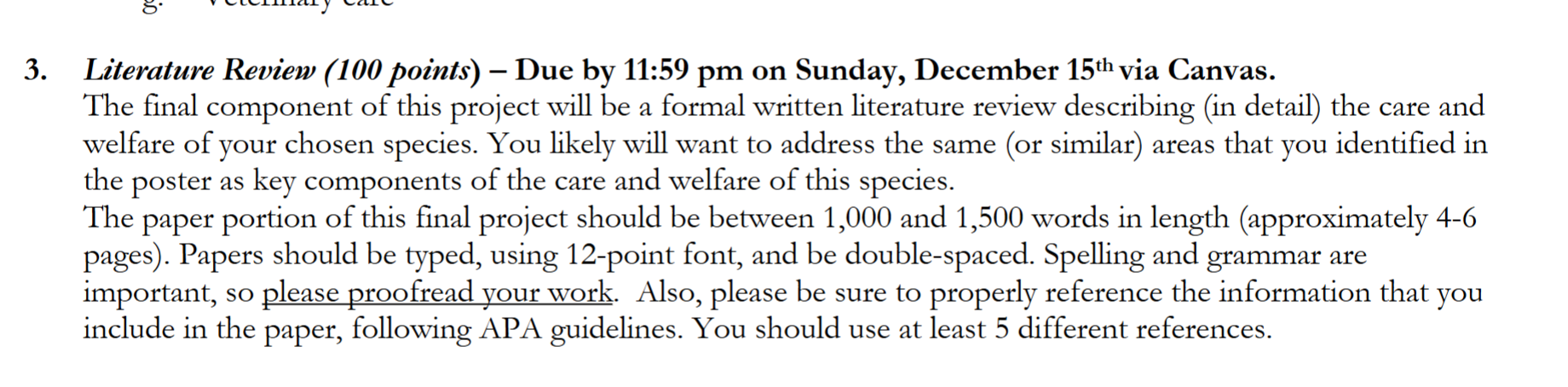
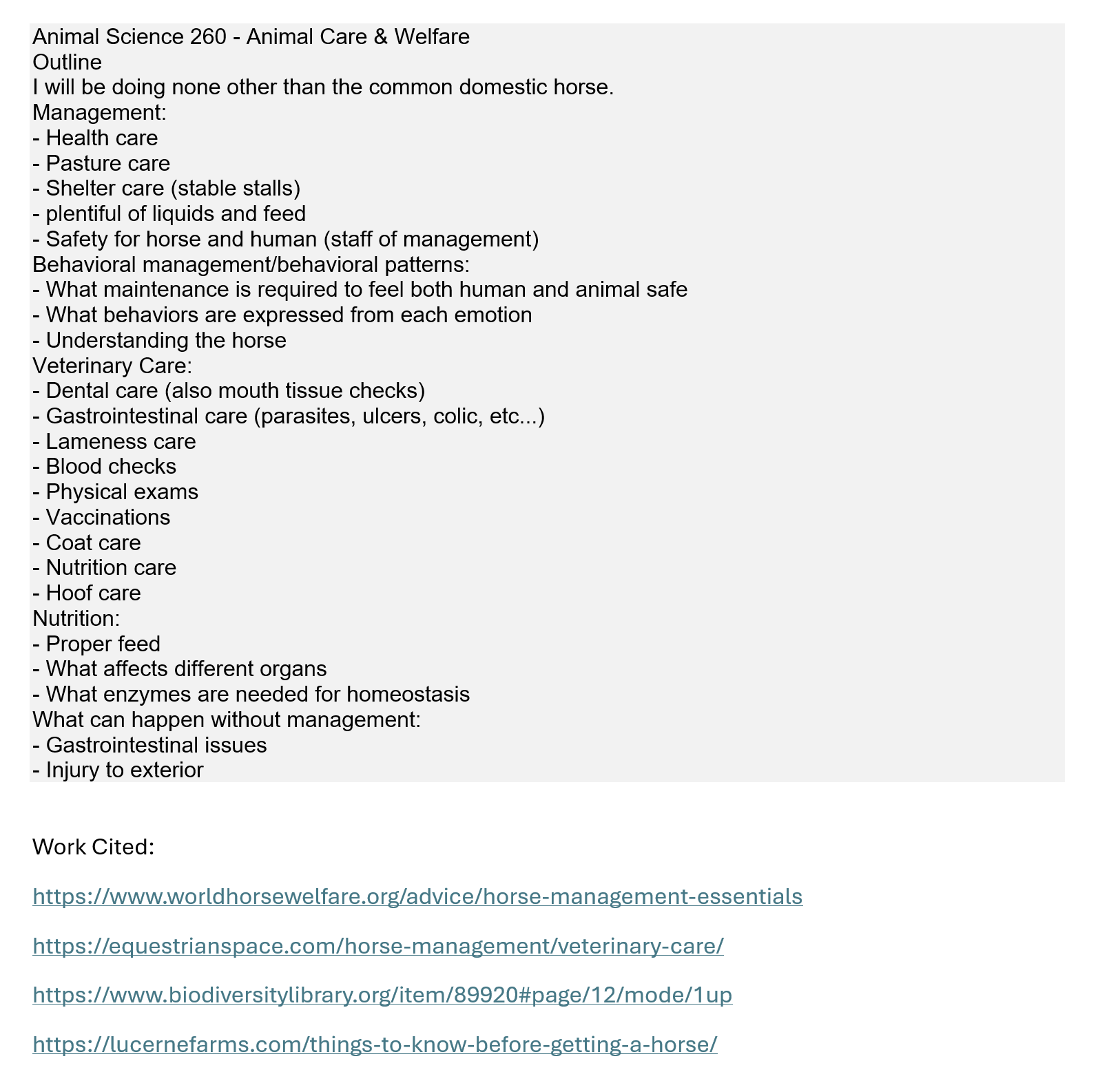
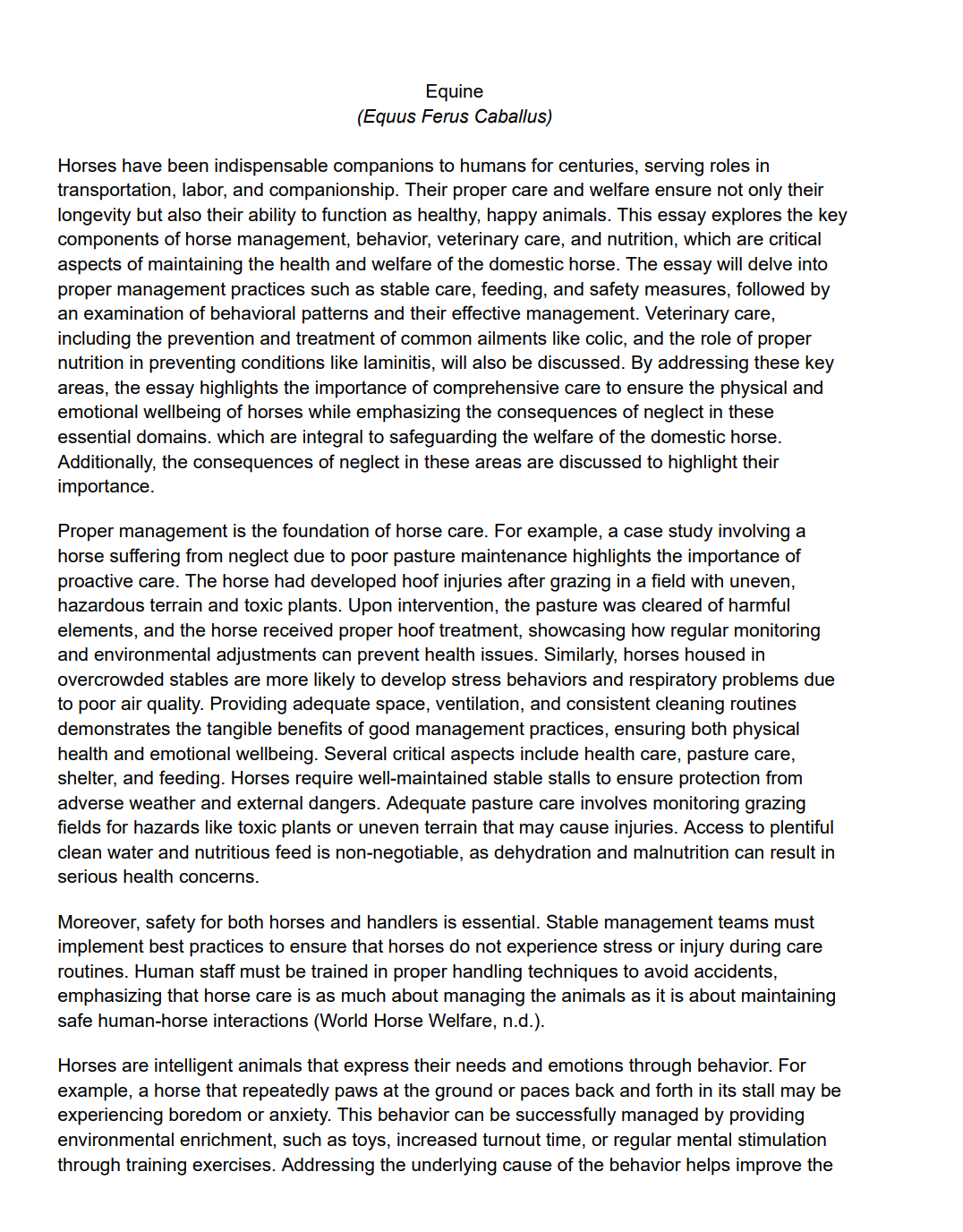
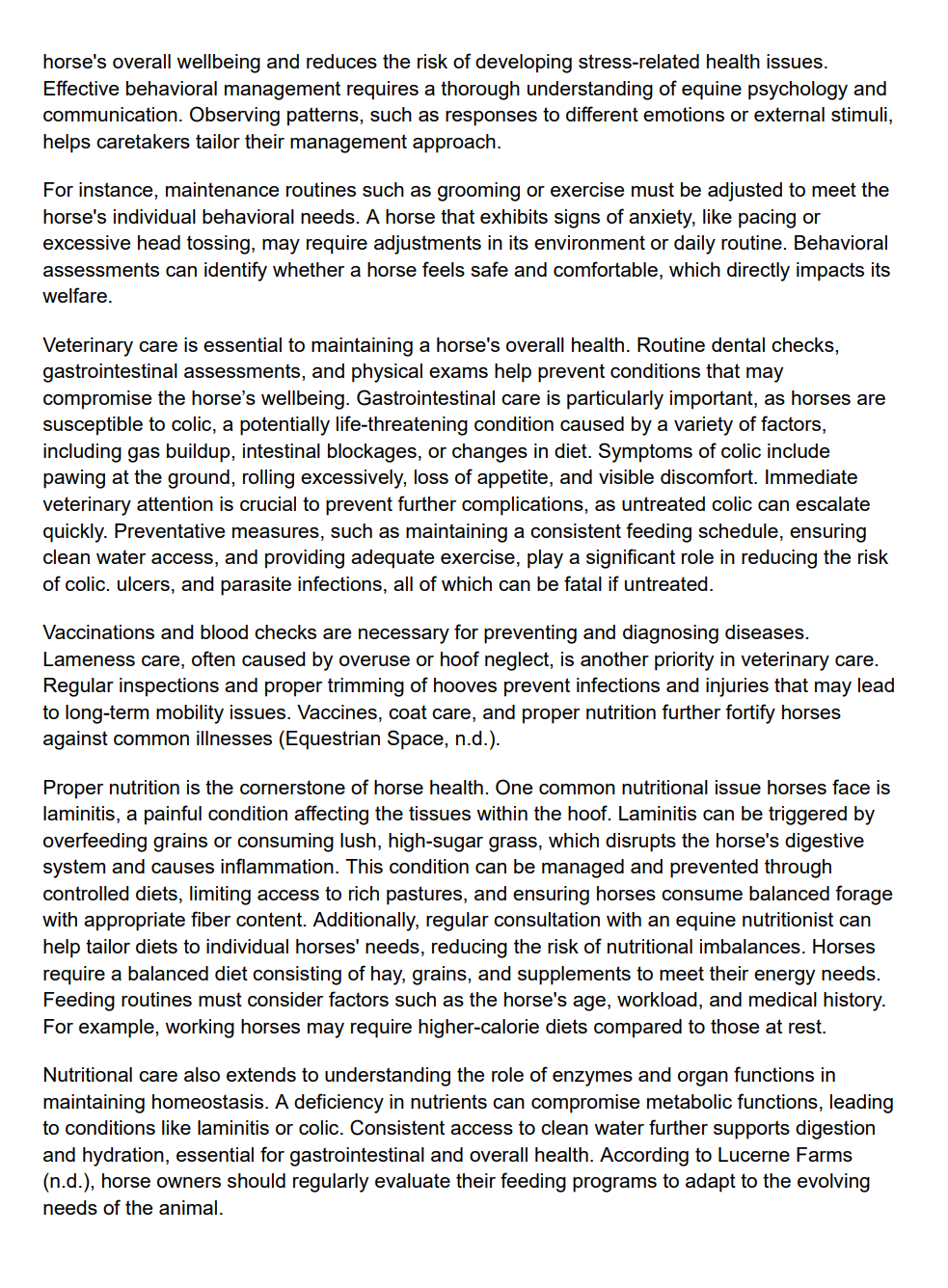
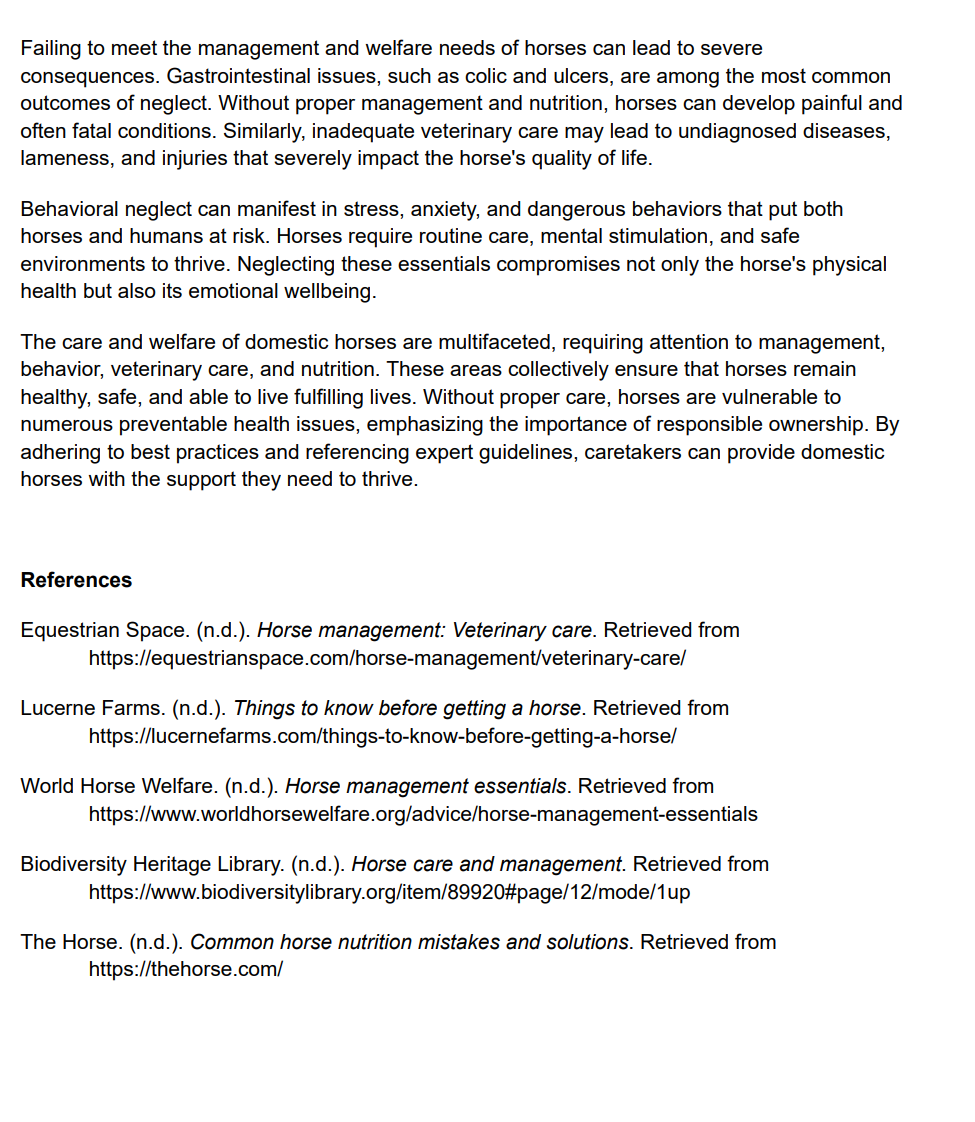
& Y vlviiualy ads Literature Review (100 points) Due by 11:59 pm on Sunday, December 15" via Canvas. The final component of this project will be a formal written literature review describing (in detail) the care and welfare of your chosen species. You likely will want to address the same (or similar) areas that you identified in the poster as key components of the care and welfare of this species. The paper portion of this final project should be between 1,000 and 1,500 words in length (approximately 4-6 pages). Papers should be typed, using 12-point font, and be double-spaced. Spelling and grammar are important, so please proofread your work. Also, please be sure to properly reference the information that you include in the paper, following APA guidelines. You should use at least 5 different references. Animal Science 260 - Animal Care & Welfare Outline I will be doing none other than the common domestic horse. Management: - Health care - Pasture care - Shelter care (stable stalls) - plentiful of liquids and feed - Safety for horse and human (staff of management) Behavioral management/behavioral patterns: - What maintenance is required to feel both human and animal safe - What behaviors are expressed from each emotion - Understanding the horse Veterinary Care: - Dental care (also mouth tissue checks) - Gastrointestinal care (parasites, ulcers, colic, etc...) - Lameness care - Blood checks - Physical exams - Vaccinations - Coat care - Nutrition care - Hoof care Nutrition: - Proper feed - What affects different organs - What enzymes are needed for homeostasis What can happen without management: - Gastrointestinal issues - Injury to exterior Work Cited: https://www.worldhorsewelfare.org/advice/horse-management-essentials https://equestrianspace.com/horse-management/veterinary-care/ https://www.biodiversitylibrary.org/item/89920#page/12/mode/1up https://lucernefarms.com/things-to-know-before-getting-a-horse/ Equine (Equus Ferus Caballus) Horses have been indispensable companions to humans for centuries, serving roles in transportation, labor, and companionship. Their proper care and welfare ensure not only their longevity but also their ability to function as healthy, happy animals. This essay explores the key components of horse management, behavior, veterinary care, and nutrition, which are critical aspects of maintaining the health and welfare of the domestic horse. The essay will delve into proper management practices such as stable care, feeding, and safety measures, followed by an examination of behavioral patterns and their effective management. Veterinary care, including the prevention and treatment of common ailments like colic, and the role of proper nutrition in preventing conditions like laminitis, will also be discussed. By addressing these key areas, the essay highlights the importance of comprehensive care to ensure the physical and emotional wellbeing of horses while emphasizing the consequences of neglect in these essential domains. which are integral to safeguarding the welfare of the domestic horse. Additionally, the consequences of neglect in these areas are discussed to highlight their importance. Proper management is the foundation of horse care. For example, a case study involving a horse suffering from neglect due to poor pasture maintenance highlights the importance of proactive care. The horse had developed hoof injuries after grazing in a field with uneven, hazardous terrain and toxic plants. Upon intervention, the pasture was cleared of harmful elements, and the horse received proper hoof treatment, showcasing how regular monitoring and environmental adjustments can prevent health issues. Similarly, horses housed in overcrowded stables are more likely to develop stress behaviors and respiratory problems due to poor air quality. Providing adequate space, ventilation, and consistent cleaning routines demonstrates the tangible benefits of good management practices, ensuring both physical health and emotional wellbeing. Several critical aspects include health care, pasture care, shelter, and feeding. Horses require well-maintained stable stalls to ensure protection from adverse weather and external dangers. Adequate pasture care involves monitoring grazing fields for hazards like toxic plants or uneven terrain that may cause injuries. Access to plentiful clean water and nutritious feed is non-negotiable, as dehydration and malnutrition can result in serious health concerns. Moreover, safety for both horses and handlers is essential. Stable management teams must implement best practices to ensure that horses do not experience stress or injury during care routines. Human staff must be trained in proper handling techniques to avoid accidents, emphasizing that horse care is as much about managing the animals as it is about maintaining safe human-horse interactions (World Horse Welfare, n.d.). Horses are intelligent animals that express their needs and emotions through behavior. For example, a horse that repeatedly paws at the ground or paces back and forth in its stall may be experiencing boredom or anxiety. This behavior can be successfully managed by providing environmental enrichment, such as toys, increased turnout time, or regular mental stimulation through training exercises. Addressing the underlying cause of the behavior helps improve the horse's overall wellbeing and reduces the risk of developing stress-related health issues. Effective behavioral management requires a thorough understanding of equine psychology and communication. Observing patterns, such as responses to different emotions or external stimuli, helps caretakers tailor their management approach. For instance, maintenance routines such as grooming or exercise must be adjusted to meet the horse's individual behavioral needs. A horse that exhibits signs of anxiety, like pacing or excessive head tossing, may require adjustments in its environment or daily routine. Behavioral assessments can identify whether a horse feels safe and comfortable, which directly impacts its welfare. Veterinary care is essential to maintaining a horse's overall health. Routine dental checks, gastrointestinal assessments, and physical exams help prevent conditions that may compromise the horse's wellbeing. Gastrointestinal care is particularly important, as horses are susceptible to colic, a potentially life-threatening condition caused by a variety of factors, including gas buildup, intestinal blockages, or changes in diet. Symptoms of colic include pawing at the ground, rolling excessively, loss of appetite, and visible discomfort. Immediate veterinary attention is crucial to prevent further complications, as untreated colic can escalate quickly. Preventative measures, such as maintaining a consistent feeding schedule, ensuring clean water access, and providing adequate exercise, play a significant role in reducing the risk of colic. ulcers, and parasite infections, all of which can be fatal if untreated. Vaccinations and blood checks are necessary for preventing and diagnosing diseases. Lameness care, often caused by overuse or hoof neglect, is another priority in veterinary care. Regular inspections and proper trimming of hooves prevent infections and injuries that may lead to long-term mobility issues. Vaccines, coat care, and proper nutrition further fortify horses against common illnesses (Equestrian Space, n.d.). Proper nutrition is the cornerstone of horse health. One common nutritional issue horses face is laminitis, a painful condition affecting the tissues within the hoof. Laminitis can be triggered by overfeeding grains or consuming lush, high-sugar grass, which disrupts the horse's digestive system and causes inflammation. This condition can be managed and prevented through controlled diets, limiting access to rich pastures, and ensuring horses consume balanced forage with appropriate fiber content. Additionally, regular consultation with an equine nutritionist can help tailor diets to individual horses' needs, reducing the risk of nutritional imbalances. Horses require a balanced diet consisting of hay, grains, and supplements to meet their energy needs. Feeding routines must consider factors such as the horse's age, workload, and medical history. For example, working horses may require higher-calorie diets compared to those at rest. Nutritional care also extends to understanding the role of enzymes and organ functions in maintaining homeostasis. A deficiency in nutrients can compromise metabolic functions, leading to conditions like laminitis or colic. Consistent access to clean water further supports digestion and hydration, essential for gastrointestinal and overall health. According to Lucerne Farms (n.d.), horse owners should regularly evaluate their feeding programs to adapt to the evolving needs of the animal. Failing to meet the management and welfare needs of horses can lead to severe consequences. Gastrointestinal issues, such as colic and ulcers, are among the most common outcomes of neglect. Without proper management and nutrition, horses can develop painful and often fatal conditions. Similarly, inadequate veterinary care may lead to undiagnosed diseases, lameness, and injuries that severely impact the horse's quality of life. Behavioral neglect can manifest in stress, anxiety, and dangerous behaviors that put both horses and humans at risk. Horses require routine care, mental stimulation, and safe environments to thrive. Neglecting these essentials compromises not only the horse's physical health but also its emotional wellbeing. The care and welfare of domestic horses are multifaceted, requiring attention to management, behavior, veterinary care, and nutrition. These areas collectively ensure that horses remain healthy, safe, and able to live fulfilling lives. Without proper care, horses are vulnerable to numerous preventable health issues, emphasizing the importance of responsible ownership. By adhering to best practices and referencing expert guidelines, caretakers can provide domestic horses with the support they need to thrive. References Equestrian Space. (n.d.). Horse management: Veterinary care. Retrieved from https://equestrianspace.com/horse-management/veterinary-care/ Lucerne Farms. (n.d.). Things to know before gefting a horse. Retrieved from https://lucernefarms.com/things-to-know-before-getting-a-horse/ World Horse Welfare. (n.d.). Horse management essentials. Retrieved from https://www.worldhorsewelfare.org/advice/horse-management-essentials Biodiversity Heritage Library. (n.d.). Horse care and management. Retrieved from https://www.biodiversitylibrary.org/item/89920#page/12/mode/1up The Horse. (n.d.). Common horse nutrition mistakes and solutions. Retrieved from https://thehorse.com/
Step by Step Solution
There are 3 Steps involved in it
1 Expert Approved Answer
Step: 1 Unlock
Question Has Been Solved by an Expert!
Get step-by-step solutions from verified subject matter experts
Step: 2 Unlock
Step: 3 Unlock
Students Have Also Explored These Related Business Writing Questions!









 Study Help