Question: help me answer these questions please!!! Chapter 1: Information Systems in Global Business Today Review Questions: 1-1 . . . How are information systems transforming
help me answer these questions please!!!
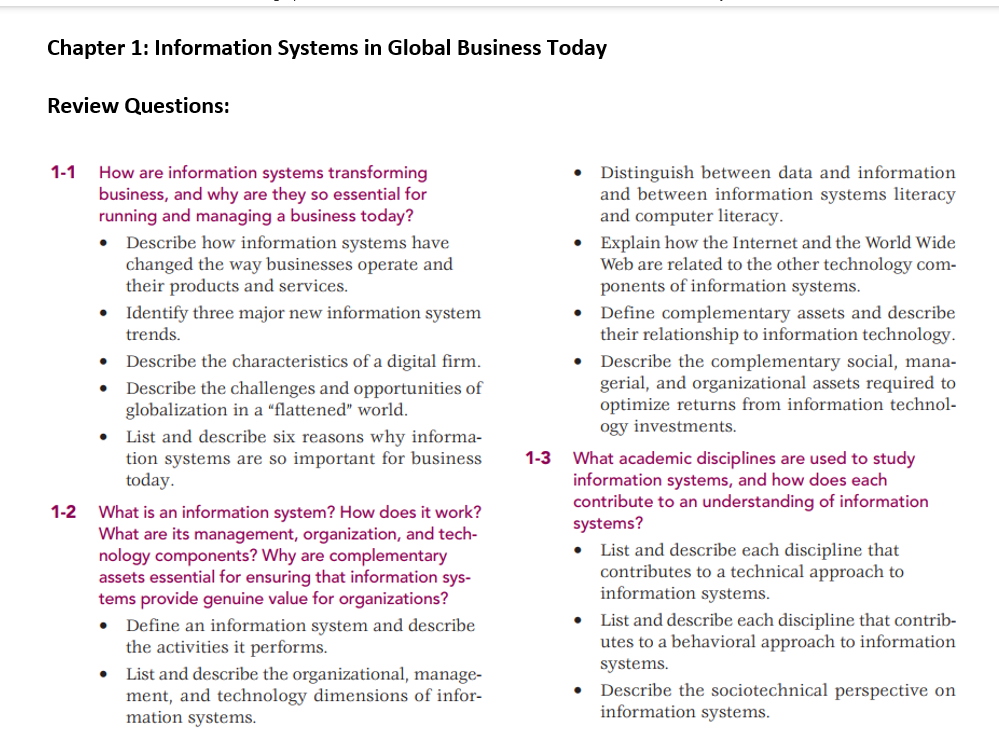
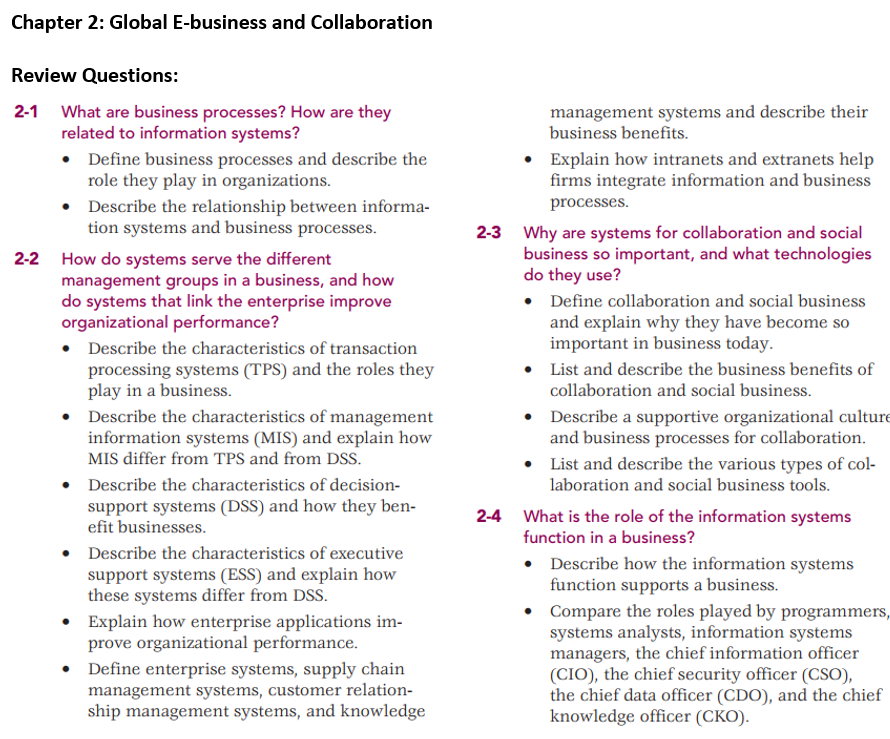
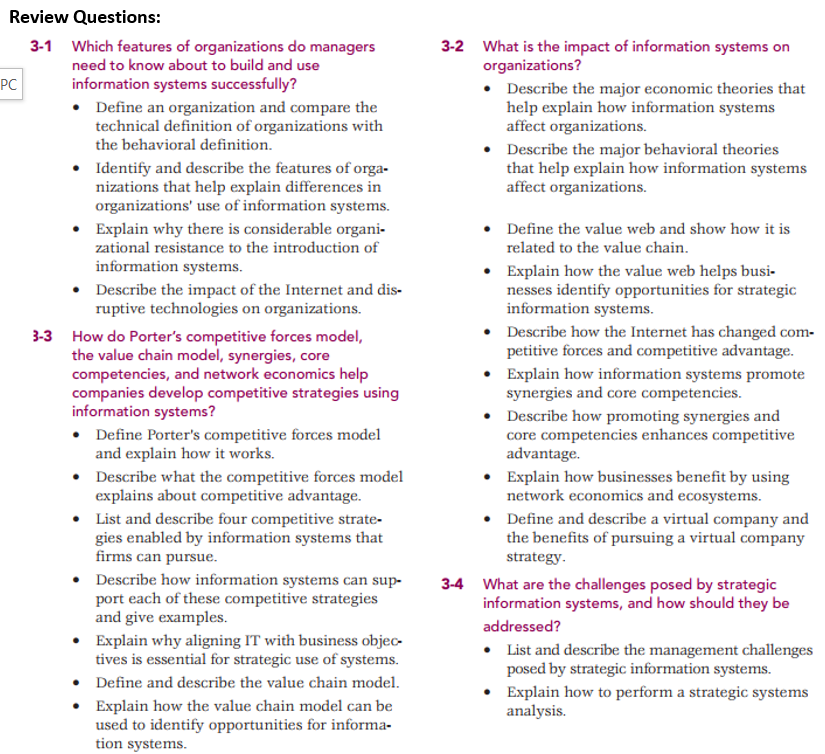
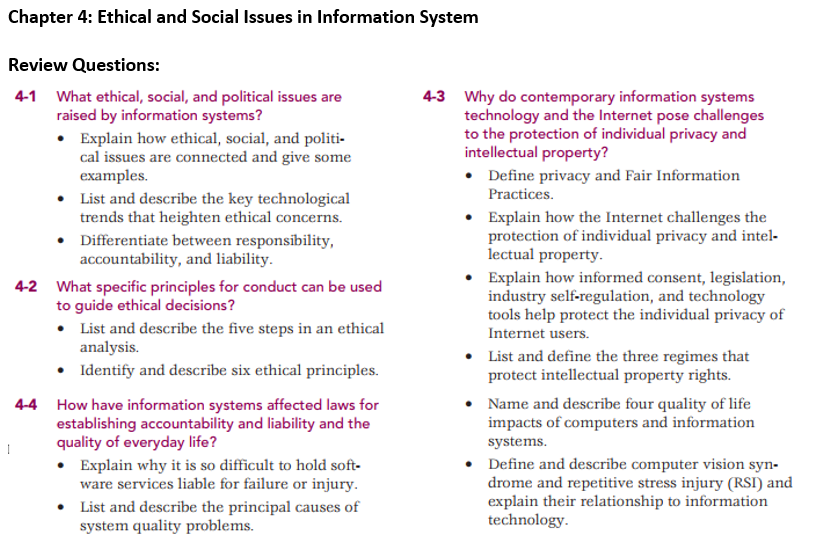
Chapter 1: Information Systems in Global Business Today Review Questions: 1-1 . . . How are information systems transforming business, and why are they so essential for running and managing a business today? Describe how information systems have changed the way businesses operate and their products and services. Identify three major new information system trends. Describe the characteristics of a digital firm. Describe the challenges and opportunities of globalization in a "flattened" world. List and describe six reasons why informa- tion systems are so important for business today. What is an information system? How does it work? What are its management, organization, and tech- nology components? Why are complementary assets essential for ensuring that information sys- tems provide genuine value for organizations? Define an information system and describe the activities it performs. List and describe the organizational, manage- ment, and technology dimensions of infor- mation systems. Distinguish between data and information and between information systems literacy and computer literacy. Explain how the Internet and the World Wide Web are related to the other technology com- ponents of information systems. Define complementary assets and describe their relationship to information technology. Describe the complementary social, mana- gerial, and organizational assets required to optimize returns from information technol- ogy investments. What academic disciplines are used to study information systems, and how does each contribute to an understanding of information systems? List and describe each discipline that contributes to a technical approach to information systems. List and describe each discipline that contrib- utes to a behavioral approach to information systems. Describe the sociotechnical perspective on information systems. 1-3 1-2 . . . . Chapter 2: Global E-business and Collaboration Review Questions: 2-1 What are business processes? How are they related to information systems? Define business processes and describe the role they play in organizations. Describe the relationship between informa- tion systems and business processes. 2-2 How do systems serve the different management groups in a business, and how do systems that link the enterprise improve organizational performance? Describe the characteristics of transaction processing systems (TPS) and the roles they play in a business. Describe the characteristics of management information systems (MIS) and explain how MIS differ from TPS and from DSS. Describe the characteristics of decision- support systems (DSS) and how they ben- efit businesses. Describe the characteristics of executive support systems (ESS) and explain how these systems differ from DSS. Explain how enterprise applications im- prove organizational performance. Define enterprise systems, supply chain management systems, customer relation- ship management systems, and knowledge management systems and describe their business benefits. Explain how intranets and extranets help firms integrate information and business processes. 2-3 Why are systems for collaboration and social business so important, and what technologies do they use? Define collaboration and social business and explain why they have become so important in business today. List and describe the business benefits of collaboration and social business. Describe a supportive organizational culture and business processes for collaboration. List and describe the various types of col- laboration and social business tools. 2-4 What is the role of the information systems function in a business? Describe how the information systems function supports a business. Compare the roles played by programmers, systems analysts, information systems managers, the chief information officer (CIO), the chief security officer (CSO), the chief data officer (CDO), and the chief knowledge officer (CKO). 3-2 What is the impact of information systems on organizations? Describe the major economic theories that help explain how information systems affect organizations. Describe the major behavioral theories that help explain how information systems affect organizations. Review Questions: 3-1 Which features of organizations do managers need to know about to build and use PC information systems successfully? Define an organization and compare the technical definition of organizations with the behavioral definition. Identify and describe the features of orga- nizations that help explain differences in organizations' use of information systems. Explain why there is considerable organi- zational resistance to the introduction of information systems. Describe the impact of the Internet and dis- ruptive technologies on organizations. 3-3 How do Porter's competitive forces model, the value chain model, synergies, core competencies, and network economics help companies develop competitive strategies using information systems? Define Porter's competitive forces model and explain how it works. Describe what the competitive forces model explains about competitive advantage. List and describe four competitive strate- gies enabled by information systems that firms can pursue. Describe how information systems can sup- port each of these competitive strategies and give examples. Explain why aligning IT with business objec- tives is essential for strategic use of systems. Define and describe the value chain model. Explain how the value chain model can be used to identify opportunities for informa- tion systems. Define the value web and show how it is related to the value chain. Explain how the value web helps busi- nesses identify opportunities for strategic information systems. Describe how the Internet has changed com- petitive forces and competitive advantage. Explain how information systems promote synergies and core competencies. Describe how promoting synergies and core competencies enhances competitive advantage. Explain how businesses benefit by using network economics and ecosystems. Define and describe a virtual company and the benefits of pursuing a virtual company strategy. 3-4 What are the challenges posed by strategic information systems, and how should they be addressed? List and describe the management challenges posed by strategic information systems. Explain how to perform a strategic systems analysis. Chapter 4: Ethical and Social Issues in Information System Review Questions: 4-1 What ethical, social, and political issues are raised by information systems? Explain how ethical, social, and politi- cal issues are connected and give some examples. List and describe the key technological trends that heighten ethical concerns. Differentiate between responsibility, accountability, and liability. 4-2 What specific principles for conduct can be used to guide ethical decisions? List and describe the five steps in an ethical analysis. Identify and describe six ethical principles. 4-4 How have information systems affected laws for establishing accountability and liability and the 1 quality of everyday life? Explain why it is so difficult to hold soft- ware services liable for failure or injury. List and describe the principal causes of system quality problems. 4-3 Why do contemporary information systems technology and the Internet pose challenges to the protection of individual privacy and intellectual property? Define privacy and Fair Information Practices. Explain how the Internet challenges the protection of individual privacy and intel- lectual property. Explain how informed consent, legislation, industry self-regulation, and technology tools help protect the individual privacy of Internet users. List and define the three regimes that protect intellectual property rights. Name and describe four quality of life impacts of computers and information systems. Define and describe computer vision syn- drome and repetitive stress injury (RSI) and explain their relationship to information technology









 Study Help