







Question: HELP ME ANSWER THIS... (ONLY THE CIRCLES YOU WILL ANSWER) THANKS Task Performance Process Scheduling Objectives: At the end of the exercise, the students should
HELP ME ANSWER THIS... (ONLY THE CIRCLES YOU WILL ANSWER) THANKS
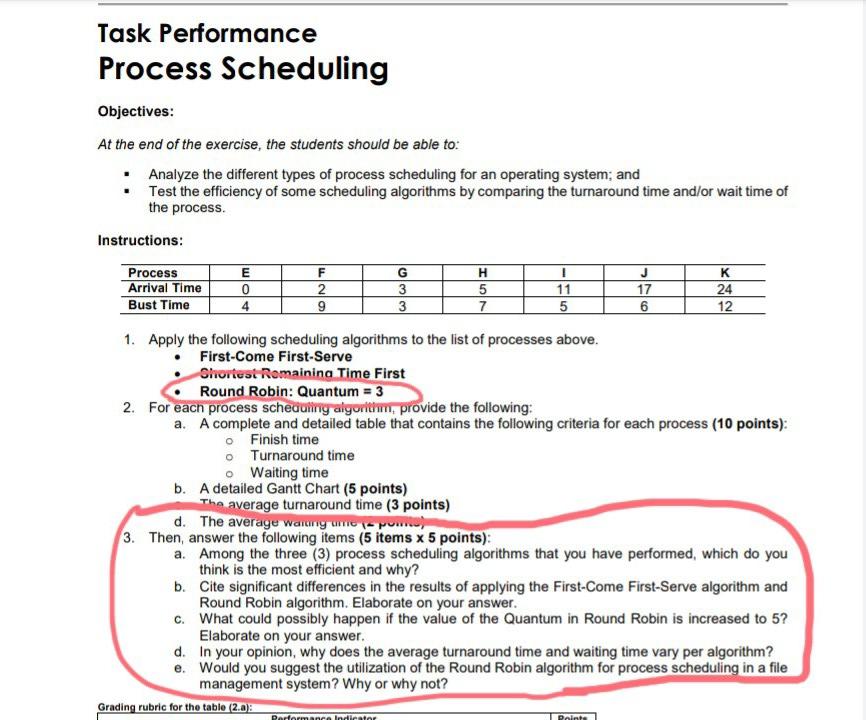
Task Performance Process Scheduling Objectives: At the end of the exercise, the students should be able to: Analyze the different types of process scheduling for an operating system; and Test the efficiency of some scheduling algorithms by comparing the turnaround time and/or wait time of the process. Instructions: Process Arrival Time Bust Time E 0 4 F 2 9 G 3 3 H 5 7 1 11 5 J 17 6 K 24 12 1. Apply the following scheduling algorithms to the list of processes above. First-Come First-Serve Shortest Romaining Time First Round Robin: Quantum = 3 2. For each process schedulling algoritem, provide the following: a. A complete and detailed table that contains the following criteria for each process (10 points): Finish time o Turnaround time o Waiting time b. A detailed Gantt Chart (5 points) The average turnaround time (3 points) d. The average warunye powo) 3. Then, answer the following items (5 items x 5 points): a. Among the three (3) process scheduling algorithms that you have performed, which do you think is the most efficient and why? b. Cite significant differences in the results of applying the First-Come First-Serve algorithm and Round Robin algorithm. Elaborate on your answer. c. What could possibly happen if the value of the Quantum in Round Robin is increased to 5? Elaborate on your answer. d. In your opinion, why does the average turnaround time and waiting time vary per algorithm? e. Would you suggest the utilization of the Round Robin algorithm for process scheduling in a file management system? Why or why not? Grading rubric for the table (2.a); Pardormance Indicator Points
Step by Step Solution
There are 3 Steps involved in it

Get step-by-step solutions from verified subject matter experts
 Study Help