



Question: Help on how the case in first 2 pictures relate to the concepts in 3rd picture.Thank you. With 97,000 employees in 80 different countries, and
Help on how the case in first 2 pictures relate to the concepts in 3rd picture.Thank you. 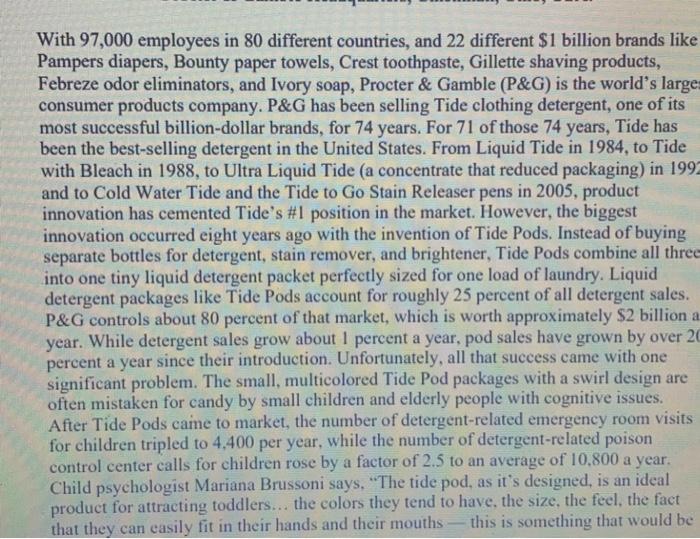
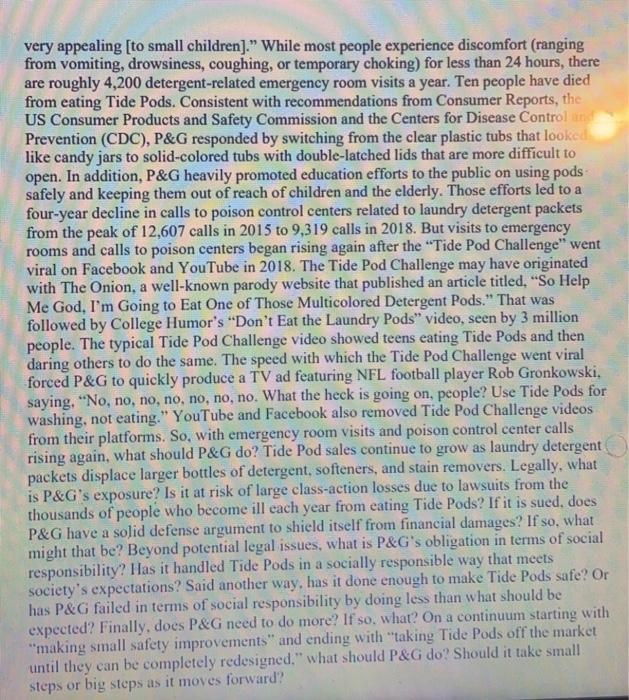
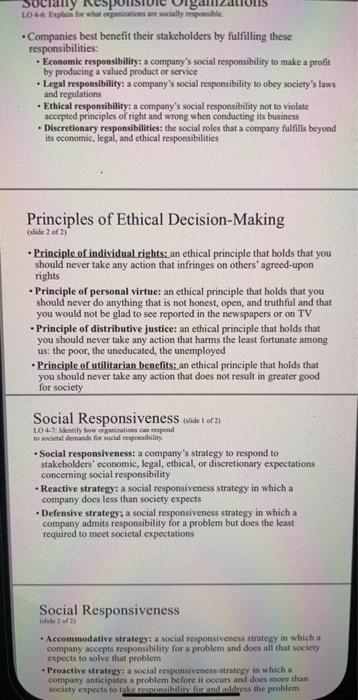
With 97,000 employees in 80 different countries, and 22 different $1 billion brands like Pampers diapers, Bounty paper towels, Crest toothpaste, Gillette shaving products, Febreze odor eliminators, and Ivory soap, Procter & Gamble (P&G) is the world's large consumer products company. P&G has been selling Tide clothing detergent, one of its most successful billion-dollar brands, for 74 years. For 71 of those 74 years, Tide has been the best-selling detergent in the United States. From Liquid Tide in 1984, to Tide with Bleach in 1988, to Ultra Liquid Tide (a concentrate that reduced packaging) in 1992 and to Cold Water Tide and the Tide to Go Stain Releaser pens in 2005, product innovation has cemented Tide's #1 position in the market. However, the biggest innovation occurred eight years ago with the invention of Tide Pods. Instead of buying separate bottles for detergent, stain remover, and brightener, Tide Pods combine all three into one tiny liquid detergent packet perfectly sized for one load of laundry. Liquid detergent packages like Tide Pods account for roughly 25 percent of all detergent sales. P&G controls about 80 percent of that market, which is worth approximately $2 billion a year. While detergent sales grow about 1 percent a year, pod sales have grown by over 20 percent a year since their introduction. Unfortunately, all that success came with one significant problem. The small, multicolored Tide Pod packages with a swirl design are often mistaken for candy by small children and elderly people with cognitive issues. After Tide Pods came to market, the number of detergent-related emergency room visits for children tripled to 4.400 per year, while the number of detergent-related poison control center calls for children rose by a factor of 2.5 to an average of 10,800 a year. Child psychologist Mariana Brussoni says, "The tide pod, as it's designed, is an ideal product for attracting toddlers... the colors they tend to have the size, the feel, the fact that they can easily fit in their hands and their mouths this is something that would be very appealing [to small children]." While most people experience discomfort (ranging from vomiting, drowsiness, coughing, or temporary choking) for less than 24 hours, there are roughly 4,200 detergent-related emergency room visits a year. Ten people have died from eating Tide Pods. Consistent with recommendations from Consumer Reports, the US Consumer Products and Safety Commission and the Centers for Disease Control in Prevention (CDC), P&G responded by switching from the clear plastic tubs that looked like candy jars to solid-colored tubs with double-latched lids that are more difficult to open. In addition, P&G heavily promoted education efforts to the public on using pods safely and keeping them out of reach of children and the elderly. Those efforts led to a four-year decline in calls to poison control centers related to laundry detergent packets from the peak of 12,607 calls in 2015 to 9,319 calls in 2018. But visits to emergency rooms and calls to poison centers began rising again after the "Tide Pod Challenge" went viral on Facebook and YouTube in 2018. The Tide Pod Challenge may have originated with The Onion, a well-known parody website that published an article titled, "So Help Me God. I'm Going to Eat One of Those Multicolored Detergent Pods." That was followed by College Humor's "Don't Eat the Laundry Pods video, seen by 3 million people. The typical Tide Pod Challenge video showed teens eating Tide Pods and then daring others to do the same. The speed with which the Tide Pod Challenge went viral forced P&G to quickly produce a TV ad featuring NFL football player Rob Gronkowski, saying, "No, no, no, no, no, no, no, What the heck is going on, people? Use Tide Pods for washing, not eating." YouTube and Facebook also removed Tide Pod Challenge videos from their platforms. So, with emergency room visits and poison control center calls rising again, what should P&G do? Tide Pod sales continue to grow as laundry detergent packets displace larger bottles of detergent, softeners, and stain removers. Legally, what is P&G's exposure? Is it at risk of large class-action losses due to lawsuits from the thousands of people who become ill each year from eating Tide Pods? If it is sued, does P&G have a solid defense argument to shield itself from financial damages? If so, what might that be? Beyond potential legal issues, what is P&G's obligation in terms of social responsibility? Has it handled Tide Pods in a socially responsible way that meets society's expectations? Said another way, has it done enough to make Tide Pods safe? Or has P&G failed in terms of social responsibility by doing less than what should be expected? Finally, does P&G need to do more? If so, what? On a continuum starting with making small safety improvements and ending with taking Tide Pods off the market until they can be completely redesigned," what should P&G do? Should it take small steps or big steps as it moves forward? Socia LO & plan for was really responsible Companies best benefit their stakeholders by fulfilling these responsibilities: Economic responsibility: a company's social responsibility to make a profit by producing a valued product or service Legal responsibility: a company's social responsibility to obey society's laws and regulations Ethical responsibility: a company's social responsibility not to violate accepted principles of right and wrong when conducting its business Discretionary responsibilities: the social roles that a company fulfills beyond its economic, legal, and ethical responsibilities Principles of Ethical Decision-Making (lide 2 of 2) Principle of individual rights: an ethical principle that holds that you should never take any action that infringes on others' agreed-upon rights Principle of personal virtue: an ethical principle that holds that you should never do anything that is not honest, open, and truthful and that you would not be glad to see reported in the newspapers or on TV Principle of distributive justice: an ethical principle that holds that you should never take any action that harms the least fortunate among us: the poor, the uneducated, the unemployed Principle of utilitarian benefits: an ethical principle that holds that you should never take any action that does not result in greater good for society Social Responsiveness videt of 3 LO 4.7. Identify w gratis can respond to societal demands for social responsibility Social responsiveness: a company's strategy to respond to stakeholders economic, legal, ethical, or discretionary expectations concering social responsibility - Reactive strategy: a social responsiveness strategy in which a company does less than society expects Defensive strategy: a social responsiveness strategy in which a company admits responsibility for a problem but does the least required to meet societal expectations Social Responsiveness Accommodative strategy a social responsiveness strategy in which a company accept responsibility for a problem and does all that society expects to solve that problem Proactive strategy: a social responsiveness strategy in which a company anticipates a problem before it occurs and does more than Society expects to take sosibility for andreas the Step by Step Solution
There are 3 Steps involved in it
1 Expert Approved Answer
Step: 1 Unlock

Question Has Been Solved by an Expert!
Get step-by-step solutions from verified subject matter experts
Step: 2 Unlock
Step: 3 Unlock