







Question: help with blank questions please PART A - CEU POTENTIALS For this part of the experiment the following six half-cells will be used each one

help with blank questions please
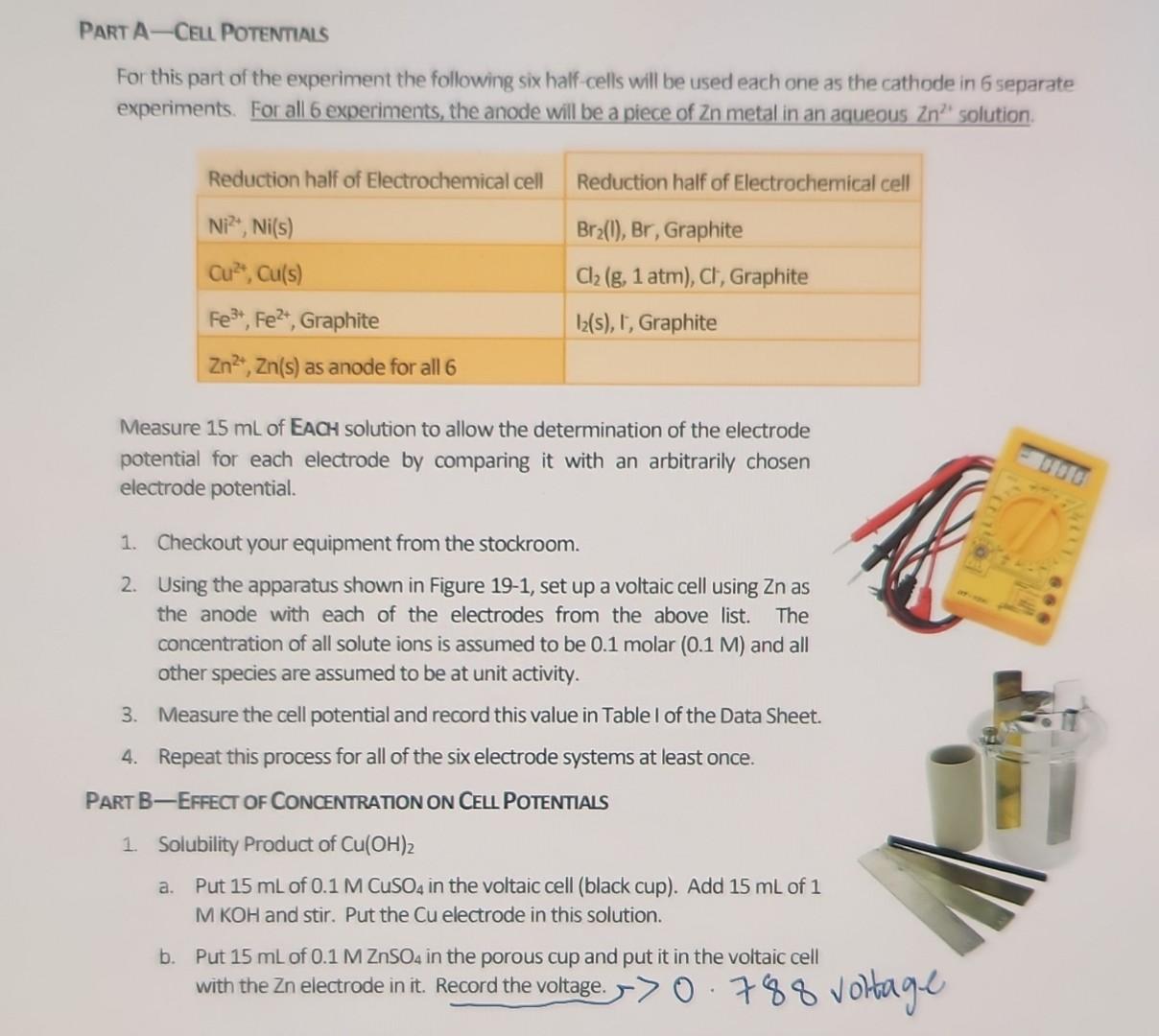
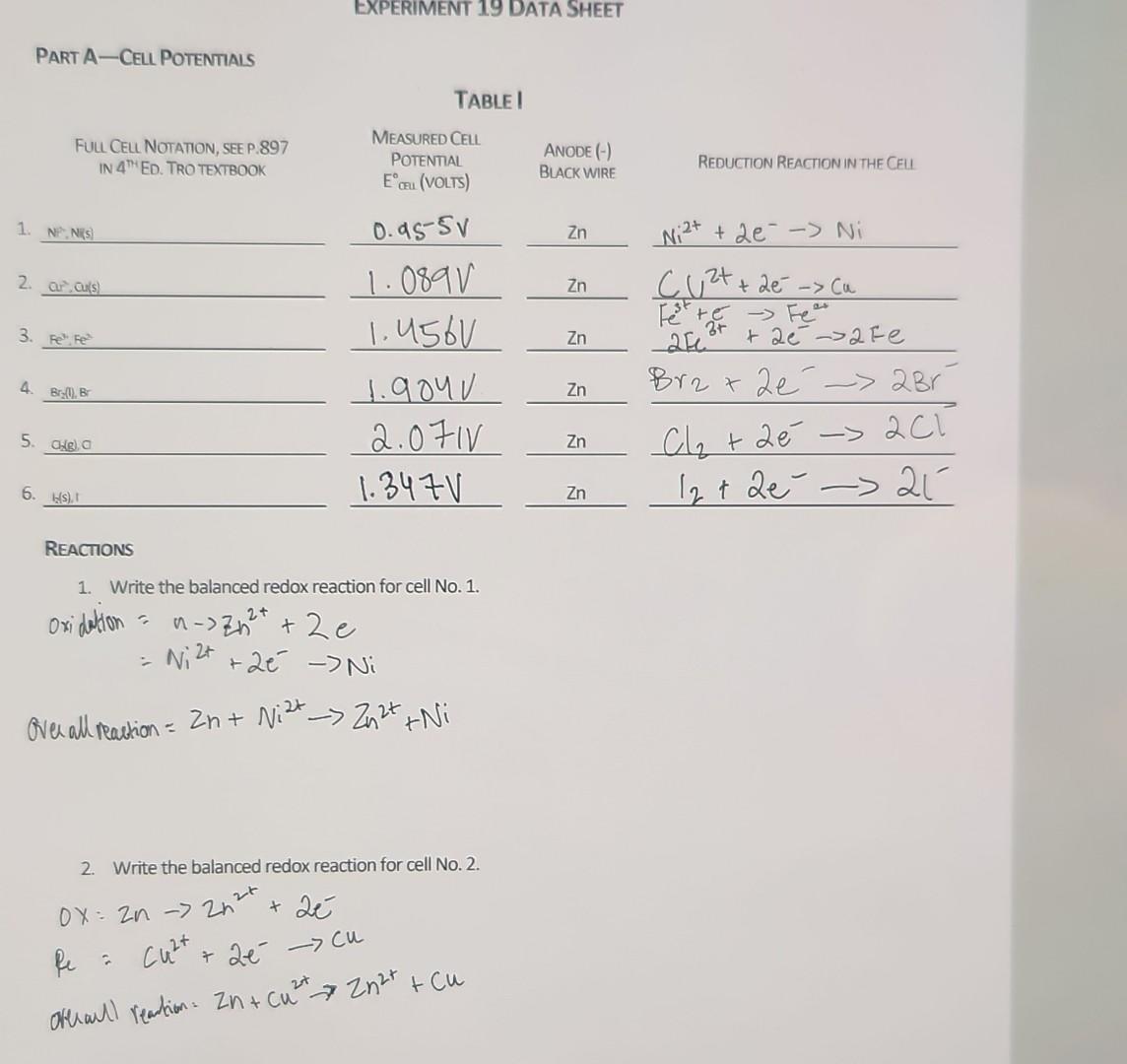
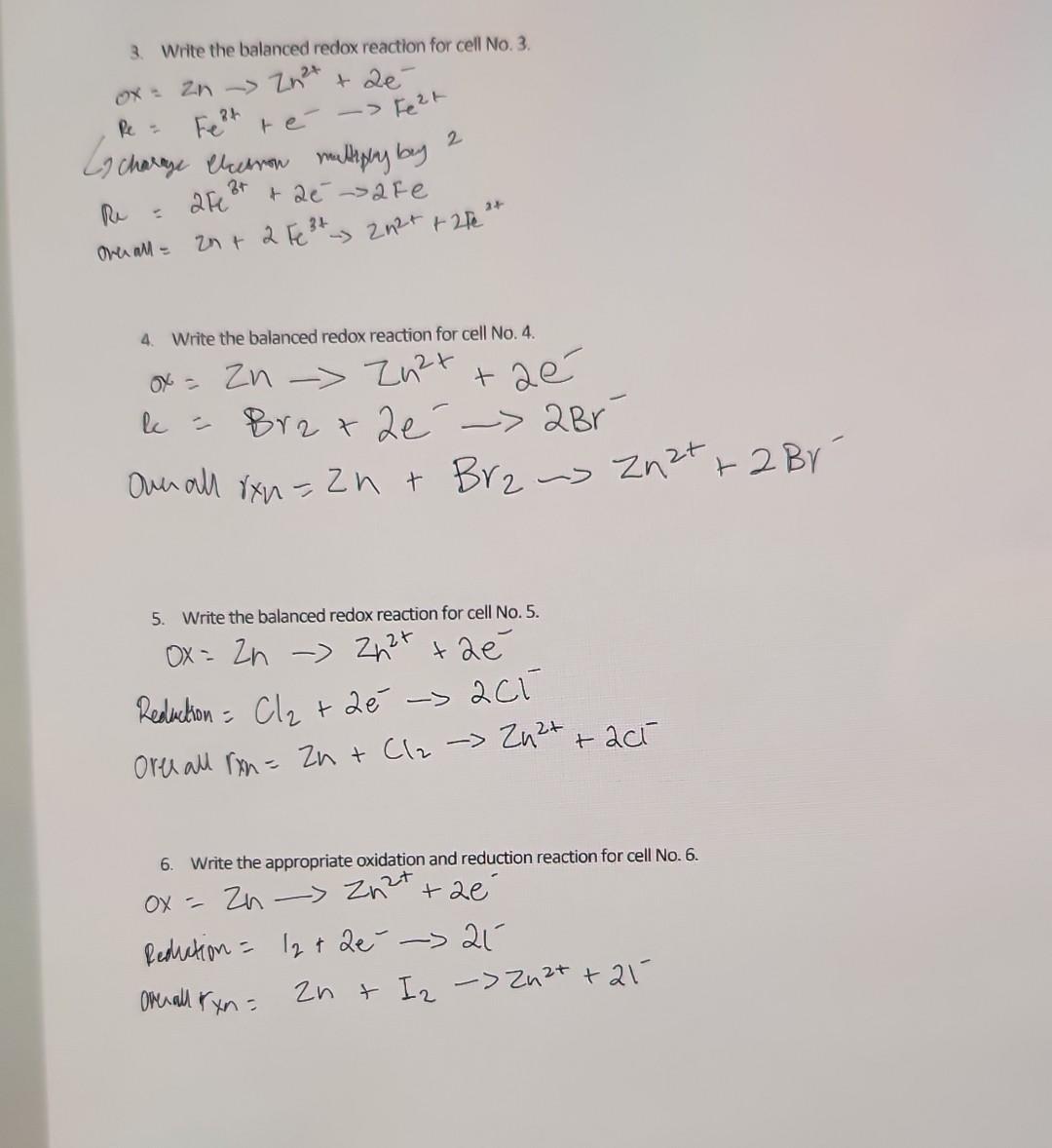
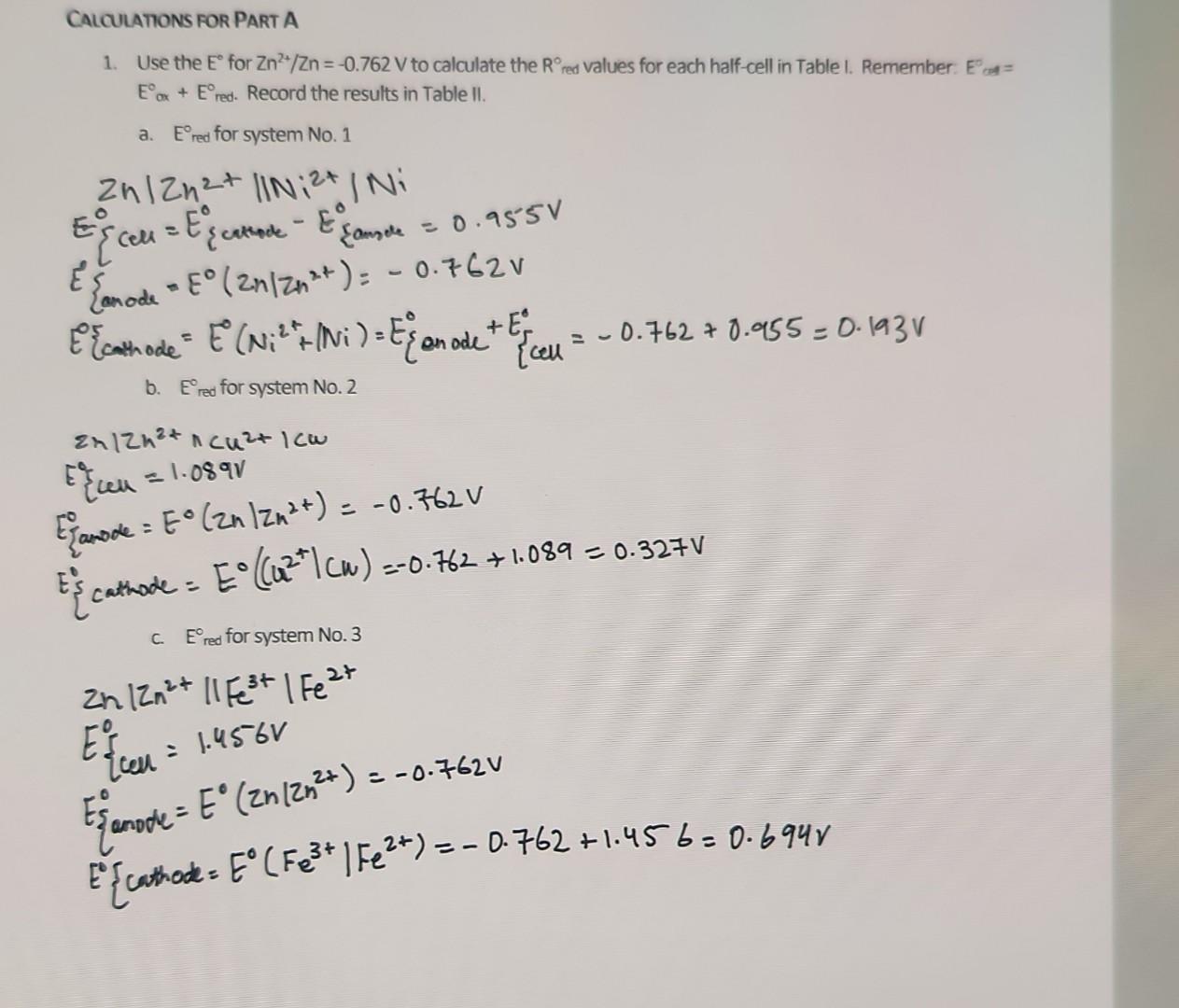
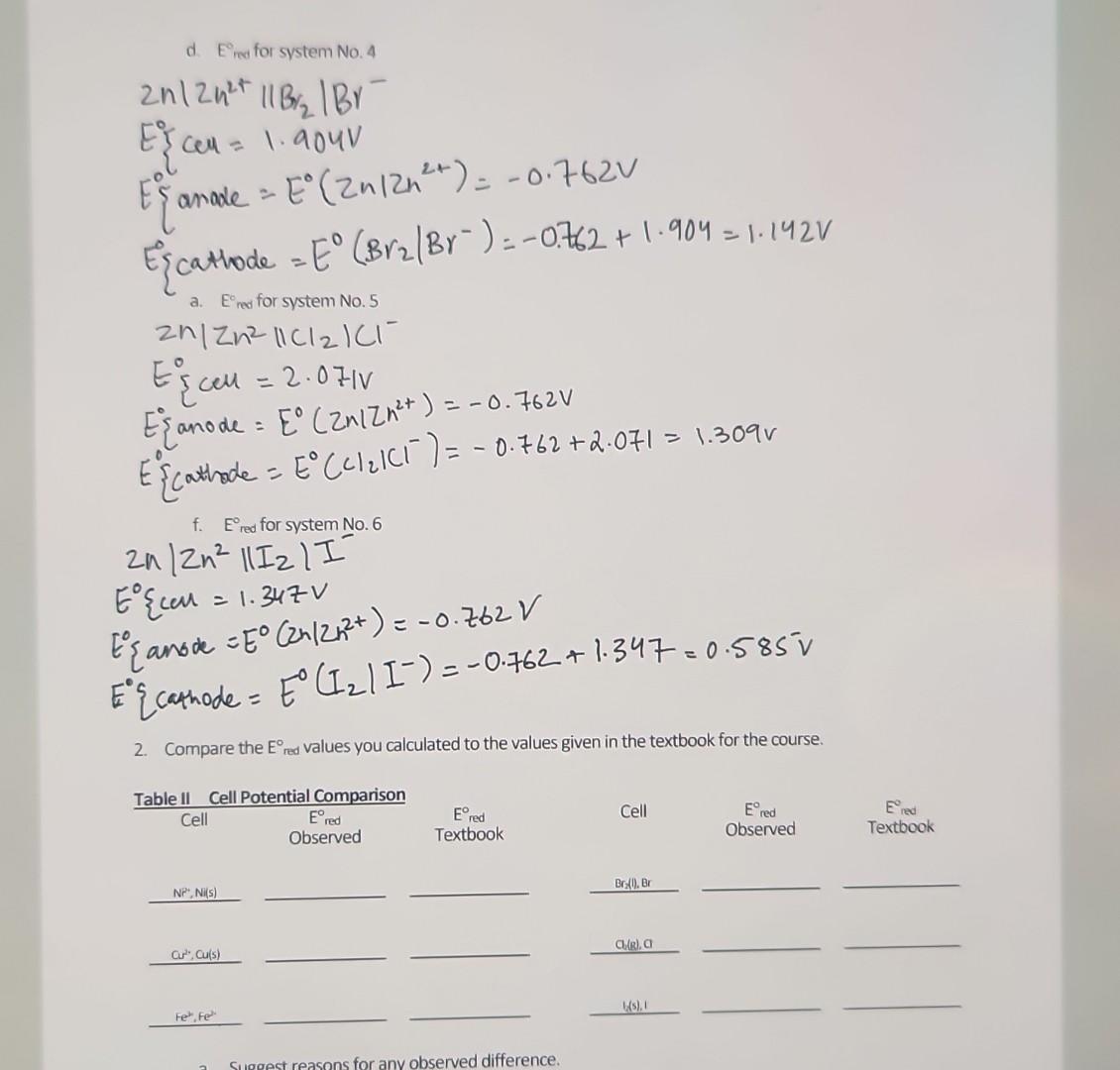
PART A - CEU POTENTIALS For this part of the experiment the following six half-cells will be used each one as the cathode in 6 separate experiments. For all 6 experiments, the anode will be a piece of Zn metal in an aqueous 2n2+ solution. Measure 15mL of EACH solution to allow the determination of the electrode potential for each electrode by comparing it with an arbitrarily chosen electrode potential. 1. Checkout your equipment from the stockroom. 2. Using the apparatus shown in Figure 191, set up a voltaic cell using Zn as the anode with each of the electrodes from the above list. The concentration of all solute ions is assumed to be 0.1molar(0.1M) and all other species are assumed to be at unit activity. 3. Measure the cell potential and record this value in Table I of the Data Sheet. 4. Repeat this process for all of the six electrode systems at least once. Part B-Effect of Concentration On CeLl Potentials 1. Solubility Product of Cu(OH)2 a. Put 15mL of 0.1MCuSO4 in the voltaic cell (black cup). Add 15mL of 1 MKOH and stir. Put the Cu electrode in this solution. b. Put 15mL of 0.1MZnSO4 in the porous cup and put it in the voltaic cell with the Zn electrode in it. Record the voltage. 5>0.788 voltagl REACTIONS 1. Write the balanced redox reaction for cell No. 1 . Oxidulion=nzn2++2e=Ni2t+2eNi ovelallreation =2n+Ni2tZn2t+Ni 2. Write the balanced redox reaction for cell No. 2 . 3. Write the balanced redox reaction for cell No. 3 . Ox=ZnZn2t+2eRe=Fe3t+e2tFe2t charege Chenow malliply bay 2 u=2Fe3t+2e2FeMM=2n+2Fe3t2K2t+2Fe2+ 4. Write the balanced redox reaction for cell No. 4. 4.WritethebalancedredoxreactionforcellNo.4.orZnZn2t+2ek=8r2+2e2r aurah rn=2n+Br22n2t+2Br 5. Write the balanced redox reaction for cell No. 5 . 5.WritethebalancedredoxreacionforcellZno.5.Redulution=Cl2+2e2e2Cloruallrmm=Zn+Cl2Zn2++2Cl 6. Write the appropriate oxidation and reduction reaction for cell No. 6. 6x=Zn2nt+2eReduction=I2+2e2ioruallrxn=2n+I22n2++21 1. Use the E for Zn2+/Zn=0.762V to calculate the R red values for each half-cell in Table I. Remember: E cal = Eox+Ered. Record the results in Table ll. a. E'red for system No. 1 2n2n2+11Ni2+1NiE0{cell=Equtude0EEamde0=0.955VE{{anode=E0(2n/2n2+)=0.762VEcathode=E(Ni2++Ni)=Eenode+E{cell=0.762+0.955=0.193V b. Eo red for system No. 2 Yarade=E0(2nzn2+)=0.762Vicathode=E(Cu2+)cw)=0.762+1.089=0.327V c. E EredforsystemNo.3 d. E'red for system No. 4 2n2n2+B/2BrE{CAl=1.904VE0{arale=E(2n12nn2+)=0.762VE{cathode=E0(Br2/Br)=0.762+1.904=1.142Va.EoredforsystemNo.52nZn2Cl2)ClE0{cen=2.07FVE{anode=E0(2n12n2+)=0.762VE{cathade=E(C12C)=0.762+2.071=1.309vf.EirerforsstemNo.6n2n2I2I{cch=1.34zVansid=E(2212h2+)=0.762V{caphode=E0(I2I)=0.762+1.347=0.585V 2. Compare the E red values you calculated to the values given in the textbook for the course. 1. Using the Nernst Equation, calculate [Cu2] in the cell where it is in equilibrium with 1MOH. Assume [Zn22] =0.1. (Remember: Eom in the Nemst Equation is the value measured after addition of KOHF is before KOH is added. [Cu2v]= 2. Using the results, calculate Ks for Cu(OH)2. kxp= 3. Compare this experimental value with that in the text or any other reference source. Discuss any deviation in terms of this experimental method
Step by Step Solution
There are 3 Steps involved in it

Get step-by-step solutions from verified subject matter experts
 Study Help