



Question: Help with the following questions Problem 2 (Growth Model): Recall the growth model that we discussed in class. We expressed the sequence problem as v(ko)
Help with the following questions
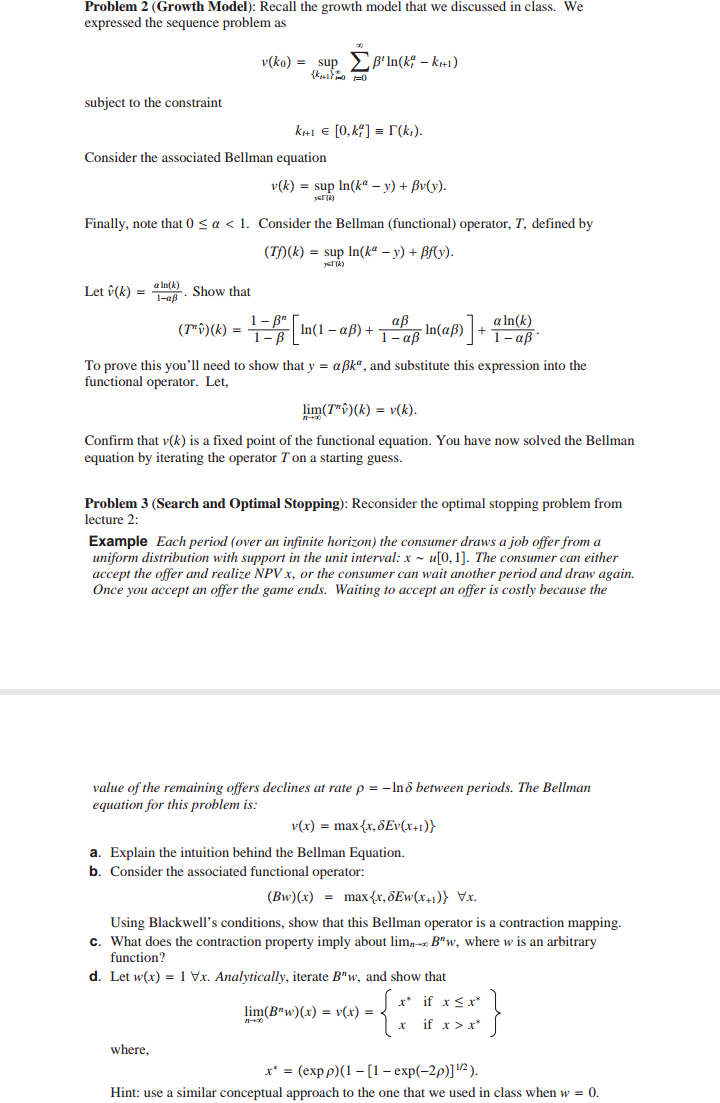
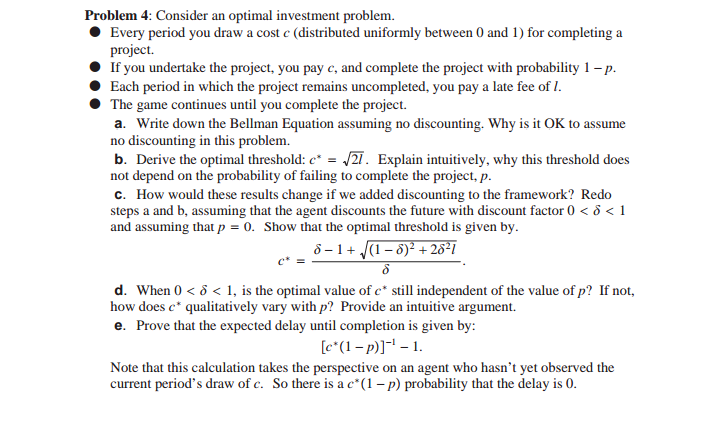
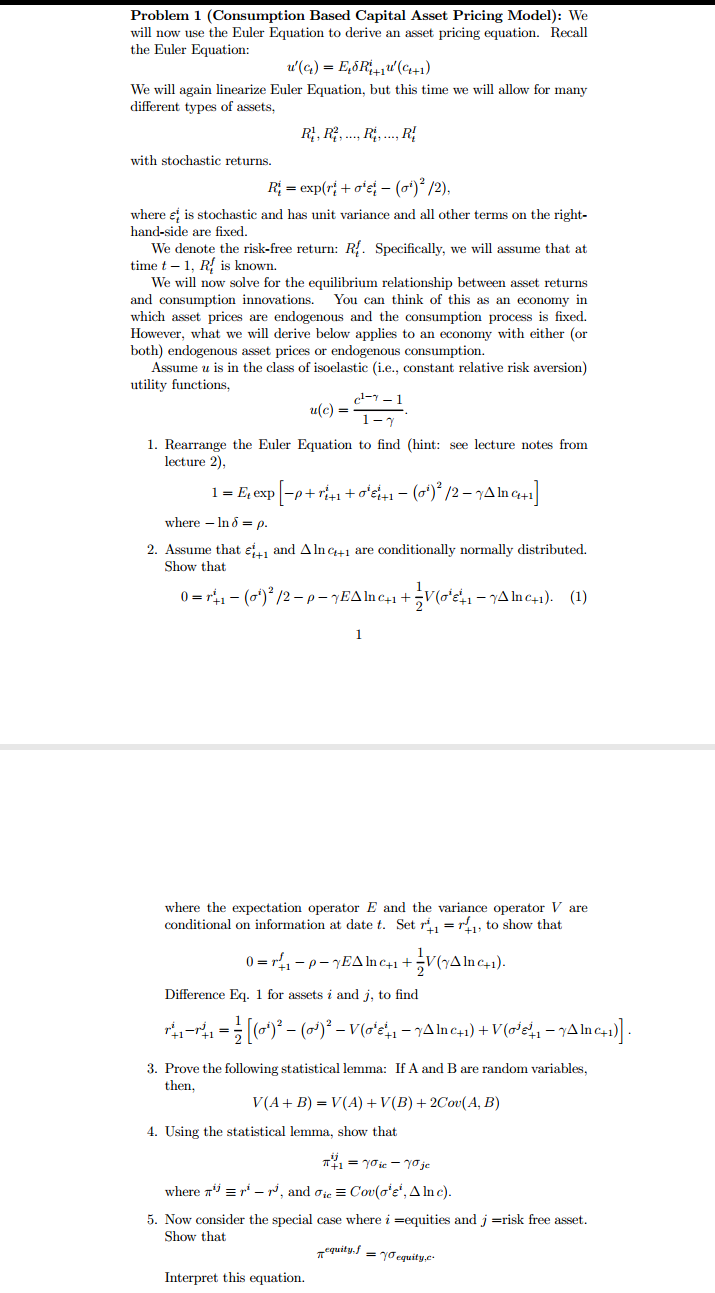
Problem 2 (Growth Model): Recall the growth model that we discussed in class. We expressed the sequence problem as v(ko) = sup > B'In(k; - kil) subject to the constraint KHI E [0, k; ] = [(K.). Consider the associated Bellman equation v(k) = sup In(k" - y) + Bv(v). Finally, note that 0 x where, x* = (expp)(1 - [1 - exp(-2p)] 1/2). Hint: use a similar conceptual approach to the one that we used in class when w = 0.Problem 4: Consider an optimal investment problem. Every period you draw a cost c (distributed uniformly between 0 and 1) for completing a project. If you undertake the project, you pay c, and complete the project with probability 1 - p. Each period in which the project remains uncompleted, you pay a late fee of 1. . The game continues until you complete the project. a. Write down the Bellman Equation assuming no discounting. Why is it OK to assume no discounting in this problem. b. Derive the optimal threshold: c* = #2/. Explain intuitively, why this threshold does not depend on the probability of failing to complete the project, p. C. How would these results change if we added discounting to the framework? Redo steps a and b, assuming that the agent discounts the future with discount factor 0
Step by Step Solution
There are 3 Steps involved in it

Get step-by-step solutions from verified subject matter experts