







Question: Help with this question??? Thank You! (Please answer specifically, thank you!) 3. Different forms of price discrimination Carlos works as a swimming instructor on evenings
Help with this question??? Thank You! (Please answer specifically, thank you!)
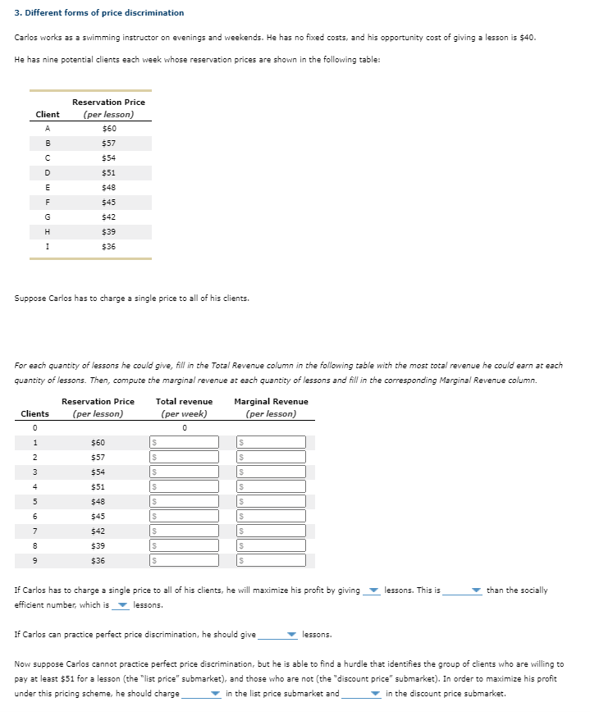
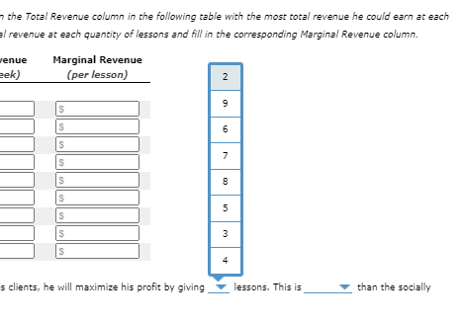
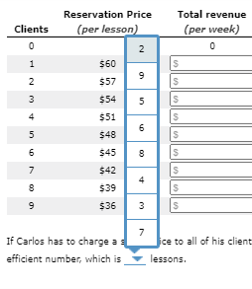
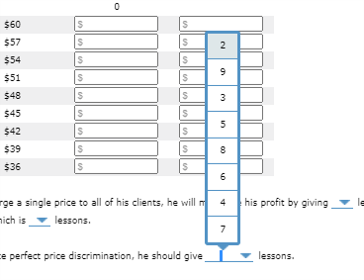
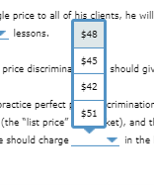
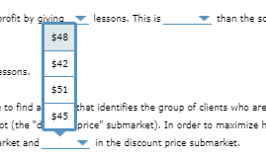
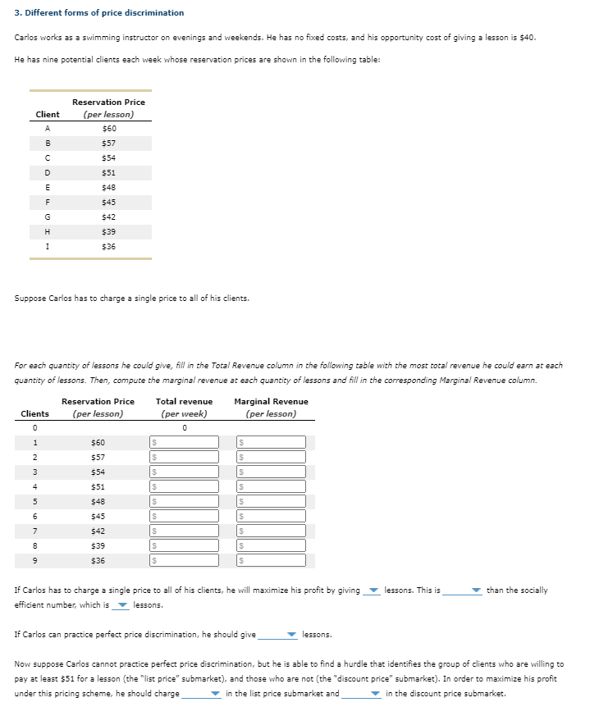
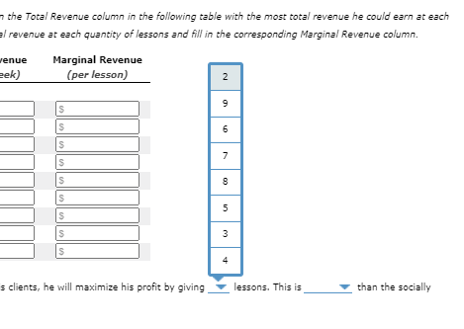
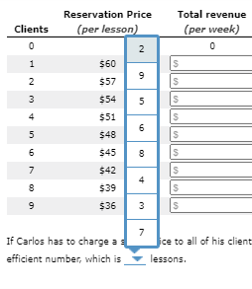
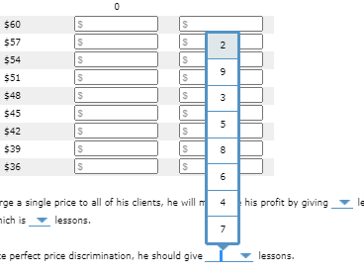
3. Different forms of price discrimination Carlos works as a swimming instructor on evenings and weekends. He has no fixed costs, and his opportunity cost of giving a lesson is $40. He has mine potential clients each week whose reservation prices are shown in the following table: Reservation Price Client (per lesson) A $60 $57 $54 on $51 $48 n m $45 $42 $39 $35 Suppose Carlos has to charge a single price to all of his clients. For each quantity of lessons he could give, fill in the Total Revenue column in the following table with the most total revenue he could earn at each quantity of lessons. Then, compute the marginal revenue at each quantity of lessons and fill in the corresponding Marginal Revenue column. Reservation Price Total revenue Marginal Revenue Clients (per lesson) (per week) (per lesson) $60 $57 $54 4 $51 $48 6 $45 $42 $39 $36 If Carlos has to charge a single price to all of his clients, he will maximize his profit by giving * lessons. This is than the socially efficient number, which is - lessons. If Carlos can practice perfect price discrimination, he should give lessons. Now suppose Carlos cannot practice perfect price discrimination, but he is able to find a hurdle that identifies the group of clients who are willing to pay at least $51 for a lesson (the "list price" submarket), and those who are not (the "discount price" submarket). In order to maximize his profit under this pricing scheme, he should charge in the list price submarket and in the discount price submarket.7 the Total Revenue column in the following table with the most total revenue he could earn at each I revenue at each quantity of lessons and fill in the corresponding Marginal Revenue column. tenue Marginal Revenue zek) (per lesson) 2 9 6 3 s clients, he will maximize his profit by giving lessons. This is than the sociallyrofit by giving lessons. This is than the socially more lessReservation Price Total revenue Clients (per lesson) (per week) 2 $60 9 $57 $54 5 $51 6 548 $45 $42 4 $39 536 'S 7 If Carlos has to charge a ce to all of his client efficient number, which is lessons.$50 $57 2 $51 9 S 548 S $45 $42 $39 536 S 6 rge a single price to all of his clients, he will m 4 his profit by giving nich is lessons. 7 e perfect price discrimination, he should give lessons.le price to all of his clients, he will lessons. $48 $45 price discrimina should giv $42 ractice perfect crimination $51 (the "list price cet), and t should charge in thero wing lessons. This is than the so $48 542 $51 to find a that identifies the group of clients who are $45 (th price" submarket). In order to maximize h irket and in the discount price submarket
Step by Step Solution
There are 3 Steps involved in it

Get step-by-step solutions from verified subject matter experts
 Study Help