







Question: Help would be awesome. Swapping in mobile system OS, like Android, is not feasible because O in single-user systems, like smartphones, there is no need
Help would be awesome.
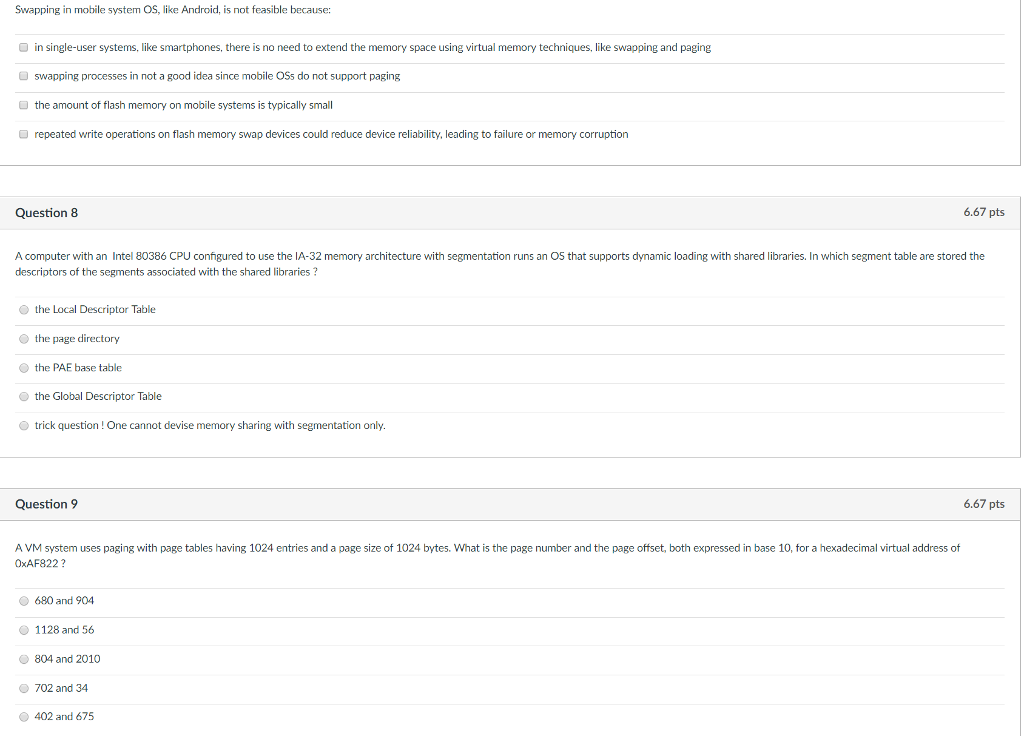
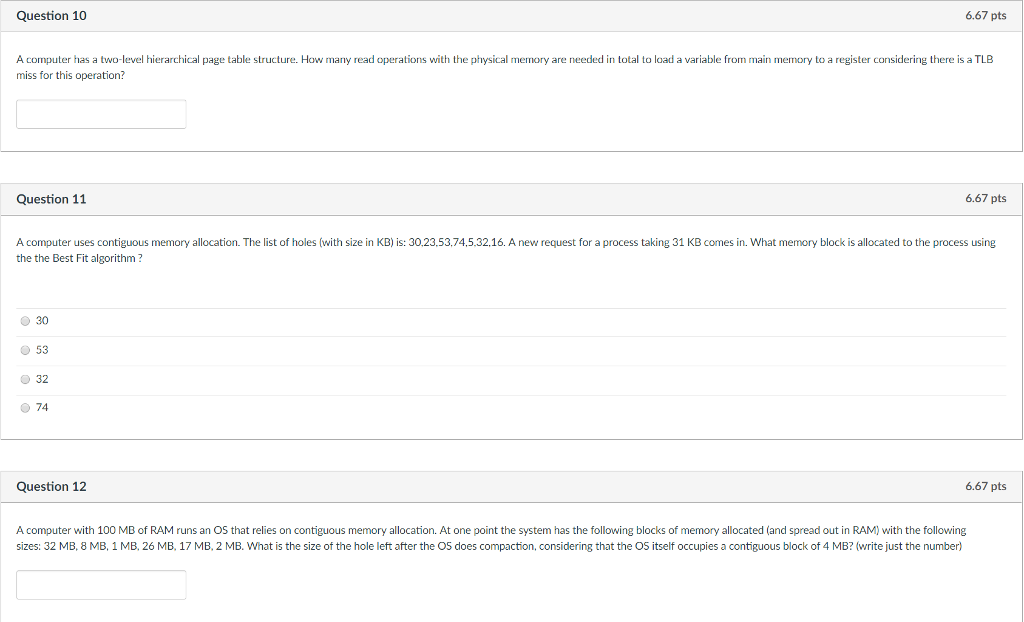
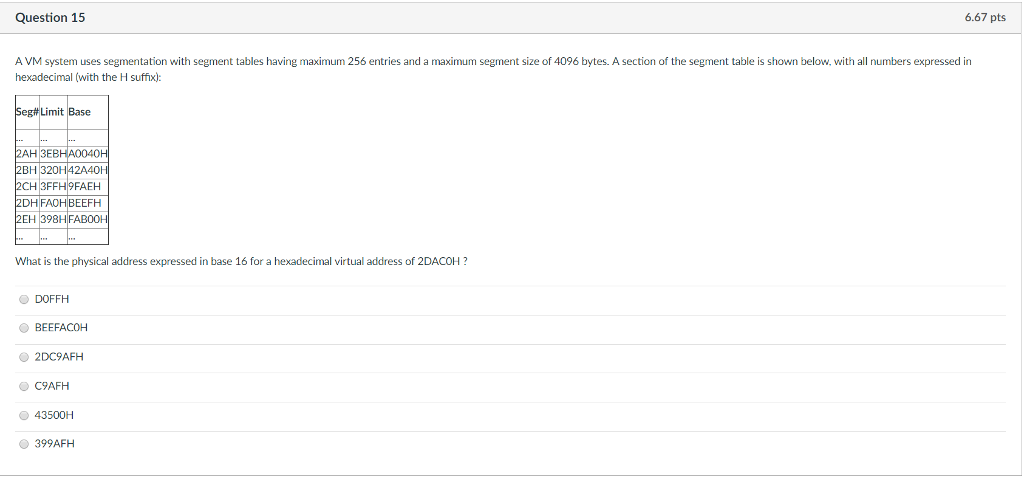
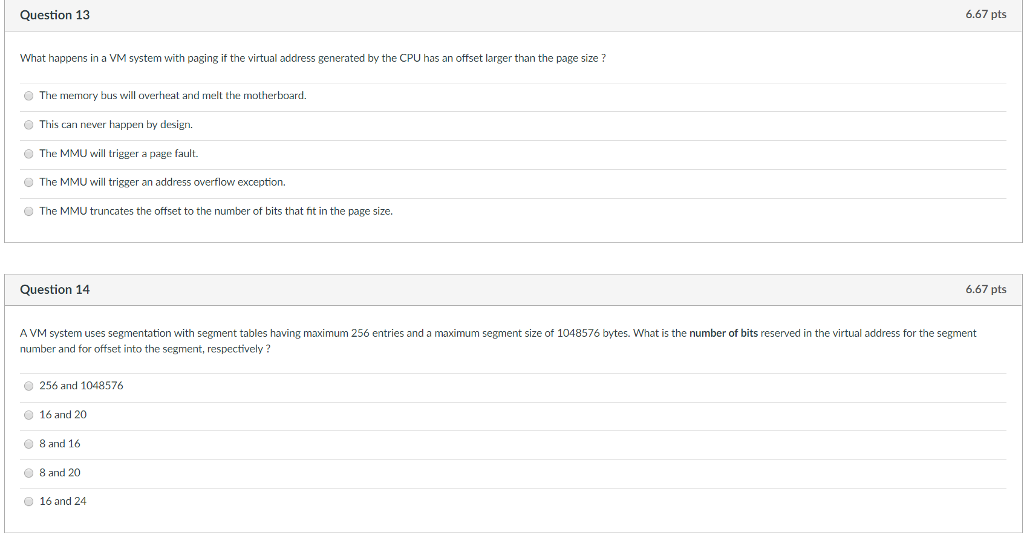
Swapping in mobile system OS, like Android, is not feasible because O in single-user systems, like smartphones, there is no need to extend the memory space using virtual memory techniques, like swapping and paging O swapping processes in not a good idea since mobile OSs do not support paging Othe amount of flash memory on mobile systems is typically small O repeated write operations on flash memory swap devices could reduce device reliability, leading to failure or memory corruption Question8 6.67 pts A computer with an Intel 80386 CPU configured to use the IA-32 memory architecture with segmentation runs an OS that supports dynamic loading with shared libraries. In which segment table are stored the descriptors of the segments associated with the shared libraries? the Local Descriptor Table the page directory the PAE base table the Global Descriptor Table trick question! One cannot devise memory sharing with segmentation only. ( Question 9 6.67 pts A VM system uses paging with page tables having 1024 entries and a page size of 1024 bytes. What is the page number and the page offset, both expressed in base 10, for a hexadecimal virtual address of 0xAF822? 680 and 904 1128 and 56 804 and 2010 702 and 34 402 and 675
Step by Step Solution
There are 3 Steps involved in it
Lets go through each of the questions Question 7 Swapping in mobile system OS like Android is not feasible because The correct answer is Repeated writ... View full answer

Get step-by-step solutions from verified subject matter experts
 Study Help