







Question: Hey Chegg, I could really use your assitance with a case study. Unfortunately, I was not able to attach the case study as one file
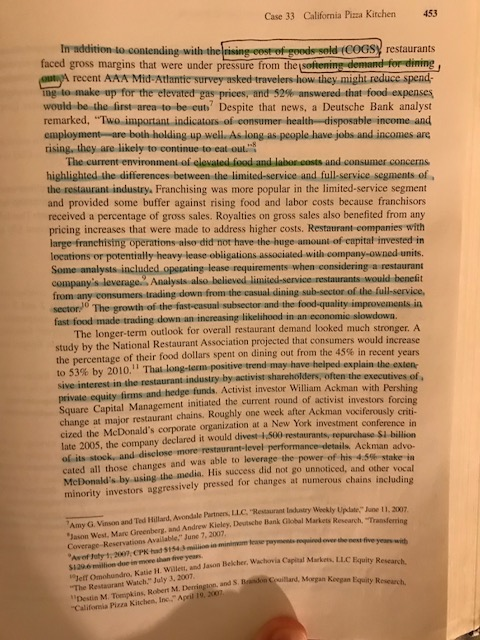
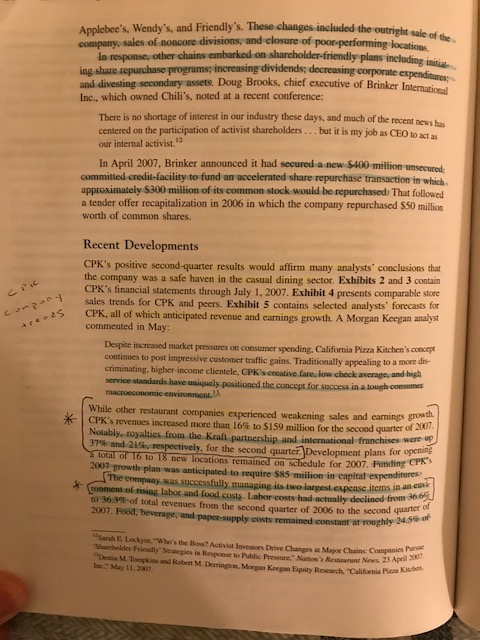
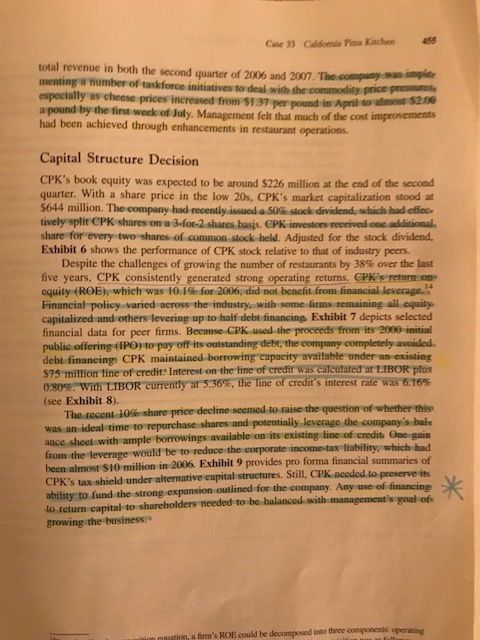
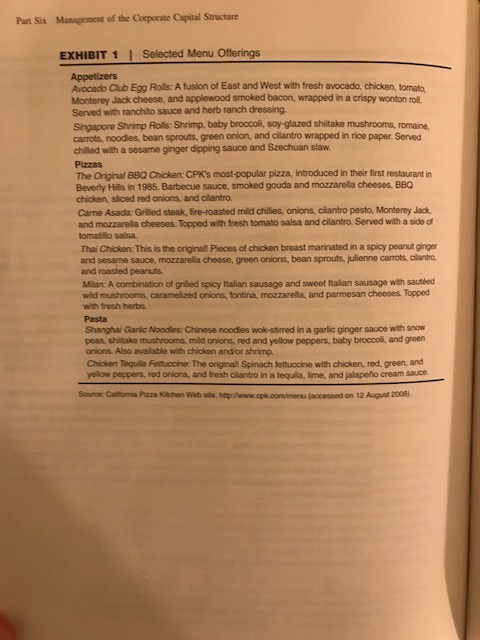
Hey Chegg, I could really use your assitance with a case study. Unfortunately, I was not able to attach the case study as one file because I was not provided with an online document that I can download. Instead, I had to send the case study as images that I took from the textbook. I apologize for the many images that was sent. But, if you can bear with me, I would really appreciate it. Hope that is ok. Below is the images sent and the question that I need assistance on.
Question:
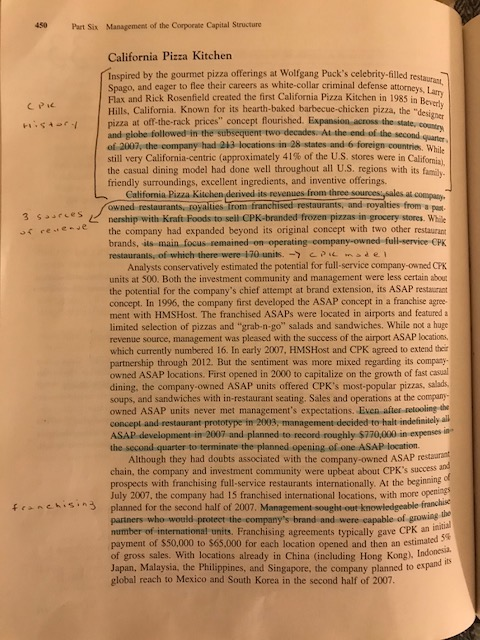
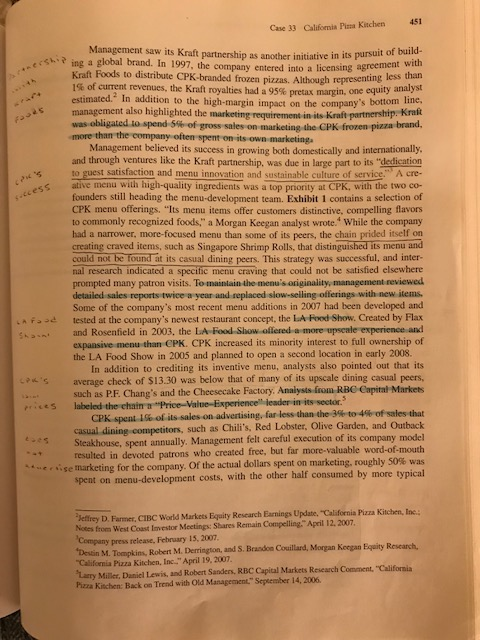
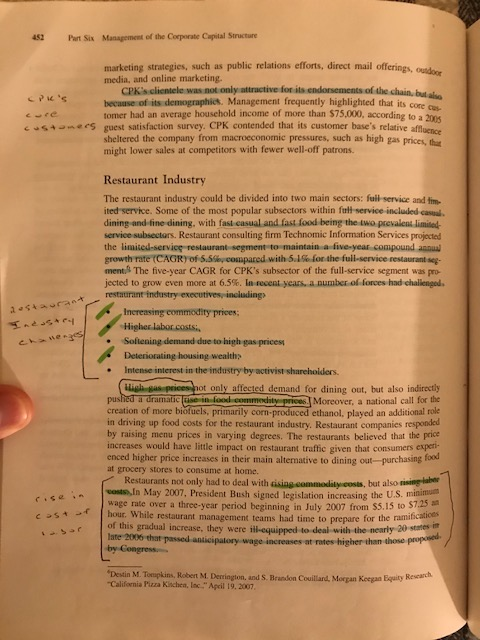
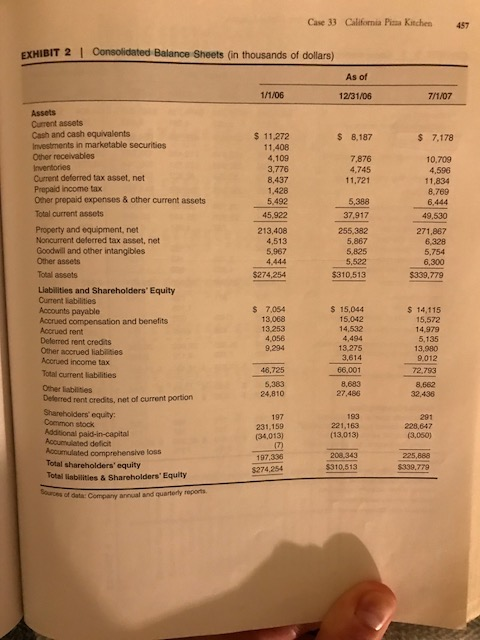
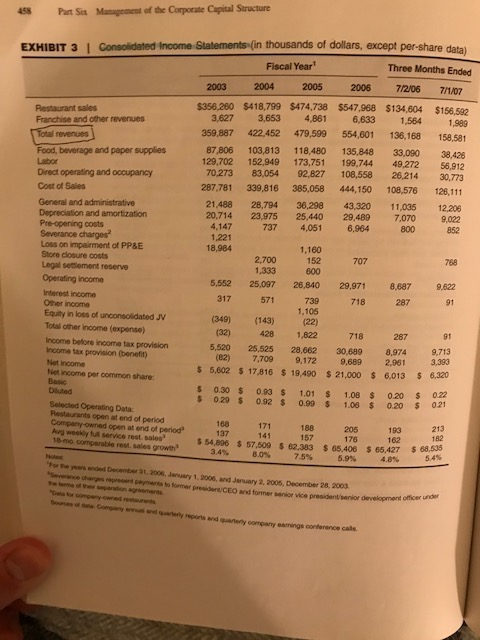
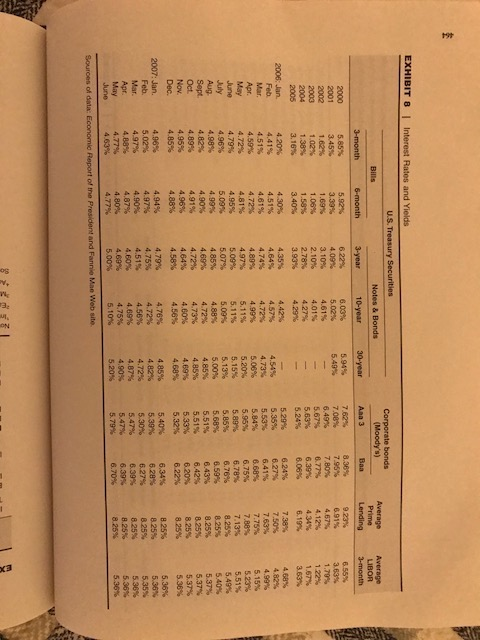
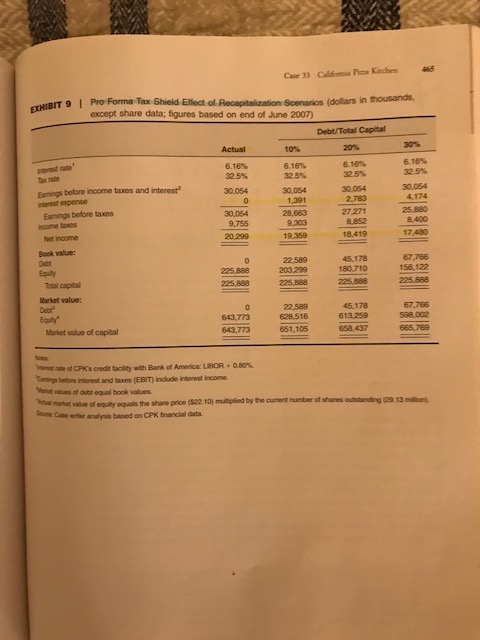
Once you have read the information provided in the case study and looked at the financial statements, I need assistance highlighting specific data points and trends in the company. The more data points and trends you provide, the better. The more information or explanation you provide, it will help me to see if I am on the right track. Really could use any Chegg representative's assitance. Thank you.
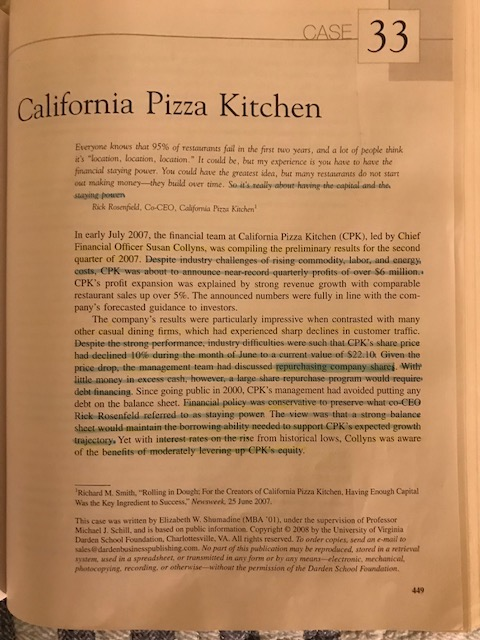
CASE 33 California Pizza Kitchen Everyone knous that 95% of restaan nts fal in the first tuo years, and a lot of people think it's "location, loxcation, location. It comld be, bout my experience is you have to have fnancial staying power. You could have the greatest idea, but many restauerants do not start out making money they buald over time. So it's sealy about having the capital and the syin powen Rick Rosenfield, Co-CEO, Calkfomia Pizos Kitchen In early July 2007, the financial team at California Pizza Kitchen (CPK), led by Chief Financial Officer Susan Collyns, was compiling the preliminary results for the second quarter of 2007. Despite industry chalenges of rising commodity, labor, and energy costs, CPK was about to announce near-record quarterly profits of over S6 million. CPK's profit expansion was explained by strong revenue growth with comparable restaurant sales up over 5%. The announced numbers were fully in line with the com- pany's forecasted guidance to investors The company's results were particularly impressive when contrasted with many other casual dining firms, which had experienced sharp declines in customer traffic. Despite the strong performance, industry difficulties were such thai CPK's share price had declined 10% during the month of June toa current value of S2210 Given the price drop. the management team had discussed repurchasing company sharei. With debt financing. Since going public in 2000, CPK's management had avoided putting any debt on the balance sheet. Financial policy was conservative to preserve what co-CEO Rick Rosenfeld referred to as staying powen The view was that a strong balance shect would maintain the borrowing ability needed to support CPK's expected growtih trajectory. Yet with interest-rates on the rise from historical lows, Collyns was aware of the benefits of moderately levering up CPK's equity Richard M. Smith, "Rolling in Dough: For the Creators of California Pizza Kitchen, Having Enough Capial Was the Key Ingredient to Saccess, Newsnweek, 25 June 2007. This case was written by Elizabeth W, Shumadine (MBA "01), under the supervision of Professor Michael J. Schill, and is based on public information Copyright 0 2008 by the University of Virginia Darden School Foundation, Charlottesville, VA. All rights reserved. To onder copics, send on e-mail to sales@dardenbusinesspublishing.com. No part of this pabilcution may be reproduced, stored in a retrieval ystem, used in a spreadsheet, or transmisted in any forsm or by any means-electronic, mechanical photocepying, reconding, or otherwise-without the permission of the Danden School Foundation 449
Step by Step Solution
There are 3 Steps involved in it

Get step-by-step solutions from verified subject matter experts
 Study Help