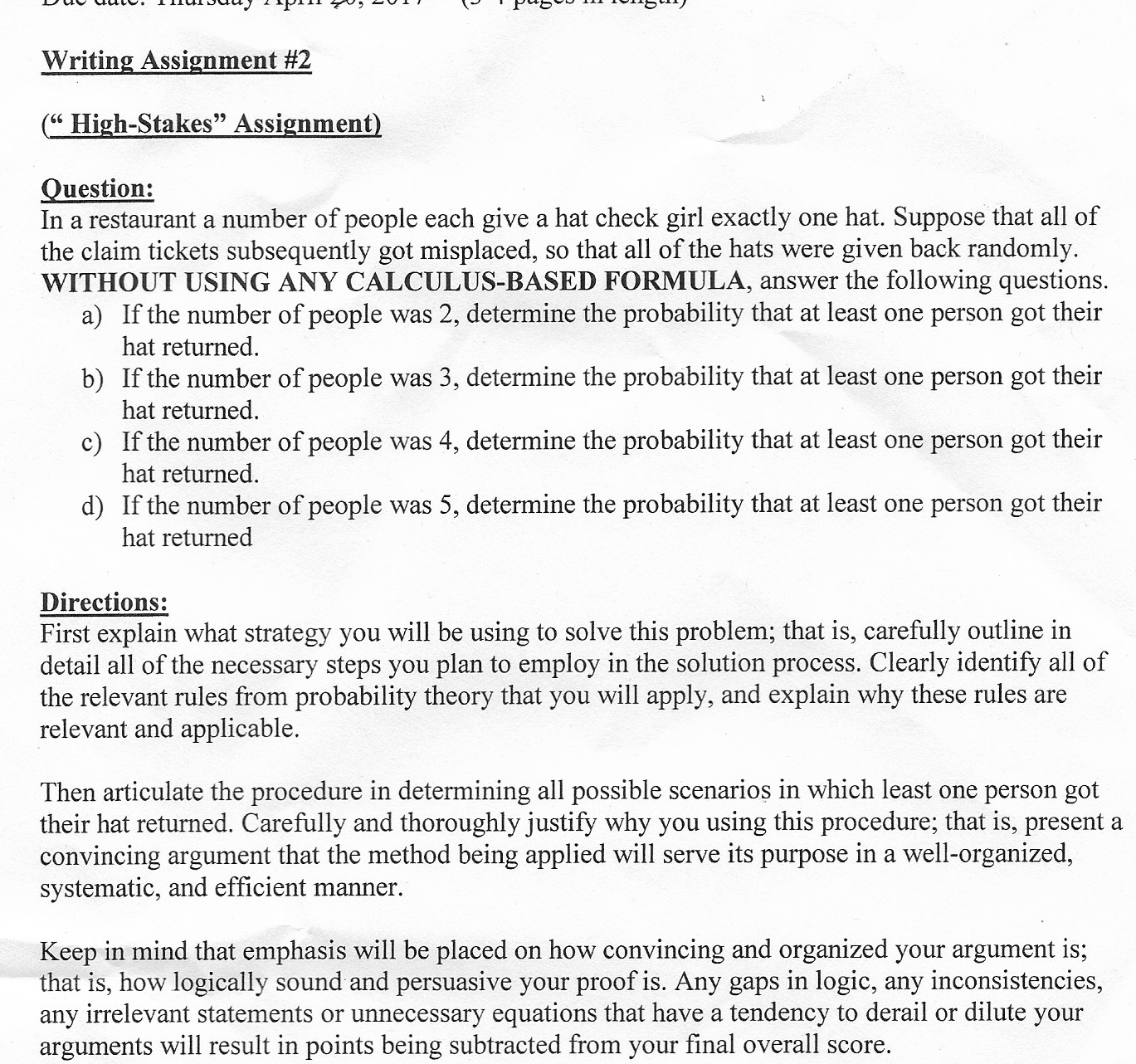
Question: Hi I have another statistics assignment. Can you help me out with that please? uuv uuuv. annunuou ' 3111.14 7v, Hun r u - Yubv
Hi
I have another statistics assignment.
Can you help me out with that please?
uuv uuuv. annunuou ' 3111.14 7v, Hun r \\u - Yubv\" 4n A'AADMA} Writing Assignment #2 (\" High-Stakes\" Assignment! Question: In a restaurant a number of people each give a hat check girl exactly one hat. Suppose that all of the claim tickets subsequently got misplaced, so that all of the hats were given back randomly. WITHOUT USING ANY CALCULUS-BASED FORMULA, answer the following questions. a) If the number of people was 2, determine the probability that at least one person got their hat returned. b) If the number of people was 3, determine the probability that at least one person got their hat returned. 0) If the number of people was 4, determine the probability that at least one person got their hat returned. _ d) If the number of people was 5, determine the probability that at least one person got their hat returned Directions: First explain what strategy you will be using to solve this problem; that is, carefully outline in detail all of the necessary steps you plan to employ in the solution process. Clearly identify all of the relevant rules from probability theory that you will apply, and explain why these rules are relevant and applicable. Then articulate the procedure in determining all possible scenarios in which least one person got their hat returned. Carefully and thoroughly justify why you using this procedure; that is, present a convincing argument that the method being applied will serve its purpose in a well-organized, systematic, and efcient manner. Keep in mind that emphasis will be placed on how convincing and organized your argument is; that is, how logically sound'and persuasive your proof is. Any gaps in logic, any inconsistencies, any irrelevant statements or unnecessary equations that have a tendency to derail or dilute your arguments will result in points being subtracted from your nal overall score. \f\f\f\fAssignment Part A If the total number of people who gave the girl a hat is two, it means that there are two possible ways of giving the Hat back. Since it was a single hat being given back to the girl, there is an equal chance of either giving each person the right hat or giving a person the wrong hat. Possible outcomes in this scenario are 2 and with an equal chance of everything happening, the probability that at least one of the persons get their hats returned is or 1 person out of two people. Hat/Person A B Person A AA BA Person B AB BB From the table, it is clear that to get the right combination of Hats being given back i.e. AA and BB is equal to a 50% chance of not getting the right combination of Hats. Probability = Part B If the number of people is three, determine the probability that at least one of the persons got their hats back When the number of people is equal to three, the total number of possible outcomes is equal to 3 * 2 * 1 = 6. Three represents the number of people, two the possible no. of outcomes of returning a hat and one represents the trial. The table below shows how the three people can receive their hats Hat A A A B B C C Hat B B C A C A B Hat C C B C A B A From the above table, there are six rows, four of which have at least one hat being given to the right person. This can be seen in ABC, ACB, BAC and CBA. These combinations have a hat correctly positioned in correspondence to the person who is to receive the hat. Probability of therefore having at least one hat being returned correctly is four out of possible six. Probability = 4/6 or 2/3 Part C Total No. of possible outcomes = 4 * 3 * 2 * 1 = 24 outcomes Hat A B B B C C C D D D Hat B A C D A D D A C C Hat C D D A D B A B A B Hat D C A C B A B C B A From the table, there are nine correct outcomes that give at least a hat to the correct person. 24 -9 = 15 Probability = 15/24 = 0.625 Part D If the total number f people is 5 determine the probability that at least one got their hat back. The total number of outcomes = 5*4 x 3 x 2 x 1 = 120 outcomes. The table gives the different possibilities Hat A A A A A A A A A A A A Hat B B B E E D D D C C C E Hat C C E C D B C E D D E C Hat D E D D B C B B E B D D Hat E D C B C E E C B E B B Number of orders from the table is equal to 11 The table shows the output for hat A of which if we add all the possible outcomes we get a total of 120 possible outcomes. By addition, we get the no. of people who did not get their hat back as 44. 76 people who get their hat back can now be used to find the Probability of at least a single person receiving their hat back Probability = 76/120 = 0.63 \f\f\f\fAssignment Part A If the total number of people who gave the girl a hat is two, it means that there are two possible ways of giving the Hat back. Since it was a single hat being given back to the girl, there is an equal chance of either giving each person the right hat or giving a person the wrong hat. Possible outcomes in this scenario are 2 and with an equal chance of everything happening, the probability that at least one of the persons get their hats returned is or 1 person out of two people. Hat/Person A B Person A AA BA Person B AB BB From the table, it is clear that to get the right combination of Hats being given back i.e. AA and BB is equal to a 50% chance of not getting the right combination of Hats. Probability = Part B If the number of people is three, determine the probability that at least one of the persons got their hats back When the number of people is equal to three, the total number of possible outcomes is equal to 3 * 2 * 1 = 6. Three represents the number of people, two the possible no. of outcomes of returning a hat and one represents the trial. The table below shows how the three people can receive their hats Hat A A A B B C C Hat B B C A C A B Hat C C B C A B A From the above table, there are six rows, four of which have at least one hat being given to the right person. This can be seen in ABC, ACB, BAC and CBA. These combinations have a hat correctly positioned in correspondence to the person who is to receive the hat. Probability of therefore having at least one hat being returned correctly is four out of possible six. Probability = 4/6 or 2/3 Part C Total No. of possible outcomes = 4 * 3 * 2 * 1 = 24 outcomes Hat A B B B C C C D D D Hat B A C D A D D A C C Hat C D D A D B A B A B Hat D C A C B A B C B A From the table, there are nine correct outcomes that give at least a hat to the correct person. 24 -9 = 15 Probability = 15/24 = 0.625 Part D If the total number f people is 5 determine the probability that at least one got their hat back. The total number of outcomes = 5*4 x 3 x 2 x 1 = 120 outcomes. The table gives the different possibilities Hat A A A A A A A A A A A A Hat B B B E E D D D C C C E Hat C C E C D B C E D D E C Hat D E D D B C B B E B D D Hat E D C B C E E C B E B B Hat A B B B B B B B B B B B Hat B A C D E A C D E A C D Hat C C D E A C E A C D A C Hat D D E A C E D C D C E A Hat E E A C D D A E A E D E a C C C C B A A B B C B B A D D D E D A E E D E E C C C C C C C D D E E A B D A B A B E E E B A B A B A A E E D D D D B A D D D D D D D D D D D B A A A C C C C E E E E C E E B A E E B A A B B D C B E E A B E B C C A E B C C B B A A C B A C A E E E E E E E E E E E B A A A C C C C D D D D C B D D A B D D A A B B D C C B B A A B B C A C E D B C D D B A C B C A number of orders from the table is equal to 11 The table shows the output for hat A of which if we add all the possible outcomes we get a total of 120 possible outcomes. By addition, we get the no. of people who did not get their hat back as 44. 76 people who get their hat back can now be used to find the Probability of at least a single person receiving their hat back Probability = 76/120 = 0.63 \f\f\f\fAssignment Part A If the total number of people who gave the girl a hat is two, it means that there are two possible ways of giving the Hat back. Since it was a single hat being given back to the girl, there is an equal chance of either giving each person the right hat or giving a person the wrong hat. Possible outcomes in this scenario are 2 and with an equal chance of everything happening, the probability that at least one of the persons get their hats returned is or 1 person out of two people. Hat/Person A B Person A AA BA Person B AB BB From the table, it is clear that to get the right combination of Hats being given back i.e. AA and BB is equal to a 50% chance of not getting the right combination of Hats. Probability = Part B If the number of people is three, determine the probability that at least one of the persons got their hats back When the number of people is equal to three, the total number of possible outcomes is equal to 3 * 2 * 1 = 6. Three represents the number of people, two the possible no. of outcomes of returning a hat and one represents the trial. The table below shows how the three people can receive their hats Hat A A A B B C C Hat B B C A C A B Hat C C B C A B A From the above table, there are six rows, four of which have at least one hat being given to the right person. This can be seen in ABC, ACB, BAC and CBA. These combinations have a hat correctly positioned in correspondence to the person who is to receive the hat. Probability of therefore having at least one hat being returned correctly is four out of possible six. Probability = 4/6 or 2/3 Part C Total No. of possible outcomes = 4 * 3 * 2 * 1 = 24 outcomes Hat A B B B C C C D D D Hat B A C D A D D A C C Hat C D D A D B A B A B Hat D C A C B A B C B A From the table, there are nine correct outcomes that give at least a hat to the correct person. 24 -9 = 15 Probability = 15/24 = 0.625 Part D If the total number f people is 5 determine the probability that at least one got their hat back. The total number of outcomes = 5*4 x 3 x 2 x 1 = 120 outcomes. The table gives the different possibilities Hat A A A A A A A A A A A A Hat B B B E E D D D C C C E Hat C C E C D B C E D D E C Hat D E D D B C B B E B D D Hat E D C B C E E C B E B B Number of orders from the table is equal to 11 The table shows the output for hat A of which if we add all the possible outcomes we get a total of 120 possible outcomes. By addition, we get the no. of people who did not get their hat back as 44. 76 people who get their hat back can now be used to find the Probability of at least a single person receiving their hat back Probability = 76/120 = 0.63 \f\f\f\fAssignment Part A If the total number of people who gave the girl a hat is two, it means that there are two possible ways of giving the Hat back. Since it was a single hat being given back to the girl, there is an equal chance of either giving each person the right hat or giving a person the wrong hat. Possible outcomes in this scenario are 2 and with an equal chance of everything happening, the probability that at least one of the persons get their hats returned is or 1 person out of two people. Hat/Person A B Person A AA BA Person B AB BB From the table, it is clear that to get the right combination of Hats being given back i.e. AA and BB is equal to a 50% chance of not getting the right combination of Hats. Probability = Part B If the number of people is three, determine the probability that at least one of the persons got their hats back When the number of people is equal to three, the total number of possible outcomes is equal to 3 * 2 * 1 = 6. Three represents the number of people, two the possible no. of outcomes of returning a hat and one represents the trial. The table below shows how the three people can receive their hats Hat A A A B B C C Hat B B C A C A B Hat C C B C A B A From the above table, there are six rows, four of which have at least one hat being given to the right person. This can be seen in ABC, ACB, BAC and CBA. These combinations have a hat correctly positioned in correspondence to the person who is to receive the hat. Probability of therefore having at least one hat being returned correctly is four out of possible six. Probability = 4/6 or 2/3 Part C Total No. of possible outcomes = 4 * 3 * 2 * 1 = 24 outcomes Hat A B B B C C C D D D Hat B A C D A D D A C C Hat C D D A D B A B A B Hat D C A C B A B C B A From the table, there are nine correct outcomes that give at least a hat to the correct person. 24 -9 = 15 Probability = 15/24 = 0.625 Part D If the total number f people is 5 determine the probability that at least one got their hat back. The total number of outcomes = 5*4 x 3 x 2 x 1 = 120 outcomes. The table gives the different possibilities Hat A A A A A A A A A A A A Hat B B B E E D D D C C C E Hat C C E C D B C E D D E C Hat D E D D B C B B E B D D Hat E D C B C E E C B E B B Hat A B B B B B B B B B B B Hat B A C D E A C D E A C D Hat C C D E A C E A C D A C Hat D D E A C E D C D C E A Hat E E A C D D A E A E D E a C C C C B A A B B C B B A D D D E D A E E D E E C C C C C C C D D E E A B D A B A B E E E B A B A B A A E E D D D D B A D D D D D D D D D D D B A A A C C C C E E E E C E E B A E E B A A B B D C B E E A B E B C C A E B C C B B A A C B A C A E E E E E E E E E E E B A A A C C C C D D D D C B D D A B D D A A B B D C C B B A A B B C A C E D B C D D B A C B C A number of orders from the table is equal to 11 The table shows the output for hat A of which if we add all the possible outcomes we get a total of 120 possible outcomes. By addition, we get the no. of people who did not get their hat back as 44. 76 people who get their hat back can now be used to find the Probability of at least a single person receiving their hat back Probability = 76/120 = 0.63









 Study Help