



Question: Hi, if given the following data: So to compute the new POHR: New total manufacturing OH cost = $2,475,000+300,000+45,000 = $ 2,820,000 New total direct
Hi, if given the following data:
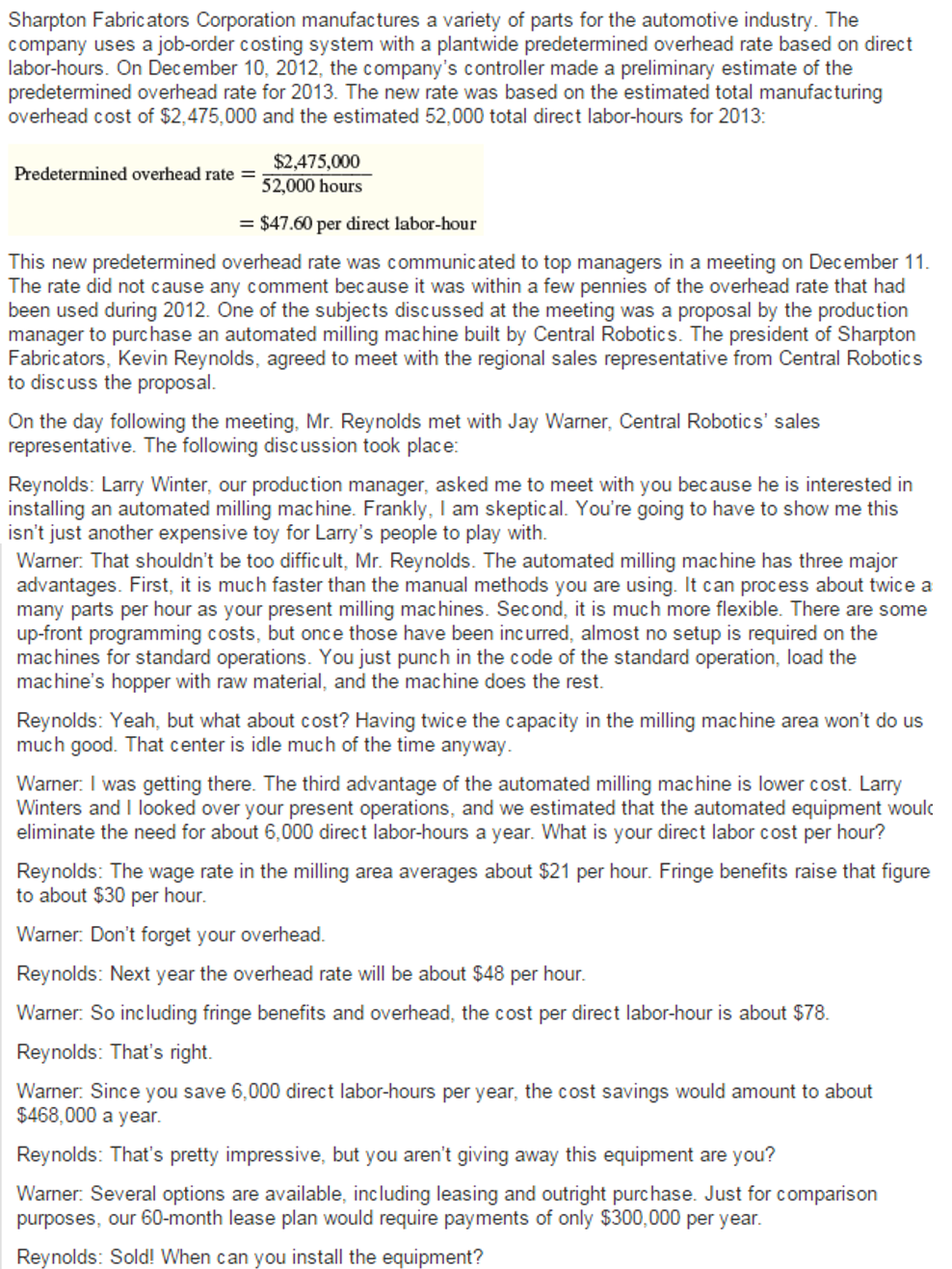
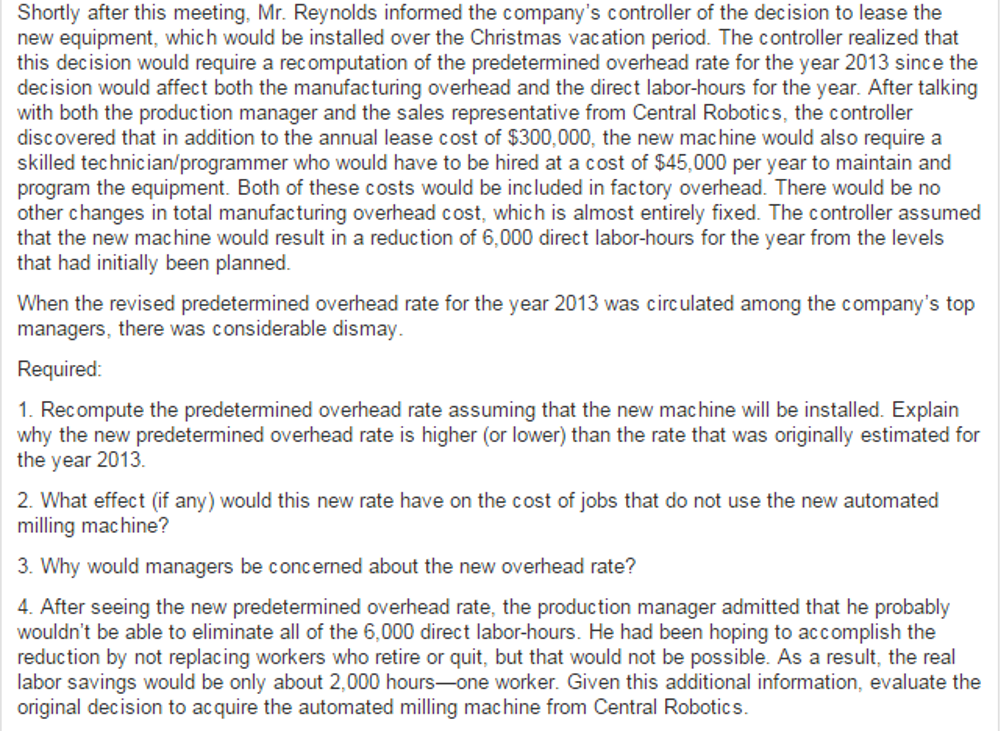
So to compute the new POHR:
| New total manufacturing OH cost = | $2,475,000+300,000+45,000 |
| = | $ 2,820,000 |
| New total direct labour hours = | 52,000 - 6,000 |
| = | 46,000 |
| Predetermined overhead rate = | Total MOH / Total DLh |
| = | 2,820,000/ 46,000 |
| = | 61.30 |
Is the above working correct?
Sharpton Fabricators Corporation manufactures a variety of parts for the automotive industry. The company uses a job-order costing system with a plantwide predetermined overhead rate based on direct labor-hours. On December 10, 2012, the company's controller made a preliminary estimate of the predetermined overhead rate for 2013. The new rate was based on the estimated total manufacturing overhead cost of $2,475,000 and the estimated 52,000 total direct labor-hours for 2013 $2,475,000 52,000 hours Predetermined overhead rate = = $47.60 per direct labor-hour This new predetermined overhead rate was communicated to top managers in a meeting on December 11 The rate did not cause any comment because it was within a few pennies of the overhead rate that had been used during 2012. One of the subjects discussed at the meeting was a proposal by the production manager to purchase an automated milling machine built by Central Robotics. The president of Sharpton Fabricators, Kevin Reynolds, agreed to meet with the regional sales representative from Central Robotics to discuss the proposal On the day following the meeting, Mr. Reynolds met with Jay Warner, Central Robotics' sales representative. The following discussion took place Reynolds: Larry Winter, our production manager, asked me to meet with you because he is interested in installing an automated mlling machine. Frankly, I am skeptical. You're going to have to show me this isn't just another expensive toy for Larry's people to play with Warner: That shouldn't be too difficult, Mr. Reynolds. The automated milling machine has three major advantages. First, it is much faster than the manual methods you are using. It can process about twice a many parts per hour as your present milling machines. Second, it is much more flexible. There are some up-front programming costs, but once those have been incurred, almost no setup is required on the machines for standard operations. You just punch in the code of the standard operation, load the machine's hopper with raw material, and the machine does the rest Reynolds: Yeah, but what about cost? Having twice the capacity in the milling machine area won't do us much good. That center is idle much of the time anyway Warner: I was getting there. The third advantage of the automated milling machine is lower cost. Larry Winters andI looked over your present operations, and we estimated that the automated equipment woul eliminate the need for about 6,000 direct labor-hours a year. What is your direct labor cost per hour? Reynolds: The wage rate in the milling area averages about $21 per hour. Fringe benefits raise that figure to about $30 per hour. Warner: Don't forget your overhead Reynolds: Next year the overhead rate will be about $48 per hour Warner: So including fringe benefits and overhead, the cost per direct labor-hour is about $78. Reynolds: That's right Warner: Since you save 6,000 direct labor-hours per year, the cost savings would amount to about $468,000 a year. Reynolds: That's pretty impressive, but you aren't giving away this equipment are you? Warner: Several options are available, including leasing and outright purchase. Just for comparison purposes, our 60-month lease plan would require payments of only $300,000 per year Reynolds: Sold! When can you install the equipment
Step by Step Solution
There are 3 Steps involved in it

Get step-by-step solutions from verified subject matter experts