







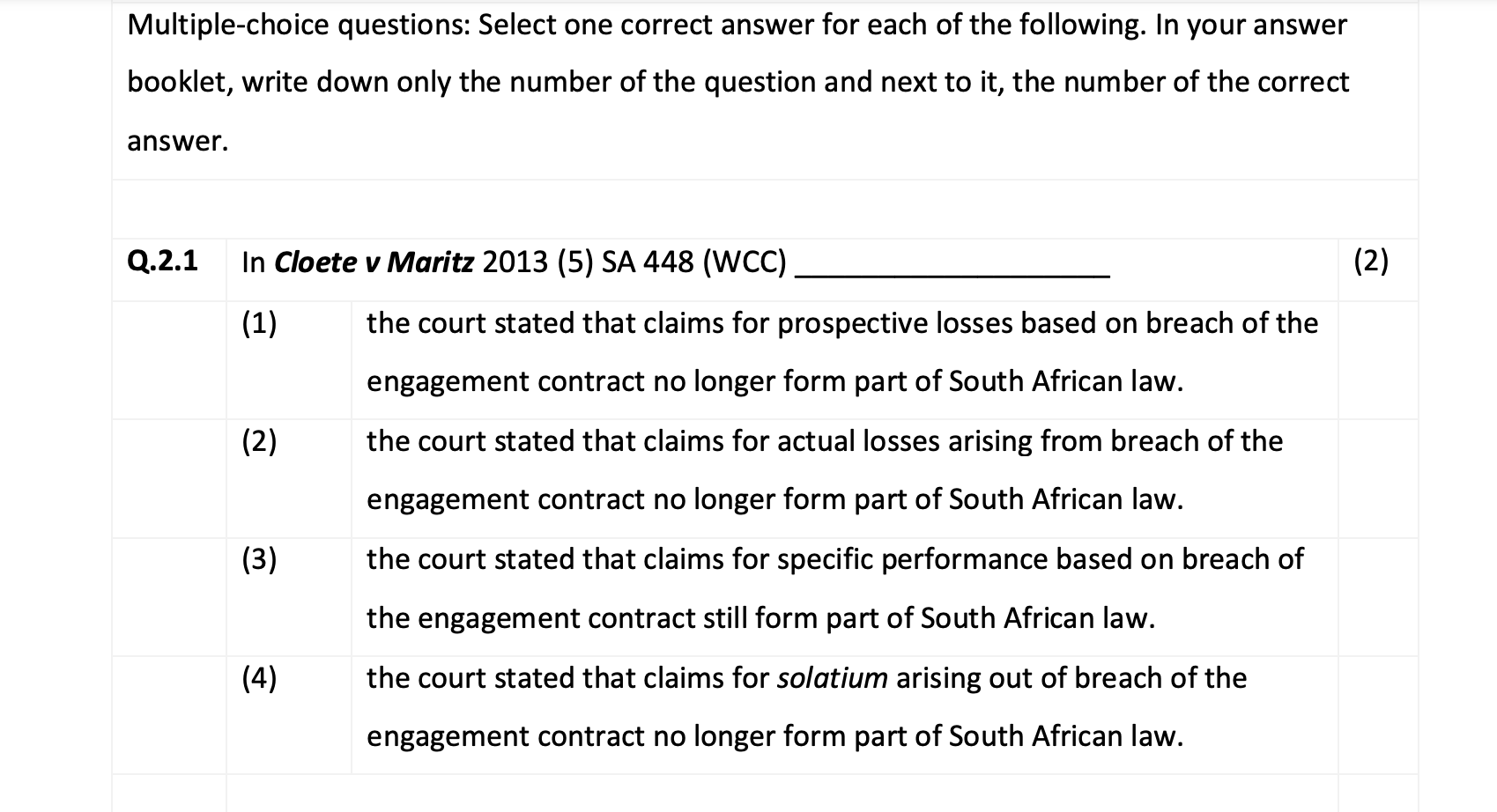
Question: HI please help me pick these are multiple choice Multiple-choice questions: Select one correct answer for each of the following. In your answer booklet, write
HI please help me pick these are multiple choice
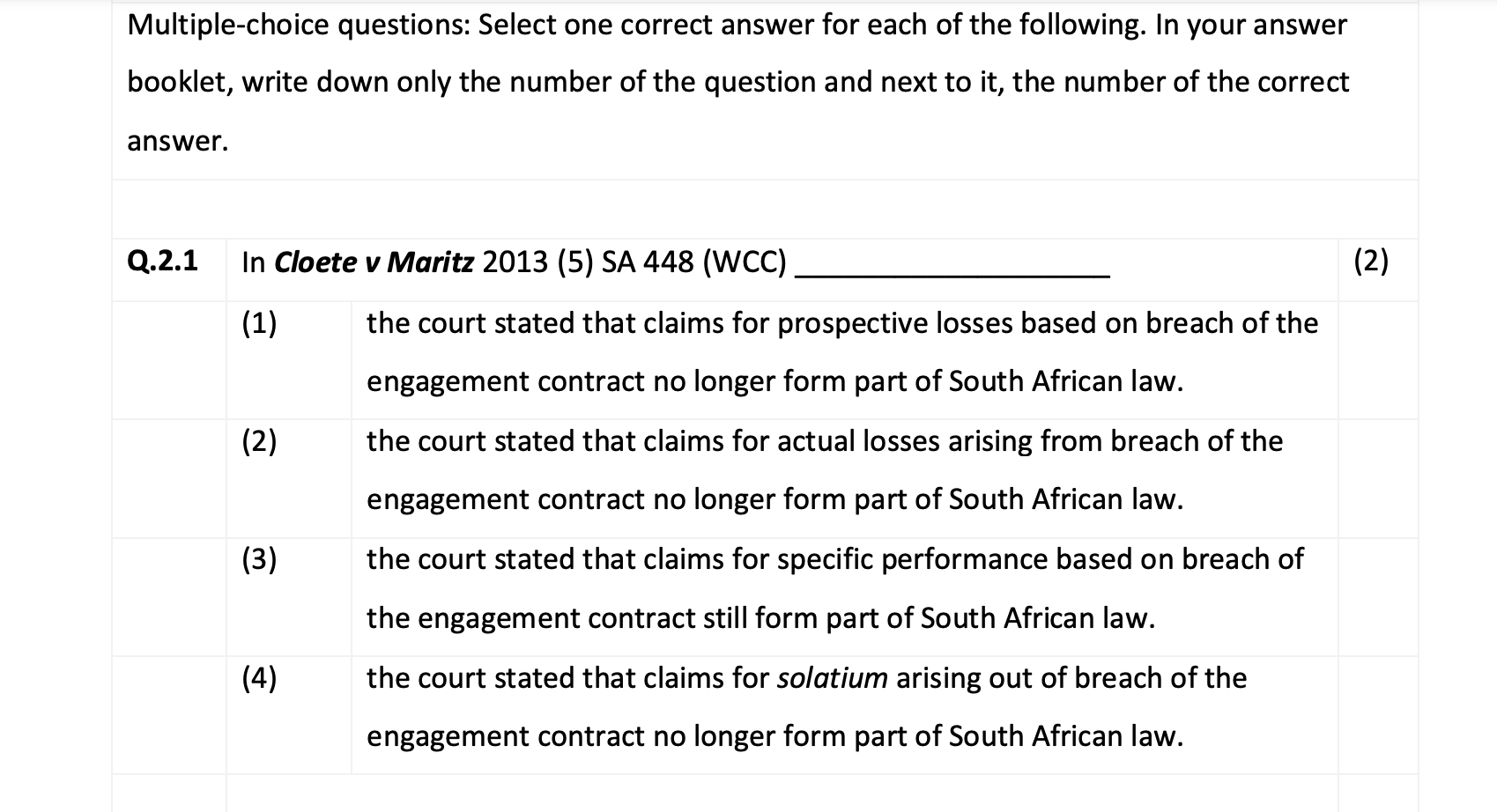
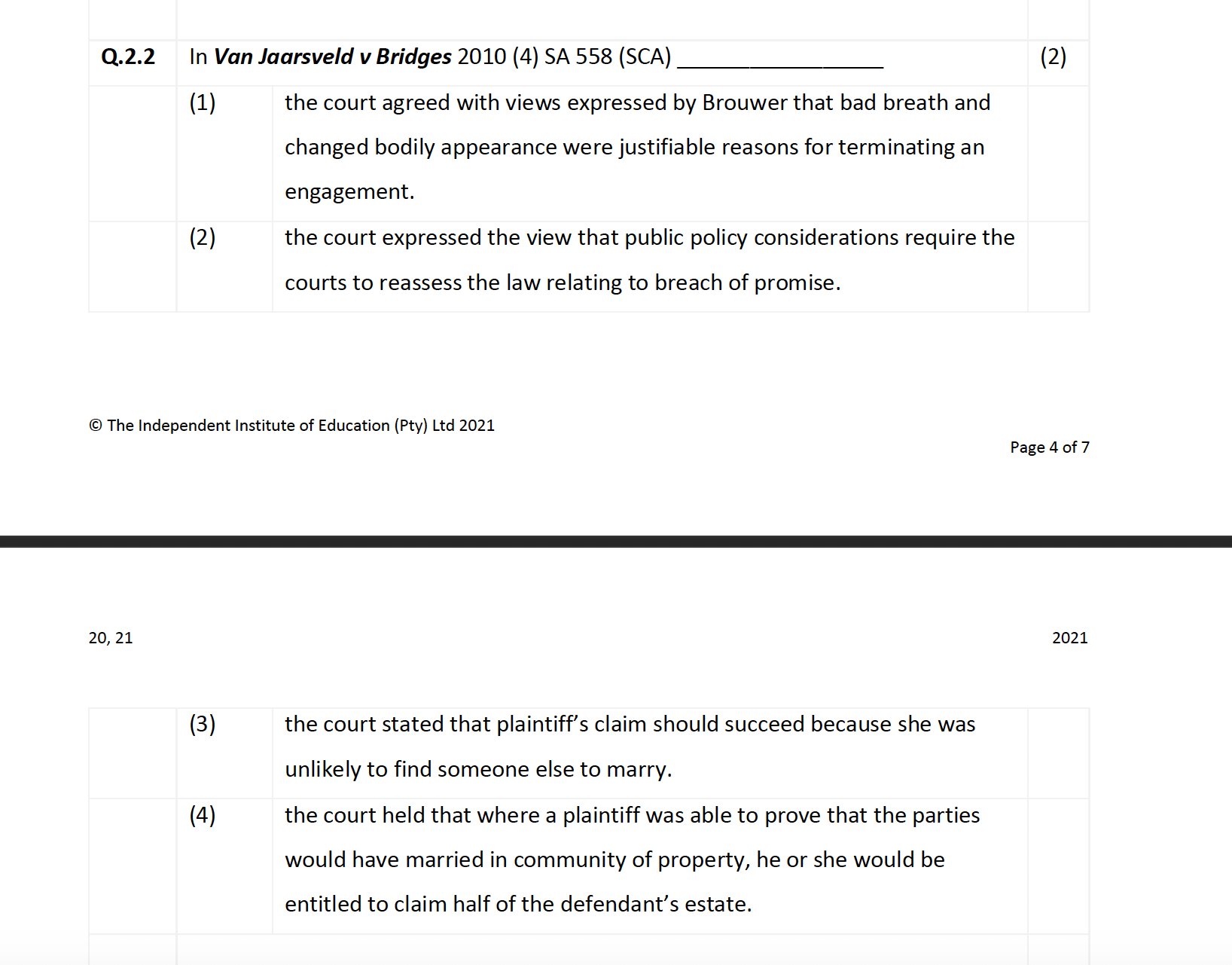
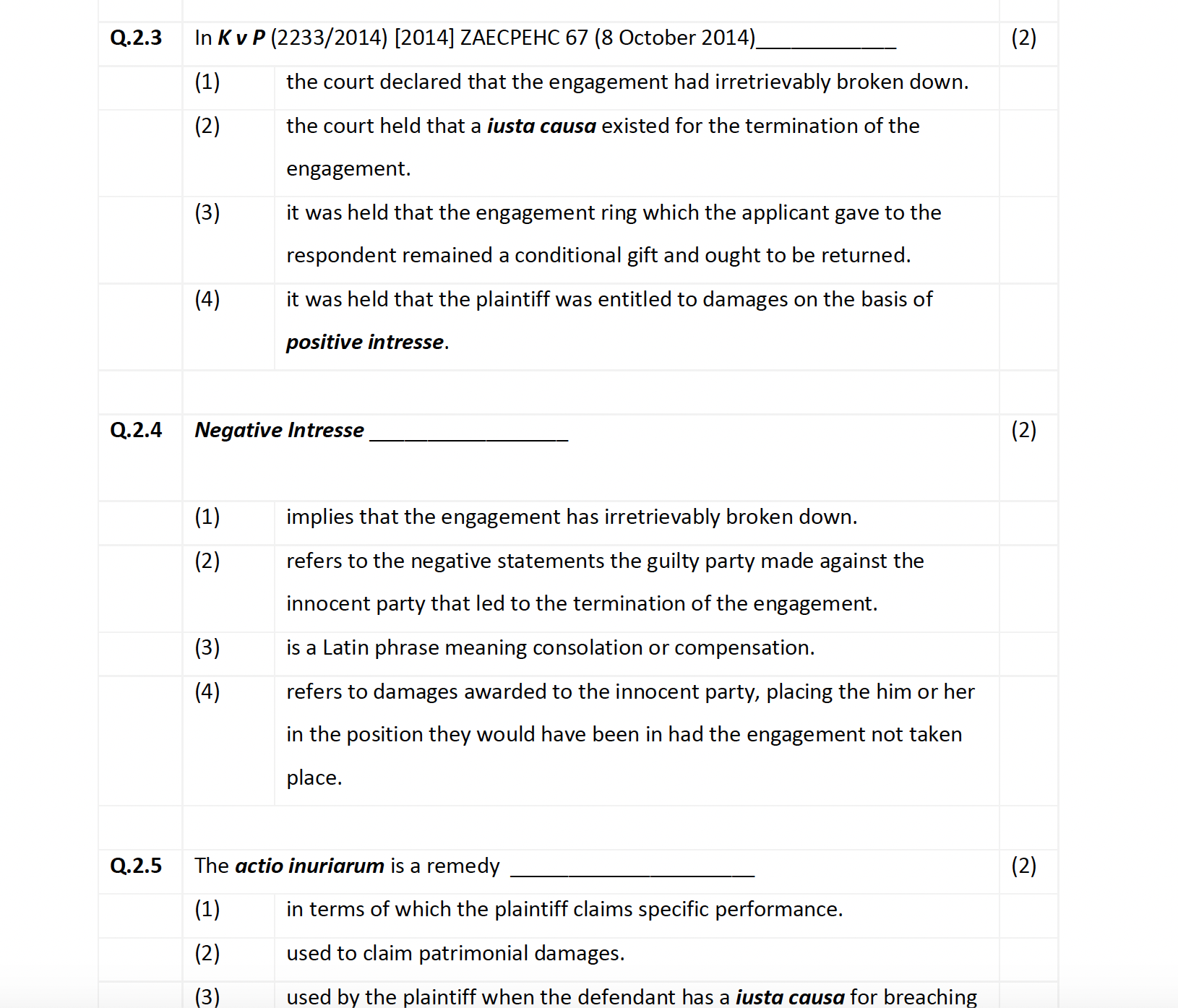
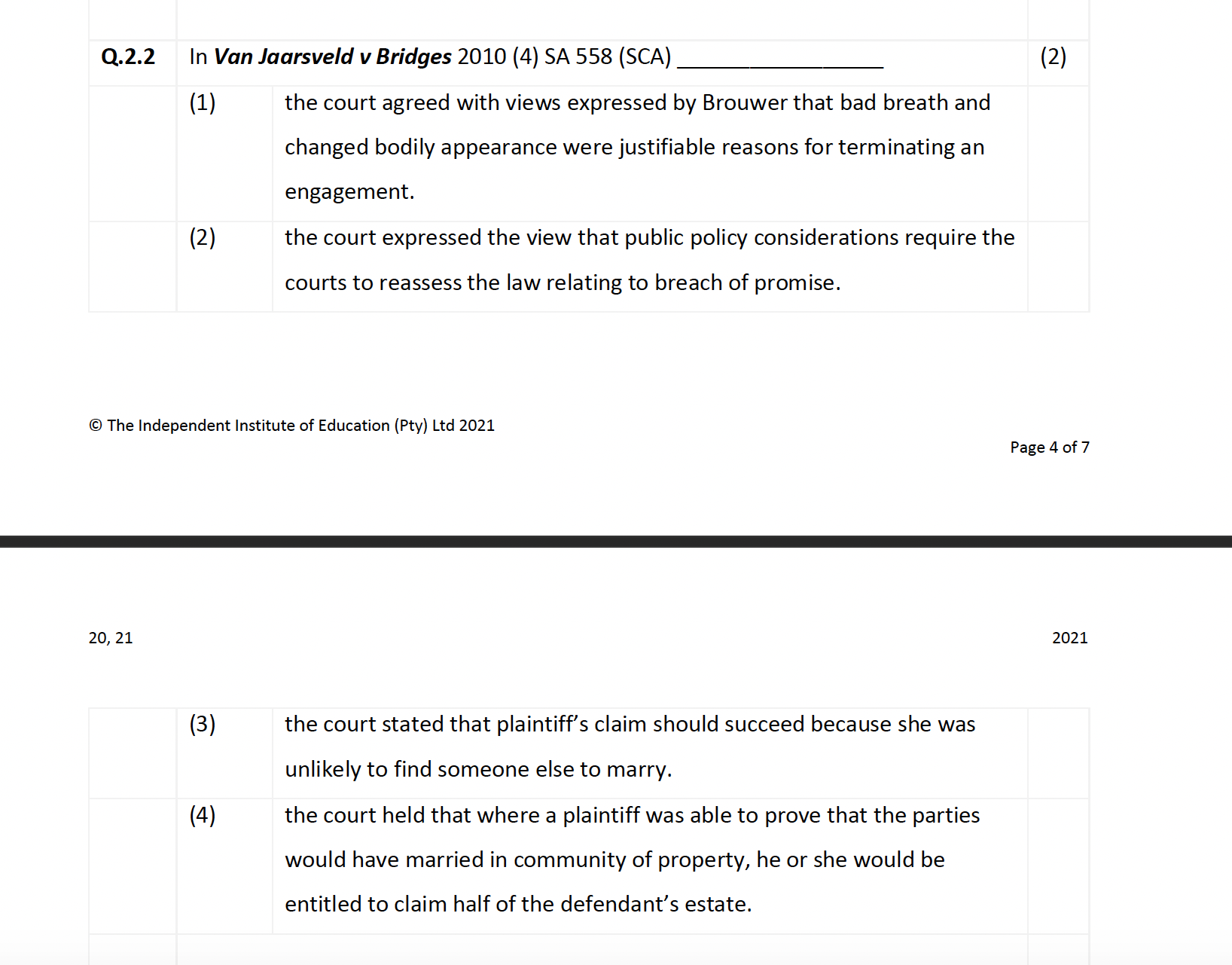
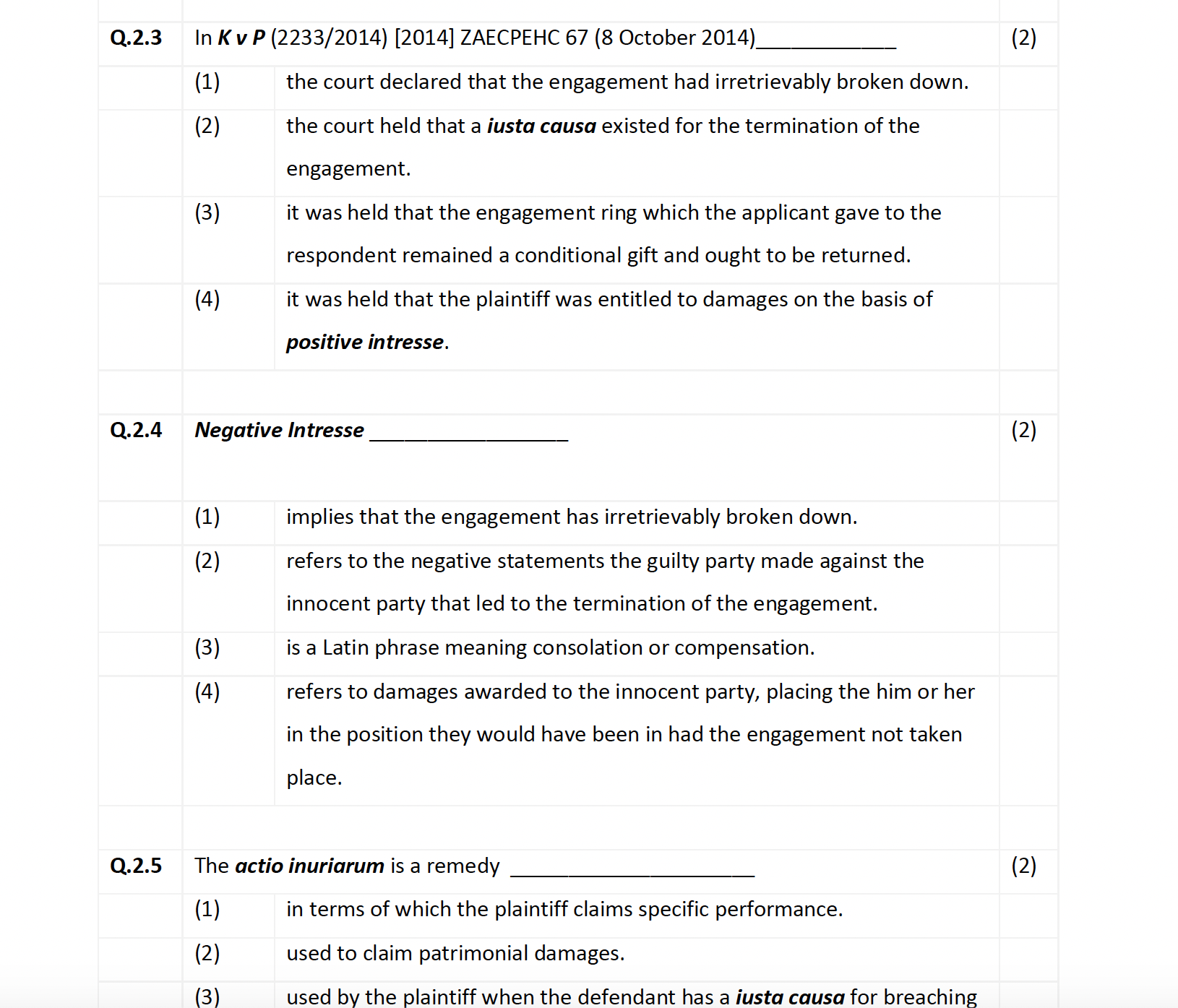
Multiple-choice questions: Select one correct answer for each of the following. In your answer booklet, write down only the number of the question and next to it, the number of the correct answer. (1.2.1 In Cloete v Moritz 2013 (5) SA 448 (WCC) (2) (1) the court stated that claims for prospective losses based on breach of the engagement contract no longer form part of South African law. (2) the court stated that claims for actual losses arising from breach of the engagement contract no longer form part of South African law. (3) the court stated that claims for specific performance based on breach of the engagement contract still form part of South African law. (4) the court stated that claims for solarium arising out of breach of the engagement contract no longer form part of South African law. Q.2.2 In Van Jaarsveld v Bridges 2010 (4) SA 558 (SCA) (2) (1) the court agreed with views expressed by Brouwer that bad breath and changed bodily appearance were justifiable reasons for terminating an engagement. (2) the court expressed the View that public policy considerations require the courts to reassess the law relating to breach of promise. The Independent Institute of Education (Pty) Ltd 2021 Page 4 of 7 20, 21 2021 (3) the court stated that plaintiff's claim should succeed because she was unlikely to find someone else to marry. (4) the court held that where a plaintiff was able to prove that the parties would have married in community of property, he or she would be entitled to claim half of the defendant's estate. (1.2.3 (1.2.4 (1.2.5 In K v P (2233/2014) [2014] ZAECPEHC 57 (8 October 2014) (2) (1) (2) (3) (4) the court declared that the engagement had irretrievably broken down. the court held that a iusta causa existed for the termination of the engagement. it was held that the engagement ring which the applicant gave to the respondent remained a conditional gift and ought to be returned. it was held that the plaintiff was entitled to damages on the basis of positive intresse. Negative intresse (2) (1) (2) (3) (4) implies that the engagement has irretrievably broken down. refers to the negative statements the guilty party made against the innocent party that led to the termination of the engagement. is a Latin phrase meaning consolation or compensation. refers to damages awarded to the innocent party, placing the him or her in the position they would have been in had the engagement not taken place. The actio inuriarum is a remedy (2) (1) (2) (3) in terms of which the plaintiff claims specific performance. used to claim patrimonial damages. used by the plaintiff when the defendant has a iusta causa for breaching
Step by Step Solution
There are 3 Steps involved in it

Get step-by-step solutions from verified subject matter experts
 Study Help