







Question: Homework # 17 - Charging by Induction Handout Problems: 1. A negatively charged rod is brought into contact with a neutral electroscope. (a) What causes
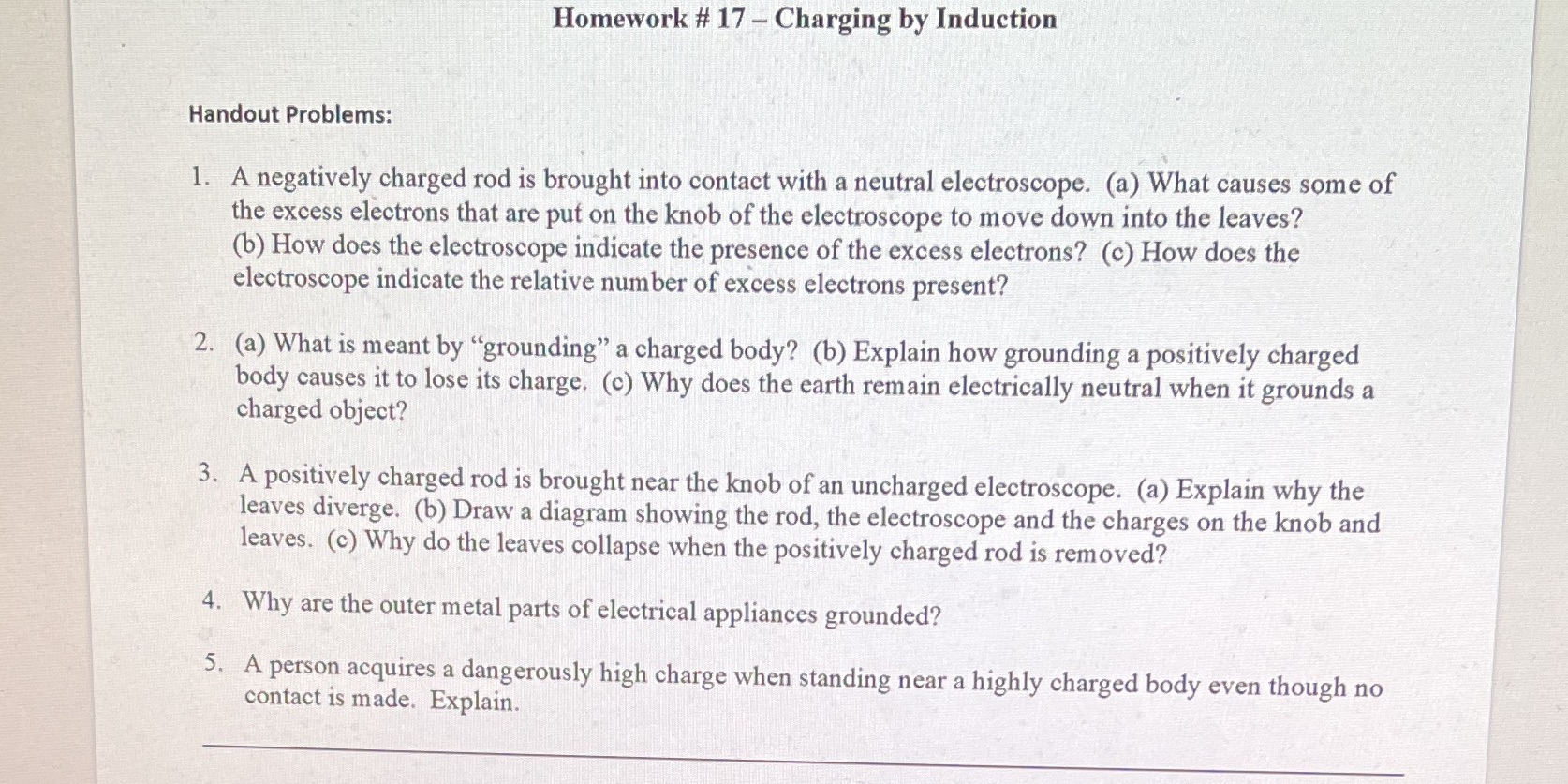
Homework # 17 - Charging by Induction Handout Problems: 1. A negatively charged rod is brought into contact with a neutral electroscope. (a) What causes some of the excess electrons that are put on the knob of the electroscope to move down into the leaves? (b) How does the electroscope indicate the presence of the excess electrons? (c) How does the electroscope indicate the relative number of excess electrons present? 2. (a) What is meant by "grounding" a charged body? (b) Explain how grounding a positively charged body causes it to lose its charge. (c) Why does the earth remain electrically neutral when it grounds a charged object? 3. A positively charged rod is brought near the knob of an uncharged electroscope. (a) Explain why the leaves diverge. (b) Draw a diagram showing the rod, the electroscope and the charges on the knob and leaves. (c) Why do the leaves collapse when the positively charged rod is removed? 4. Why are the outer metal parts of electrical appliances grounded? 5. A person acquires a dangerously high charge when standing near a highly charged body even though no contact is made. Explain
Step by Step Solution
There are 3 Steps involved in it

Get step-by-step solutions from verified subject matter experts
 Study Help