







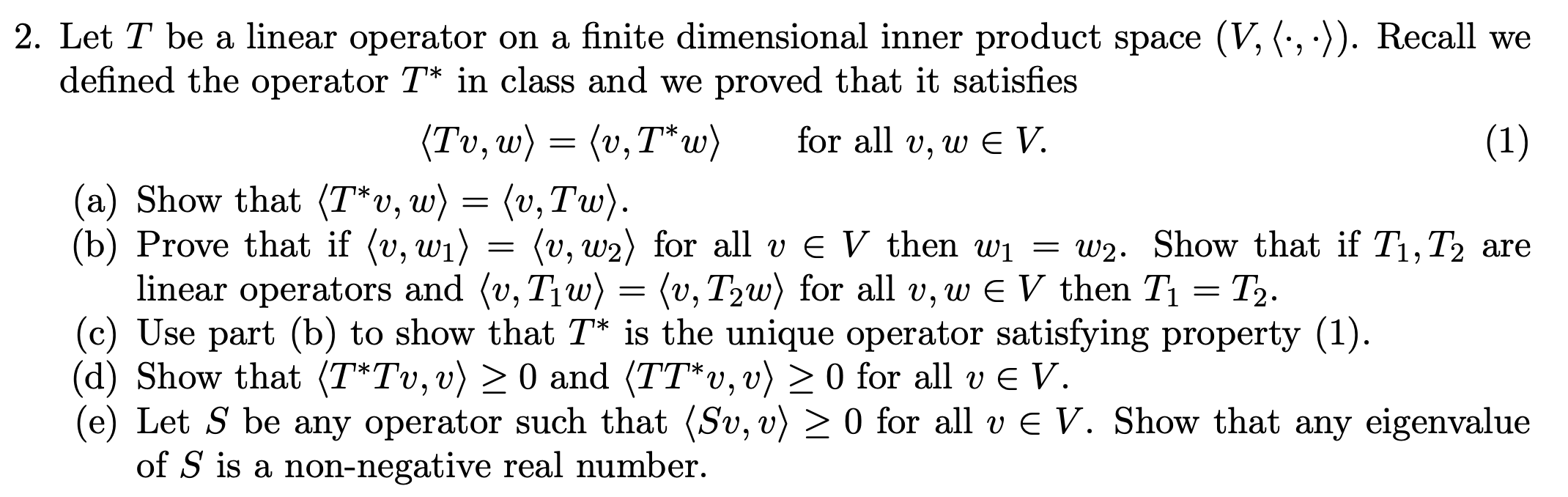
Question: How do I solve for problem 2(e)? I can prove that any eigenvalue of S is non-negative, but how do I prove it is also
How do I solve for problem 2(e)? I can prove that any eigenvalue of S is non-negative, but how do I prove it is also not complex number?
Please be clear in handwriting. I will rate your answer as "helpful". Thanks!
Step by Step Solution
There are 3 Steps involved in it
1 Expert Approved Answer
Step: 1 Unlock

Question Has Been Solved by an Expert!
Get step-by-step solutions from verified subject matter experts
Step: 2 Unlock
Step: 3 Unlock
 Study Help