



Question: How do I solve these problems? Questions What methods did we employ in this experiment? On each trial, you adjusted the size of an isolated
How do I solve these problems?
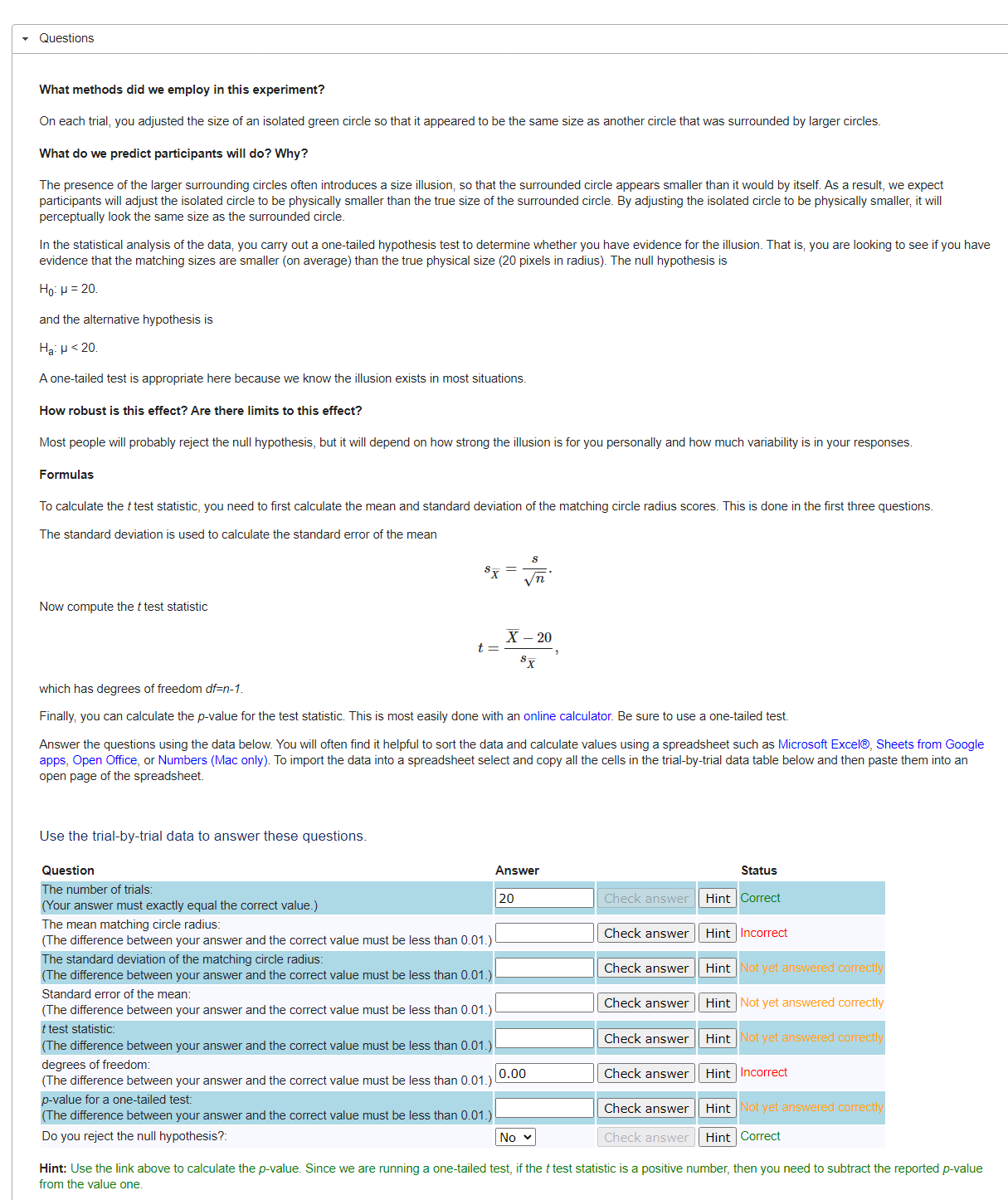
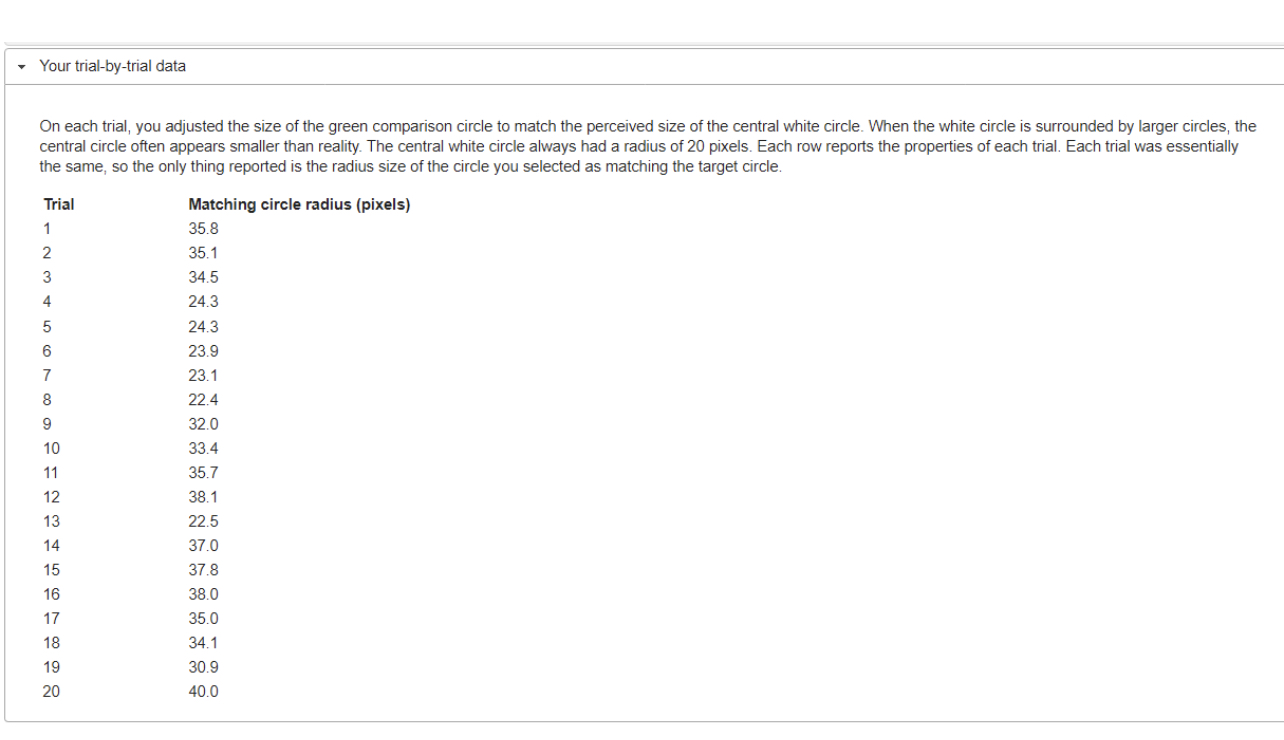
Questions What methods did we employ in this experiment? On each trial, you adjusted the size of an isolated green circle so that it appeared to be the same size as another circle that was surrounded by larger circles. What do we predict participants will do? Why? The presence of the larger surrounding circles often introduces a size illusion, so that the surrounded circle appears smaller than it would by itself. As a result, we expect participants will adjust the isolated circle to be physically smaller than the true size of the surrounded circle. By adjusting the isolated circle to be physically smaller, it will perceptually look the same size as the surrounded circle. In the statistical analysis of the data, you carry out a one-tailed hypothesis test to determine whether you have evidence for the illusion. That is, you are looking to see if you have evidence that the matching sizes are smaller (on average) than the true physical size (20 pixels in radius). The null hypothesis is Ho: H = 20. and the alternative hypothesis is Ha: H
Step by Step Solution
There are 3 Steps involved in it

Get step-by-step solutions from verified subject matter experts