Question: How do I solve these? Select the big-Oh characterization, in terms of n, for the following loop. s=0fori=1ton2doforj=1toidos=s+i O(n2) O(nlogn) O(n4) O(n3) O(2n) O(1) O(n)

How do I solve these?
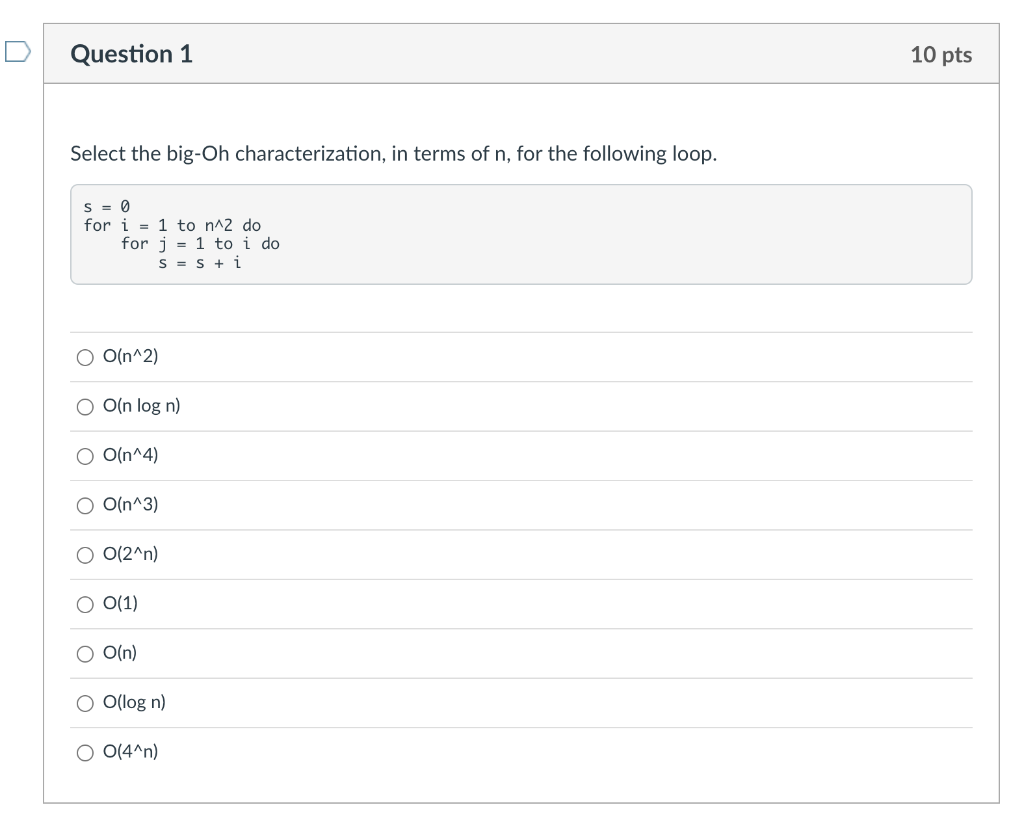
How do I solve these? Select the big-Oh characterization, in terms of

n, for the following loop. s=0fori=1ton2doforj=1toidos=s+i O(n2) O(nlogn) O(n4) O(n3) O(2n) O(1)

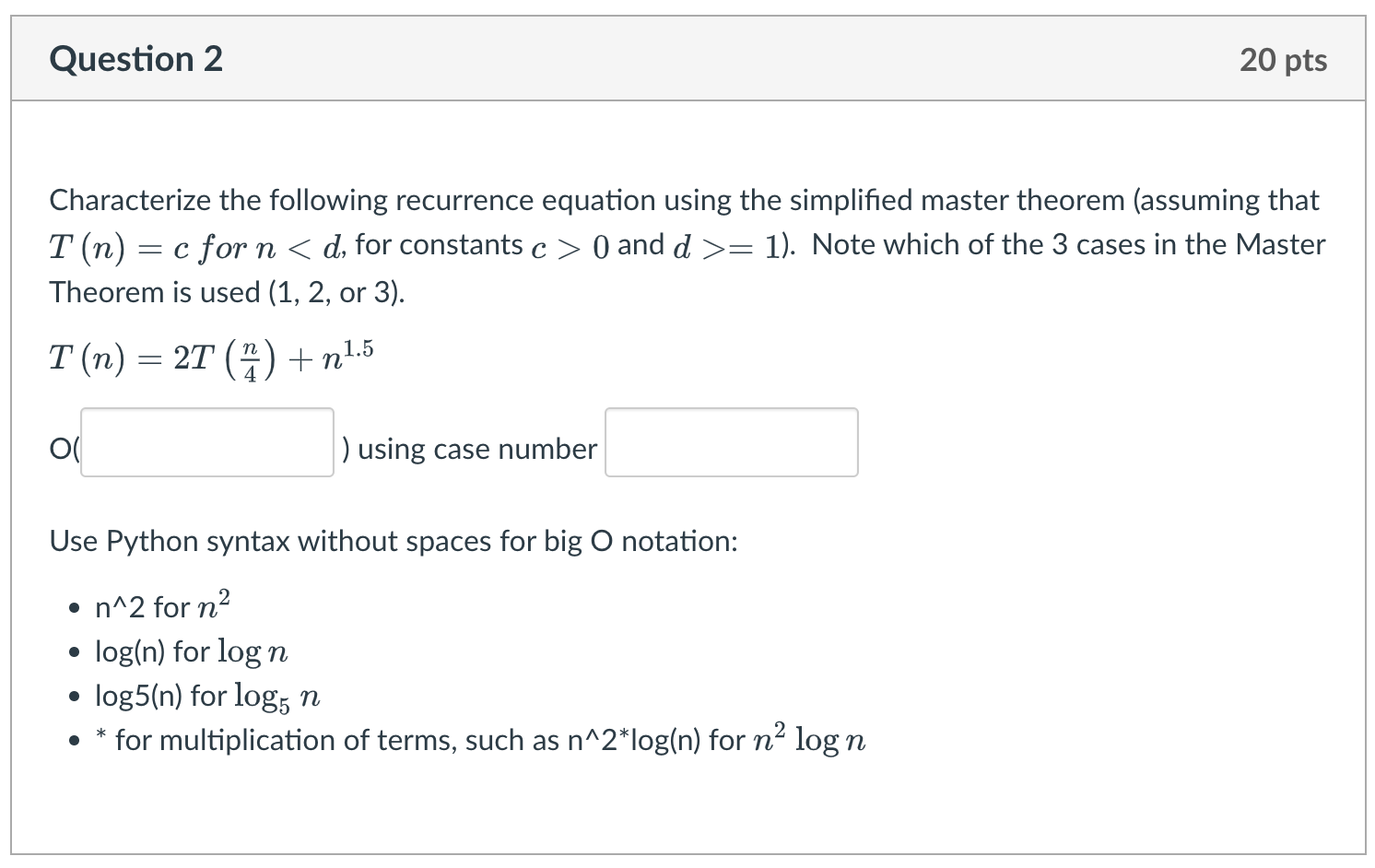
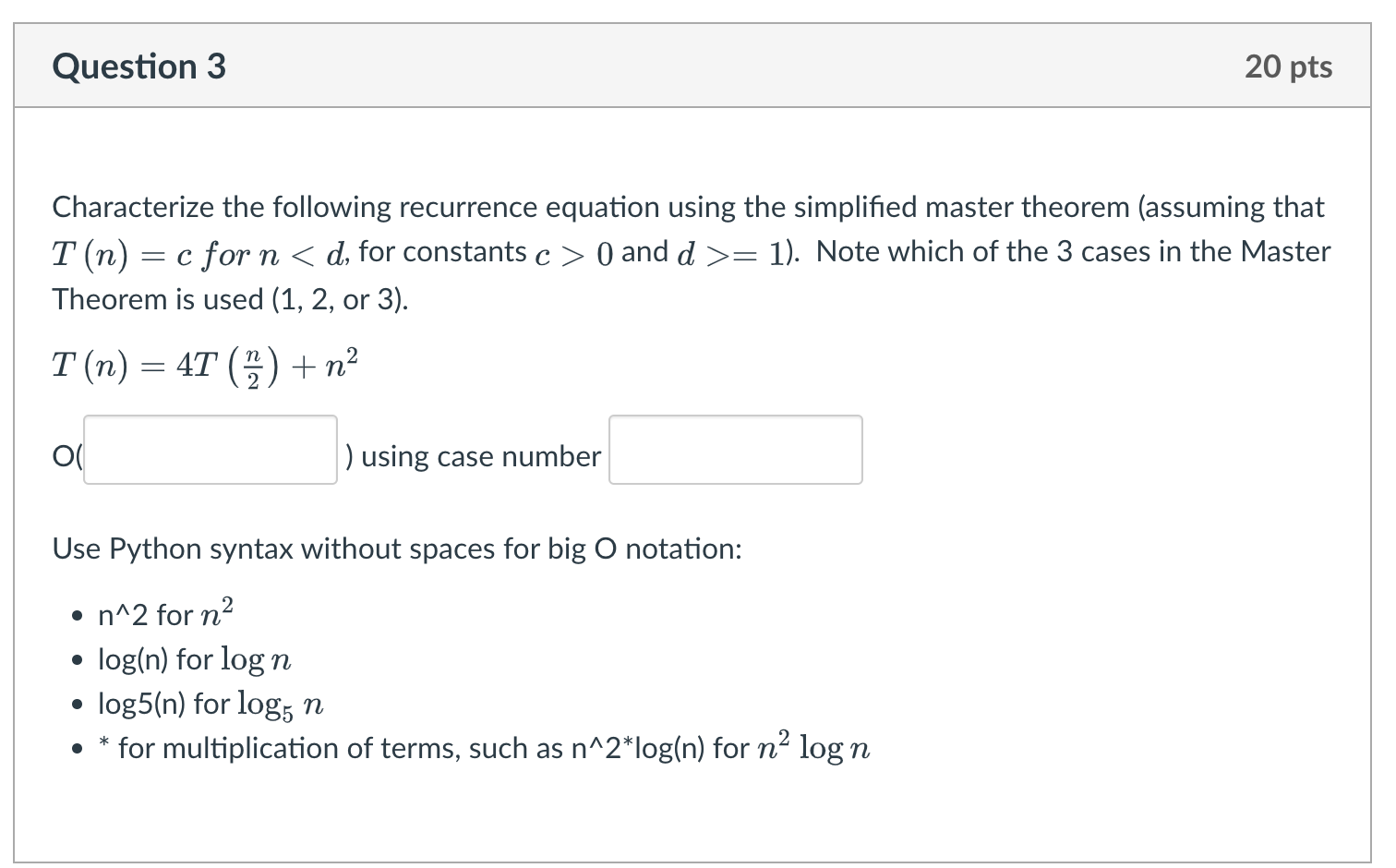
O(n) O(logn) O(4n) Characterize the following recurrence equation using the simplified master

Select the big-Oh characterization, in terms of n, for the following loop. s=0fori=1ton2doforj=1toidos=s+i O(n2) O(nlogn) O(n4) O(n3) O(2n) O(1) O(n) O(logn) O(4n) Characterize the following recurrence equation using the simplified master theorem (assuming that T(n)=c for n0 and d>=1 ). Note which of the 3 cases in the Master Theorem is used (1,2, or 3). T(n)=2T(4n)+n1.5 O ) using case number Use Python syntax without spaces for big O notation: - n2 for n2 - log(n) for logn - log5(n) for log5n - for multiplication of terms, such as n2log(n) for n2logn Characterize the following recurrence equation using the simplified master theorem (assuming that T(n)=c for n0 and d>=1 ). Note which of the 3 cases in the Master Theorem is used (1,2, or 3). T(n)=4T(2n)+n2 O ) using case number Use Python syntax without spaces for big O notation: - n2 for n2 - log(n) for logn - log5(n) for log5n - for multiplication of terms, such as n2log(n) for n2logn

Step by Step Solution

There are 3 Steps involved in it

1 Expert Approved Answer
Step: 1 Unlock blur-text-image
Question Has Been Solved by an Expert!

Get step-by-step solutions from verified subject matter experts

Step: 2 Unlock
Step: 3 Unlock

Students Have Also Explored These Related Databases Questions!