







Question: How does a flexible approach help in delivering presentations? Explain with the help of an example. Stay Flexible Presentations rarely go as planned. Knowing your
How does a flexible approach help in delivering presentations? Explain with the help of an example. 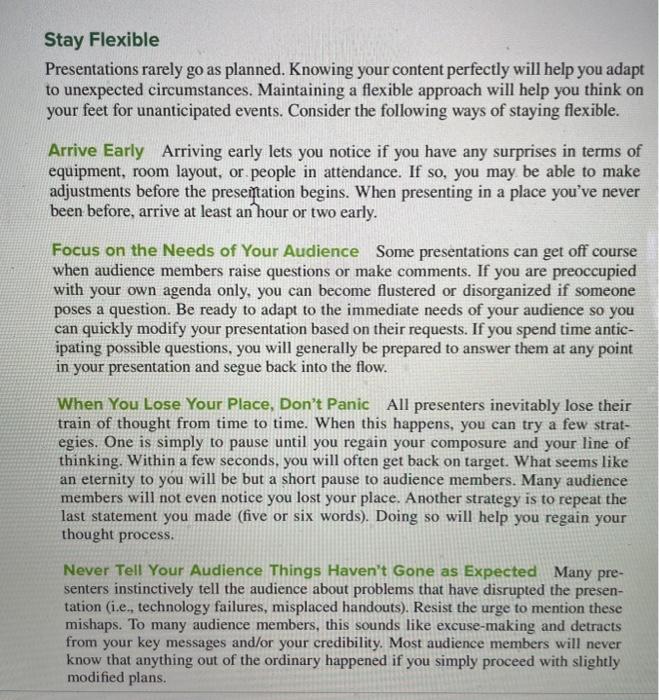
Stay Flexible Presentations rarely go as planned. Knowing your content perfectly will help you adapt to unexpected circumstances. Maintaining a flexible approach will help you think on your feet for unanticipated events. Consider the following ways of staying flexible. Arrive Early Arriving early lets you notice if you have any surprises in terms of equipment, room layout, or people in attendance. If so, you may be able to make adjustments before the presetation begins. When presenting in a place you've never been before, arrive at least an hour or two early. Focus on the Needs of Your Audience Some presentations can get off course when audience members raise questions or make comments. If you are preoccupied with your own agenda only, you can become flustered or disorganized if someone poses a question. Be ready to adapt to the immediate needs of your audience so you can quickly modify your presentation based on their requests. If you spend time antic- ipating possible questions, you will generally be prepared to answer them at any point in your presentation and segue back into the flow. When You Lose Your Place, Don't Panic All presenters inevitably lose their train of thought from time to time. When this happens, you can try a few strat- egies. One is simply to pause until you regain your composure and your line of thinking. Within a few seconds, you will often get back on target. What seems like an eternity to you will be but a short pause to audience members. Many audience members will not even notice you lost your place. Another strategy is to repeat the last statement you made (five or six words). Doing so will help you regain your thought process. Never Tell Your Audience Things Haven't Gone as Expected Many pre- senters instinctively tell the audience about problems that have disrupted the presen- tation (i.e., technology failures, misplaced handouts). Resist the urge to mention these mishaps. To many audience members, this sounds like excuse-making and detracts will never from your key messages and/or your credibility. Most audience mem know that anything out of the ordinary happened if you simply proceed with slightly modified plans
Step by Step Solution
There are 3 Steps involved in it
1 Expert Approved Answer
Step: 1 Unlock

Question Has Been Solved by an Expert!
Get step-by-step solutions from verified subject matter experts
Step: 2 Unlock
Step: 3 Unlock
 Study Help