







Question: How it's Made: Cost Pools and Cost Drivers Please return and repost the link to your How It's Made video from the Job Order Costing
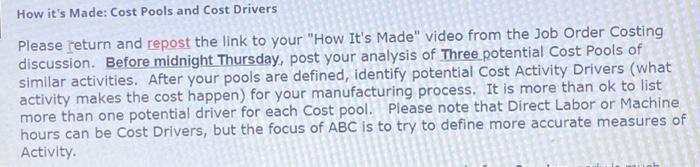
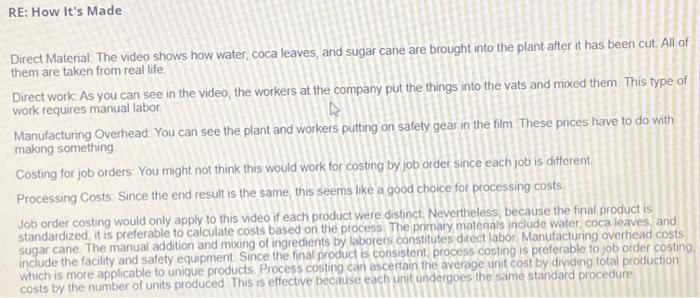
How it's Made: Cost Pools and Cost Drivers Please leturn and repost the link to your "How It's Made" video from the Job Order Costing discussion. Before midnight Thursday, post your analysis of Three potential Cost Pools of similar activities. After your pools are defined, identify potential Cost Activity Drivers (what activity makes the cost happen) for your manufacturing process. It is more than ok to list more than one potential driver for each Cost pool. Please note that Direct Labor or Machine hours can be Cost Drivers, but the focus of ABC is to try to define more accurate measures of Activity. Direct Material The video shows how water, coca leaves, and sugar cane are brought into the plant after it has been cut All of them are taken from real life. Direct work. As you can see in the video, the workers at the company put the things into the vats and mixed them. This type of work requires manual labor: Manufacturing Overhead You can see the plant and workers putting on safety gear in the film. These prices have to do with making something Costing for job orders You might not think this would work for costing by job order since each job is different Processing Costs Since the end result is the same, this seems like a good choice for processing costs. Job order costing would only apply to this video if each product were distinct. Nevertheless, because the final product is standardized, it is preferable to calculate costs based on the process. The primary matenals include water, coca leaves, and sugar cane. The manual addition and mixing of ingredients by laborers constitutes direct labor Manufacturing overhead costs include the facility and safety equipment Since the final product is consistent, process costing is preferable to job order costing which is more applicable to unique products. Process costing can ascertain the average unit cost by dividing total production costs by the number of units produced. This is effective because each unit undergoes the same standard procedure
Step by Step Solution
There are 3 Steps involved in it

Get step-by-step solutions from verified subject matter experts
 Study Help