







Question: how to convert this code from Python to C ? def suffixArray(s): Given T return suffix array SA(T). We use Pythons sorted function here
how to convert this code from Python to C ?
def suffixArray(s): """ Given T return suffix array SA(T). We use Pythons sorted
function here for simplicity, but we can do better. """ # Empty suffix plays role of $. satups = sorted([(s[i:], i) for i in xrange(0, len(s)+1)]) # Extract and return just the offsets
return map(lambda x: x[1], satups)
def bwt(t): """ Given T, returns BWT(T), by way of the suffix array. """ bw = [] for si in suffixArray(t):
if si == 0: bw.append($)
else: bw.append(t[si-1])
return .join(bw) # return string-ized version of list bw
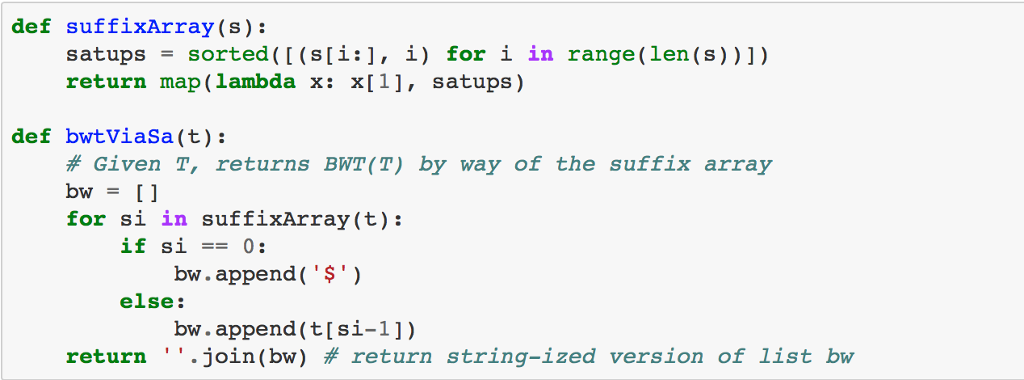
def suffixArray(s): satups sorted ( [ ( s [ i : ] , ) for i in range ( len ( s ) ) ] ) return map (lambda x: x[1], satups) def bwtviaSa(t): # Given T, returns BWT(T) by way of the suffix array for si in suffixArray (t): if si0: bw.append('$') else: bw.append(tlsi-1]) return ' ' .join (bw) # return string-ized version of list bw def suffixArray(s): satups sorted ( [ ( s [ i : ] , ) for i in range ( len ( s ) ) ] ) return map (lambda x: x[1], satups) def bwtviaSa(t): # Given T, returns BWT(T) by way of the suffix array for si in suffixArray (t): if si0: bw.append('$') else: bw.append(tlsi-1]) return ' ' .join (bw) # return string-ized version of list bw
Step by Step Solution
There are 3 Steps involved in it

Get step-by-step solutions from verified subject matter experts
 Study Help