







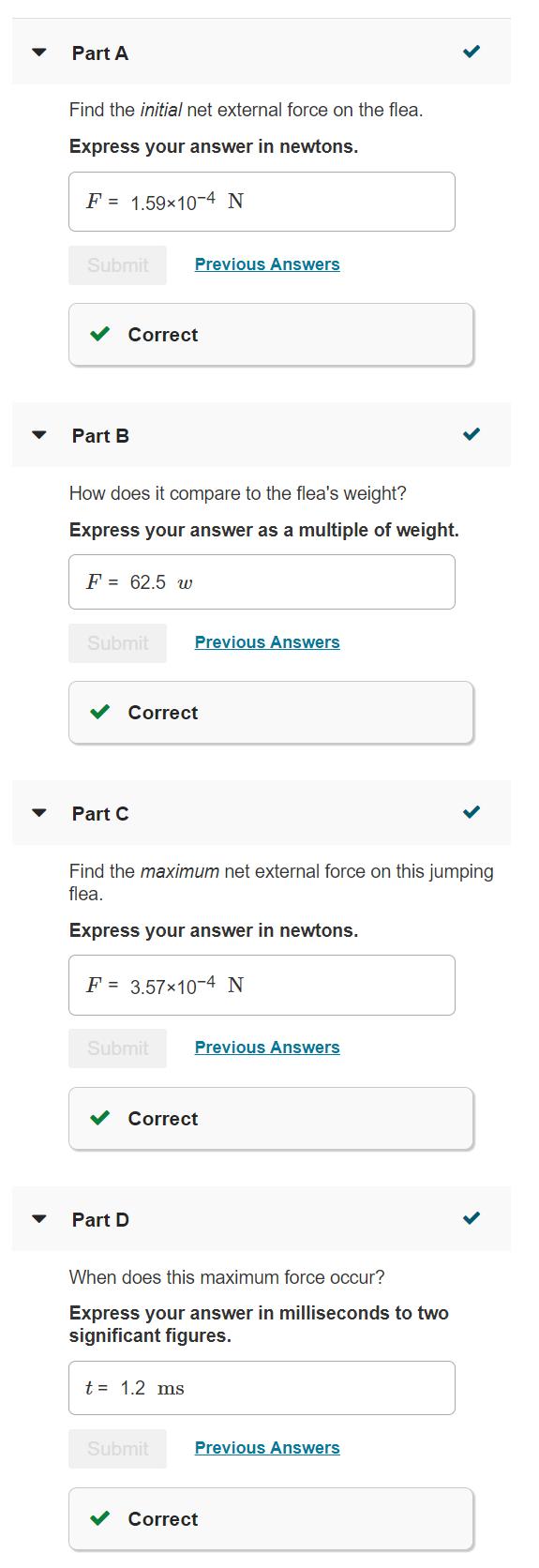
Question: How to do part E? High-speed motion pictures (3500 frames/second) of a jumping 260 g flea yielded the data to plot the flea's acceleration as
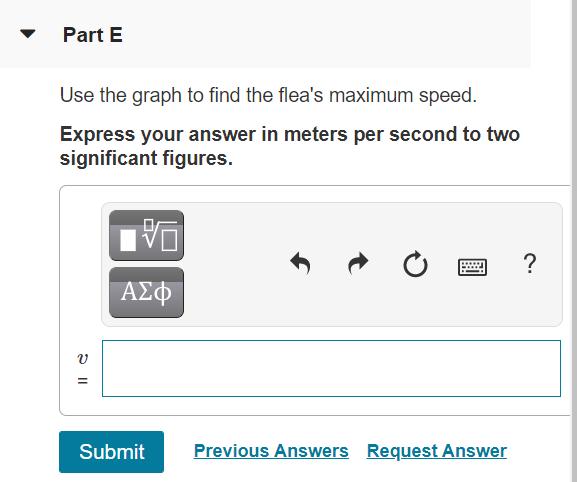
How to do part E?
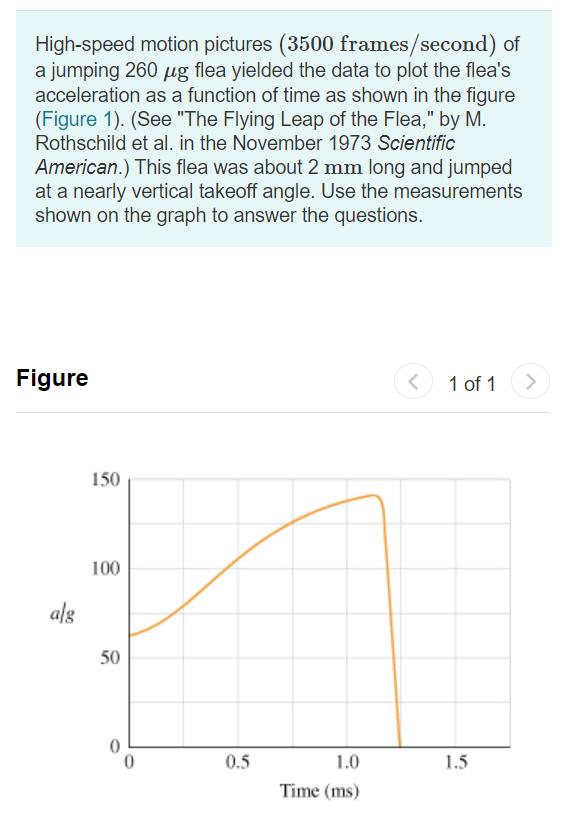
High-speed motion pictures (3500 frames/second) of a jumping 260 g flea yielded the data to plot the flea's acceleration as a function of time as shown in the figure (Figure 1). (See "The Flying Leap of the Flea," by M. Rothschild et al. in the November 1973 Scientific American.) This flea was about 2 mm long and jumped at a nearly vertical takeoff angle. Use the measurements shown on the graph to answer the questions. Figure 1 of 1 150 100 alg 50 0. 0.5 1.0 1.5 Time (ms)
Step by Step Solution
3.45 Rating (152 Votes )
There are 3 Steps involved in it
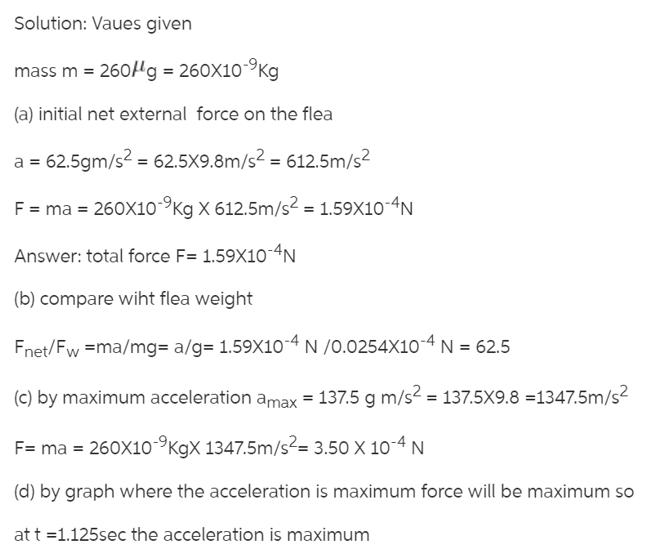
e from the graph at time 1125 millisecond the ve... View full answer

Get step-by-step solutions from verified subject matter experts
 Study Help