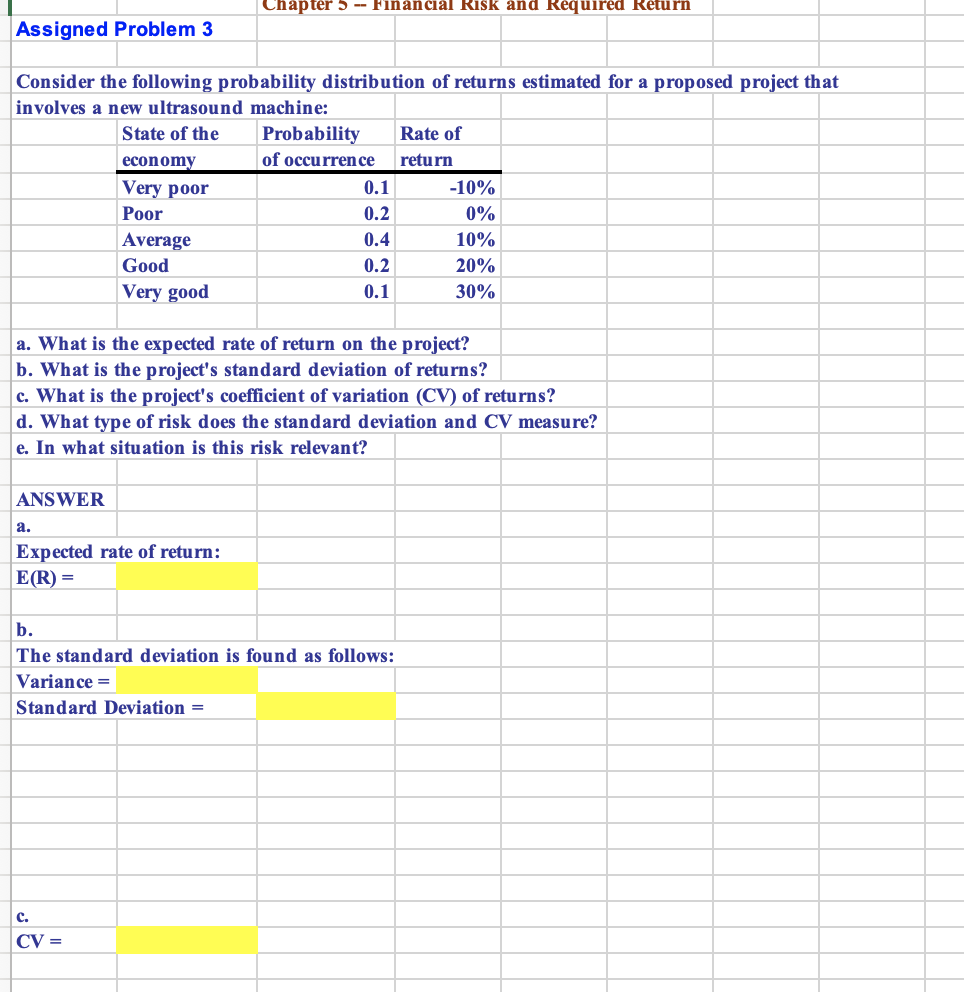
Question: I am needing assistance with understanding and solving these two problems. JamLDcDm-qmmanLcwmwmmanLc Assigned Problem 2 John Adams is the CEO of a nursing home in

I am needing assistance with understanding and solving these two problems.
I am needing assistance with understanding andI am needing assistance with understanding and
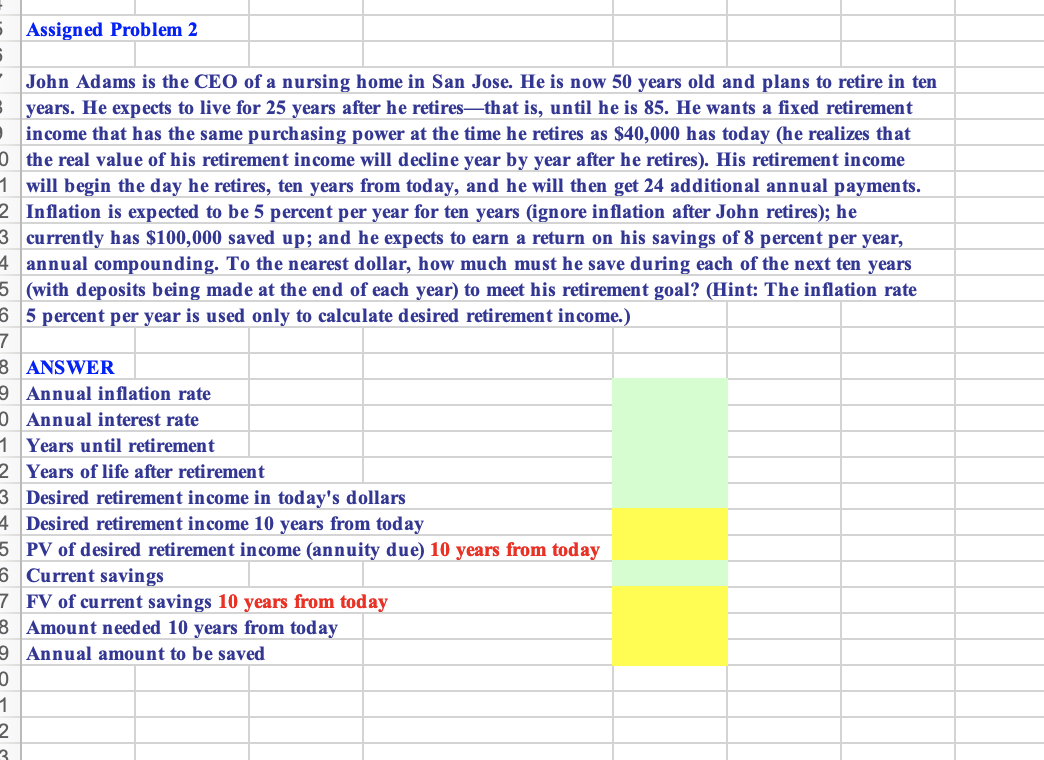
JamLDcDm-qmmanLcwmwmmanLc Assigned Problem 2 John Adams is the CEO of a nursing home in San Jose. He is now 50 years old and plans to retire in ten years. He expects to live for 25 years am he retiresthat is, until he is 85. He wants a xed retirement income that has the same purchasing power at the time he retires as $40,000 has today (he realizes that the real value of his retirement income will decline year by year after he retires). His retirement income will begin the day he retires, ten years from today, and he will then get 24 additional annual payments. Ination is expected to be 5 percent per year for ten years (ignore ination after John retires); he currently has $100,000 saved up; and he expects to earn a return on his savings of 8 percent per year, annual compounding. To the nearest dollar, how much must he save during each of the next ten years (with deposits being made at the end of each year) to meet his retirement goal? (Hint: The ination rate 5 percent per year is used only to calculate desired retirement income.) ANSWER Annual ination rate Annual interest rate Years until retirement Years of life after retirement Desired retirement income in today's dollars Desired retirement income 10 years from today PV of desired retirement income (annuity due) 10 years from today Current savings FV of current savings 10 years from today Amount needed 10 years from today Annual amount to be saved Assigned Problem 3 Consider the following probability distribution of returns estimated for a proposed project that involves a new ultrasound machine: State of the Probability Rate of economy of occurrence return Very poor 0.1 -10% Poor 0.2 1% Average 0.4 10% Good 0.2 20% Very good 0.1 30% a. What is the expected rate of return on the project? b. What is the project's standard deviation of returns? c. What is the project's coefficient of variation (CV) of returns? d. What type of risk does the standard deviation and CV measure? e. In what situation is this risk relevant? ANSWER a Expected rate of return: E(R) = b. The standard deviation is found as follows: Variance = Standard Deviation = C. CV =

Step by Step Solution

There are 3 Steps involved in it

1 Expert Approved Answer
Step: 1 Unlock blur-text-image

Question Has Been Solved by an Expert!

Get step-by-step solutions from verified subject matter experts

Step: 2 Unlock
Step: 3 Unlock

Students Have Also Explored These Related Finance Questions!