







Question: I am now exams Case Study 15 marks Knowledge Management at the CSO The case study organization (CSO) strategy was grounded in sustaining a capability
I am now exams
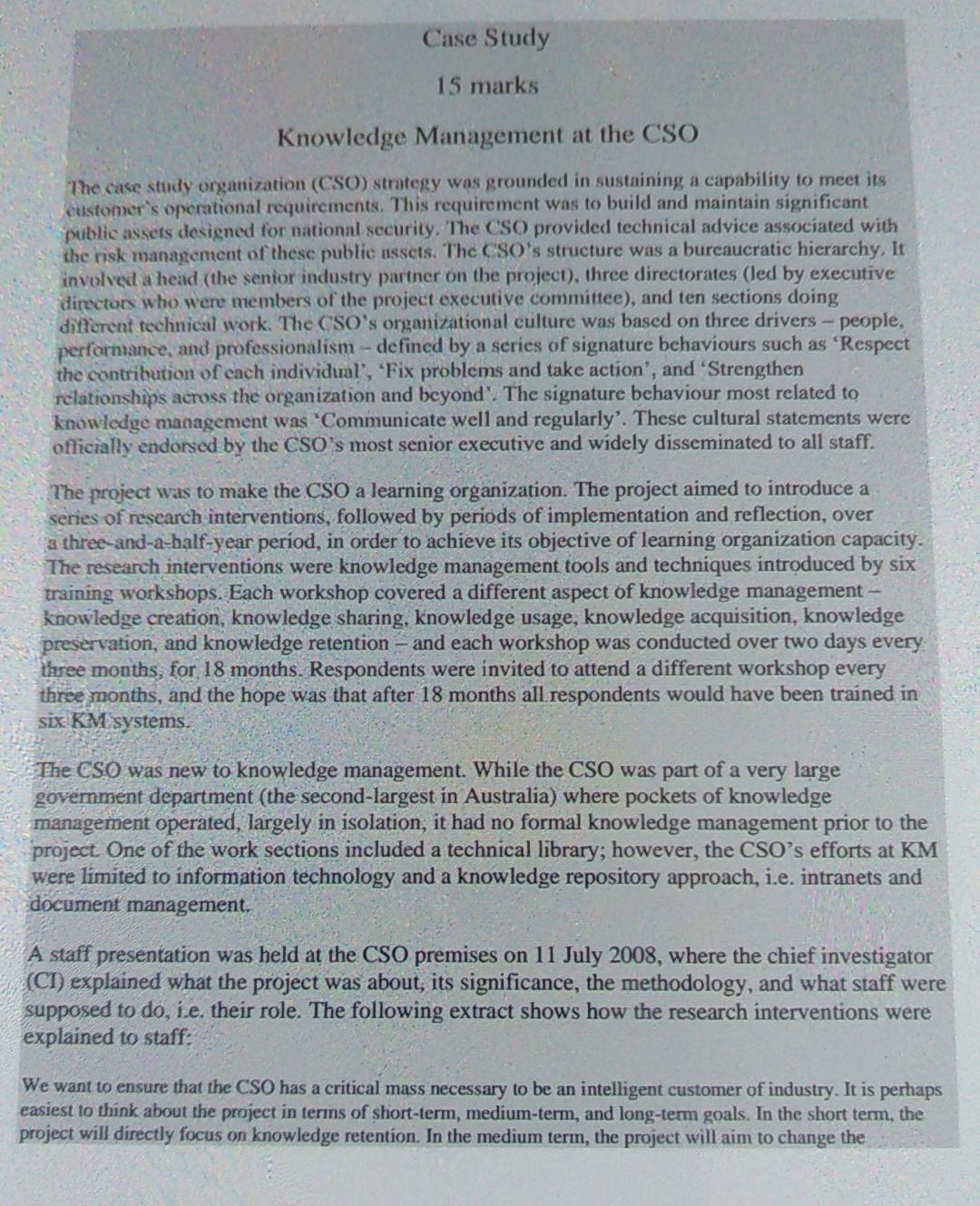
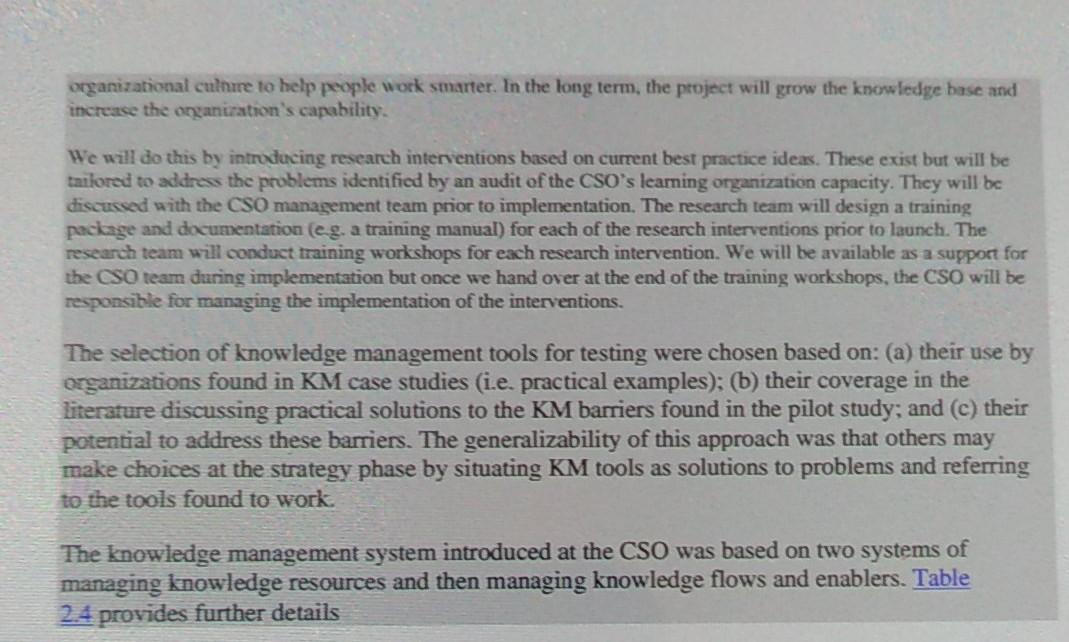
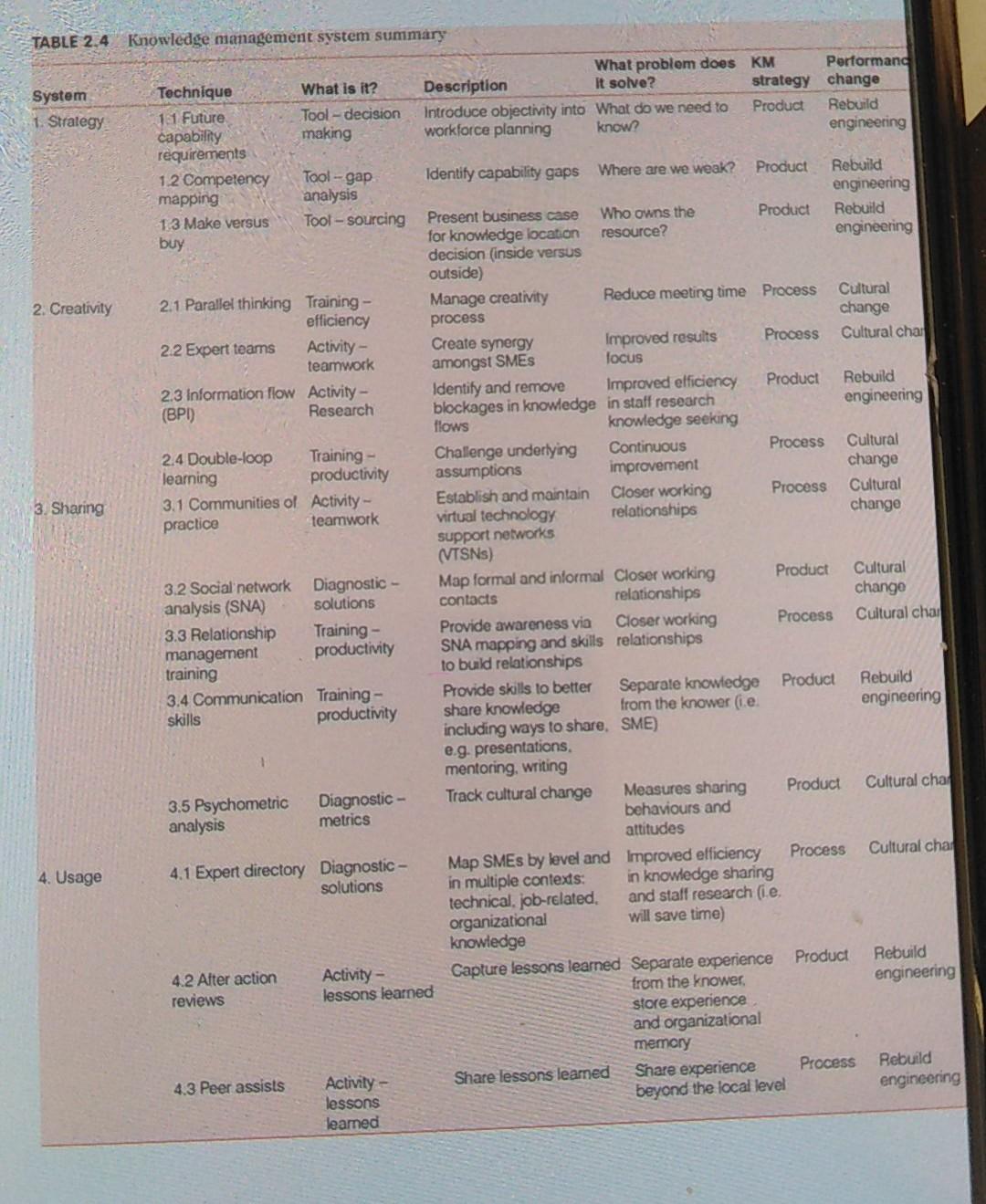
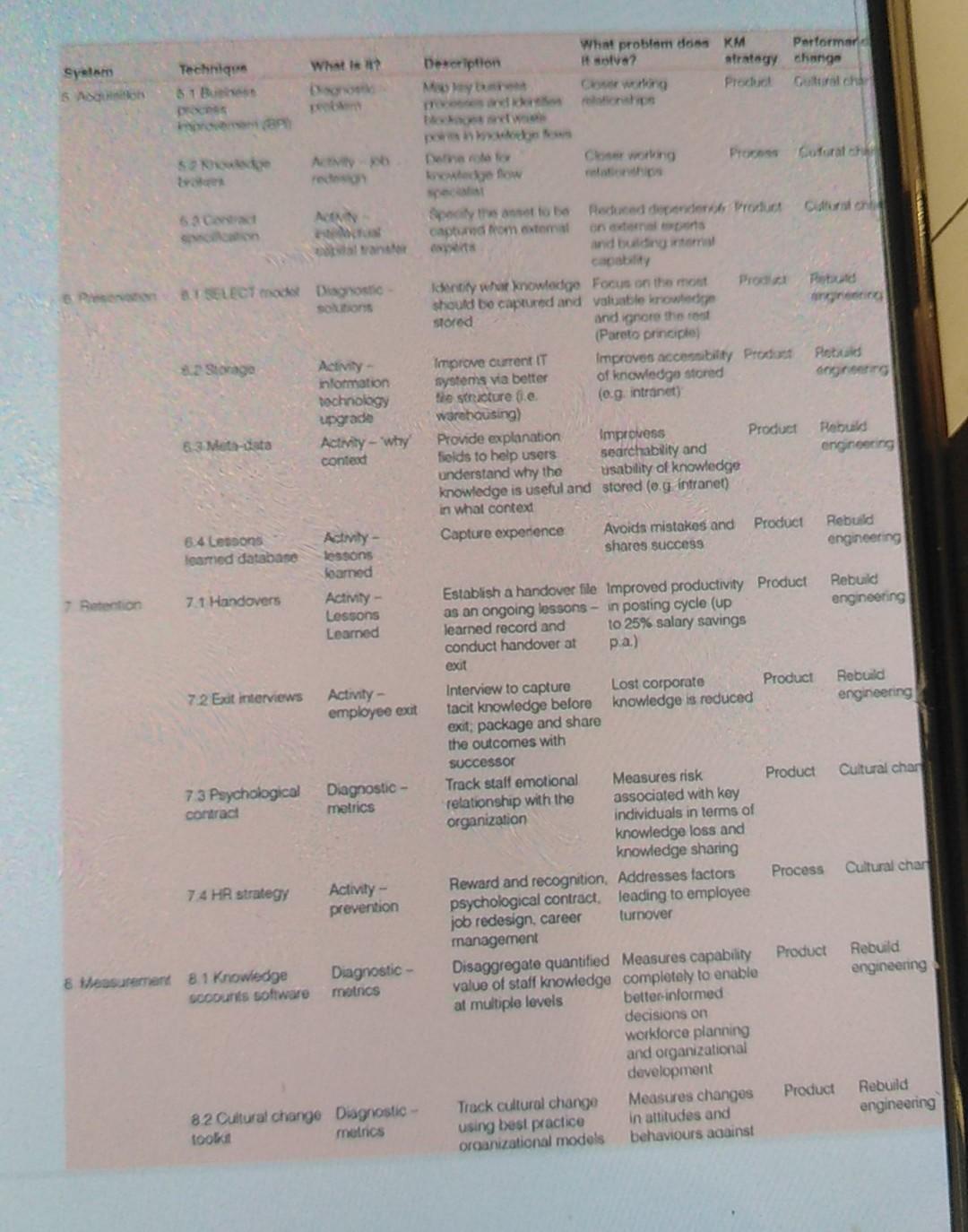
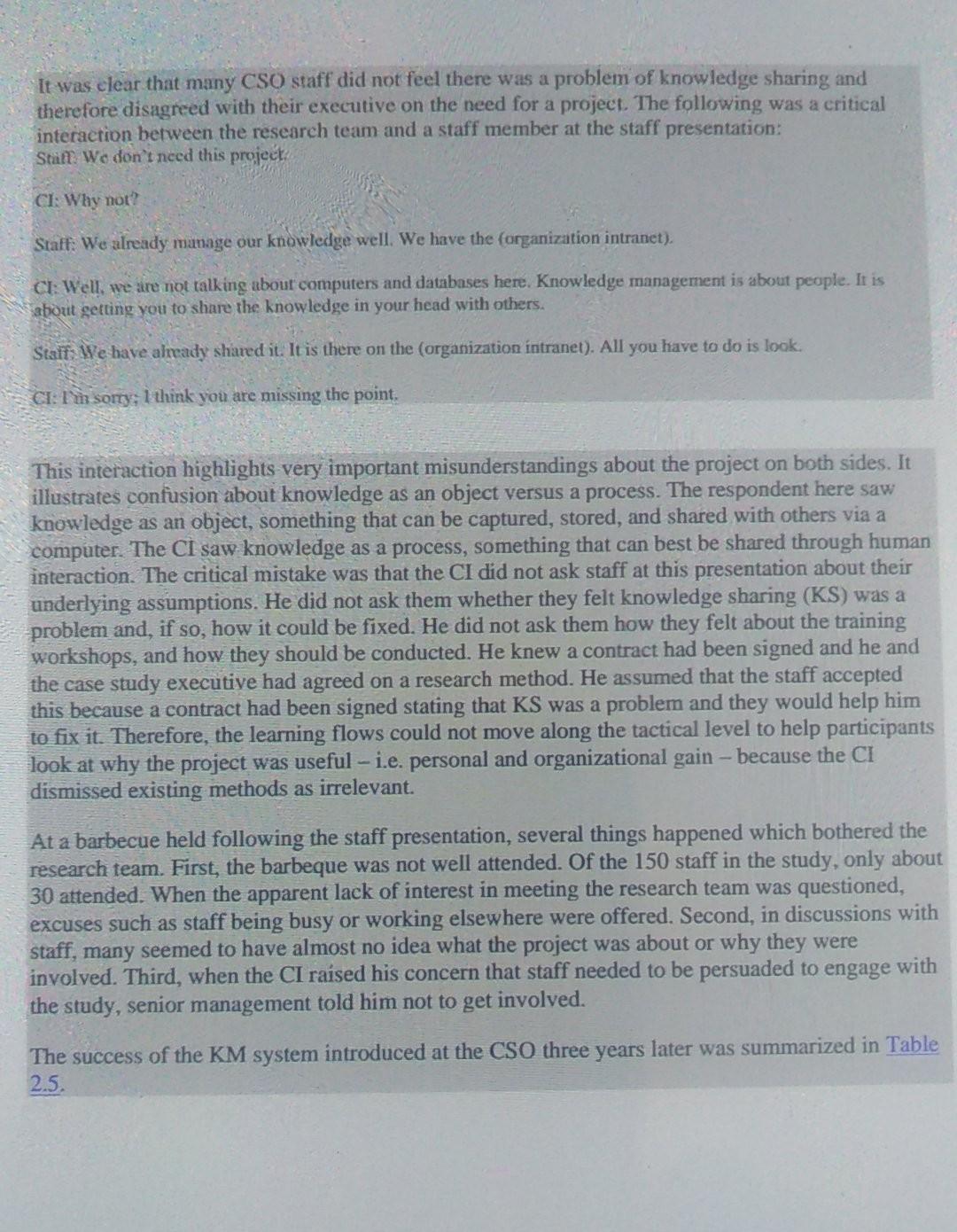
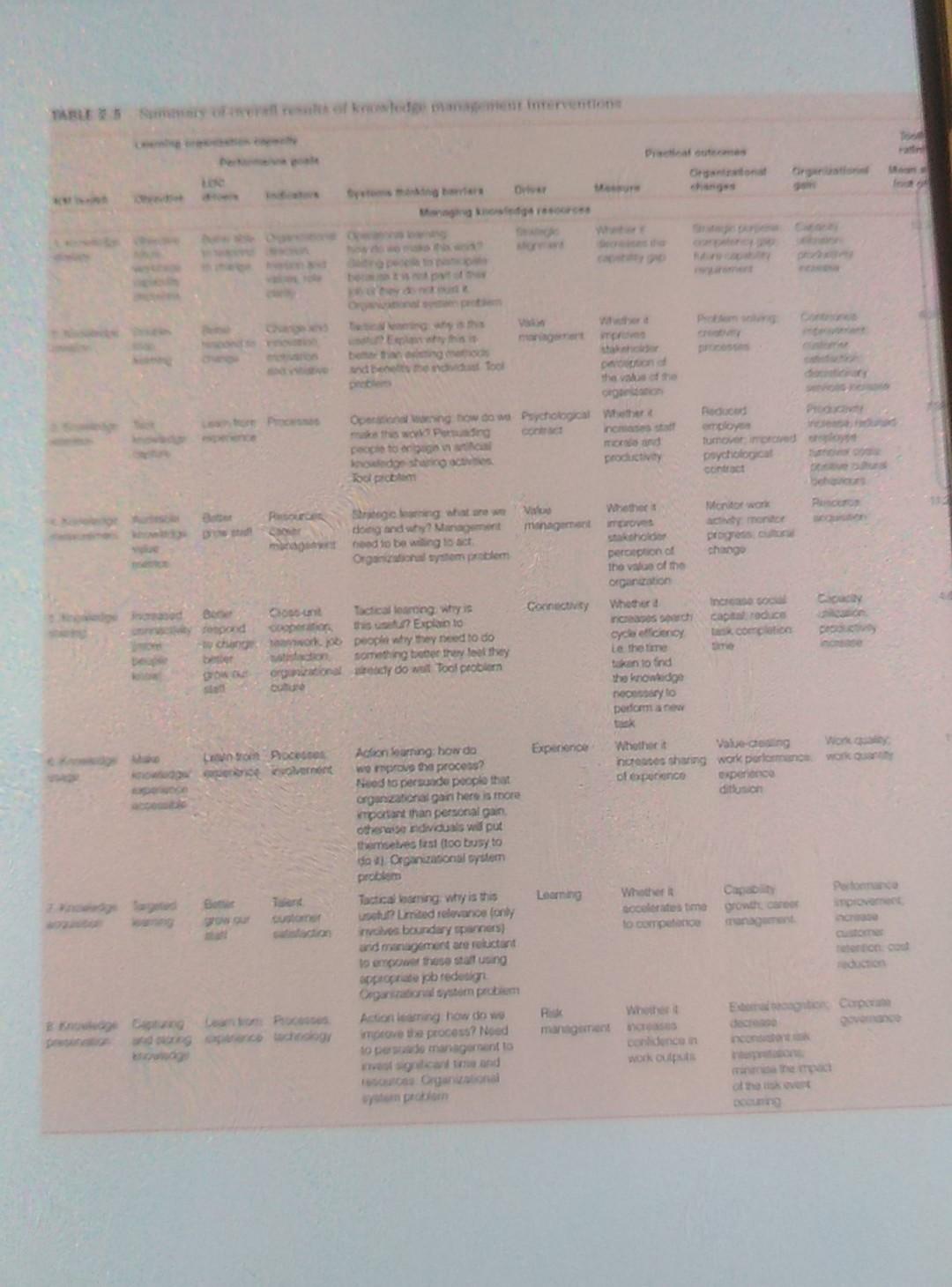
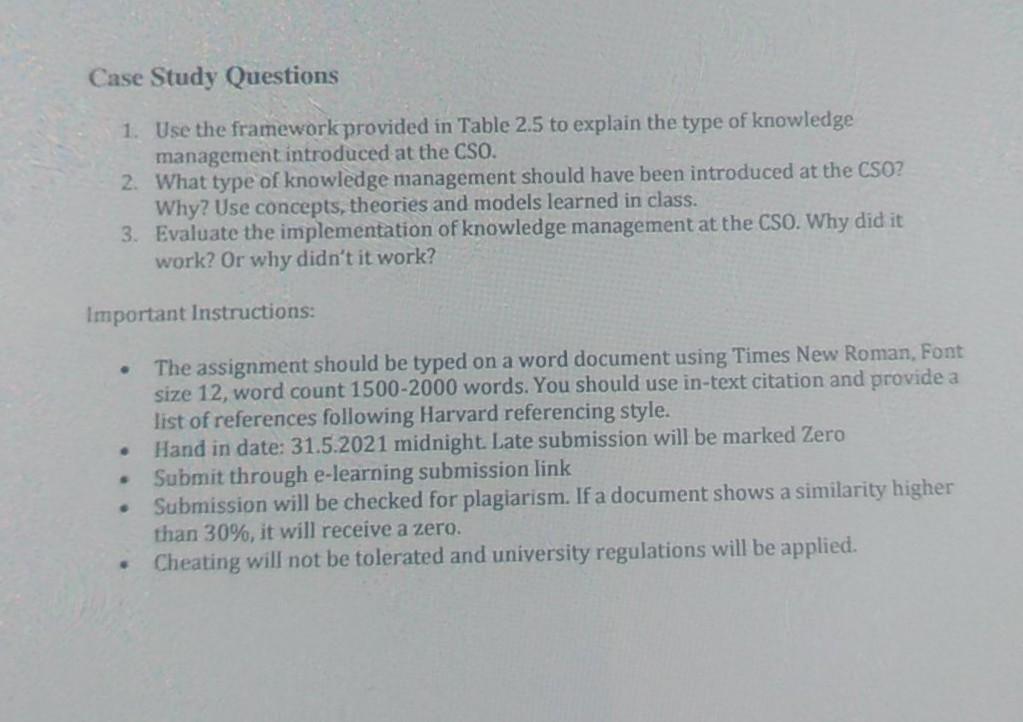
Case Study 15 marks Knowledge Management at the CSO The case study organization (CSO) strategy was grounded in sustaining a capability to meet its customer's operational requirements. This requirement was to build and maintain significant public assets designed for national security. The CSO provided technical advice associated with the risk management of these public assets. The CSO's structure was a bureaucratic hierarchy. It involved a head (the senior industry partner on the project), three directorates (led by executive directors who were members of the project executive committee), and ten sections doing different technical work. The CSO's organizational culture was based on three drivers - people, performance, and professionalism - defined by a series of signature behaviours such as Respect the contribution of each individual', 'Fix problems and take action', and 'Strengthen relationships across the organization and beyond'. The signature behaviour most related to knowledge management was 'Communicate well and regularly'. These cultural statements were officially endorsed by the CSO's most senior executive and widely disseminated to all staff. The project was to make the CSO a learning organization. The project aimed to introduce a series of research interventions, followed by periods of implementation and reflection, over a three-and-a-half-year period, in order to achieve its objective of learning organization capacity. The research interventions were knowledge management tools and techniques introduced by six training workshops. Each workshop covered a different aspect of knowledge management - knowledge creation, knowledge sharing, knowledge usage, knowledge acquisition, knowledge preservation, and knowledge retention - and each workshop was conducted over two days every three months, for 18 months. Respondents were invited to attend a different workshop every three months, and the hope was that after 18 months all respondents would have been trained in six KM systems. The CSO was new to knowledge management. While the CSO was part of a very large government department (the second-largest in Australia) where pockets of knowledge management operated, largely in isolation, it had no formal knowledge management prior to the project. One of the work sections included a technical library; however, the CSO's efforts at KM were limited to information technology and a knowledge repository approach, i.e. intranets and document management. A staff presentation was held at the CSO premises on 11 July 2008, where the chief investigator (CI) explained what the project was about, its significance, the methodology, and what staff were supposed to do, i.e. their role. The following extract shows how the research interventions were explained to staff: We want to ensure that the CSO has a critical mass necessary to be an intelligent customer of industry. It is perhaps easiest to think about the project in terms of short-term, medium-term, and long-term goals. In the short term, the project will directly focus on knowledge retention. In the medium term, the project will aim to change the organizational culme to help people work smarter. In the long term, the project will grow the knowledge base and increase the organeration's capability We will do this by introducing research interventions based on current best practice ideas. These exist but will be tailored to address the problems identified by an audit of the CSO's learning organization capacity. They will be discussed with the CSO management team prior to implementation. The research team will design a training package and documentation (eg. a training manual) for each of the research interventions prior to launch. The research team will conduct training workshops for each research intervention. We will be available as a support for the CSO team during implementation but once we hand over at the end of the training workshops, the CSO will be responsible for managing the implementation of the interventions. The selection of knowledge management tools for testing were chosen based on: (a) their use by organizations found in KM case studies (i.e. practical examples); (b) their coverage in the literature discussing practical solutions to the KM barriers found in the pilot study; and (c) their potential to address these barriers. The generalizability of this approach was that others may make choices at the strategy phase by situating KM tools as solutions to problems and referring to the tools found to work. The knowledge management system introduced at the CSO was based on two systems of managing knowledge resources and then managing knowledge flows and enablers. Table 2.4 provides further details TABLE 2.4 Knowledge management system summary System 1. Strategy What is it? Tool - decision making What problem does KM Performand Description It solve? strategy change Introduce objectivity into What do we need to Product Rebuild workforce planning know? engineering Technique 11 Future capability requirements 12 Competency mapping 1.3 Make versus buy Tool-gap analysis Tool - sourcing 2. Creativity 2.1 Parallel thinking Training - efficiency 2.2 Expert teams Activity - teamwork 2.3 Information flow Activity- (BPD) Research 2.4 Double-loop Training - learning productivity 3.1 Communities of Activity - practice teamwork 3. Sharing 3.2 Social network Diagnostic - analysis (SNA) solutions 3.3 Relationship Training - management productivity training 3.4 Communication Training - skills productivity Identify capability gaps Where are we weak? Product Rebuild engineering Present business case Who owns the Product Rebuild for knowledge location resource? engineering decision (inside versus outside) Manage creativity Reduce meeting time Process Cultural process change Create synergy Improved results Process Cultural chas amongst SMEs locus Identify and remove Improved efficiency Product Rebuild blockages in knowledge in staff research engineering flows knowledge seeking Challenge underlying Continuous Process Cultural assumptions improvement change Establish and maintain Closer working Process Cultural virtual technology relationships change support networks (VTSNS) Map formal and informal Closer working Product Cultural contacts relationships change Provide awareness via Closer working Process Cultural char SNA mapping and skills relationships to build relationships Provide skills to better Separate knowledge Product Rebuild share knowledge from the knower (ie. engineering including ways to share, SME) eg presentations mentoring, writing Track cultural change Measures sharing Product Cultural char behaviours and attitudes Map SMEs by level and Improved efficiency Process Cultural cha in multiple contexts: in knowledge sharing technical. job-related and staff research (ie. organizational will save time) knowledge Product Rebuild Capture lessons learned Separate experience from the knower engineering store experience and organizational memory Share lessons leamed Share experience Process Rebuild beyond the local level engineering 3.5 Psychometric analysis Diagnostic - metrics 4. Usage 4.1 Expert directory Diagnostic - solutions 4.2 After action reviews Activity - lessons learned 4.3 Peer assists Activity - lessons learned Technique System What is? What problem doiss KM Performan Potva? strategy change Product Detoption Mb Process Cottorat AAN ity to be captund from stoma Pad BISECT mods Diago solutions Potud 3.2 Storage Activity - information technology upgrade Activity - why contend Identity who knowledge Focus on the most Proda should be captured and valuable knowledge stored and ignore the (Pareto principle Improve current IT Improves accessibility Press systems via better of knowledge stored te structure (.e (0.g. intranet) warehousing) Provide explanation Improvess Product fields to help users searchablity and understand why the usability of knowledge knowledge is useful and stored (og intranet) in whal context Capture experience Avoids mistakes and Product shares success Pobud engineering 63 Mtdata Rebuild engineering 8.4 Lessons lored database Activity- lessons Soamned Activity - Lessons Learned Rebuild engineering Rection 7.1 Handovers pa) Rebuild engineering 7.2 Edt interviews Activity - employee exit Cultural char 7.3 Psychological contrad Diagnostic - metrics Establish a handover file Improved productivity Product as an ongoing lessons - in posting cycle (up learned record and to 25% salary savings conduct handover at exit Interview to capture Lost corporate Product tacit knowledge belore knowledge is reduced ext, package and share the outcomes with Successor Track staff emotional Measures risk Product relationship with the associated with key organization individuals in terms of knowledge loss and knowledge sharing Reward and recognition, Addresses factors Process psychological contract, leading to employee job redesign, career turnover management Disaggregate quantified Measures capability Product value of staff knowledge completely to enable at multiple levels better-informed decisions on workforce planning and organizational development Track cultural change Measures changes Product using best practice in attitudes and organizational models behaviours against Cultural char 74 HR Strategy Activity prevention Rebuild engineering 8 the surement 81 Knowledge scoounts software Diagnostic - moncs Rebuild engineering 82 Cultural change Diagnostic - took metrics It was clear that many CSO staff did not feel there was a problem of knowledge sharing and therefore disagreed with their executive on the need for a project. The following was a critical interaction between the research team and a staff member at the staff presentation: Stall. We don't need this project: CI: Why not? Staff: We already manage our knowledge well. We have the organization intranet). CI: Well, we are not talking about computers and databases here. Knowledge management is about people. It is about getting you to share the knowledge in your head with others. Staff: We have already shared it. It is there on the (organization intranet). All you have to do is look. CI: I'm sorry, I think you are missing the point. This interaction highlights very important misunderstandings about the project on both sides. It illustrates confusion about knowledge as an object versus a process. The respondent here saw knowledge as an object, something that can be captured, stored, and shared with others via a computer. The CI saw knowledge as a process, something that can best be shared through human interaction. The critical mistake was that the CI did not ask staff at this presentation about their underlying assumptions. He did not ask them whether they felt knowledge sharing (KS) was a problem and, if so, how it could be fixed. He did not ask them how they felt about the training workshops, and how they should be conducted. He knew a contract had been signed and he and the case study executive had agreed on a research method. He assumed that the staff accepted this because a contract had been signed stating that KS was a problem and they would help him to fix it. Therefore, the learning flows could not move along the tactical level to help participants look at why the project was useful - i.e. personal and organizational gain - because the CI dismissed existing methods as irrelevant. At a barbecue held following the staff presentation, several things happened which bothered the research team. First, the barbeque was not well attended. Of the 150 staff in the study, only about 30 attended. When the apparent lack of interest in meeting the research team was questioned, excuses such as staff being busy or working elsewhere were offered. Second, in discussions with staff, many seemed to have almost no idea what the project was about or why they were involved. Third, when the CI raised his concern that staff needed to be persuaded to engage with the study, senior management told him not to get involved. The success of the KM system introduced at the CSO three years later was summarized in Table 2.5. Opening how do we Pychological Weather Reduced loy tumor more paychological Contact productive Meno wa Pic Sige lang what are Vale management Whether mos mated to being to set Organ system problem change perception of the value of the Organization Connect Inco captar coction cacy con ncreased cycle ciency Tactical learning why is compond this Explain to change work people why they need to do better something to the they go ognitional do Tool poble co an to find the knowidge nosary to Dodoma Experience WOO no Rocco o corner Whether it Vale-dong neces sharing work porno of prince experience dilusion Adion Souring: how do we prove the process? Ned to persuade people that organizational gari here is more important than personal gan othedividuals will put themselves test too busy to ou Organizational system Learning Whether scores time to competence growth care pont Tactical bring why is this ustur med relevance only vos boundary sparners) and management are reluctant 10 cow these statusing spectate pred ona R Action coming how dow move the process? Noed So pa management to con work output Case Study Questions 1. Use the framework provided in Table 2.5 to explain the type of knowledge management introduced at the CSO. 2. What type of knowledge management should have been introduced at the CSOZ Why? Use concepts, theories and models learned in class. 3. Evaluate the implementation of knowledge management at the CSO. Why did it work? Or why didn't it work? Important Instructions: . The assignment should be typed on a word document using Times New Roman, Font size 12, word count 1500-2000 words. You should use in-text citation and provide a list of references following Harvard referencing style. Hand in date: 31.5.2021 midnight. Late submission will be marked Zero Submit through e-learning submission link Submission will be checked for plagiarism. If a document shows a similarity higher than 30%, it will receive a zero. Cheating will not be tolerated and university regulations will be applied. . . Case Study 15 marks Knowledge Management at the CSO The case study organization (CSO) strategy was grounded in sustaining a capability to meet its customer's operational requirements. This requirement was to build and maintain significant public assets designed for national security. The CSO provided technical advice associated with the risk management of these public assets. The CSO's structure was a bureaucratic hierarchy. It involved a head (the senior industry partner on the project), three directorates (led by executive directors who were members of the project executive committee), and ten sections doing different technical work. The CSO's organizational culture was based on three drivers - people, performance, and professionalism - defined by a series of signature behaviours such as Respect the contribution of each individual', 'Fix problems and take action', and 'Strengthen relationships across the organization and beyond'. The signature behaviour most related to knowledge management was 'Communicate well and regularly'. These cultural statements were officially endorsed by the CSO's most senior executive and widely disseminated to all staff. The project was to make the CSO a learning organization. The project aimed to introduce a series of research interventions, followed by periods of implementation and reflection, over a three-and-a-half-year period, in order to achieve its objective of learning organization capacity. The research interventions were knowledge management tools and techniques introduced by six training workshops. Each workshop covered a different aspect of knowledge management - knowledge creation, knowledge sharing, knowledge usage, knowledge acquisition, knowledge preservation, and knowledge retention - and each workshop was conducted over two days every three months, for 18 months. Respondents were invited to attend a different workshop every three months, and the hope was that after 18 months all respondents would have been trained in six KM systems. The CSO was new to knowledge management. While the CSO was part of a very large government department (the second-largest in Australia) where pockets of knowledge management operated, largely in isolation, it had no formal knowledge management prior to the project. One of the work sections included a technical library; however, the CSO's efforts at KM were limited to information technology and a knowledge repository approach, i.e. intranets and document management. A staff presentation was held at the CSO premises on 11 July 2008, where the chief investigator (CI) explained what the project was about, its significance, the methodology, and what staff were supposed to do, i.e. their role. The following extract shows how the research interventions were explained to staff: We want to ensure that the CSO has a critical mass necessary to be an intelligent customer of industry. It is perhaps easiest to think about the project in terms of short-term, medium-term, and long-term goals. In the short term, the project will directly focus on knowledge retention. In the medium term, the project will aim to change the organizational culme to help people work smarter. In the long term, the project will grow the knowledge base and increase the organeration's capability We will do this by introducing research interventions based on current best practice ideas. These exist but will be tailored to address the problems identified by an audit of the CSO's learning organization capacity. They will be discussed with the CSO management team prior to implementation. The research team will design a training package and documentation (eg. a training manual) for each of the research interventions prior to launch. The research team will conduct training workshops for each research intervention. We will be available as a support for the CSO team during implementation but once we hand over at the end of the training workshops, the CSO will be responsible for managing the implementation of the interventions. The selection of knowledge management tools for testing were chosen based on: (a) their use by organizations found in KM case studies (i.e. practical examples); (b) their coverage in the literature discussing practical solutions to the KM barriers found in the pilot study; and (c) their potential to address these barriers. The generalizability of this approach was that others may make choices at the strategy phase by situating KM tools as solutions to problems and referring to the tools found to work. The knowledge management system introduced at the CSO was based on two systems of managing knowledge resources and then managing knowledge flows and enablers. Table 2.4 provides further details TABLE 2.4 Knowledge management system summary System 1. Strategy What is it? Tool - decision making What problem does KM Performand Description It solve? strategy change Introduce objectivity into What do we need to Product Rebuild workforce planning know? engineering Technique 11 Future capability requirements 12 Competency mapping 1.3 Make versus buy Tool-gap analysis Tool - sourcing 2. Creativity 2.1 Parallel thinking Training - efficiency 2.2 Expert teams Activity - teamwork 2.3 Information flow Activity- (BPD) Research 2.4 Double-loop Training - learning productivity 3.1 Communities of Activity - practice teamwork 3. Sharing 3.2 Social network Diagnostic - analysis (SNA) solutions 3.3 Relationship Training - management productivity training 3.4 Communication Training - skills productivity Identify capability gaps Where are we weak? Product Rebuild engineering Present business case Who owns the Product Rebuild for knowledge location resource? engineering decision (inside versus outside) Manage creativity Reduce meeting time Process Cultural process change Create synergy Improved results Process Cultural chas amongst SMEs locus Identify and remove Improved efficiency Product Rebuild blockages in knowledge in staff research engineering flows knowledge seeking Challenge underlying Continuous Process Cultural assumptions improvement change Establish and maintain Closer working Process Cultural virtual technology relationships change support networks (VTSNS) Map formal and informal Closer working Product Cultural contacts relationships change Provide awareness via Closer working Process Cultural char SNA mapping and skills relationships to build relationships Provide skills to better Separate knowledge Product Rebuild share knowledge from the knower (ie. engineering including ways to share, SME) eg presentations mentoring, writing Track cultural change Measures sharing Product Cultural char behaviours and attitudes Map SMEs by level and Improved efficiency Process Cultural cha in multiple contexts: in knowledge sharing technical. job-related and staff research (ie. organizational will save time) knowledge Product Rebuild Capture lessons learned Separate experience from the knower engineering store experience and organizational memory Share lessons leamed Share experience Process Rebuild beyond the local level engineering 3.5 Psychometric analysis Diagnostic - metrics 4. Usage 4.1 Expert directory Diagnostic - solutions 4.2 After action reviews Activity - lessons learned 4.3 Peer assists Activity - lessons learned Technique System What is? What problem doiss KM Performan Potva? strategy change Product Detoption Mb Process Cottorat AAN ity to be captund from stoma Pad BISECT mods Diago solutions Potud 3.2 Storage Activity - information technology upgrade Activity - why contend Identity who knowledge Focus on the most Proda should be captured and valuable knowledge stored and ignore the (Pareto principle Improve current IT Improves accessibility Press systems via better of knowledge stored te structure (.e (0.g. intranet) warehousing) Provide explanation Improvess Product fields to help users searchablity and understand why the usability of knowledge knowledge is useful and stored (og intranet) in whal context Capture experience Avoids mistakes and Product shares success Pobud engineering 63 Mtdata Rebuild engineering 8.4 Lessons lored database Activity- lessons Soamned Activity - Lessons Learned Rebuild engineering Rection 7.1 Handovers pa) Rebuild engineering 7.2 Edt interviews Activity - employee exit Cultural char 7.3 Psychological contrad Diagnostic - metrics Establish a handover file Improved productivity Product as an ongoing lessons - in posting cycle (up learned record and to 25% salary savings conduct handover at exit Interview to capture Lost corporate Product tacit knowledge belore knowledge is reduced ext, package and share the outcomes with Successor Track staff emotional Measures risk Product relationship with the associated with key organization individuals in terms of knowledge loss and knowledge sharing Reward and recognition, Addresses factors Process psychological contract, leading to employee job redesign, career turnover management Disaggregate quantified Measures capability Product value of staff knowledge completely to enable at multiple levels better-informed decisions on workforce planning and organizational development Track cultural change Measures changes Product using best practice in attitudes and organizational models behaviours against Cultural char 74 HR Strategy Activity prevention Rebuild engineering 8 the surement 81 Knowledge scoounts software Diagnostic - moncs Rebuild engineering 82 Cultural change Diagnostic - took metrics It was clear that many CSO staff did not feel there was a problem of knowledge sharing and therefore disagreed with their executive on the need for a project. The following was a critical interaction between the research team and a staff member at the staff presentation: Stall. We don't need this project: CI: Why not? Staff: We already manage our knowledge well. We have the organization intranet). CI: Well, we are not talking about computers and databases here. Knowledge management is about people. It is about getting you to share the knowledge in your head with others. Staff: We have already shared it. It is there on the (organization intranet). All you have to do is look. CI: I'm sorry, I think you are missing the point. This interaction highlights very important misunderstandings about the project on both sides. It illustrates confusion about knowledge as an object versus a process. The respondent here saw knowledge as an object, something that can be captured, stored, and shared with others via a computer. The CI saw knowledge as a process, something that can best be shared through human interaction. The critical mistake was that the CI did not ask staff at this presentation about their underlying assumptions. He did not ask them whether they felt knowledge sharing (KS) was a problem and, if so, how it could be fixed. He did not ask them how they felt about the training workshops, and how they should be conducted. He knew a contract had been signed and he and the case study executive had agreed on a research method. He assumed that the staff accepted this because a contract had been signed stating that KS was a problem and they would help him to fix it. Therefore, the learning flows could not move along the tactical level to help participants look at why the project was useful - i.e. personal and organizational gain - because the CI dismissed existing methods as irrelevant. At a barbecue held following the staff presentation, several things happened which bothered the research team. First, the barbeque was not well attended. Of the 150 staff in the study, only about 30 attended. When the apparent lack of interest in meeting the research team was questioned, excuses such as staff being busy or working elsewhere were offered. Second, in discussions with staff, many seemed to have almost no idea what the project was about or why they were involved. Third, when the CI raised his concern that staff needed to be persuaded to engage with the study, senior management told him not to get involved. The success of the KM system introduced at the CSO three years later was summarized in Table 2.5. Opening how do we Pychological Weather Reduced loy tumor more paychological Contact productive Meno wa Pic Sige lang what are Vale management Whether mos mated to being to set Organ system problem change perception of the value of the Organization Connect Inco captar coction cacy con ncreased cycle ciency Tactical learning why is compond this Explain to change work people why they need to do better something to the they go ognitional do Tool poble co an to find the knowidge nosary to Dodoma Experience WOO no Rocco o corner Whether it Vale-dong neces sharing work porno of prince experience dilusion Adion Souring: how do we prove the process? Ned to persuade people that organizational gari here is more important than personal gan othedividuals will put themselves test too busy to ou Organizational system Learning Whether scores time to competence growth care pont Tactical bring why is this ustur med relevance only vos boundary sparners) and management are reluctant 10 cow these statusing spectate pred ona R Action coming how dow move the process? Noed So pa management to con work output Case Study Questions 1. Use the framework provided in Table 2.5 to explain the type of knowledge management introduced at the CSO. 2. What type of knowledge management should have been introduced at the CSOZ Why? Use concepts, theories and models learned in class. 3. Evaluate the implementation of knowledge management at the CSO. Why did it work? Or why didn't it work? Important Instructions: . The assignment should be typed on a word document using Times New Roman, Font size 12, word count 1500-2000 words. You should use in-text citation and provide a list of references following Harvard referencing style. Hand in date: 31.5.2021 midnight. Late submission will be marked Zero Submit through e-learning submission link Submission will be checked for plagiarism. If a document shows a similarity higher than 30%, it will receive a zero. Cheating will not be tolerated and university regulations will be appliedStep by Step Solution
There are 3 Steps involved in it
1 Expert Approved Answer
Step: 1 Unlock

Question Has Been Solved by an Expert!
Get step-by-step solutions from verified subject matter experts
Step: 2 Unlock
Step: 3 Unlock
 Study Help