i have all unclock so please answer all question
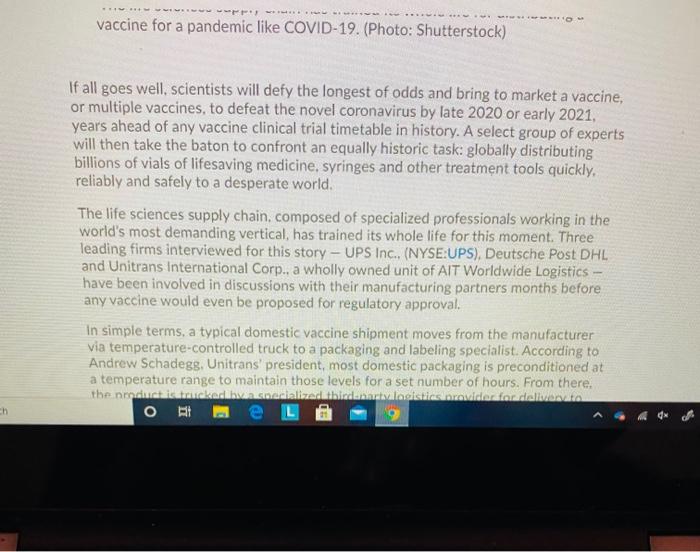
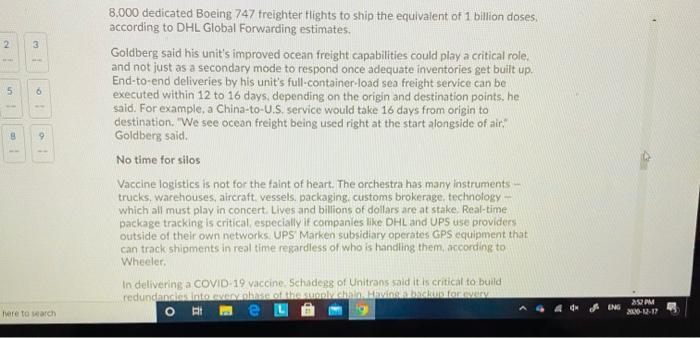
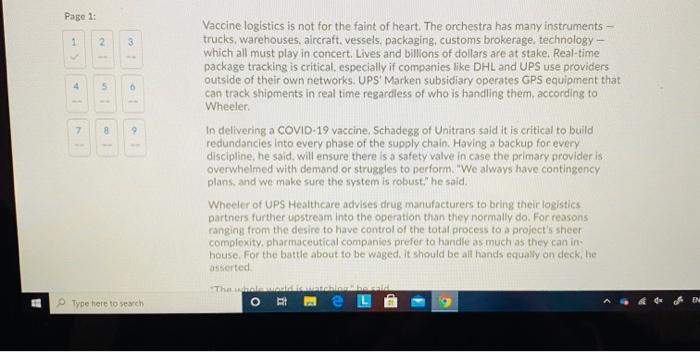
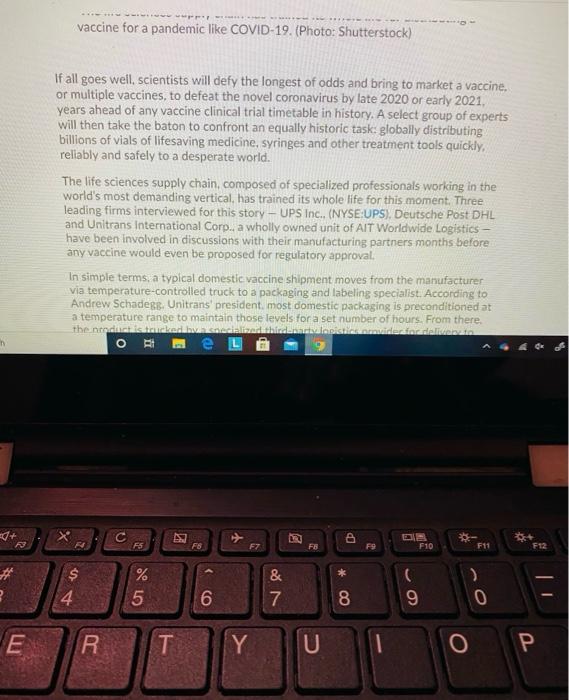
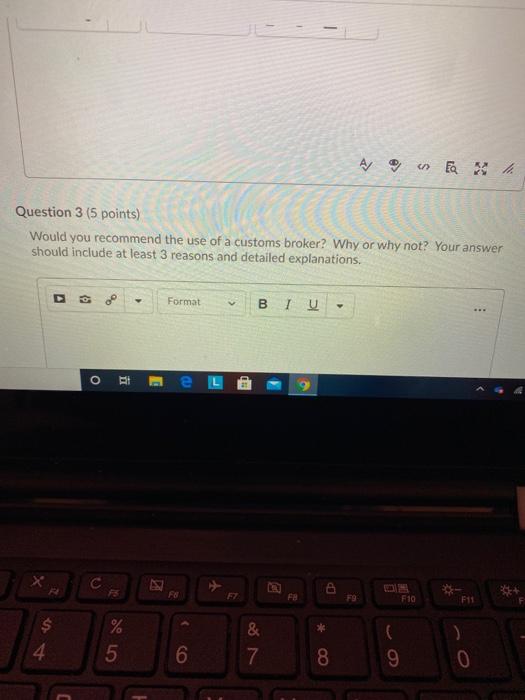
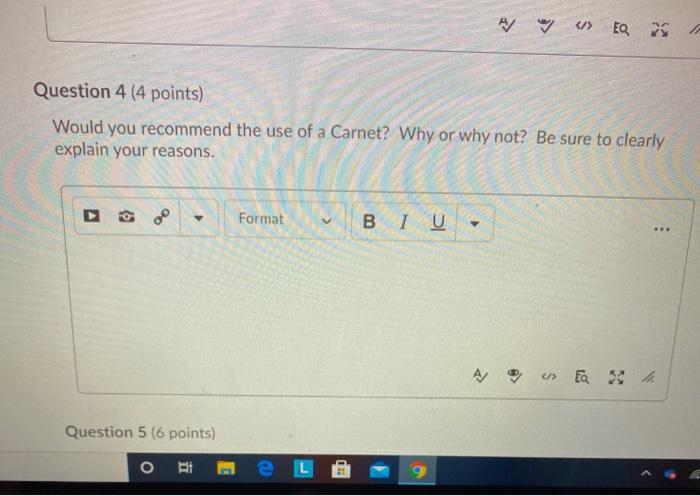
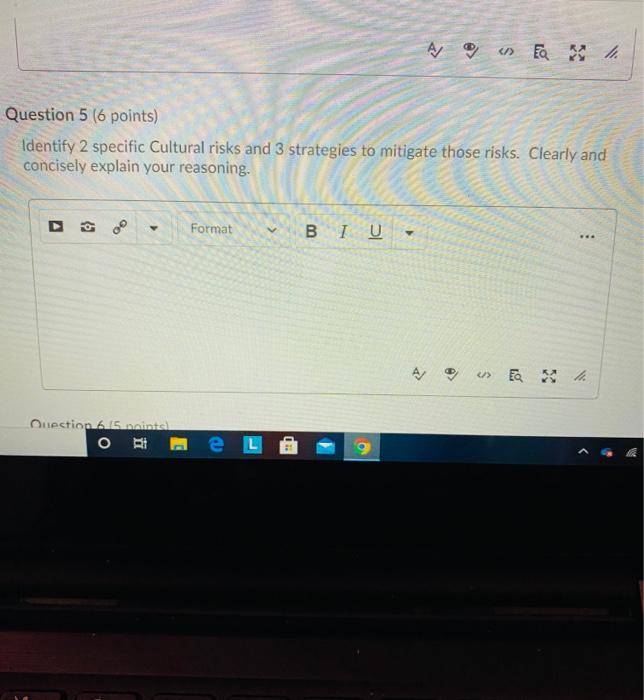
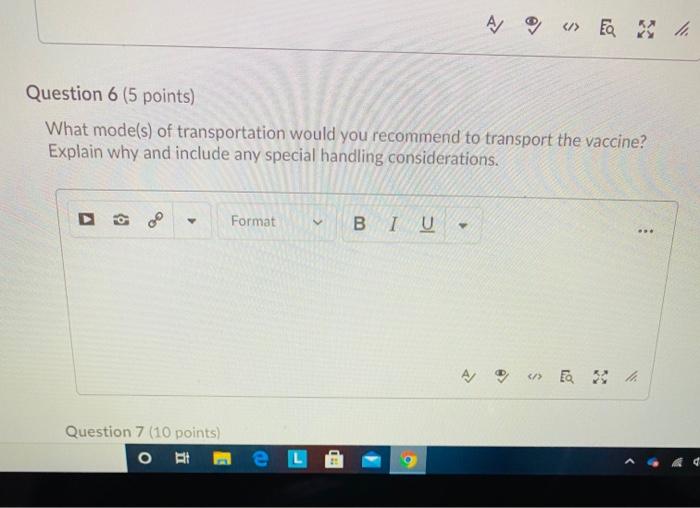
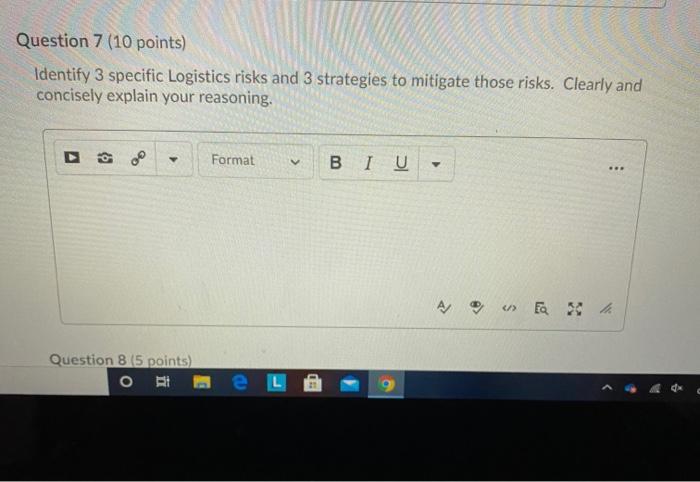
vaccine for a pandemic like COVID-19. (Photo: Shutterstock) If all goes well, scientists will defy the longest of odds and bring to market a vaccine, or multiple vaccines, to defeat the novel coronavirus by late 2020 or early 2021, years ahead of any vaccine clinical trial timetable in history. A select group of experts will then take the baton to confront an equally historic task: globally distributing billions of vials of lifesaving medicine, syringes and other treatment tools quickly. reliably and safely to a desperate world. The life sciences supply chain composed of specialized professionals working in the world's most demanding vertical, has trained its whole life for this moment. Three leading firms interviewed for this story - UPS Inc. (NYSE:UPS), Deutsche Post DHL and Unitrans International Corp., a wholly owned unit of AIT Worldwide Logistics --- have been involved in discussions with their manufacturing partners months before any vaccine would even be proposed for regulatory approval. In simple terms, a typical domestic vaccine shipment moves from the manufacturer via temperature-controlled truck to a packaging and labeling specialist. According to Andrew Schadegs, Unitrans president, most domestic packaging is preconditioned at a temperature range to maintain those levels for a set number of hours. From there. the producimukadincadializadithidmatalastasandidadiondallanato 0 e L ch 3 6 via temperature-controlled truck to a packaging and labeling specialist. According to Andrew Schadegg, Unitrans' president, most domestic packaging is preconditioned at a temperature range to maintain those levels for a set number of hours. From there, the product is trucked by a specialized third-party logistics provider for delivery to hospitals, clinics or other end users. The complexities are in the details. Still, executives are confident they have the expertise, experience and resources to scale up fast and execute properly should the bell hopefully ring. "The way we would handle COVID-19 is similar to the way we would handle the distribution of a flu vaccine," said Wes Wheeler, president of UPS Healthcare, which operates under the auspices of the parent company. Marken another life sciences subsidiary of UPS, has managed the logistics of 19 clinical trials involving vaccines, Wheeler said. Obstacles ahead 9 There will be obstacles. One is the availability of materials like glass needed to make vials. A published report over the weekend highlighted potential shortages of glass that could hinder vial manufacturing. Another factor beyond the logisticians' control is the speed that manufacturers can pump out vaccines without potentially compromising safety and consistency. In both cases, a supply chain is only as O L e to search se 1: 2 3 4 5 6 7 8 9 that couia ninaer vial manuracturing. Another factor beyond the logisticians contro is the speed that manufacturers can pump out vaccines without potentially compromising safety and consistency. In both cases, a supply chain is only as responsive as the production that goes ahead of it, they said. "You're not going to have 330 million doses administered in the U.S. in one day." said Schadess, referring to the approximate U.S. population. Vaccine production will have an assembly-line feel to it. Schadege said. Availability will be prioritized to ill patients and those with a high-risk profile before the vaccines are dispensed to the general population. The U.S. government's Operation Warp Speed program has set a goal of 300 million doses of a safe and effective COVID-19 vaccine by January. Another challenge would be the lack of linearity. No one knows where paydirt will be struck, or who will strike it. The active ingredient at the heart of a vaccine may be produced in one location in the world and need to be shipped to a finished dose" manufacturing site hundreds or thousands of miles away. It is possible that multiple vaccines will be approved and that manufacturing will occur simultaneously at many global points. Effective distribution outcomes will demand nimble, flexible supply chains with massive geographic footprints There is also the unprecedented nature of the vaccine development Vaccines work by training the body to recognize and respond to proteins produced by disease. causing organisms such as visor bacteria. Messenser RNA MRNA vacaines Type here to search 2 5 8 9 Ma UPS Healthcare is building freezer farms in Louisville, Kentucky, home of its global air hub, and in the Netherlands to accommodate these products, according to Wheeler DHL Global Forwarding has handled vaccines at minus 60 degrees, said David Goldberg, CEO of the U.S. arm of DHL Global Forwarding the DHL unit that is handling the project. Going colder than that would require "additional conversations" with stakeholders, Goldberg said. Governments generally don't get involved in vaccine distribution. However, the sense of urgency in developing and distributing a COVID-19 vaccine has changed the calculus, according to logistics experts, The Trump administration is working closely with private industry to develop a vaccine, and it is expected to be equally proactive if and when the efforts turn to distribution. Because government input in vaccine logistics is so uncommon and no one knows in what direction this White House will head, the supply chain needs to be prepared for anything experts said Layered on top of that uncertainty is a frayed geopolitical environment that may pit countries against each other in vaccine development and distribution, rather than governments collaborating toward a solution Should distribution ramp up, it is likely airlines will be pressed into service first because of their speed to market capabilities. Typically, the bellies of the passenger here to ach ENG 252 PM 220-12-17 Page 1: 1 2 3 4 -5 6 7 9 Should distribution ramp up, it is likely airlines will be pressed into service first because of their speed-to-market capabilities. Typically, the bellies of the passenger aircraft would be an ideal conveyance for the vaccine. However, the pandemic has indefinitely grounded nearly all international passenger flights, taking the bellies with them. According to Schadegg of Unitrans, air cargo capacity, whether it be scheduled freighters, charters or so-called passenger freighters - passenger aircraft hastily reconfigured to carry main-deck cargo on seats or on cabin floors with the seats removed - are fully committed Schadegg's comments are supported by a story published earlier this month in the trade publication The Loadstar. The story cited data from a consultancy that global air "load factors." a key measure of demand, had hit their highest point last week since 2018. Goldberg of DHL Global Forwarding, the world's largest air forwarder, said that while slobal capacity is down about 25% from a year ago the trans-Pacific trade lanes have more capacity year-on-year due to a large influx of charter aircraft deployed to replace the lost belly lift It will take a lot of air capacity to move the projected volumes. Depending on factors such as the source of production and packaging requirements, it will require 7,000 to 8.000 dedicated Boeing 747 freighter Flights to ship the equivalent of 1 billion doses, according to DHL Global Forwarding estimates Type here to search 2 3 1 5 6 9 8.000 dedicated Boeing 747 freighter Flights to ship the equivalent of 1 billion doses, according to DHL Global Forwarding estimates Goldberg said his unit's improved ocean freight capabilities could play a critical role and not just as a secondary mode to respond once adequate inventories get built up. End-to-end deliveries by his unit's full-container-load sea freight service can be executed within 12 to 16 days, depending on the origin and destination points, he said. For example, a China-to-U.S. service would take 16 days from origin to destination. "We see ocean freight being used right at the start alongside of air." Goldberg said. No time for silos Vaccine logistics is not for the faint of heart. The orchestra has many instruments trucks, warehouses, aircraft vessels, packaging, customs brokerage, technology which all must play in concert Lives and billions of dollars are at stake Real-time package tracking is critical especially if companies like DHL and UPS use providers outside of their own networks UPS Marken subsidiary operates GPS equipment that can track shipments in real time regardless of who is handling them, according to Wheeler In delivering a COVID-19 vaccine Schades of Unitrans said it is critical to build redundant une vingar O RI ING 292M 2-17 Tere to watch Page 1 1 2 3 4 5 7 9 Vaccine logistics is not for the faint of heart. The orchestra has many instruments - trucks, warehouses, aircraft. vessels, packaging, customs brokerage, technology - which all must play in concert. Lives and billions of dollars are at stake. Real-time package tracking is critical, especially if companies like DHL and UPS use providers outside of their own networks. UPS Marken subsidiary operates GPS equipment that can track shipments in real time regardless of who is handling them according to Wheeler In delivering a COVID-19 vaccine. Schadege of Unitrans said it is critical to build redundancies into every phase of the supply chain. Having a backup for every discipline, he said. will ensure there is a safety valve in case the primary provider is overwhelmed with demand or struggles to perform. "We always have contingency plans, and we make sure the system is robust" he said. Wheeler of UPS Healthcare advises drug manufacturers to bring their logistics partners further upstream into the operation than they normally do. For reasons ranging from the desire to have control of the total process to a project's sheer complexity, pharmaceutical companies prefer to handle as much as they can in house. For the battle about to be waged, it should be alt hands equally on deck, he assorted Thea o Type here to search R? vaccine for a pandemic like COVID-19. (Photo: Shutterstock) If all goes well, scientists will defy the longest of odds and bring to market a vaccine. or multiple vaccines, to defeat the novel coronavirus by late 2020 or early 2021 years ahead of any vaccine clinical trial timetable in history. A select group of experts will then take the baton to confront an equally historic task: globally distributing billions of vials of lifesaving medicine, syringes and other treatment tools quickly reliably and safely to a desperate world. The life sciences supply chain, composed of specialized professionals working in the world's most demanding vertical, has trained its whole life for this moment. Three leading firms interviewed for this story - UPS Inc. (NYSE:UPS). Deutsche Post DHL and Unitrans International Corp., a wholly owned unit of AIT Worldwide Logistics - have been involved in discussions with their manufacturing partners months before any vaccine would even be proposed for regulatory approval. In simple terms, a typical domestic vaccine shipment moves from the manufacturer via temperature-controlled truck to a packaging and labeling specialist. According to Andrew SchadereUnitrans president, most domestic packaging is preconditioned at a temperature range to maintain those levels for a set number of hours. From there, the nicknaked becedathadeanleiderforadat O Pte L + 2 OP OB F10 FS F8 F7 FB F9 F11 F12 % 5 & 7 C 9 ) 0 4 6 8 E E R . Y O P - 1 A El Question 3 (5 points) Would you recommend the use of a customs broker? Why or why not? Your answer should include at least 3 reasons and detailed explanations. Format V BIU o RI E OP FO F10 F11 $ % 5 4 & 7 6 ( 9 8 0 ^ EO Question 4 (4 points) Would you recommend the use of a Carnet? Why or why not? Be sure to clearly explain your reasons. ole Format BIU A/ Question 5 (6 points) o e L Ea Question 5 (6 points) Identify 2 specific Cultural risks and 3 strategies to mitigate those risks. Clearly and concisely explain your reasoning. Format - ... Question 65 minta O BH e L (1) EQ Question 6 (5 points) What mode(s) of transportation would you recommend to transport the vaccine? Explain why and include any special handling considerations. Format BIO ... A > Question 7 (10 points) o Question 7 (10 points) Identify 3 specific Logistics risks and 3 strategies to mitigate those risks. Clearly and concisely explain your reasoning. Format I U v A/ Question 8/5 points) O DI Question 8 (5 points) Would you recommend the use of hedge inventory? Explain why or why not, Format BIU Question 9 10 points O e 1 FO Y DP F7 F F9 FIO F11 $ $ 4 % 5 & 7 C 9 ) 0 6 8 E R T Y U O P AJ Fax Question 9 (10 points) Once the vaccine is in transit it will be vulnerable to risk threats. Describe the 5 most important strategies you would recommend to protect against the risk of loss, damage, and theft during transit. Paragraph BIU- L O E e C FS F7 F9 F10 F11 F12 4 % 5 & 7 6 ) 0 00 8 9 R T Y U vaccine for a pandemic like COVID-19. (Photo: Shutterstock) If all goes well, scientists will defy the longest of odds and bring to market a vaccine, or multiple vaccines, to defeat the novel coronavirus by late 2020 or early 2021, years ahead of any vaccine clinical trial timetable in history. A select group of experts will then take the baton to confront an equally historic task: globally distributing billions of vials of lifesaving medicine, syringes and other treatment tools quickly. reliably and safely to a desperate world. The life sciences supply chain composed of specialized professionals working in the world's most demanding vertical, has trained its whole life for this moment. Three leading firms interviewed for this story - UPS Inc. (NYSE:UPS), Deutsche Post DHL and Unitrans International Corp., a wholly owned unit of AIT Worldwide Logistics --- have been involved in discussions with their manufacturing partners months before any vaccine would even be proposed for regulatory approval. In simple terms, a typical domestic vaccine shipment moves from the manufacturer via temperature-controlled truck to a packaging and labeling specialist. According to Andrew Schadegs, Unitrans president, most domestic packaging is preconditioned at a temperature range to maintain those levels for a set number of hours. From there. the producimukadincadializadithidmatalastasandidadiondallanato 0 e L ch 3 6 via temperature-controlled truck to a packaging and labeling specialist. According to Andrew Schadegg, Unitrans' president, most domestic packaging is preconditioned at a temperature range to maintain those levels for a set number of hours. From there, the product is trucked by a specialized third-party logistics provider for delivery to hospitals, clinics or other end users. The complexities are in the details. Still, executives are confident they have the expertise, experience and resources to scale up fast and execute properly should the bell hopefully ring. "The way we would handle COVID-19 is similar to the way we would handle the distribution of a flu vaccine," said Wes Wheeler, president of UPS Healthcare, which operates under the auspices of the parent company. Marken another life sciences subsidiary of UPS, has managed the logistics of 19 clinical trials involving vaccines, Wheeler said. Obstacles ahead 9 There will be obstacles. One is the availability of materials like glass needed to make vials. A published report over the weekend highlighted potential shortages of glass that could hinder vial manufacturing. Another factor beyond the logisticians' control is the speed that manufacturers can pump out vaccines without potentially compromising safety and consistency. In both cases, a supply chain is only as O L e to search se 1: 2 3 4 5 6 7 8 9 that couia ninaer vial manuracturing. Another factor beyond the logisticians contro is the speed that manufacturers can pump out vaccines without potentially compromising safety and consistency. In both cases, a supply chain is only as responsive as the production that goes ahead of it, they said. "You're not going to have 330 million doses administered in the U.S. in one day." said Schadess, referring to the approximate U.S. population. Vaccine production will have an assembly-line feel to it. Schadege said. Availability will be prioritized to ill patients and those with a high-risk profile before the vaccines are dispensed to the general population. The U.S. government's Operation Warp Speed program has set a goal of 300 million doses of a safe and effective COVID-19 vaccine by January. Another challenge would be the lack of linearity. No one knows where paydirt will be struck, or who will strike it. The active ingredient at the heart of a vaccine may be produced in one location in the world and need to be shipped to a finished dose" manufacturing site hundreds or thousands of miles away. It is possible that multiple vaccines will be approved and that manufacturing will occur simultaneously at many global points. Effective distribution outcomes will demand nimble, flexible supply chains with massive geographic footprints There is also the unprecedented nature of the vaccine development Vaccines work by training the body to recognize and respond to proteins produced by disease. causing organisms such as visor bacteria. Messenser RNA MRNA vacaines Type here to search 2 5 8 9 Ma UPS Healthcare is building freezer farms in Louisville, Kentucky, home of its global air hub, and in the Netherlands to accommodate these products, according to Wheeler DHL Global Forwarding has handled vaccines at minus 60 degrees, said David Goldberg, CEO of the U.S. arm of DHL Global Forwarding the DHL unit that is handling the project. Going colder than that would require "additional conversations" with stakeholders, Goldberg said. Governments generally don't get involved in vaccine distribution. However, the sense of urgency in developing and distributing a COVID-19 vaccine has changed the calculus, according to logistics experts, The Trump administration is working closely with private industry to develop a vaccine, and it is expected to be equally proactive if and when the efforts turn to distribution. Because government input in vaccine logistics is so uncommon and no one knows in what direction this White House will head, the supply chain needs to be prepared for anything experts said Layered on top of that uncertainty is a frayed geopolitical environment that may pit countries against each other in vaccine development and distribution, rather than governments collaborating toward a solution Should distribution ramp up, it is likely airlines will be pressed into service first because of their speed to market capabilities. Typically, the bellies of the passenger here to ach ENG 252 PM 220-12-17 Page 1: 1 2 3 4 -5 6 7 9 Should distribution ramp up, it is likely airlines will be pressed into service first because of their speed-to-market capabilities. Typically, the bellies of the passenger aircraft would be an ideal conveyance for the vaccine. However, the pandemic has indefinitely grounded nearly all international passenger flights, taking the bellies with them. According to Schadegg of Unitrans, air cargo capacity, whether it be scheduled freighters, charters or so-called passenger freighters - passenger aircraft hastily reconfigured to carry main-deck cargo on seats or on cabin floors with the seats removed - are fully committed Schadegg's comments are supported by a story published earlier this month in the trade publication The Loadstar. The story cited data from a consultancy that global air "load factors." a key measure of demand, had hit their highest point last week since 2018. Goldberg of DHL Global Forwarding, the world's largest air forwarder, said that while slobal capacity is down about 25% from a year ago the trans-Pacific trade lanes have more capacity year-on-year due to a large influx of charter aircraft deployed to replace the lost belly lift It will take a lot of air capacity to move the projected volumes. Depending on factors such as the source of production and packaging requirements, it will require 7,000 to 8.000 dedicated Boeing 747 freighter Flights to ship the equivalent of 1 billion doses, according to DHL Global Forwarding estimates Type here to search 2 3 1 5 6 9 8.000 dedicated Boeing 747 freighter Flights to ship the equivalent of 1 billion doses, according to DHL Global Forwarding estimates Goldberg said his unit's improved ocean freight capabilities could play a critical role and not just as a secondary mode to respond once adequate inventories get built up. End-to-end deliveries by his unit's full-container-load sea freight service can be executed within 12 to 16 days, depending on the origin and destination points, he said. For example, a China-to-U.S. service would take 16 days from origin to destination. "We see ocean freight being used right at the start alongside of air." Goldberg said. No time for silos Vaccine logistics is not for the faint of heart. The orchestra has many instruments trucks, warehouses, aircraft vessels, packaging, customs brokerage, technology which all must play in concert Lives and billions of dollars are at stake Real-time package tracking is critical especially if companies like DHL and UPS use providers outside of their own networks UPS Marken subsidiary operates GPS equipment that can track shipments in real time regardless of who is handling them, according to Wheeler In delivering a COVID-19 vaccine Schades of Unitrans said it is critical to build redundant une vingar O RI ING 292M 2-17 Tere to watch Page 1 1 2 3 4 5 7 9 Vaccine logistics is not for the faint of heart. The orchestra has many instruments - trucks, warehouses, aircraft. vessels, packaging, customs brokerage, technology - which all must play in concert. Lives and billions of dollars are at stake. Real-time package tracking is critical, especially if companies like DHL and UPS use providers outside of their own networks. UPS Marken subsidiary operates GPS equipment that can track shipments in real time regardless of who is handling them according to Wheeler In delivering a COVID-19 vaccine. Schadege of Unitrans said it is critical to build redundancies into every phase of the supply chain. Having a backup for every discipline, he said. will ensure there is a safety valve in case the primary provider is overwhelmed with demand or struggles to perform. "We always have contingency plans, and we make sure the system is robust" he said. Wheeler of UPS Healthcare advises drug manufacturers to bring their logistics partners further upstream into the operation than they normally do. For reasons ranging from the desire to have control of the total process to a project's sheer complexity, pharmaceutical companies prefer to handle as much as they can in house. For the battle about to be waged, it should be alt hands equally on deck, he assorted Thea o Type here to search R? vaccine for a pandemic like COVID-19. (Photo: Shutterstock) If all goes well, scientists will defy the longest of odds and bring to market a vaccine. or multiple vaccines, to defeat the novel coronavirus by late 2020 or early 2021 years ahead of any vaccine clinical trial timetable in history. A select group of experts will then take the baton to confront an equally historic task: globally distributing billions of vials of lifesaving medicine, syringes and other treatment tools quickly reliably and safely to a desperate world. The life sciences supply chain, composed of specialized professionals working in the world's most demanding vertical, has trained its whole life for this moment. Three leading firms interviewed for this story - UPS Inc. (NYSE:UPS). Deutsche Post DHL and Unitrans International Corp., a wholly owned unit of AIT Worldwide Logistics - have been involved in discussions with their manufacturing partners months before any vaccine would even be proposed for regulatory approval. In simple terms, a typical domestic vaccine shipment moves from the manufacturer via temperature-controlled truck to a packaging and labeling specialist. According to Andrew SchadereUnitrans president, most domestic packaging is preconditioned at a temperature range to maintain those levels for a set number of hours. From there, the nicknaked becedathadeanleiderforadat O Pte L + 2 OP OB F10 FS F8 F7 FB F9 F11 F12 % 5 & 7 C 9 ) 0 4 6 8 E E R . Y O P - 1 A El Question 3 (5 points) Would you recommend the use of a customs broker? Why or why not? Your answer should include at least 3 reasons and detailed explanations. Format V BIU o RI E OP FO F10 F11 $ % 5 4 & 7 6 ( 9 8 0 ^ EO Question 4 (4 points) Would you recommend the use of a Carnet? Why or why not? Be sure to clearly explain your reasons. ole Format BIU A/ Question 5 (6 points) o e L Ea Question 5 (6 points) Identify 2 specific Cultural risks and 3 strategies to mitigate those risks. Clearly and concisely explain your reasoning. Format - ... Question 65 minta O BH e L (1) EQ Question 6 (5 points) What mode(s) of transportation would you recommend to transport the vaccine? Explain why and include any special handling considerations. Format BIO ... A > Question 7 (10 points) o Question 7 (10 points) Identify 3 specific Logistics risks and 3 strategies to mitigate those risks. Clearly and concisely explain your reasoning. Format I U v A/ Question 8/5 points) O DI Question 8 (5 points) Would you recommend the use of hedge inventory? Explain why or why not, Format BIU Question 9 10 points O e 1 FO Y DP F7 F F9 FIO F11 $ $ 4 % 5 & 7 C 9 ) 0 6 8 E R T Y U O P AJ Fax Question 9 (10 points) Once the vaccine is in transit it will be vulnerable to risk threats. Describe the 5 most important strategies you would recommend to protect against the risk of loss, damage, and theft during transit. Paragraph BIU- L O E e C FS F7 F9 F10 F11 F12 4 % 5 & 7 6 ) 0 00 8 9 R T Y U