



Question: I have the answer. Can someone please show me a graph basket that includes the peso and the yuan. Question 3 Describe the effect of
I have the answer. Can someone please show me a graph
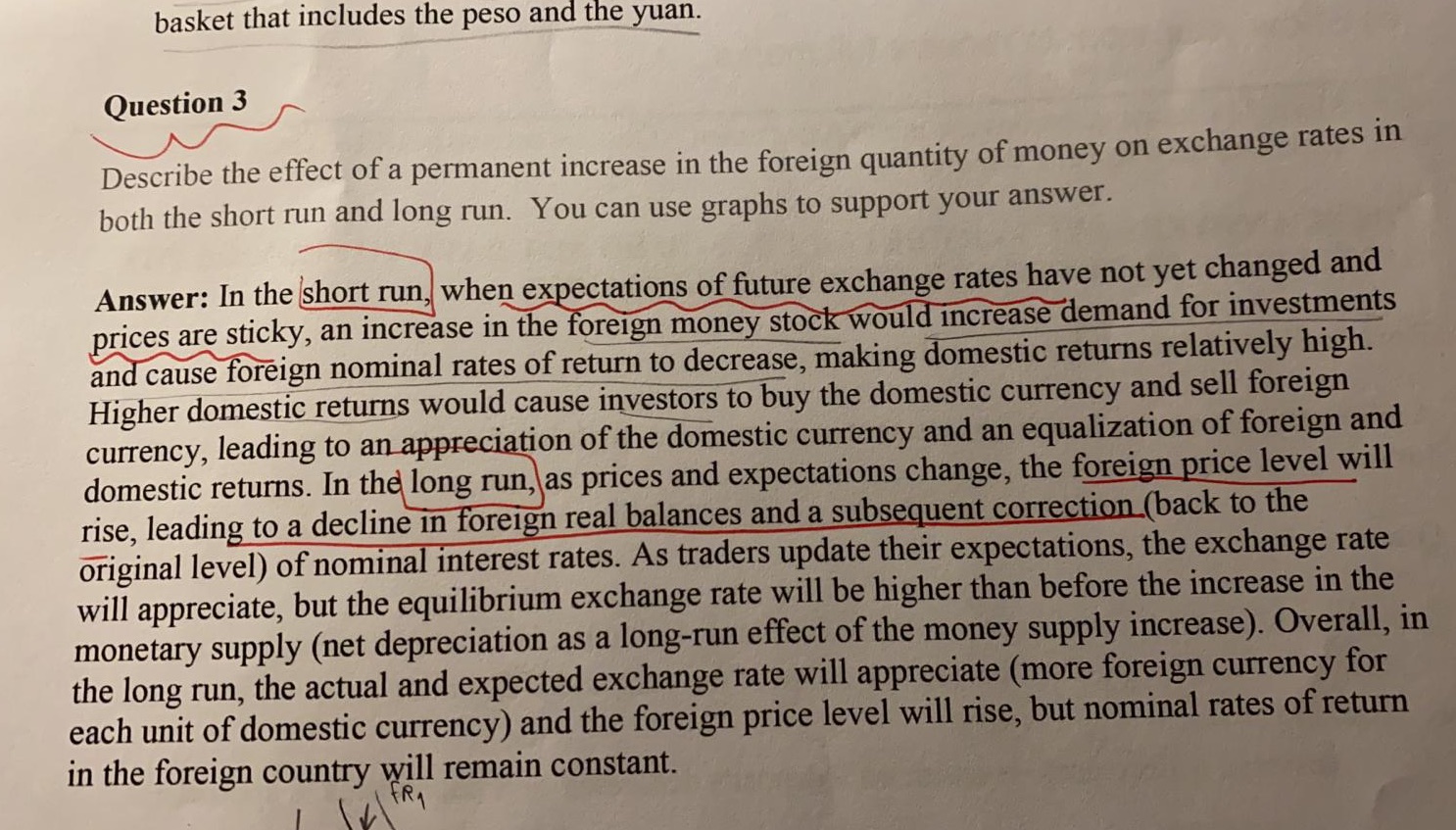
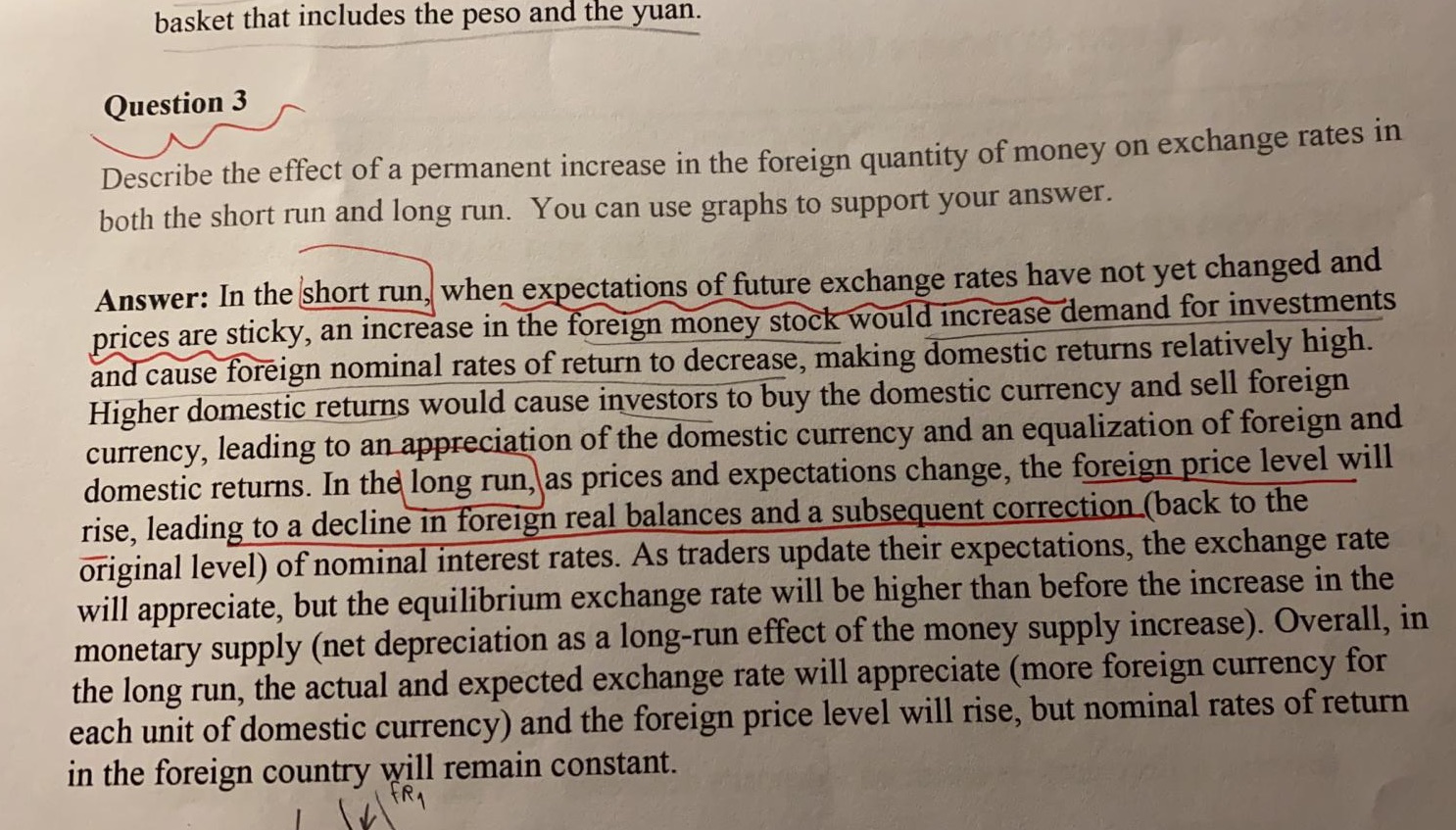
basket that includes the peso and the yuan. Question 3 Describe the effect of a permanent increase in the foreign quantity of money on exchange rates in both the short run and long run. You can use graphs to support your answer. Answer: In the (short run, when expectations of future exchange rates have not yet changed and prices are sticky, an increase in the foreign money stock would increase demand for investments and cause foreign nominal rates of return to decrease, making domestic returns relatively high. Higher domestic returns would cause investors to buy the domestic currency and sell foreign currency, leading to an appreciation of the domestic currency and an equalization of foreign and domestic returns. In the long run, as prices and expectations change, the foreign price level will rise, leading to a decline in foreign real balances and a subsequent correction (back to the original level) of nominal interest rates. As traders update their expectations, the exchange rate will appreciate, but the equilibrium exchange rate will be higher than before the increase in the monetary supply (net depreciation as a long-run effect of the money supply increase). Overall, in the long run, the actual and expected exchange rate will appreciate (more foreign currency for each unit of domestic currency) and the foreign price level will rise, but nominal rates of return in the foreign country will remain constant
Step by Step Solution
There are 3 Steps involved in it

Get step-by-step solutions from verified subject matter experts