







Question: I know this might be a bit time consuming, but you take the time to clearly draw each step out? I m sorry about the
I know this might be a bit time consuming, but you take the time to clearly draw each step out? Im sorry about the bother, but written instructions like that confuse me Having things clearly laid out makes it much easier to follow. Others on Chegg have done this problem, but don't have everything clearly laid out.
Part :
a The values are to be inserted into a MAX
heap initially empty Insert the values in the listed order.
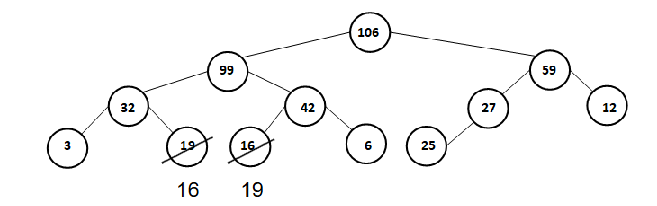
Demonstrate the process by drawing the Binary Heap tree after each insertion and verify that
the final binary heap will be like this has on top
b List the contents of the Vector that represents the final MAXheap in a
Part :
Show the details of deleteMax operations applied to the final MAXheap from
Part depicted Draw binary heap after each swap of nodes andor node deletion. Verify that the binary heap after applications of deleteMax looks like this in image that has on top
b List the contents of the Vector that represents the final MAXheap in a
Part :
MINheapify the final MAXheap from Part depicted Draw the binary
heap after each swap of nodes. Also list the contents of the Vector that represents your final
MINheap.
Step by Step Solution
There are 3 Steps involved in it
1 Expert Approved Answer
Step: 1 Unlock

Question Has Been Solved by an Expert!
Get step-by-step solutions from verified subject matter experts
Step: 2 Unlock
Step: 3 Unlock
 Study Help