







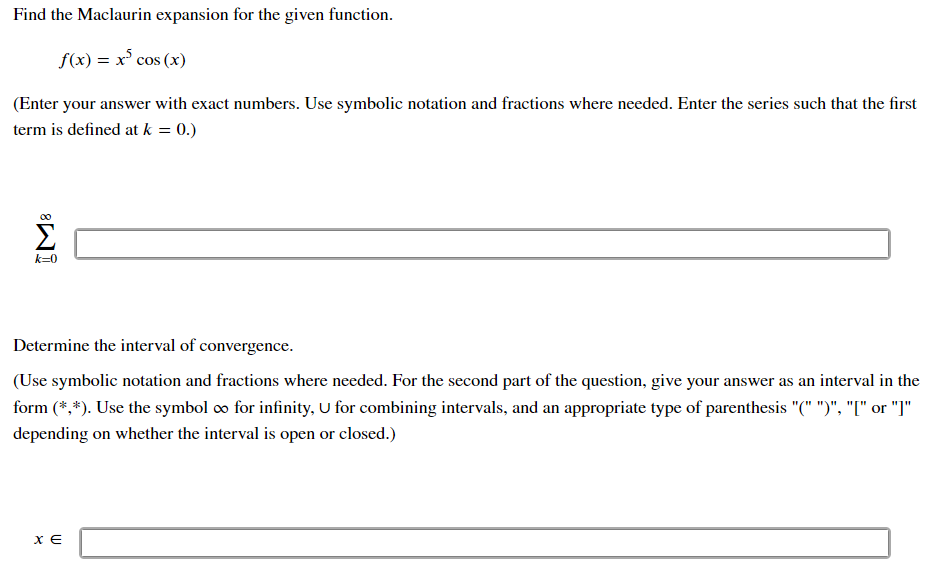
Question: I need help on these 6 problems please: 1. Find the Maclaurin expansion for the given function. f(x) = x cos (x) (Enter your answer
I need help on these 6 problems please:
1.
![")", "[" or "]" depending on whether the interval is open or](https://s3.amazonaws.com/si.experts.images/answers/2024/06/66668e09a1d17_06566668e09907d4.jpg)
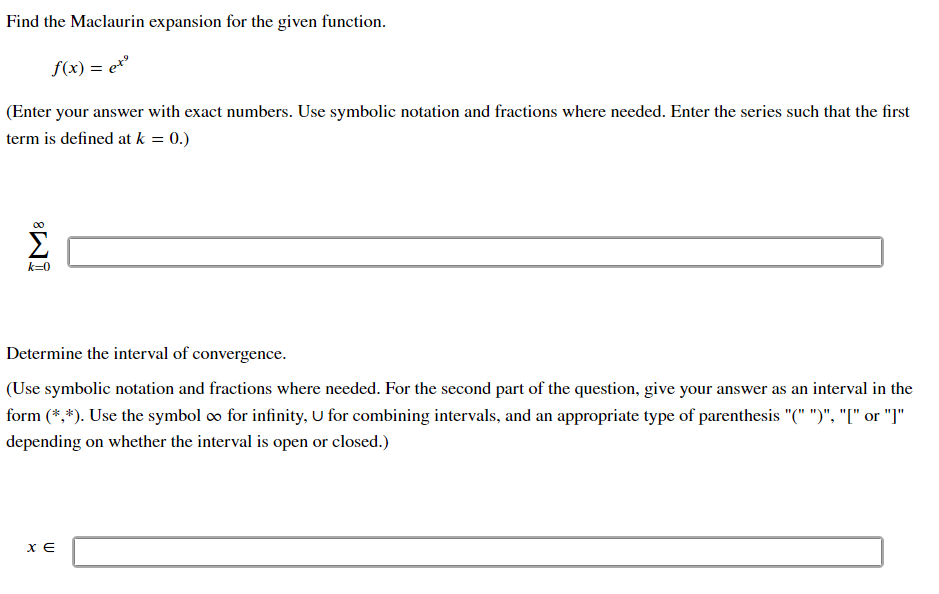
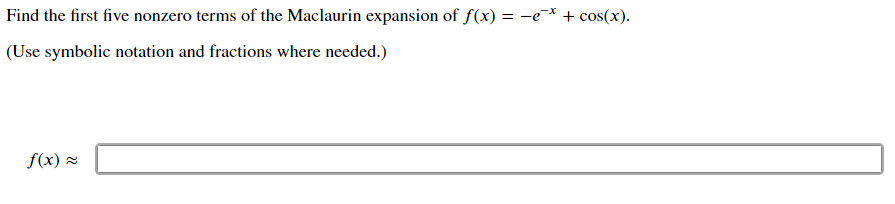
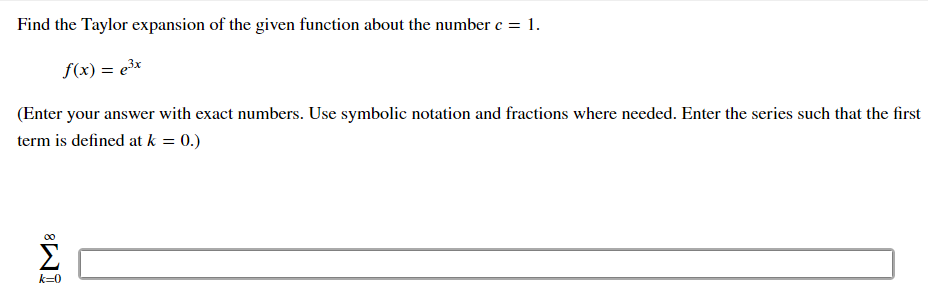
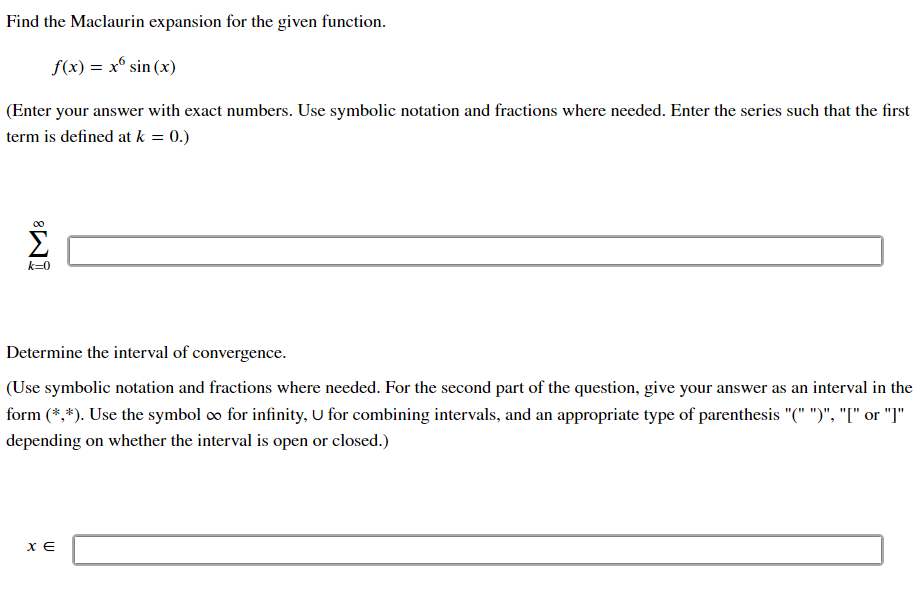
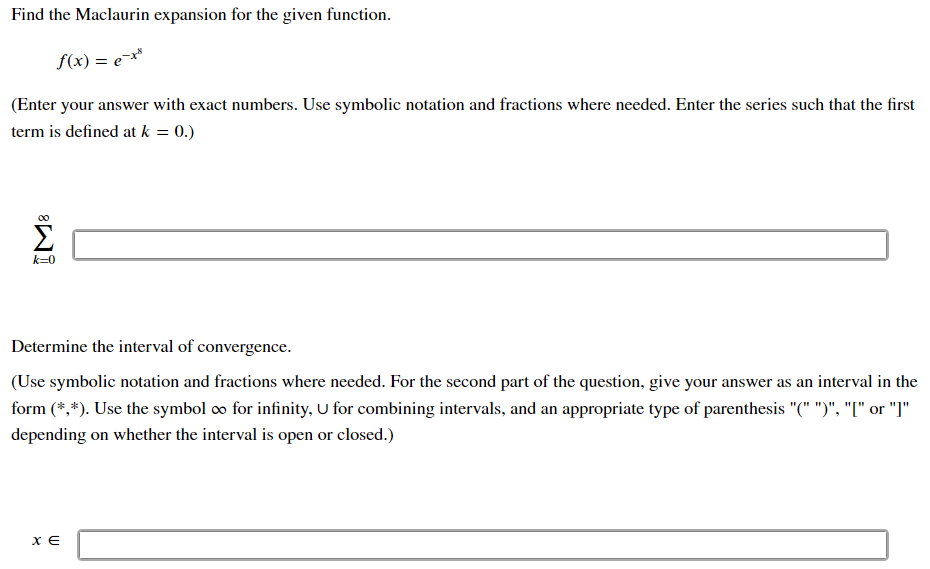
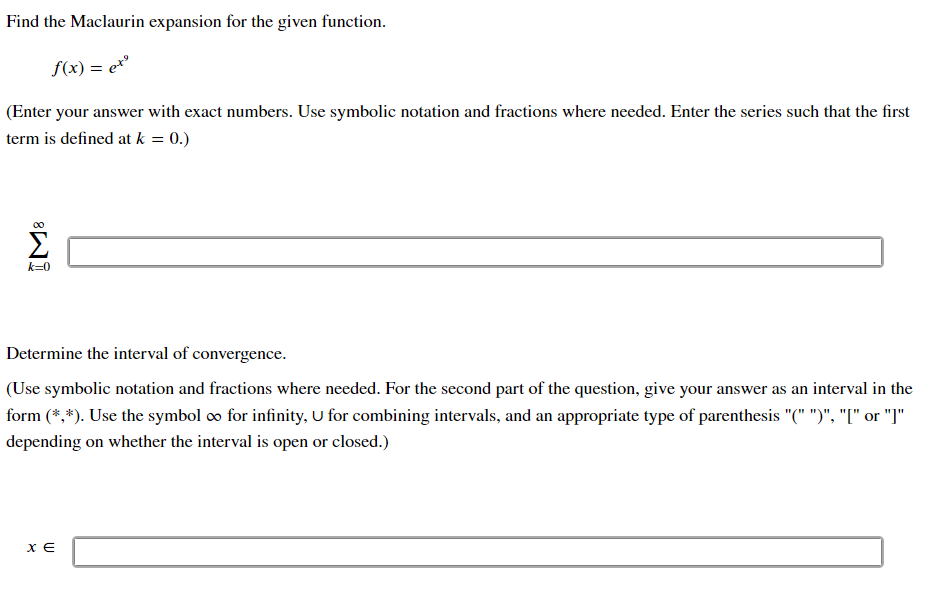
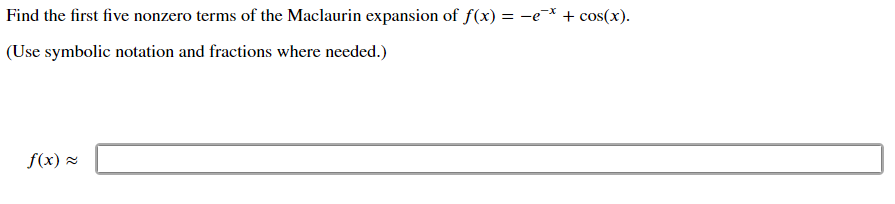
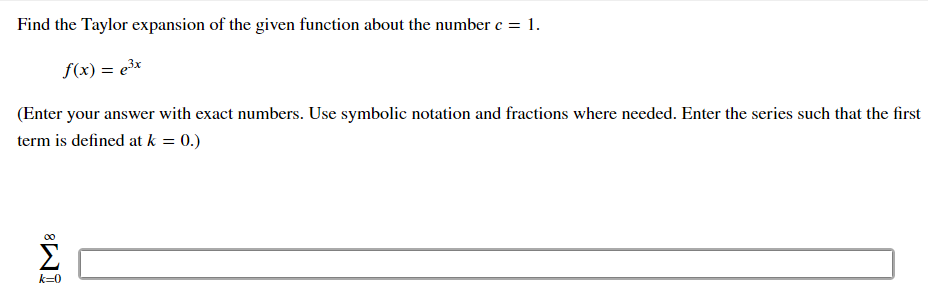
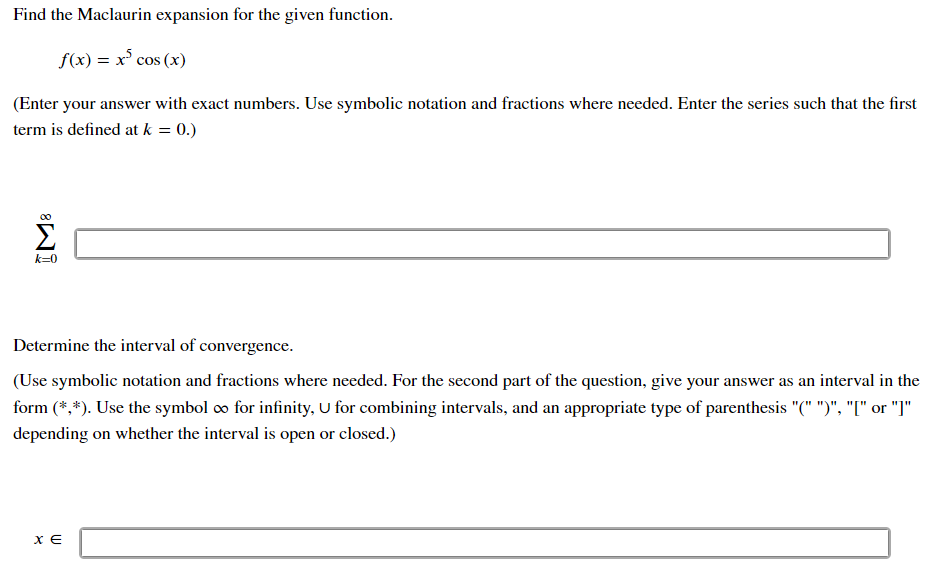
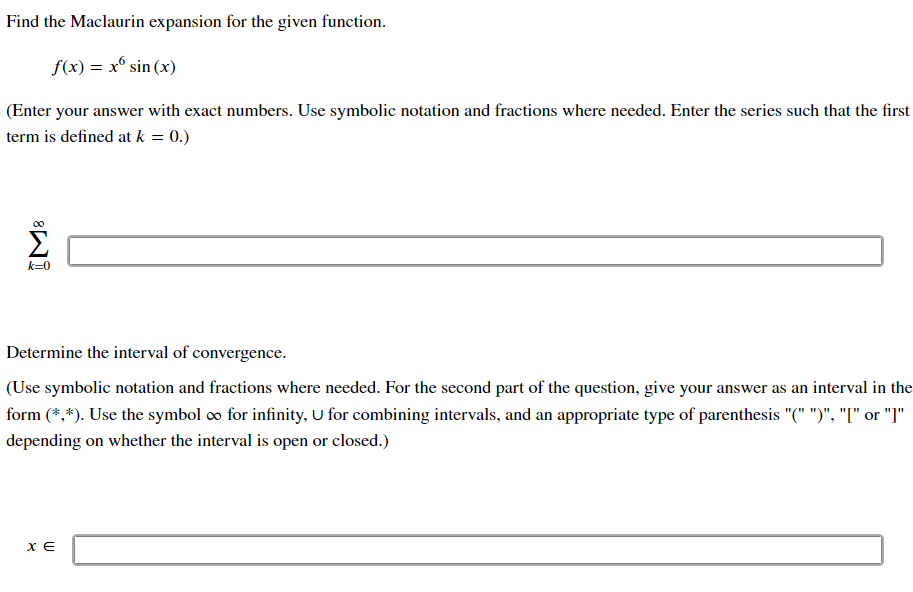
Find the Maclaurin expansion for the given function. f(x) = x cos (x) (Enter your answer with exact numbers. Use symbolic notation and fractions where needed. Enter the series such that the first term is defined at k = 0.) IM: Determine the interval of convergence. (Use symbolic notation and fractions where needed. For the second part of the question, give your answer as an interval in the form (*,*). Use the symbol co for infinity, U for combining intervals, and an appropriate type of parenthesis "(" ")", "[" or "]" depending on whether the interval is open or closed.) X EFind the Maclaurin expansion for the given function. f(x) = x" sin (x) (Enter your answer with exact numbers. Use symbolic notation and fractions where needed. Enter the series such that the first term is defined at k = 0.) IM: Determine the interval of convergence. (Use symbolic notation and fractions where needed. For the second part of the question, give your answer as an interval in the form (*,*). Use the symbol co for infinity, U for combining intervals, and an appropriate type of parenthesis "(" ")", "[" or "]" depending on whether the interval is open or closed.) XEFind the Maclaurin expansion for the given function. f ( x) = ex (Enter your answer with exact numbers. Use symbolic notation and fractions where needed. Enter the series such that the first term is defined at k = 0.) M Determine the interval of convergence. (Use symbolic notation and fractions where needed. For the second part of the question, give your answer as an interval in the form (*,*). Use the symbol co for infinity, U for combining intervals, and an appropriate type of parenthesis "(" ")", "[" or "]" depending on whether the interval is open or closed.) XEFind the Maclaurin expansion for the given function. ax} = 2*\" (Enter your answer with exact numbers. Use symbolic notation and fractions where needed. Enter the series such that the rst term is dened at k : 0.} Determine the interval of convergence. (Use symbolic notation and fractions where needed. For the second part of the question. give your answer as an interval in the form (\"U"). Use the symbol 00 for innity, U for combining intervals, and an appropriate type of parenthesis "(" ")", "[" or \" " depending on whether the interval is open or closed.) . Find the first five nonzero terms of the Maclaurin expansion of f(x) = -e-* + cos(x). (Use symbolic notation and fractions where needed.) f ( x ) ~Find the Taylor expansion of the given function about the number c = 1. f(x) = e3x (Enter your answer with exact numbers. Use symbolic notation and fractions where needed. Enter the series such that the first term is defined at k = 0.)
Step by Step Solution
There are 3 Steps involved in it

Get step-by-step solutions from verified subject matter experts
 Study Help