







Question: I need help solving problem 6.4 of chapter 6 Chapter 6: Departmental Costing and Cost All 6.4 Assume that the for general adminis driver for
I need help solving problem 6.4 of chapter 6
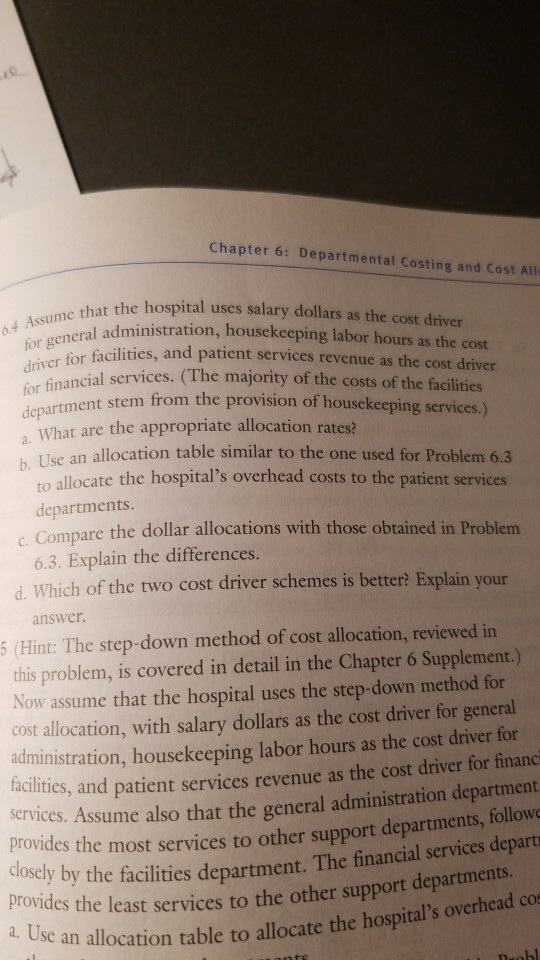
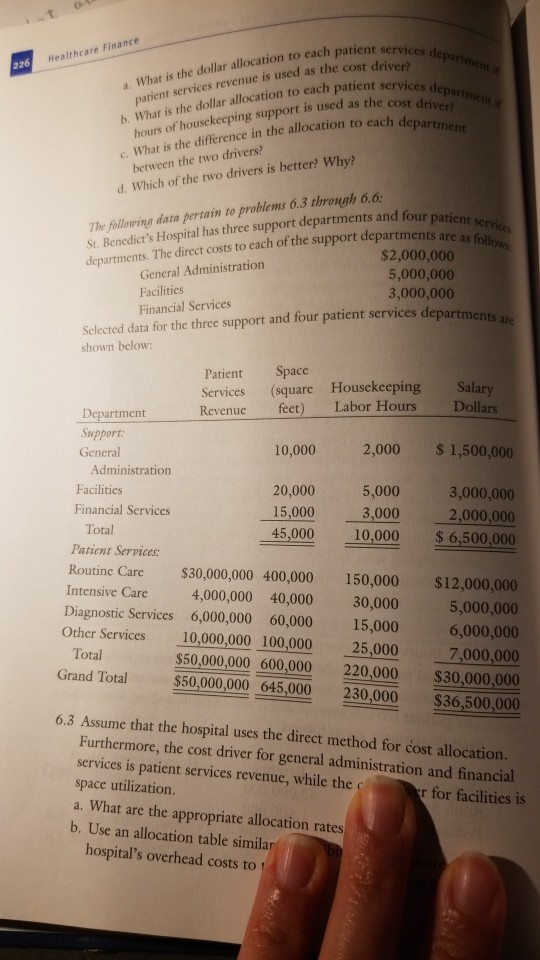
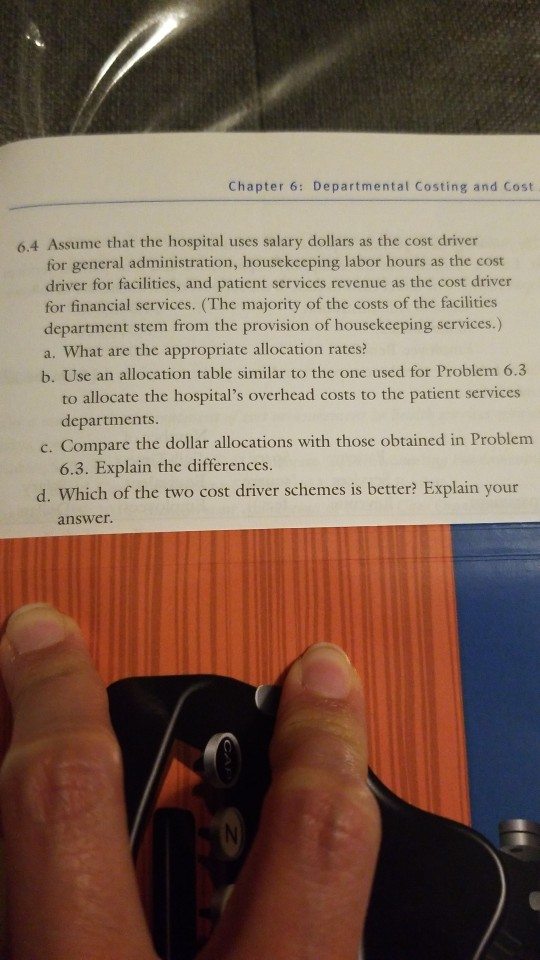
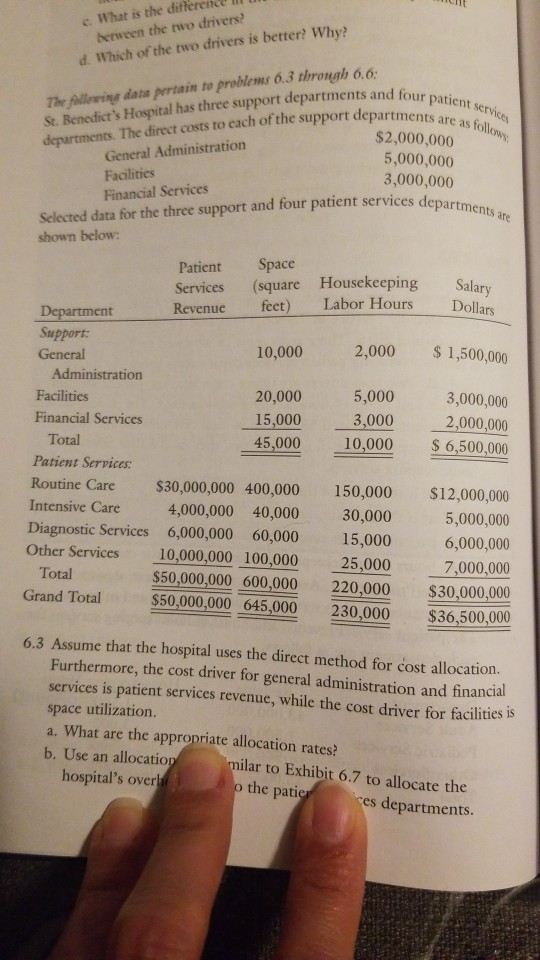
Chapter 6: Departmental Costing and Cost All 6.4 Assume that the for general adminis driver for facilities, and for financial services what the hospital uses salary dollars as the cost driver wanal administration, housekeeping labor hours as the cost facilities, and patient services revenue as the cost driven cial services. (The majority of the costs of the facilities tment stem from the provision of housekeeping services.) What are the appropriate allocation rates? Tee an allocation table similar to the one used for Problem 63 to allocate the hospital's overhead costs to the patient services departments. Compare the dollar allocations with those obtained in Problem 6.3. Explain the differences. d. Which of the two cost driver schemes is better? Explain your answer. 5 (Hint: The step-down method of cost allocation, reviewed in this problem, is covered in detail in the Chapter 6 Supplement.) Now assume that the hospital uses the step-down method for cost allocation, with salary dollars as the cost driver for general administration, housekeeping labor hours as the cost driver for facilities, and patient services revenue as the cost driver for hinang crvices. Assume also that the general administration department me most services to other support departments, followe he facilities department. The financial services depart provides the least services to the other su a. Use an allocation table to allocate provides the most services to closely by the facilities departh t services to the other support departments table to allocate the hospital's overhead con te nobl ices department Healthcare Finance tation to each patient services de 226 ices department is sed as the cost driver? an to each department a. What is the dollar allocation to cad natient services revenue is used as the cost drive b. What is the dollar allocation to each hours of housekeeping support is used as the ci What is the difference in the allocation to each between the two drivers? d. Which of the two drivers is better? Why? and four patient services ents are as follows The following data pertain to problems 6.3 through 6.6: St. Benedict's Hospital has three support departments and four departments. The direct costs to each of the support departments are General Administration Facilities Financial Services Selected data for the three support and four patient services departme shown below: $2,000,000 5,000,000 3,000,000 departments are Salary Housekeeping Labor Hours Dollars 2,000 $1,500,000 Patient Space Services (square Department Revenue feet) Support: General 10,000 Administration Facilities 20,000 Financial Services 15,000 Total 45,000 Patient Services: Routine Care $30,000,000 400,000 Intensive Care 4,000,000 40,000 Diagnostic Services 6,000,000 60,000 Other Services 10,000,000 100,000 Total $50,000,000 600,000 Grand Total $50,000,000 645,000 5,000 3,000 10,000 3,000,000 2,000,000 $6,500,000 150,000 30,000 15,000 25,000 220,000 230,000 $12,000,000 5,000,000 6,000,000 7,000,000 $30,000,000 $36,500,000 6.3 Assume that the hospital uses the direct method for cost allocation. Furthermore, the cost driver for general administration and financial services is patient services revenue, while the er for facilities is space utilization. a. What are the appropriate allocation rates b. Use an allocation table similar hospital's overhead costs to Chapter 6: Departmental Costing and Cost 6.4 Assume that the hospital uses salary dollars as the cost driver for general administration, housekeeping labor hours as the cost driver for facilities, and patient services revenue as the cost driver for financial services. (The majority of the costs of the facilities department stem from the provision of housekeeping services.) a. What are the appropriate allocation rates? b. Use an allocation table similar to the one used for Problem 6.3 to allocate the hospital's overhead costs to the patient services departments. c. Compare the dollar allocations with those obtained in Problem 6.3. Explain the differences. d. Which of the two cost driver schemes is better? Explain your answer. CI c. What is the difference between the two drivers? d. Which of the two drivers is better? Why? ats and four patient servis, departments are as follow The following data pertain to problems 6,3 through 6.6: St. Benedict's Hospital has three support departments and fou derurtiments. The direct costs to each of the support departm General Administration Facilities Financial Services Selected data for the three support and four patient services de shown below: $2,000,000 5,000,000 3,000,000 ces departments are Salary Doll $1,500,000 Patient Space Services (square Housekeeping Revenue feet) Department Labor Hours Support: General 10,000 2,000 Administration Facilities 20,000 5,000 Financial Services 15,000 3,000 Total 45,000 10,000 Patient Services: Routine Care 150,000 Intensive Care 4,000,000 40,000 30,000 Diagnostic Services 6,000,000 60.000 15.000 Other Services 10,000,000 100,000 25,000 Total $50,000,000 600,000 220,000 Grand Total $50,000,000 645,000 230,000 3,000,000 2,000,000 $ 6,500,000 $12,000,000 5,000,000 6,000,000 7,000,000 $30,000,000 $36,500,000 6.3 Assume that the hospital uses the direct method for cost allocation. Furthermore, the cost driver for general administration and financial services is patient services revenue, while the cost driver for facilities is space utilization. a. What are the appropriate allocation rates? b. Use an allocation milar to Exhibit 6.7 to allocate the hospital's overla o the patie ces departments. Chapter 6: Departmental Costing and Cost All 6.4 Assume that the for general adminis driver for facilities, and for financial services what the hospital uses salary dollars as the cost driver wanal administration, housekeeping labor hours as the cost facilities, and patient services revenue as the cost driven cial services. (The majority of the costs of the facilities tment stem from the provision of housekeeping services.) What are the appropriate allocation rates? Tee an allocation table similar to the one used for Problem 63 to allocate the hospital's overhead costs to the patient services departments. Compare the dollar allocations with those obtained in Problem 6.3. Explain the differences. d. Which of the two cost driver schemes is better? Explain your answer. 5 (Hint: The step-down method of cost allocation, reviewed in this problem, is covered in detail in the Chapter 6 Supplement.) Now assume that the hospital uses the step-down method for cost allocation, with salary dollars as the cost driver for general administration, housekeeping labor hours as the cost driver for facilities, and patient services revenue as the cost driver for hinang crvices. Assume also that the general administration department me most services to other support departments, followe he facilities department. The financial services depart provides the least services to the other su a. Use an allocation table to allocate provides the most services to closely by the facilities departh t services to the other support departments table to allocate the hospital's overhead con te nobl ices department Healthcare Finance tation to each patient services de 226 ices department is sed as the cost driver? an to each department a. What is the dollar allocation to cad natient services revenue is used as the cost drive b. What is the dollar allocation to each hours of housekeeping support is used as the ci What is the difference in the allocation to each between the two drivers? d. Which of the two drivers is better? Why? and four patient services ents are as follows The following data pertain to problems 6.3 through 6.6: St. Benedict's Hospital has three support departments and four departments. The direct costs to each of the support departments are General Administration Facilities Financial Services Selected data for the three support and four patient services departme shown below: $2,000,000 5,000,000 3,000,000 departments are Salary Housekeeping Labor Hours Dollars 2,000 $1,500,000 Patient Space Services (square Department Revenue feet) Support: General 10,000 Administration Facilities 20,000 Financial Services 15,000 Total 45,000 Patient Services: Routine Care $30,000,000 400,000 Intensive Care 4,000,000 40,000 Diagnostic Services 6,000,000 60,000 Other Services 10,000,000 100,000 Total $50,000,000 600,000 Grand Total $50,000,000 645,000 5,000 3,000 10,000 3,000,000 2,000,000 $6,500,000 150,000 30,000 15,000 25,000 220,000 230,000 $12,000,000 5,000,000 6,000,000 7,000,000 $30,000,000 $36,500,000 6.3 Assume that the hospital uses the direct method for cost allocation. Furthermore, the cost driver for general administration and financial services is patient services revenue, while the er for facilities is space utilization. a. What are the appropriate allocation rates b. Use an allocation table similar hospital's overhead costs to Chapter 6: Departmental Costing and Cost 6.4 Assume that the hospital uses salary dollars as the cost driver for general administration, housekeeping labor hours as the cost driver for facilities, and patient services revenue as the cost driver for financial services. (The majority of the costs of the facilities department stem from the provision of housekeeping services.) a. What are the appropriate allocation rates? b. Use an allocation table similar to the one used for Problem 6.3 to allocate the hospital's overhead costs to the patient services departments. c. Compare the dollar allocations with those obtained in Problem 6.3. Explain the differences. d. Which of the two cost driver schemes is better? Explain your answer. CI c. What is the difference between the two drivers? d. Which of the two drivers is better? Why? ats and four patient servis, departments are as follow The following data pertain to problems 6,3 through 6.6: St. Benedict's Hospital has three support departments and fou derurtiments. The direct costs to each of the support departm General Administration Facilities Financial Services Selected data for the three support and four patient services de shown below: $2,000,000 5,000,000 3,000,000 ces departments are Salary Doll $1,500,000 Patient Space Services (square Housekeeping Revenue feet) Department Labor Hours Support: General 10,000 2,000 Administration Facilities 20,000 5,000 Financial Services 15,000 3,000 Total 45,000 10,000 Patient Services: Routine Care 150,000 Intensive Care 4,000,000 40,000 30,000 Diagnostic Services 6,000,000 60.000 15.000 Other Services 10,000,000 100,000 25,000 Total $50,000,000 600,000 220,000 Grand Total $50,000,000 645,000 230,000 3,000,000 2,000,000 $ 6,500,000 $12,000,000 5,000,000 6,000,000 7,000,000 $30,000,000 $36,500,000 6.3 Assume that the hospital uses the direct method for cost allocation. Furthermore, the cost driver for general administration and financial services is patient services revenue, while the cost driver for facilities is space utilization. a. What are the appropriate allocation rates? b. Use an allocation milar to Exhibit 6.7 to allocate the hospital's overla o the patie ces departments
Step by Step Solution
There are 3 Steps involved in it

Get step-by-step solutions from verified subject matter experts
 Study Help