Question: I need help with question 4, i have no idea where to even start! Thank you. UPDATE - Here is a summary of part A
I need help with question 4, i have no idea where to even start! Thank you.
UPDATE - Here is a summary of part A toolkit
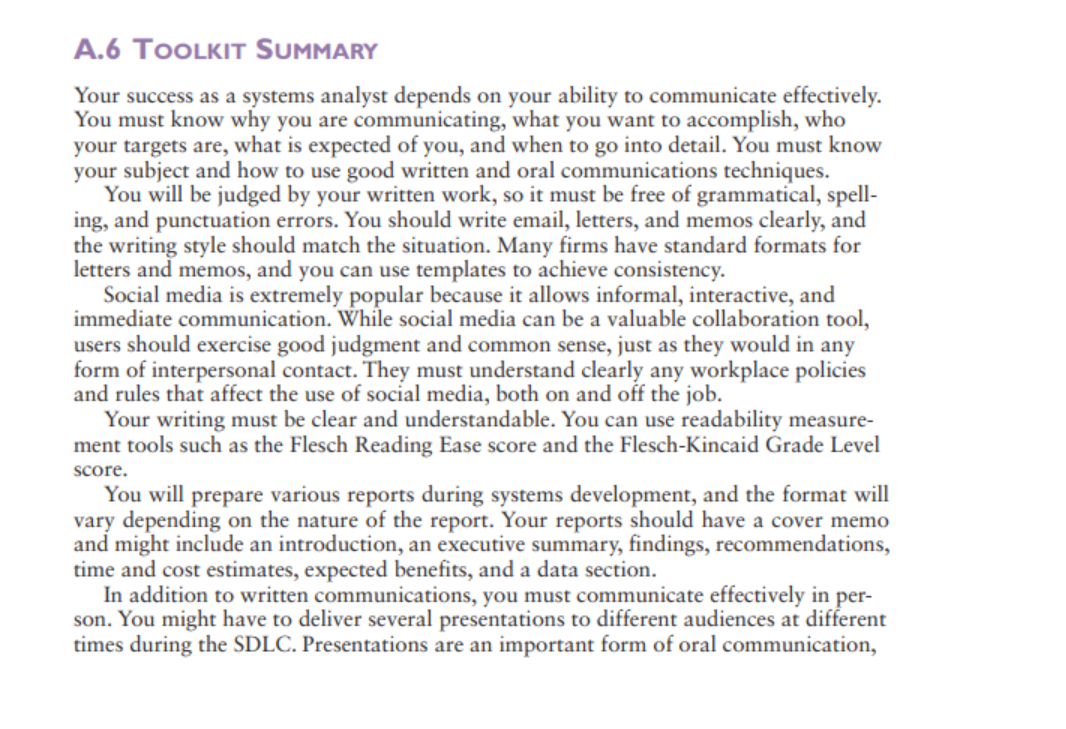
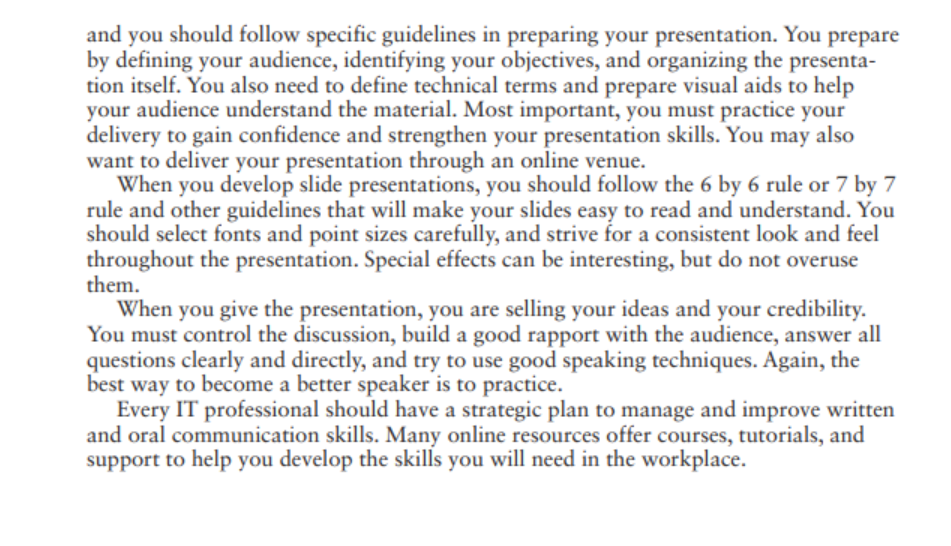
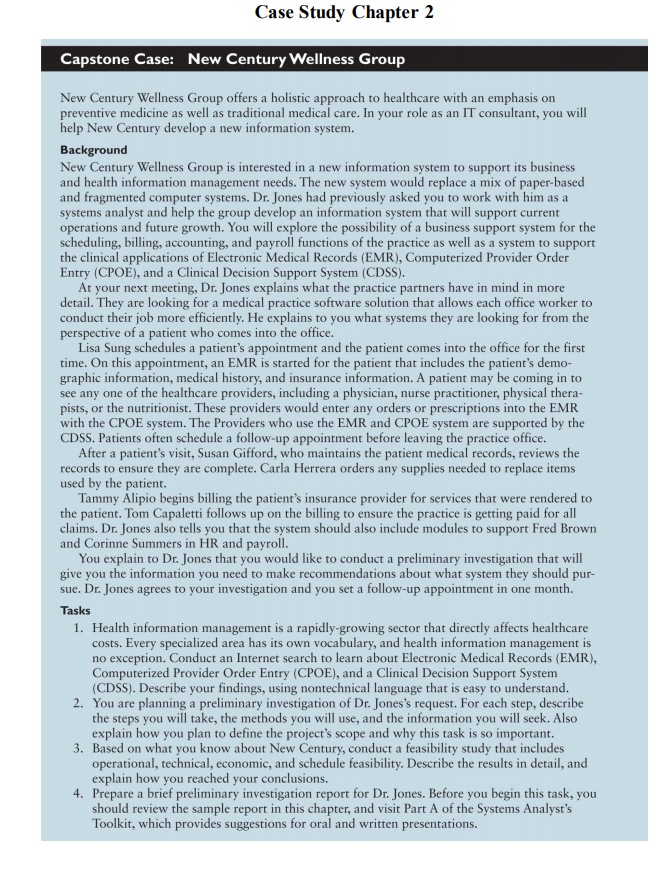
Case Study Chapter 2 Capstone Case: New Century Wellness Group New Century Wellness Group offers a holistic approach to healthcare with an emphasis on preventive medicine as well as traditional medical care. In your role as an IT consultant, you will help New Century develop a new information system. Background New Century Wellness Group is interested in a new information system to support its business and health information management needs. The new system would replace a mix of paper-based and fragmented computer systems. Dr. Jones had previously asked you to work with him as a systems analyst and help the group develop an information system that will support current operations and future growth. You will explore the possibility of a business support system for the scheduling, billing, accounting, and payroll functions of the practice as well as a system to support the clinical applications of Electronic Medical Records (EMR), Computerized Provider Order Entry (CPOE), and a Clinical Decision Support System (CDSS). At your next meeting, Dr. Jones explains what the practice partners have in mind in more detail. They are looking for a medical practice software solution that allows each office worker to conduct their job more efficiently. He explains to you what systems they are looking for from the perspective of a patient who comes into the office. Lisa Sung schedules a patient's appointment and the patient comes into the office for the first time. On this appointment, an EMR is started for the patient that includes the patient's demo- graphic information, medical history, and insurance information. A patient may be coming in to see any one of the healthcare providers, including a physician, nurse practitioner, physical thera- pists, or the nutritionist. These providers would enter any orders or prescriptions into the EMR with the CPOE system. The Providers who use the EMR and CPOE system are supported by the CDSS. Patients often schedule a follow-up appointment before leaving the practice office. After a patient's visit, Susan Gifford, who maintains the patient medical records, reviews the records to ensure they are complete. Carla Herrera orders any supplies needed to replace items used by the patient. Tammy Alipio begins billing the patient's insurance provider for services that were rendered to the patient. Tom Capaletti follows up on the billing to ensure the practice is getting paid for all claims. Dr. Jones also tells you that the system should also include modules to support Fred Brown and Corinne Summers in HR and payroll. You explain to Dr. Jones that you would like to conduct a preliminary investigation that will give you the information you need to make recommendations about what system they should pur- sue. Dr. Jones agrees to your investigation and you set a follow-up appointment in one month. Tasks 1. Health information management is a rapidly-growing sector that directly affects healthcare costs. Every specialized area has its own vocabulary, and health information management is no exception. Conduct an Internet search to learn about Electronic Medical Records (EMR), Computerized Provider Order Entry (CPOE), and a Clinical Decision Support System (CDSS). Describe your findings, using nontechnical language that is easy to understand. 2. You are planning a preliminary investigation of Dr. Jones's request. For each step, describe the steps you will take, the methods you will use, and the information you will seek. Also explain how you plan to define the project's scope and why this task is so important. 3. Based on what you know about New Century, conduct a feasibility study that includes operational, technical, economic, and schedule feasibility. Descr explain how you reached your conclusions. 4. Prepare a brief preliminary investigation report for Dr. Jones. Before you begin this task, you should review the sample report in this chapter, and visit Part A of the Systems Analyst's Toolkit, which provides suggestions for oral and written presentations. A.6 TOOLKIT SUMMARY Your success as a systems analyst depends on your ability to communicate effectively. You must know why you are communicating, what you want to accomplish, who your targets are, what is expected of you, and when to go into detail. You must know your subject and how to use good written and oral communications techniques. You will be judged by your written work, so it must be free of grammatical, spell- ing, and punctuation errors. You should write email, letters, and memos clearly, and the writing style should match the situation. Many firms have standard formats for letters and memos, and you can use templates to achieve consistency. Social media is extremely popular because it allows informal, interactive, and immediate communication. While social media can be a valuable collaboration tool, users should exercise good judgment and common sense, just as they would in any form of interpersonal contact. They must understand clearly any workplace policies and rules that affect the use of social media, both on and off the job. Your writing must be clear and understandable. You can use readability measure- ment tools such as the Flesch Reading Ease score and the Flesch-Kincaid Grade Level score. You will prepare various reports during systems development, and the format will vary depending on the nature of the report. Your reports should have a cover memo and might include an introduction, an executive summary, findings, recommendations, time and cost estimates, expected benefits, and a data section. In addition to written communications, you must communicate effectively in per- son. You might have to deliver several presentations to different audiences at different times during the SDLC. Presentations are an important form of oral communication, and you should follow specific guidelines in preparing your presentation. You prepare by defining your audience, identifying your objectives, and organizing the presenta- tion itself. You also need to define technical terms and prepare visual aids to help your audience understand the material. Most important, you must practice your delivery to gain confidence and strengthen your presentation skills. You may also want to deliver your presentation through an online venue. When you develop slide presentations, you should follow the 6 by 6 rule or 7 by 7 rule and other guidelines that will make your slides easy to read and understand. You should select fonts and point sizes carefully, and strive for a consistent look and feel throughout the presentation. Special effects can be interesting, but do not overuse them. When you give the presentation, you are selling your ideas and your credibility. You must control the discussion, build a good rapport with the audience, answer all questions clearly and directly, and try to use good speaking techniques. Again, the best way to become a better speaker is to practice. Every IT professional should have a strategic plan to manage and improve written and oral communication skills. Many online resources offer courses, tutorials, and support to help you develop the skills you will need in the workplace









 Study Help