



Question: I need help with these questions. On January 1, a company agrees to pay $14,000 in seven years. If the annual interest rate is 7%,
I need help with these questions.
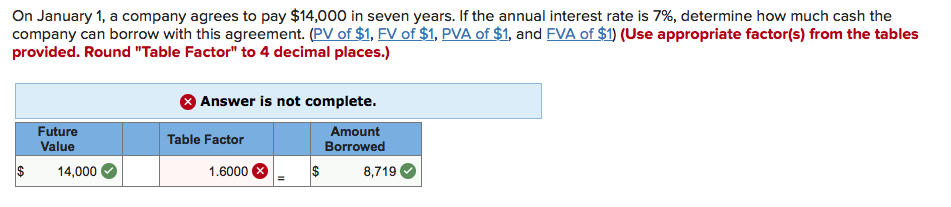
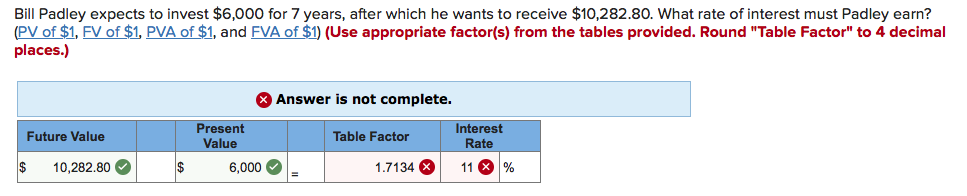

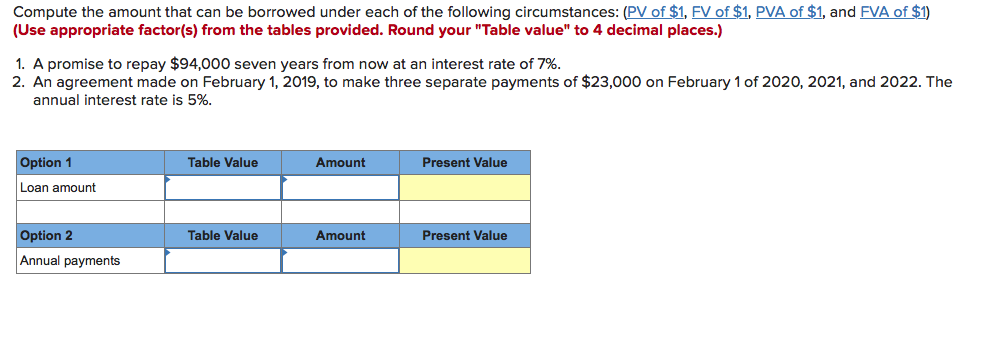
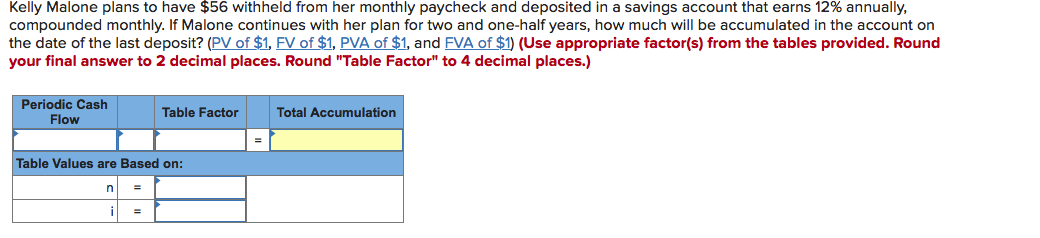
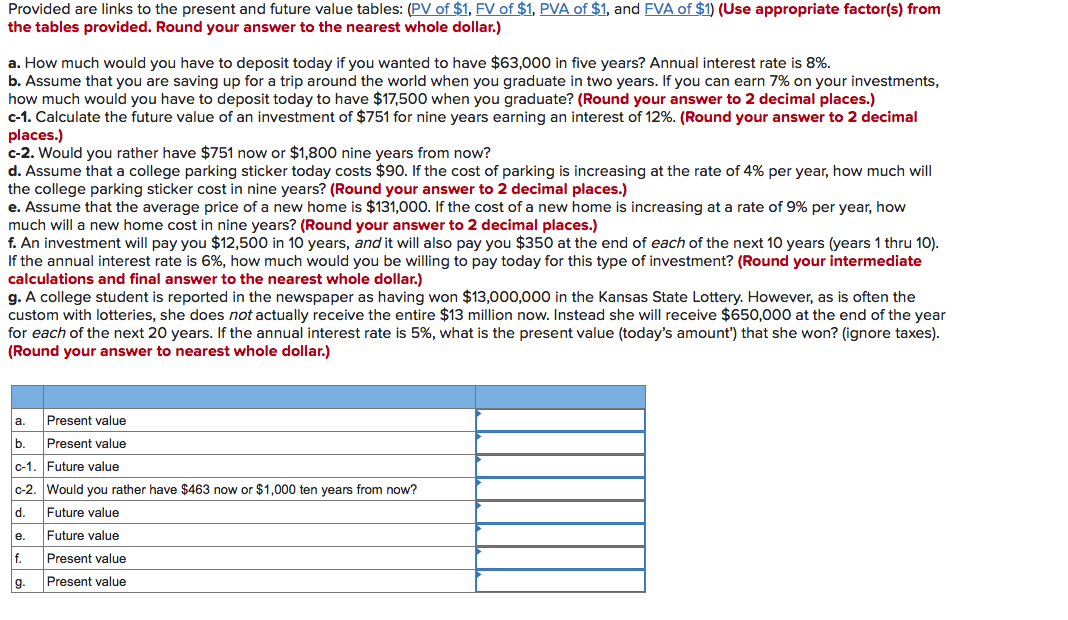
On January 1, a company agrees to pay $14,000 in seven years. If the annual interest rate is 7%, determine how much cash the company can borrow with this agreement. (PV of $1, FV of $1, PVA of $1, and EVA of $1) (Use appropriate factor(s) from the tables provided. Round "Table Factor" to 4 decimal places.) x Answer is not complete. Future Value Table Factor Amount Borrowed $ 14,000 1.6000 X $ 8,719Bill Padley expects to invest $6,000 for 7 years, after which he wants to receive $10,282.80. What rate of interest must Padley earn? (PV of $1, FV of $1, PVA of $1, and EVA of $1) (Use appropriate factor(s) from the tables provided. Round "Table Factor" to 4 decimal places.) x Answer is not complete. Future Value Present Interest Value Table Factor Rate $ 10,282.80 $ 6,000 1.7134 X 11 X %Jones expects an immediate investment of $45,638.00 to return $10,000 annually for seven years, with the first payment to be received one year from now. What rate of interest must Jones earn? (PV of $1, FV of $1, PVA of $1, and EVA of $1) (Use appropriate factor(s) from the tables provided. Round "Table Factor" to 4 decimal places.) Present Value Annuity Payment Table Factor Interest Rate %Compute the amount that can be borrowed under each of the following circumstances: (PV of $1, FV of $1, PVA of $1, and EVA of $1) (Use appropriate factor(s) from the tables provided. Round your "Table value" to 4 decimal places.) 1. A promise to repay $94,000 seven years from now at an interest rate of 7%. 2. An agreement made on February 1, 2019, to make three separate payments of $23,000 on February 1 of 2020, 2021, and 2022. The annual interest rate is 5%. Option 1 Table Value Amount Present Value Loan amount Option 2 Table Value Amount Present Value Annual paymentsKelly Malone plans to have $56 withheld from her monthly paycheck and deposited in a savings account that earns 12% annually, compounded monthly. If Malone continues with her plan for two and one-half years, how much will be accumulated in the account on the date of the last deposit? (PV of $1, FV of $1, PVA of $1, and EVA of $1) (Use appropriate factor(s) from the tables provided. Round your final answer to 2 decimal places. Round "Table Factor" to 4 decimal places.) Periodic Cash Flow Table Factor Total Accumulation = Table Values are Based on: nProvided are links to the present and future value tables: (PV of $1. FV of $1. PVA of $1. and FVA of $1) {Use appropriate factorls) from the tables provided. Round your answer to the nearest whole dollar.) a. How much would you have to deposit today if you wanted to have $63,000 In ve years? Annual interest rate is 8%. h. Assume that you are saving up for a trip around the world when you graduate in two years. If you can earn NE on your investments, how much would you have to deposit today to have $11500 when you graduate? {Round your answer to 2 decimal places.) c-'I. Calculate the future value of an investment of $?51 for nine years earning an interest of 12%. {Round your answer to 2 decimal places.) c-2. Would you rather have $51 now or $1,300 nine years from now? d. Assume that a college parking sticker today costs $90. If the cost of parking is increasing at the rate of 4% per year. how much will the college parking sticker cost in nine years? {Round your answer to 2 decimal places.) e. Assume that the average prioe ofa new home is $131,000. If the cost ofa new home is increasing at a rate of 9% per year, how much will a new home cost in nine years? {Round your answer to 2 decimal places.) f. An investment will pay you $12,500 in 10 years. and it will also pay you $350 at the end of each of the next 10 years {years 1 thru 10). If the annual interest rate is 6%, how much would you be willing to pay today for this type of investment? {Round your Intermediate calculations and nal answer to the nearest whole dollar.) 9. A college student is reported in the newspaper as having won $13,000,000 in the Kansas State Lottery. However. as is often the custom with lotteries, she does not actually receive the entire $13 million now. Instead she will receive $650,000 at the end of the year for each of the next 20 years. If the annual interest rate is 5%. what Is the present value (today's amount') that she won? [ignore taxes). {Round your answer to nearest whole dollar.) a. Pment value b. Present value 01 . Future value c2. Would you rather have $463 new or $1,000 ten years from now'? d Future value e. Future value 1 9 Pment value Present value
Step by Step Solution
There are 3 Steps involved in it

Get step-by-step solutions from verified subject matter experts