Question: I need help with this white paper and dont know how to make this six pages. Conclusion Al is a transformative force shaping the future
I need help with this white paper and dont know how to make this six pages.
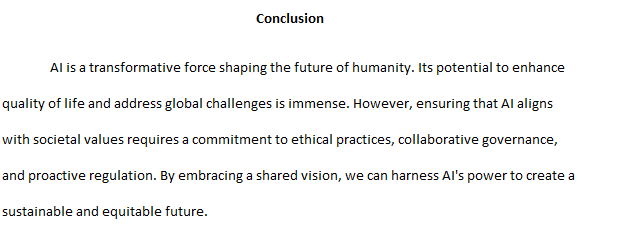
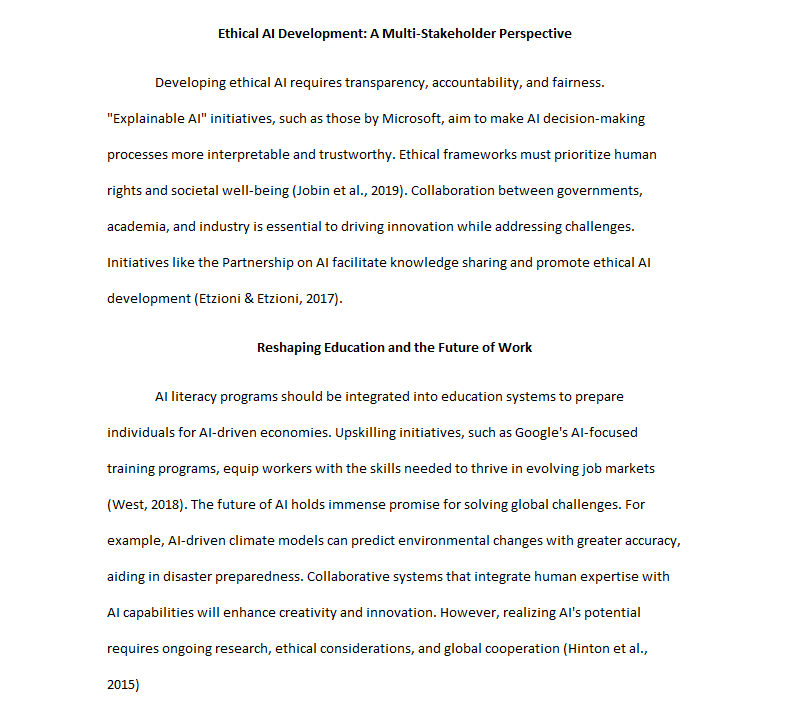
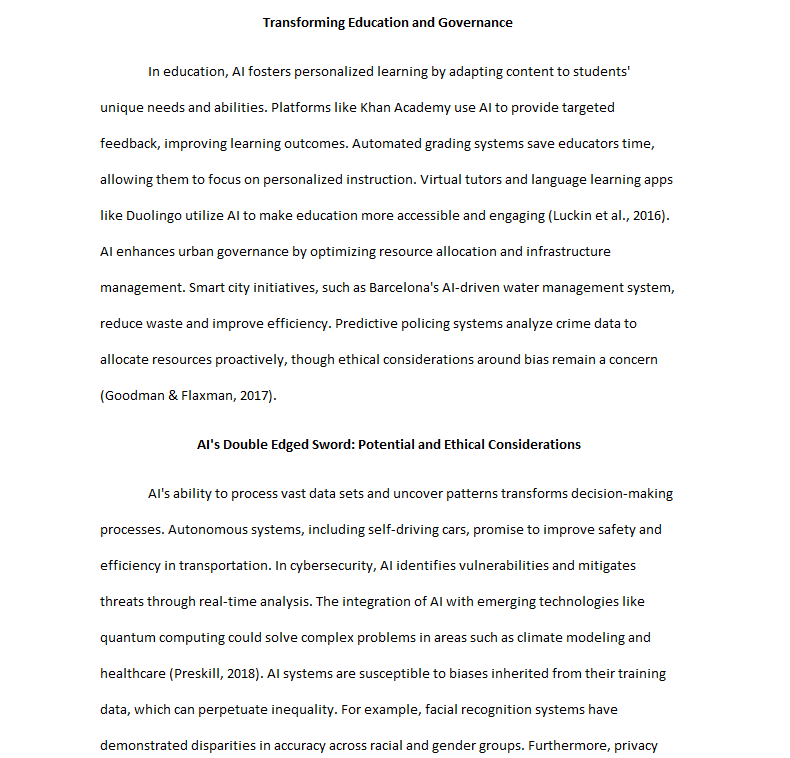
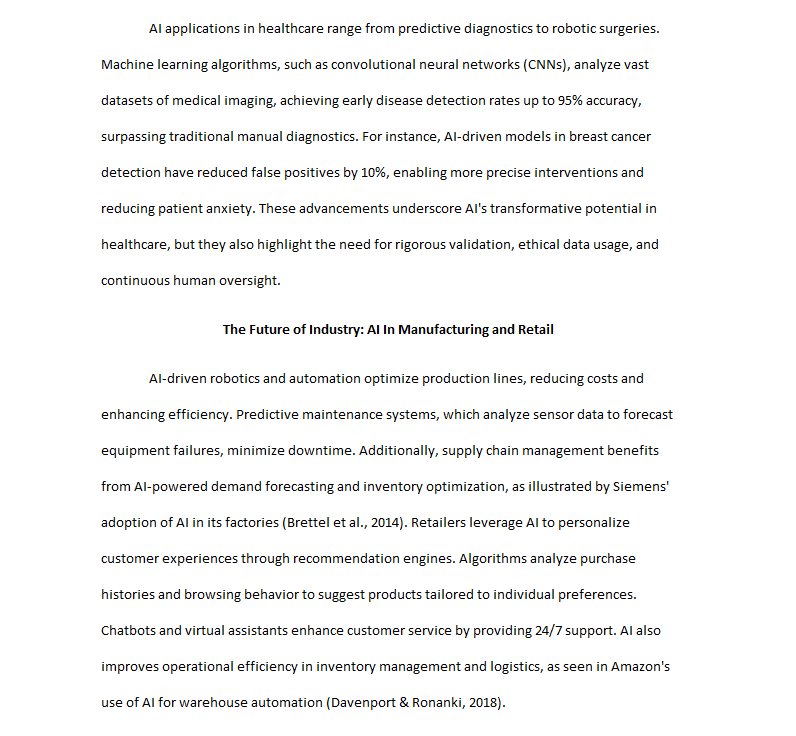
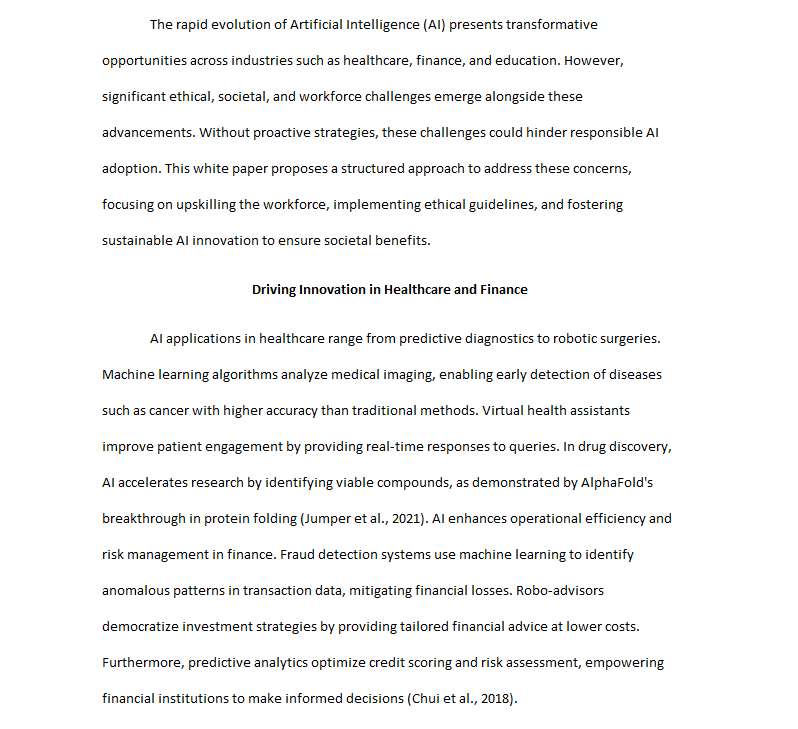
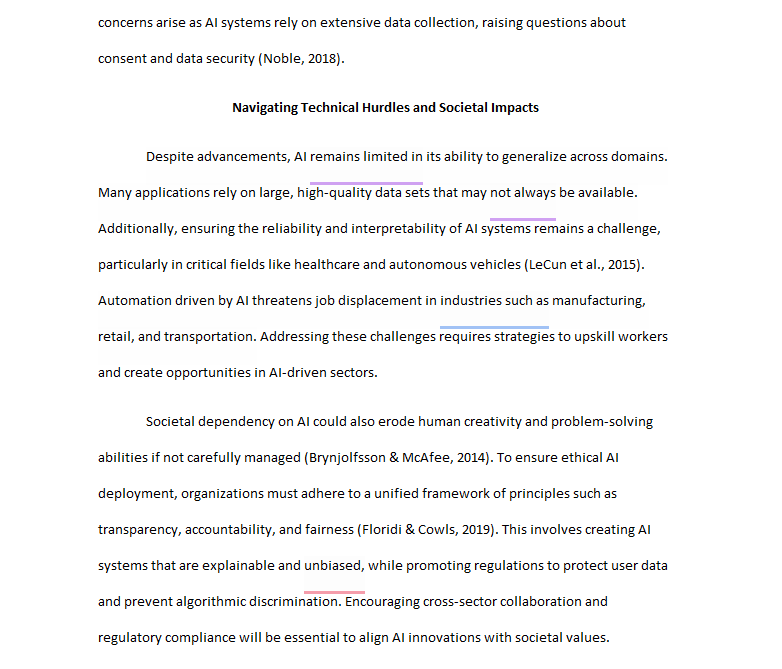
Conclusion Al is a transformative force shaping the future of humanity. Its potential to enhance guality of life and address global challenges is immense. However, ensuring that Al aligns with societal values requires a commitment to ethical practices, collaborative governance, and proactive regulation. By embracing a shared vision, we can harness Al's power to create a sustainable and equitable future. Ethical Al Development: A Multi-Stakeholder Perspective Developing ethical Al requires transparency, accountability, and fairness. "Explainable Al" initiatives, such as those by Microsoft, aim to make Al decision-making processes more interpretable and trustworthy. Ethical frameworks must prioritize human rights and societal well-being (Jobin et al., 2019). Collaboration between governments, academia, and industry is essential to driving innovation while addressing challenges. Initiatives like the Partnership on Al facilitate knowledge sharing and promote ethical Al development (Etzioni & Etzioni, 2017). Reshaping Education and the Future of Work Al literacy programs should be integrated into education systems to prepare individuals for Al-driven economies. Upskilling initiatives, such as Google's Al-focused training programs, equip workers with the skills needed to thrive in evolving job markets (West, 2018). The future of Al holds immense promise for solving global challenges. For example, Al-driven climate models can predict environmental changes with greater accuracy, aiding in disaster preparedness. Collaborative systems that integrate human expertise with Al capabilities will enhance creativity and innovation. However, realizing Al's potential requires ongoing research, ethical considerations, and global cooperation (Hinton et al., 2015)Transforming Education and Governance In education, Al fosters personalized learning by adapting content to students' unigue needs and abilities. Platforms like Khan Academy use Al to provide targeted feedback, improving learning outcomes. Automated grading systems save educators time, allowing them to focus on personalized instruction. Virtual tutors and language learning apps like Duolingo utilize Al to make education more accessible and engaging (Luckin et al., 2016}. Al enhances urban governance by optimizing resource allocation and infrastructure management. Smart city initiatives, such as Barcelona's Al-driven water management system, reduce waste and improve efficiency. Predictive policing systems analyze crime data to allocate resources proactively, though ethical considerations around bias remain a concern {Goodman & Flaxman, 2017). Al's Double Edged S5word: Potential and Ethical Considerations Al's ability to process vast data sets and uncover patterns transforms decision-making processes. Autonomous systems, including self-driving cars, promise to improve safety and efficiency in transportation. In cybersecurity, Al identifies vulnerabilities and mitigates threats through real-time analysis. The integration of Al with emerging technologies like guantum computing could solve complex problems in areas such as climate modeling and healthcare (Preskill, 2018). Al systems are susceptible to biases inherited from their training data, which can perpetuate inequality. For example, facial recognition systems have demonstrated disparities in accuracy across racial and gender groups. Furthermore, privacy Al applications in healthcare range from predictive diagnostics to robotic surgeries. Machine learning algorithms, such as convolutional neural networks (CNNs), analyze vast datasets of medical imaging, achieving early disease detection rates up to 95% accuracy, surpassing traditional manual diagnostics. For instance, Al-driven models in breast cancer detection have reduced false positives by 10%, enabling more precise interventions and reducing patient anxiety. These advancements underscore Al's transformative potential in healthcare, but they also highlight the need for rigorous validation, ethical data usage, and continuous human oversight. The Future of Industry: Al In Manufacturing and Retail Al-driven robotics and automation optimize production lines, reducing costs and enhancing efficiency. Predictive maintenance systems, which analyze sensor data to forecast equipment failures, minimize downtime. Additionally, supply chain management benefits from Al-powered demand forecasting and inventory optimization, as illustrated by Siemens' adoption of Al in its factories (Brettel et al., 2014). Retailers leverage Al to personalize customer experiences through recommendation engines. Algorithms analyze purchase histories and browsing behavior to suggest products tailored to individual preferences. Chatbots and virtual assistants enhance customer service by providing 24/7 support. Al also improves operational efficiency in inventory management and logistics, as seen in Amazon's use of Al for warehouse automation (Davenport & Ronanki, 2018). The rapid evolution of Artificial Intelligence (Al) presents transformative opportunities across industries such as healthcare, finance, and education. However, significant ethical, societal, and workforce challenges emerge alongside these advancements. Without proactive strategies, these challenges could hinder responsible Al adoption. This white paper proposes a structured approach to address these concerns, focusing on upskilling the workforce, implementing ethical guidelines, and fostering sustainable Al innovation to ensure societal benefits. Driving Innovation in Healthcare and Finance Al applications in healthcare range from predictive diagnostics to robotic surgeries. Machine learning algorithms analyze medical imaging, enabling early detection of diseases such as cancer with higher accuracy than traditional methods. Virtual health assistants improve patient engagement by providing real-time responses to queries. In drug discovery, Al accelerates research by identifying viable compounds, as demonstrated by AlphaFold's breakthrough in protein folding (Jumper et al., 2021). Al enhances operational efficiency and risk management in finance. Fraud detection systems use machine learning to identify anomalous patterns in transaction data, mitigating financial losses. Robo-advisors democratize investment strategies by providing tailored financial advice at lower costs. Furthermore, predictive analytics optimize credit scoring and risk assessment, empowering financial institutions to make informed decisions (Chui et al., 2018). concerns arise as Al systems rely on extensive data collection, raising questions about consent and data security (Noble, 2018). Mavigating Technical Hurdles and Societal Impacts Despite advancements, Al remains limited in its ability to generalize across domains. Many applications rely on large, high-quality data sets that may not always be available. Additionally, ensuring the reliability and interpretability of Al systems remains a challenge, particularly in critical fields like healthcare and autonomous vehicles (LeCun et al., 2015). Automation driven by Al threatens job displacement in industries such as manufacturing, retail, and transportation. Addressing these challenges requires strategies to upskill workers and create opportunities in Al-driven sectors. Societal dependency on Al could also erode human creativity and problem-solving abilities if not carefully managed (Brynjolfsson & McAfee, 2014). To ensure ethical Al deployment, organizations must adhere to a unified framework of principles such as transparency, accountability, and fairness (Floridi & Cowls, 2019). This involves creating Al systems that are explainable and unbiased, while promoting regulations to protect user data and prevent algorithmic discrimination. Encouraging cross-sector collaboration and regulatory compliance will be essential to align Al innovations with societal values
Step by Step Solution
There are 3 Steps involved in it
1 Expert Approved Answer
Step: 1 Unlock
Question Has Been Solved by an Expert!
Get step-by-step solutions from verified subject matter experts
Step: 2 Unlock
Step: 3 Unlock
Students Have Also Explored These Related Business Writing Questions!