Question: I need help with writing this email please, I attached some email writing notes asked for as well, thanks. Write an e-mail to a supervisor
I need help with writing this email please, I attached some email writing notes asked for as well, thanks.
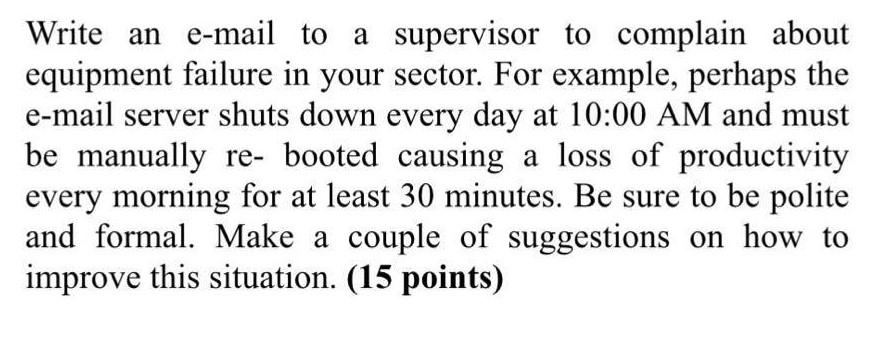
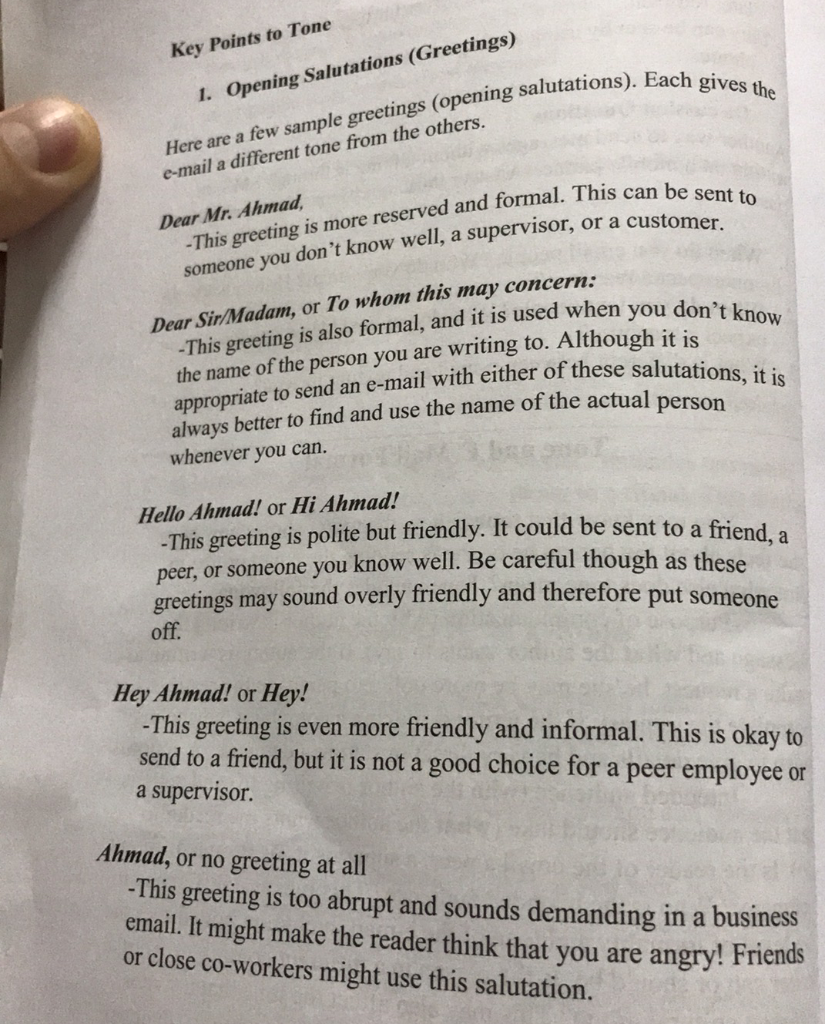
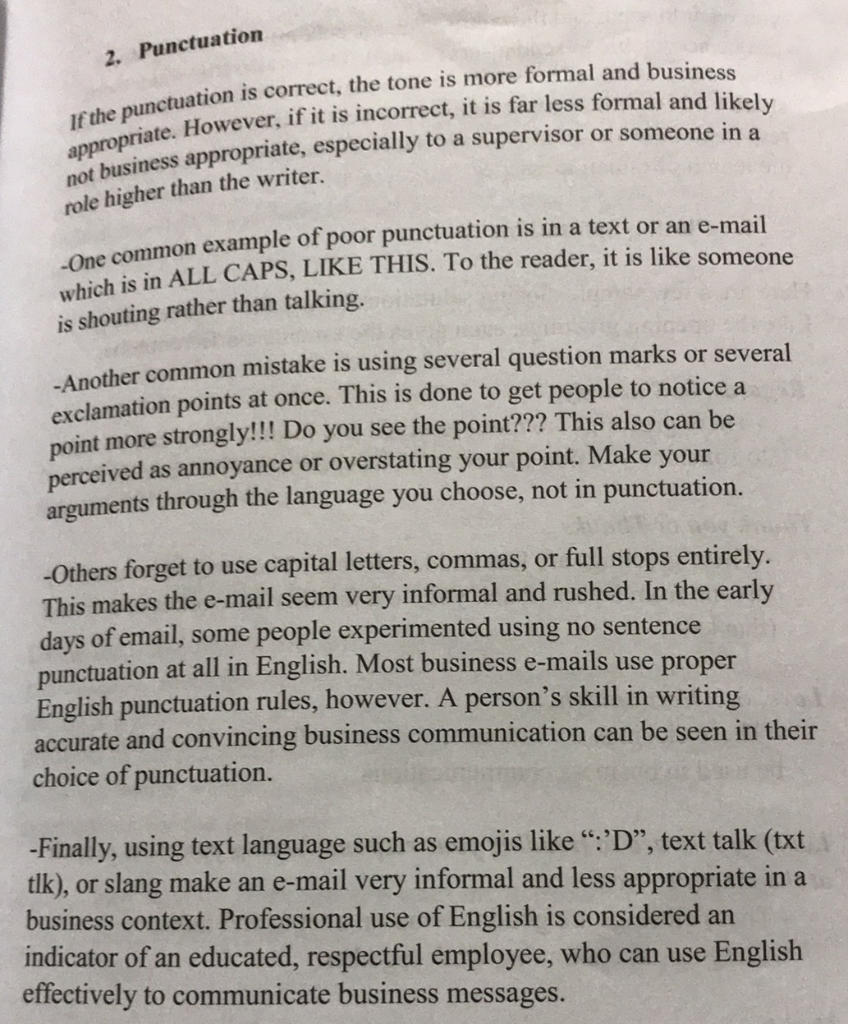
Write an e-mail to a supervisor to complain about equipment failure in your sector. For example, perhaps the e-mail server shuts down every day at 10:00 AM and must be manually re- booted causing a loss of productivity every morning for at least 30 minutes. Be sure to be polite and formal. Make a couple of suggestions on how to improve this situation. (15 points) Here are a few sample greetings (opening salutations). Each gives the -This greeting is more reserved and formal. This can be sent to someone you don't know well, a supervisor, or a customer. -This greeting is also formal, and it is used when you don't know appropriate to send an e-mail with either of these salutations, it is Key Points to Tone 1. Opening Salutations (Greetings) e-mail a different tone from the others. Dear Mr. Ahmad, Dear Sir/Madam, or To whom this may concern: the name of the person you are writing to. Although it is always better to find and use the name of the actual person whenever you can. Hello Ahmad! or Hi Ahmad! -This greeting is polite but friendly. It could be sent to a friend, a peer, or someone you know well. Be careful though as these greetings may sound overly friendly and therefore put someone off. Hey Ahmad! or Hey! -This greeting is even more friendly and informal. This is okay to send to a friend, but it is not a good choice for a peer employee or a supervisor. Ahmad, or no greeting at all -This greeting is too abrupt and sounds demanding in a business email. It might make the reader think that you are angry! Friends or close co-workers might use this salutation. If the punctuation is correct, the tone is more formal and business appropriate. However, if it is incorrect, it is far less formal and likely not business appropriate, especially to a supervisor or someone in a 2. Punctuation role higher than the writer. -One common example of poor punctuation is in a text or an e-mail which is in ALL CAPS, LIKE THIS. To the reader, it is like someone is shouting rather than talking. -Another common mistake is using several question marks or several exclamation points at once. This is done to get people to notice a point more strongly!!! Do you see the point??? This also can be perceived as annoyance or overstating your point. Make your arguments through the language you choose, not in punctuation. -Others forget to use capital letters, commas, or full stops entirely. This makes the e-mail seem very informal and rushed. In the early days of email, some people experimented using no sentence punctuation at all in English. Most business e-mails use proper English punctuation rules, however. A person's skill in writing accurate and convincing business communication can be seen in their choice of punctuation. -Finally, using text language such as emojis like ":'D, text talk (txt tlk), or slang make an e-mail very informal and less appropriate in a business context. Professional use of English is considered an indicator of an educated, respectful employee, who can use English effectively to communicate business messages









 Study Help