







Question: I need part B . Its the same question the ratio now it 1 . 2 5 0 0 . 5 6 1 Methanol )
I need part B Its the same question the ratio now it
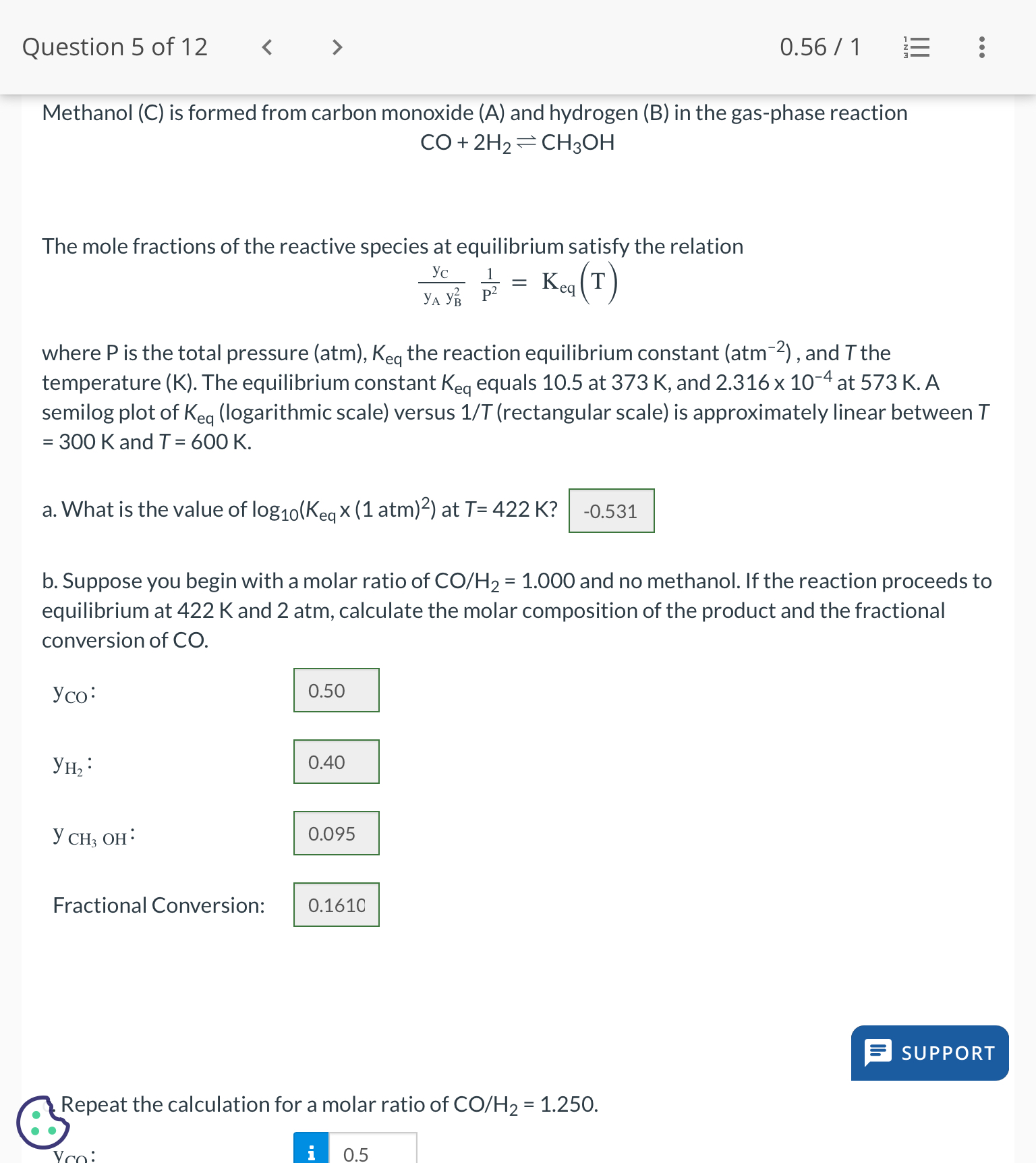
Methanol is formed from carbon monoxide and hydrogen B in the gasphase reaction
The mole fractions of the reactive species at equilibrium satisfy the relation
where is the total pressure atm the reaction equilibrium constant and the temperature K The equilibrium constant equals at K and at A semilog plot of logarithmic scale versus rectangular scale is approximately linear between and
a What is the value of at
b Suppose you begin with a molar ratio of and no methanol. If the reaction proceeds to equilibrium at K and atm calculate the molar composition of the product and the fractional conversion of CO
:
:
:
Fractional Conversion:
Repeat the calculation for a molar ratio of
Step by Step Solution
There are 3 Steps involved in it
1 Expert Approved Answer
Step: 1 Unlock

Question Has Been Solved by an Expert!
Get step-by-step solutions from verified subject matter experts
Step: 2 Unlock
Step: 3 Unlock
 Study Help