



Question: I need table for this 1) Consider the indefinitely repeated prisoner's dilemma. Recall that the tit-for-tat strategy is to cooperate (deny) in the first round
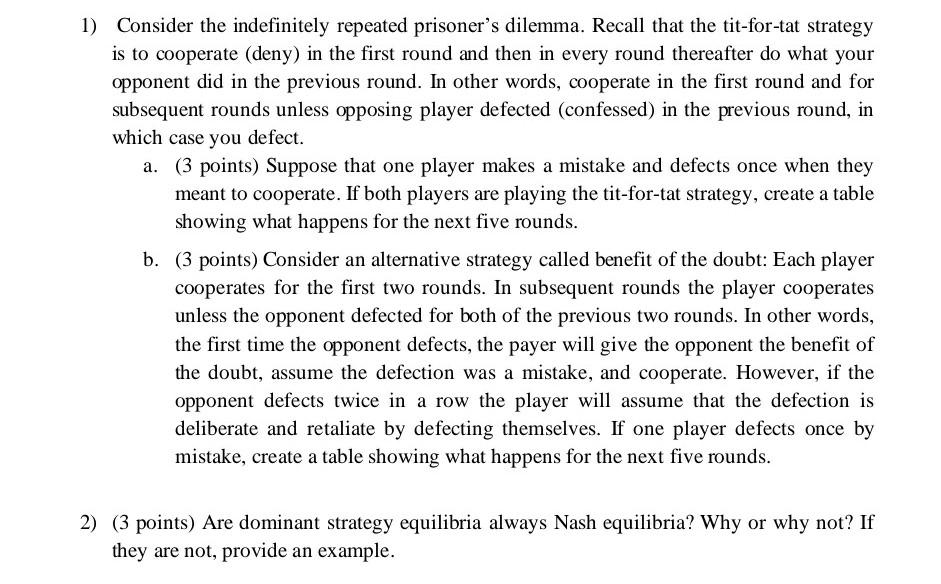
I need table for this
1) Consider the indefinitely repeated prisoner's dilemma. Recall that the tit-for-tat strategy is to cooperate (deny) in the first round and then in every round thereafter do what your opponent did in the previous round. In other words, cooperate in the first round and for subsequent rounds unless opposing player defected (confessed) in the previous round, in which case you defect. a. (3 points) Suppose that one player makes a mistake and defects once when they meant to cooperate. If both players are playing the tit-for-tat strategy, create a table showing what happens for the next five rounds. b. (3 points) Consider an alternative strategy called benefit of the doubt: Each player cooperates for the first two rounds. In subsequent rounds the player cooperates unless the opponent defected for both of the previous two rounds. In other words, the first time the opponent defects, the payer will give the opponent the benefit of the doubt, assume the defection was a mistake, and cooperate. However, if the opponent defects twice in a row the player will assume that the defection is deliberate and retaliate by defecting themselves. If one player defects once by mistake, create a table showing what happens for the next five rounds. 2) (3 points) Are dominant strategy equilibria always Nash equilibria? Why or why not? If they are not, provide an example
Step by Step Solution
There are 3 Steps involved in it

Get step-by-step solutions from verified subject matter experts