Question: I need to summarize this please these issues. The IRS is concentrating on good governance - is there a publicly stated mission, an active, independent,
I need to summarize this please
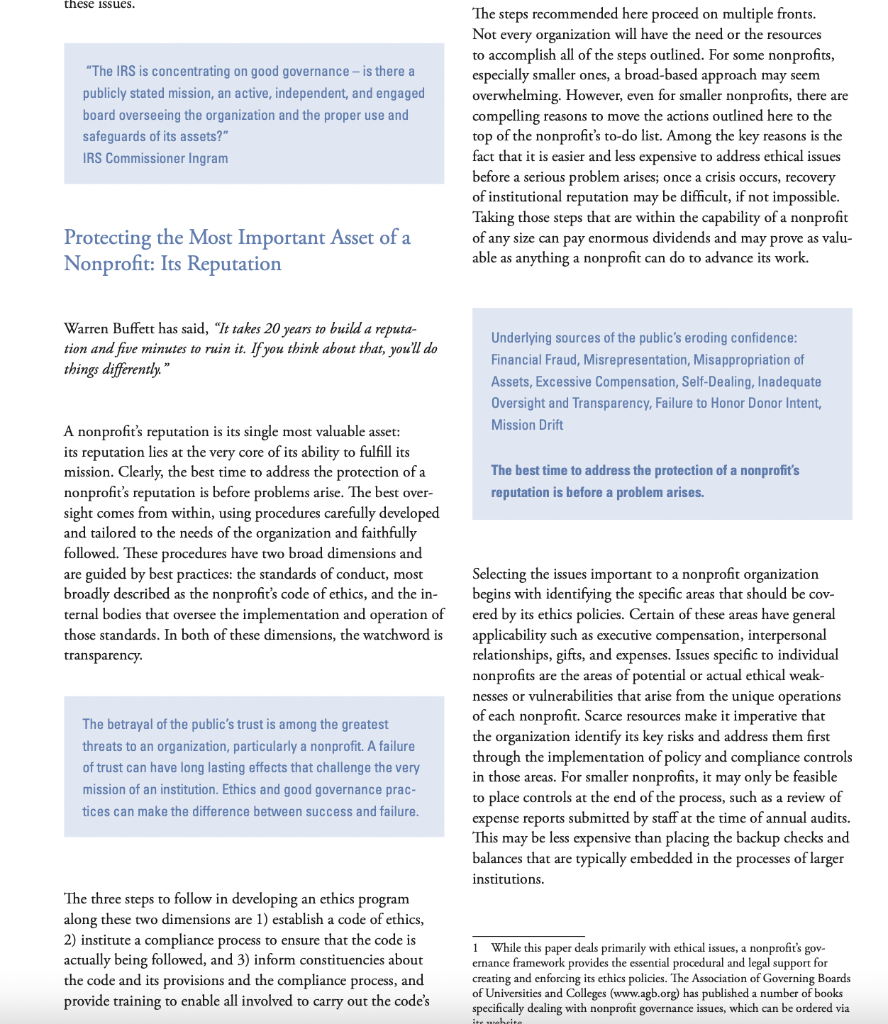
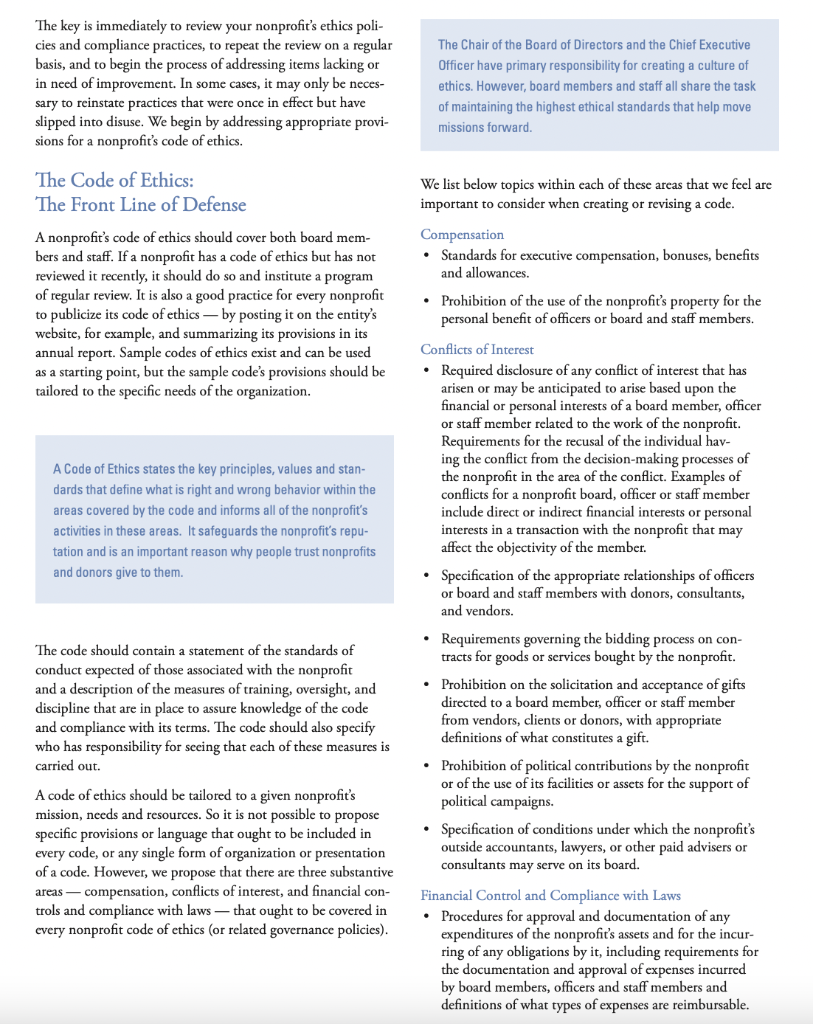
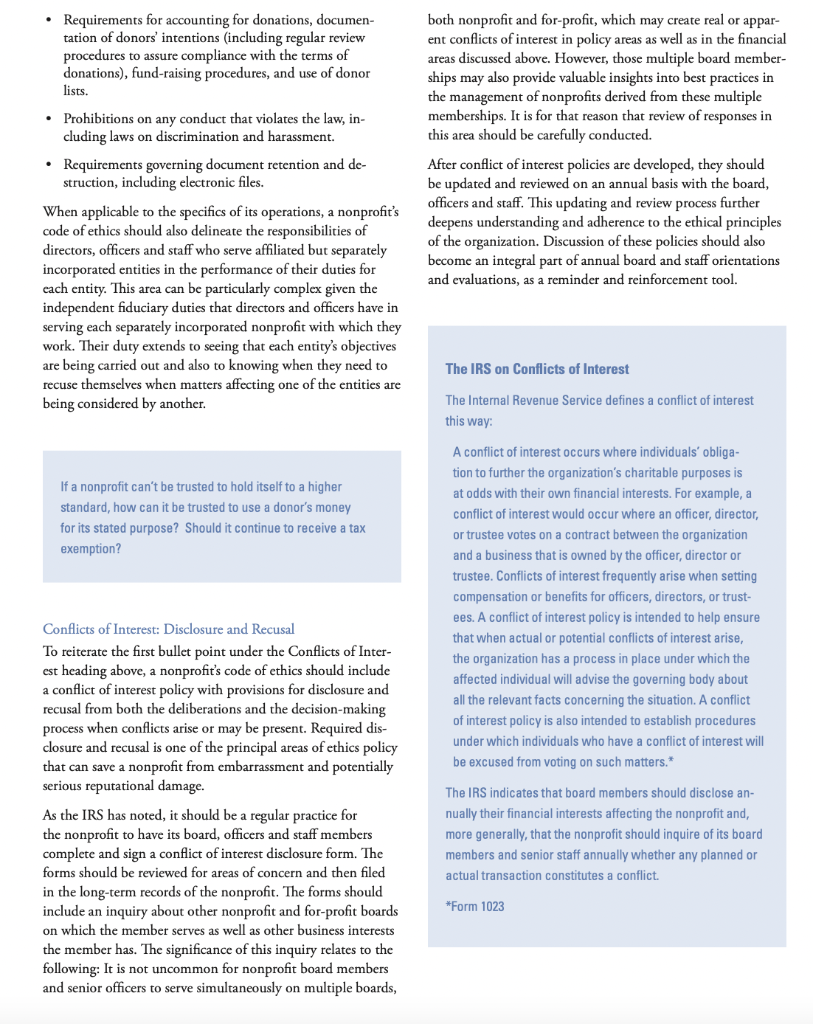
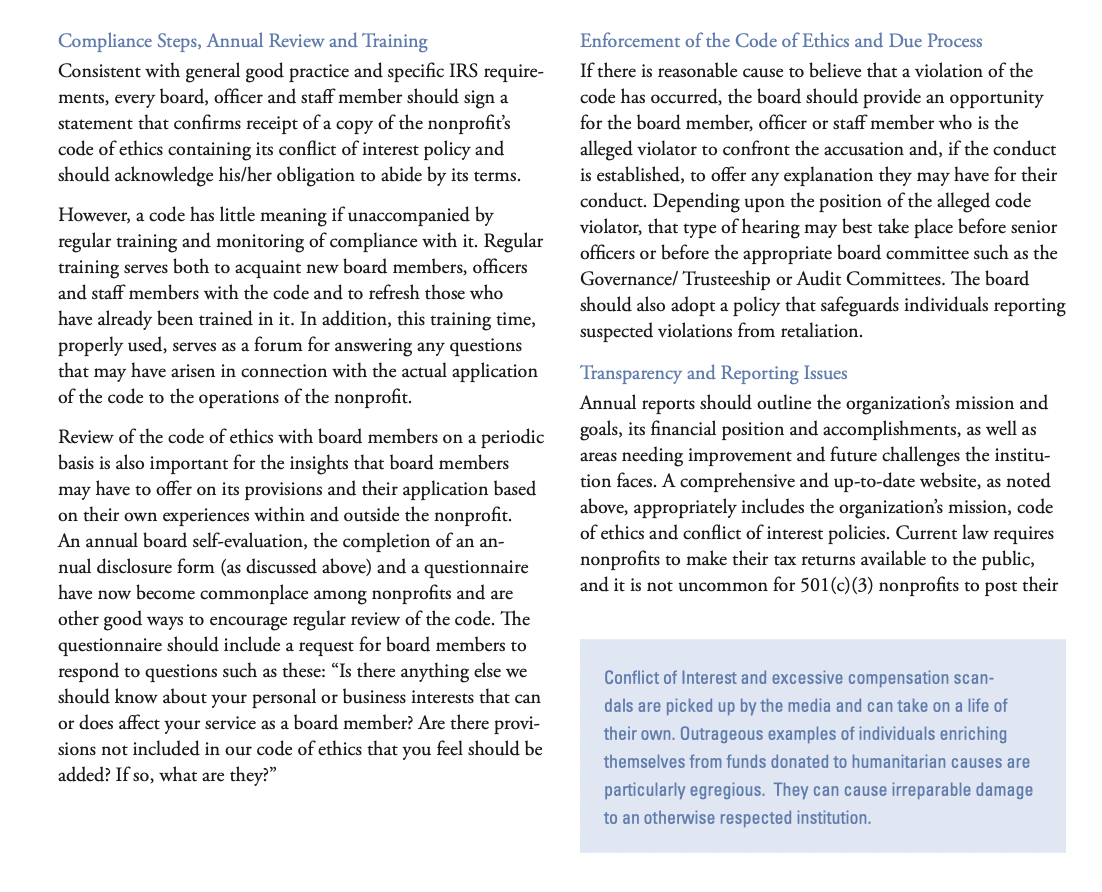
these issues. "The IRS is concentrating on good governance - is there a publicly stated mission, an active, independent, and engaged board overseeing the organization and the proper use and safeguards of its assets?" IRS Commissioner Ingram The steps recommended here proceed on multiple fronts. Not every organization will have the need or the resources to accomplish all of the steps outlined. For some nonprofits, especially smaller ones, a broad-based approach may seem overwhelming. However, even for smaller nonprofits, there are compelling reasons to move the actions outlined here to the top of the nonprofits to-do list. Among the key reasons is the fact that it is easier and less expensive to address ethical issues before a serious problem arises; once a crisis occurs, recovery of institutional reputation may be difficult, if not impossible. Taking those steps that are within the capability of a nonprofit of any size can pay enormous dividends and may prove as valu- able as anything a nonprofit can do to advance its work. Protecting the Most Important Asset of a Nonprofit: Its Reputation Warren Buffett has said, "It takes 20 years to build a reputa- tion and five minutes to ruin it. If you think about that, you'll do things differently." Underlying sources of the public's eroding confidence: Financial Fraud, Misrepresentation, Misappropriation of Assets, Excessive Compensation, Self-Dealing, Inadequate Oversight and Transparency, Failure to Honor Donor Intent, Mission Drift The best time to address the protection of a nonprofit's reputation is before a problem arises. A nonprofit's reputation is its single most valuable asset: its reputation lies at the very core of its ability to fulfill its mission. Clearly, the best time to address the protection of a nonprofit's reputation is before problems arise. The best over- sight comes from within, using procedures carefully developed and tailored to the needs of the organization and faithfully followed. These procedures have two broad dimensions and are guided by best practices: the standards of conduct, most broadly described as the nonprofit's code of ethics, and the in- ternal bodies that oversee the implementation and operation of those standards. In both of these dimensions, the watchword is transparency The betrayal of the public's trust is among the greatest threats to an organization, particularly a nonprofit. A failure of trust can have long lasting effects that challenge the very mission of an institution. Ethics and good governance prac- tices can make the difference between success and failure. Selecting the issues important to a nonprofit organization begins with identifying the specific areas that should be cov- ered by its ethics policies. Certain of these areas have general applicability such as executive compensation, interpersonal relationships, gifts, and expenses. Issues specific to individual nonprofits are the areas of potential or actual ethical weak- nesses or vulnerabilities that arise from the unique operations of each nonprofit. Scarce resources make it imperative that the organization identify its key risks and address them first through the implementation of policy and compliance controls in those areas. For smaller nonprofits, it may only be feasible to place controls at the end of the process, such as a review of expense reports submitted by staff at the time of annual audits. This may be less expensive than placing the backup checks and balances that are typically embedded in the processes of larger institutions. The three steps to follow in developing an ethics program along these two dimensions are 1) establish a code of ethics, 2) institute a compliance process to ensure that the code is actually being followed, and 3) inform constituencies about the code and its provisions and the compliance process, and provide training to enable all involved to carry out the code's 1 While this paper deals primarily with ethical issues, a nonprofit's gov- erance framework provides the essential procedural and legal support for creating and enforcing its ethics policies. The Association of Governing Boards of Universities and Colleges (www.agb.org) has published a number of books specifically dealing with nonprofit governance issues, which can be ordered via it brita The key is immediately to review your nonprofit's ethics poli- cies and compliance practices, to repeat the review on a regular basis, and to begin the process of addressing items lacking or in need of improvement. In some cases, it may only be neces- sary to reinstate practices that were once in effect but have slipped into disuse. We begin by addressing appropriate provi- sions for a nonprofit's code of ethics. The Chair of the Board of Directors and the Chief Executive Officer have primary responsibility for creating a culture of ethics. However, board members and staff all share the task of maintaining the highest ethical standards that help move missions forward. The Code of Ethics: The Front Line of Defense A nonprofit's code of ethics should cover both board mem- bers and staff. If a nonprofit has a code of ethics but has not reviewed it recently, it should do so and institute a program of regular review. It is also a good practice for every nonprofit to publicize its code of ethics by posting it on the entity's website, for example, and summarizing its provisions in its annual report. Sample codes of ethics exist and can be used as a starting point, but the sample code's provisions should be tailored to the specific needs of the organization. We list below topics within each of these areas that we feel are important to consider when creating or revising a code. Compensation Standards for executive compensation, bonuses, benefits and allowances. Prohibition of the use of the nonprofit's property for the personal benefit of officers or board and staff members. Conflicts of Interest Required disclosure of any conflict of interest that has arisen or may be anticipated to arise based upon the financial or personal interests of a board member, officer or staff member related to the work of the nonprofit. Requirements for the recusal of the individual hav- ing the conflict from the decision-making processes of the nonprofit in the area of the conflict. Examples of conflicts for a nonprofit board, officer or staff member include direct or indirect financial interests or personal interests in a transaction with the nonprofit that may affect the objectivity of the member. Specification of the appropriate relationships of officers or board and staff members with donors, consultants, and vendors. A Code of Ethics states the key principles, values and stan- dards that define what is right and wrong behavior within the areas covered by the code and informs all of the nonprofit's activities in these areas. It safeguards the nonprofit's repu- tation and is an important reason why people trust nonprofits and donors give to them. The code should contain a statement of the standards of conduct expected of those associated with the nonprofit and a description of the measures of training, oversight, and discipline that are in place to assure knowledge of the code and compliance with its terms. The code should also specify who has responsibility for seeing that each of these measures is carried out. A code of ethics should be tailored to a given nonprofit's mission, needs and resources. So it is not possible to propose specific provisions or language that ought to be included in every code, or any single form of organization or presentation of a code. However, we propose that there are three substantive areas - compensation, conflicts of interest, and financial con- trols and compliance with laws that ought to be covered in every nonprofit code of ethics (or related governance policies). Requirements governing the bidding process on con- tracts for goods or services bought by the nonprofit. Prohibition on the solicitation and acceptance of gifts directed to a board member, officer or staff member from vendors, clients or donors, with appropriate definitions of what constitutes a gift. Prohibition of political contributions by the nonprofit or of the use of its facilities or assets for the support of political campaigns. Specification of conditions under which the nonprofit's outside accountants, lawyers, or other paid advisers or consultants may serve on its board. Financial Control and Compliance with Laws Procedures for approval and documentation of any expenditures of the nonprofit's assets and for the incur- ring of any obligations by it, including requirements for the documentation and approval of expenses incurred by board members, officers and staff members and definitions of what types of expenses are reimbursable. Requirements for accounting for donations, documen- tation of donors' intentions (including regular review procedures to assure compliance with the terms of donations), fund-raising procedures, and use of donor lists. Prohibitions on any conduct that violates the law, in- cluding laws on discrimination and harassment. Requirements governing document retention and de- struction, including electronic files. When applicable to the specifics of its operations, a nonprofit's code of ethics should also delineate the responsibilities of directors, officers and staff who serve affiliated but separately incorporated entities in the performance of their duties for cach entity. This area can be particularly complex given the independent fiduciary duties that directors and officers have in serving each separately incorporated nonprofit with which they work. Their duty extends to seeing that each entity's objectives are being carried out and also to knowing when they need to recuse themselves when matters affecting one of the entities are being considered by another. both nonprofit and for-profit, which may create real or appar- ent conflicts of interest in policy areas as well as in the financial areas discussed above. However, those multiple board member- ships may also provide valuable insights into best practices in the management of nonprofits derived from these multiple memberships. It is for that reason that review of responses in this area should be carefully conducted. After conflict of interest policies are developed, they should be updated and reviewed on an annual basis with the board, officers and staff. This updating and review process further deepens understanding and adherence to the ethical principles of the organization. Discussion of these policies should also become an integral part of annual board and staff orientations and evaluations, as a reminder and reinforcement tool. The IRS on Conflicts of Interest The Internal Revenue Service defines a conflict of interest this way: If a nonprofit can't be trusted to hold itself to a higher standard, how can it be trusted to use a donor's money for its stated purpose? Should it continue receive a tax exemption? A conflict of interest occurs where individuals' obliga- to further the organization's charitable purposes is at odds with their own financial interests. For example, a conflict of interest would occur where an officer, director, or trustee votes on a contract between the organization a business that is owned by the officer, director or trustee. Conflicts of interest frequently arise when setting compensation or benefits for officers, directors, or trust- ees. A conflict of interest policy is intended to help ensure that when actual or potential conflicts of interest arise, the organization has a process in place under which the affected individual will advise the governing body about all the relevant facts concerning the situation. A conflict of interest policy is also intended to establish procedures under which individuals who have a conflict of interest will be excused from voting on such matters.* Conflicts of Interest: Disclosure and Recusal To reiterate the first bullet point under the Conflicts of Inter- est heading above, a nonprofit's code of ethics should include a conflict of interest policy with provisions for disclosure and recusal from both the deliberations and the decision-making process when conflicts arise or may be present. Required dis- closure and recusal is one of the principal areas of ethics policy that can save a nonprofit from embarrassment and potentially serious reputational damage. As the IRS has noted, it should be a regular practice for the nonprofit to have its board, officers and staff members complete and sign a conflict of interest disclosure form. The forms should be reviewed for areas of concern and then filed in the long-term records of the nonprofit. The forms should include an inquiry about other nonprofit and for-profit boards on which the member serves as well as other business interests the member has. The significance of this inquiry relates to the following: It is not uncommon for nonprofit board members and senior officers to serve simultaneously on multiple boards, The IRS indicates that board members should disclose an- nually their financial interests affecting the nonprofit and, more generally, that the nonprofit should inquire of its board members and senior staff annually whether any planned or actual transaction constitutes a conflict. *Form 1023 Enforcement of the Code of Ethics and Due Process If there is reasonable cause to believe that a violation of the code has occurred, the board should provide an opportunity for the board member, officer or staff member who is the alleged violator to confront the accusation and, if the conduct is established, to offer any explanation they may have for their conduct. Depending upon the position of the alleged code violator, that type of hearing may best take place before senior officers or before the appropriate board committee such as the Governance/ Trusteeship or Audit Committees. The board should also adopt a policy that safeguards individuals reporting suspected violations from retaliation. Compliance Steps, Annual Review and Training Consistent with general good practice and specific IRS require- ments, every board, officer and staff member should sign a statement that confirms receipt of a copy of the nonprofit's code of ethics containing its conflict of interest policy and should acknowledge his/her obligation to abide by its terms. However, a code has little meaning if unaccompanied by regular training and monitoring of compliance with it. Regular training serves both to acquaint new board members, officers and staff members with the code and to refresh those who have already been trained in it. In addition, this training time, properly used, serves as a forum for answering any questions that may have arisen in connection with the actual application of the code to the operations of the nonprofit. Review of the code of ethics with board members on a periodic basis is also important for the insights that board members may have to offer on its provisions and their application based on their own experiences within and outside the nonprofit. An annual board self-evaluation, the completion of an an- nual disclosure form (as discussed above) and a questionnaire have now become commonplace among nonprofits and are other good ways to encourage regular review of the code. The questionnaire should include a request for board members to respond to questions such as these: Is there anything else we should know about your personal or business interests that can or does affect your service as a board member? Are there provi- sions not included in our code of ethics that you feel should be added? If so, what are they?" Transparency and Reporting Issues Annual reports should outline the organization's mission and goals, its financial position and accomplishments, as well as areas needing improvement and future challenges the institu- tion faces. A comprehensive and up-to-date website, as noted above, appropriately includes the organization's mission, code of ethics and conflict of interest policies. Current law requires nonprofits to make their tax returns available to the public, and it is not uncommon for 501(c)(3) nonprofits to post their Conflict of Interest and excessive compensation scan- dals are picked up by the media and can take on a life of their own. Outrageous examples of individuals enriching themselves from funds donated to humanitarian causes are particularly egregious. They can cause irreparable damage to an otherwise respected institution. Form 990s on their websites. Changes in board members and senior officers should also be publicly updated on a regular basis. Compensation Codes governing compensation for employees of nonprofits should describe the general standards used for determining levels of compensation, especially for senior staff. To the extent that there are performance-based bonuses included in com- pensation, they should be structured to avoid creating perverse incentives regarding such issues as the operating focus of the institution and the timing of expenses. Importantly, compensation codes also typically provide that any member of the governing board or compensation commit- tee who receives compensation from the organization, directly or indirectly, is prohibited from voting on that compensation and also from providing any compensation information or materials themselves to the board and its compensation com- mittee. Whether or not the board has a separate compensation committee, there should be regular periodic board review of the reasonableness of compensation and benefits to senior officers, and confirmation that they are the result of arm's length negotiations. committee is to oversee issues relating to governance policy for the nonprofit; as such, it is in an ideal position to oversee the nonprofit's code of ethics and specifically its conflict of inter- est policy. The committee can be used as the clearinghouse, subject to full board review, for matters involving disclosed conflicts, recusal from decision-making and required board member resignations, where that becomes necessary. The committee should also investigate and render decisions regarding board member disclosures or failures to disclose or complaints about their performance. In larger organizations that have a separate compliance officer, it would be appropri- ate to have the compliance officer report either to the chair of this committee or to the chair of the board concerning any matters relating to possible or actual ethical violations. Compensation Committee The Compensation Committee should be separate from the Audit and Budget/Finance Committees to assure that officer compensation and incentive elements will be considered sepa- rately from other financial matters. As part of this committee's focus on the nonprofit's executive compensation programs, the committee should be familiar with best practices compensation plans and be able to deter- mine if the nonprofit's existing programs are reasonable when compared with nonprofit organizations of similar size and mis- sion. The committee should also assist in setting goals and in evaluating the performance of the nonprofit's officers. Implementation and Operation of Codes of Ethics The best ethics programs are implemented through strong oversight and review practices at both the board level and the officer and staff level. Some smaller organizations may be con- strained in their ability to implement the structures and pro- cedures described below because of their size. However, these practices are scalable and can be implemented in an expanding way as the nonprofit grows. While a compliance officer may oversee the implementation and enforcement of ethical codes at large nonprofits, at the great majority of institutions this function will be carried out via a committee of the board, typi- cally the Governance, Compensation or Audit Committee. Oversight at the Board Level The boards of larger nonprofits generally employ a committee structure. The key board committees for the ethics oversight role are the Governance/ Trusteeship, Compensation and Au- dit Committees. The Executive Committee of the board, often composed of the board's committee chairs, can also play an important role in this area in conjunction with these specific board committees. The IRS has a particular interest in how compensation is and on those who receive and approve it. A charity can be jeopardized by the imposition of significant financial penalties against it, as well as against those determined to have been excessively compensated and against those who knowingly approved the excessive compensation. At the most extreme, the removal of nonprofits' tax-exempt status in circumstances of significant ethical violations is a real threat. In addition to approving annual compensation, bonuses, incentive compensation, and termination packages, the com- mittee should perform an annual evaluation of the nonprofit's officers with its evaluations and recommendations provided to the full board. No board member who receives compensation for services, directly or indirectly, from the nonprofit should be a member of this committee or vote as a board member with respect to his or her own compensation. They should also, of course, be excluded from the portion of any board meeting in Governance/Trusteeship Committee High profile ethical issues have focused more attention on the importance of having a Governance Committee, also some- times called a Trusteeship Committee. A key purpose of this which their compensation is discussed. Audit Committee In the critical area of financial performance, the separation of audit oversight from budget/finance oversight in boards large enough to permit this division can further promote compli- ance with the code of ethics. Such a separation provides two distinct sets of board-level eyes on financial operations - where the potential for misconduct is usually the greatest. Naturally, the Audit and Budget/Finance Committees should be in regular dialogue, and it is advisable to have some overlap- ping membership in both (but not exceeding 50 percent) as well as regular meetings between committee chairs to share information and perspectives on operations. Audit Committee members should not include the chief executive, chief financial officer, board treasurer or other staff members.? The Audit Committee employs and oversees the outside auditors for the nonprofit and receives the auditors' reports, both final and interim. It addresses any concerns expressed by the auditors including any document access issues or docu- ment quality or retention issues that the auditors may find. It also considers the scope of the audit conducted and any qualifications the auditors may attach to their opinion. spring of 2007, the current Senate Finance Committee Chair and his immediate predecessor issued a joint press release in re- sponse to the Service's release of the list of its "dirty dozen tax scams," one of which was "Abuse of Charitable Organizations and Deductions." The chairs said in part, "We believe this is an appropriate time to request that the IRS provide the finance) committee with a new report on compliance issues involving tax-exempt...entities and charitable contributions. This report should describe each issue, provide a technical analysis of the IRS' position on the issue, and (state) what actions the IRS is taking to mitigate each issue. The report should also include any recommendations you might have for how best to address these compliance issues." The three specific areas of special ethical concern in tax policy for exempt nonprofits are 1) acting inconsistently with the nonprofit's tax-exempt purposes generally through conflicts of interest and specifically through excessive compensation, 2) recognition and proper tax treatment of unrelated business income and 3) avoidance of prohibited political activity. The IRS is looking for the presence and use of internal financial controls, independent financial reviews, conflict of interest policies and whether compensation is fair and reasonable. They are also inquiring whether the organiza- tion provides a copy of its 990 to all board members before it is filed and asks them to review it. The IRS finds that "Failing institutions have a high rate of failing governance." The IRS includes good governance among its most significant indicia of good tax compliance This committee is a major line of defense in safeguarding the organization's assets from financial fraud and abuse. It must be both vigilant and proactive in detecting and prosecuting fraud. The committee should require management and the auditors to develop and implement appropriate antifraud programs and controls to identify potential fraud. It must ensure that if a fraud is suspected or detected, investigations are undertaken and appropriate responsive and preventive action is taken. Actions Inconsistent with Tax-Exempt Purposes The IRS Form 1023, Purpose of Conflict of Interest Policy, states the matter very clearly from the IRS' perspective: ...organizations will lose their tax-exempt status unless they operate in a manner consistent with their charitable purposes. Serving private interests more than insub- stantially is inconsistent with accomplishing charitable purposes. For example, paying an individual who is in a position of substantial authority excessive compensation serves a private interest. Providing facilities, goods or services to an individual who is in a position of sub- stantial authority also serves a private interest unless the benefits are part of a reasonable compensation arrange- ment or they are available to the public on equal terms and conditions. Focusing specifically on these issues, the Service revised its Form 990 to take effect with filings covering the year 2008; this was the first substantial revision to that form in almost 20 years and includes required reporting on executive compensa- Specific Ethical Issues in Tax Policy for Exempt Nonprofits As noted above, both the Internal Revenue Service and Con- gressional committees, including the Senate Finance Com- mittee, have taken special interest in recent years in nonprofits tax-exempt under IRC Section 501(c)(3). For example, in the 2 CA Nonprofit Integrity Act of 2004. 3 If the conduct in question is that of the CEO, the reporting should, of course, be exclusively to the Audit Committee Chair. tion, on governance and disclosure, and on endowment funds and bonding "Self-dealing" is a term used to describe certain types of conflicts of interest that are particularly troublesome both generally and from a tax standpoint. They typically involve a transaction between the nonprofit and a "disqualified person" such as one of its board members. Some examples of self- dealing by disqualified persons include the following: buying property from the nonprofit or selling property to it, using the nonprofit's property for personal purposes, and receiving exces- sive compensation for services performed for the nonprofit. Self-dealing transactions that should be prohibited and that may require disgorgement if already completed include: Excessive compensation of officers both directly and as reflected in deferred and in-kind compensation, balloon payments, severance packages and buy-out-of-contract terms; or in loans, loan guarantees, transfers of real property, debt relief, or other special benefits and perks; "It's virtually impossible, I think, for a board to be fully devoid of individuals who have some level of conflict, either actual conflict or the appearance of conflict or a little bit of both. Many colleges point out that trustees have waived fees or offered discounts for their investment services." stated Rick Legon, Association of Governing Boards of Colleges & Universities Excessive or unusual expense or travel reimbursements; Dealings between the nonprofit and its officers or board and staff members on non-market terms to the detri- ment of the nonprofit; and Making political contributions by a 501(c)(3) nonprofit in violation of the law. Section 4941 of the Internal Revenue Code imposes an excise tax of 5 percent on acts of self-dealing. The financial risks as- sociated with self-dealing cannot always be covered by general liability insurance or by directors' and officers' liability insur- ance, and board members may be held personally liable for approving items that are found to be self-dealing. The purchase of goods or services by nonprofits from board members or their companies raises special concerns about the real beneficiary of such transactions the nonprofit or the board member. The IRS Good Governance guidelines caution that in particular, the duty of loyalty requires a director to avoid conflicts of interest that are detrimental to the charity. Regular reviews should be made to assure that joint ventures, investments and management consulting arrangements of the nonprofit reflect reasonable investments or payments and fur- ther the mission of the nonprofit without creating a prohibited private or excessive benefit. Any matter involving the potential for self-dealing should be presented to the board, and minutes of the board meet- ings surrounding the transaction should include the names of persons disclosing a financial or other interest, the nature of the interest disclosed, the involved member's and the board's decisions concerning recusal, and the board action taken. Proper Treatment of Unrelated Business Income It is important to bear in mind that 501(c)(3) nonprofits are "taxable on business activity which is not related to their exempt purposes in a substantial, important and causal way." For nonprofits that may have such so-called "unrelated busi- ness income," the ethical practices to be followed need to be developed in coordination with the nonprofit's tax advisers to be sure that such income, if any, is properly accounted for and expenses (including especially joint expenses) are properly apportioned between the tax-exempt and the taxed portions of the nonprofit's activities. Prohibited Political Activity Recent IRS releases evidence a crackdown by the Service on prohibited political activities by nonprofits that have tax- exempt status under Internal Revenue Code section 501(c) (3). "The Service stated that it had found problems in almost 75 percent of the 82 organizations it examined over the past 4 Reid and Riege P.C., Nonprofit Organization Report - Special Supple- ment (Winter 2007), http://www.reidandriege.com/contentews_detail/134 IRS financial gain and conflict of interest policy guidelines requires full disclosure of actual or possible financial inter- ests and of all material facts concerning them to the board. Conflict of interest is seen as a personal financial interest; it includes direct and indirect remuneration and substantial gifts as compensation. An interested party may present to the board on the issue of conflict at a meeting followed immediately by his or her reculsal from all discussion and decision making. Comparisons of alternative options should be made by the board. If no other reasonable option is available, a vote of the board should determine if the proposal is fair and reasonable and in the financial best interest of the organization Ethics and the Nonprofit March 2013 10 Ethics compliance is your institution's best risk management tool - a protective shield against damage to your reputation. Conclusion few years, and two were found to be at substantial risk of los- ing their tax-exempt status which, of course, would be the death knell for those nonprofits' fund-raising activities. Thus, part of the ethics policy of every nonprofit that is a 501(c)(3) needs to include special attention to political dealings. The prohibition is not against issue advocacy meaning taking a position on public policy issues where the issues are hot subjects for political debate and are even featured in the election campaigns of those running for public office. Rather, it is the act of favoring particular candidates that triggers the Service's concern and is viewed by the Service as passing beyond the boundary of what qualifies as mere issue advocacy. That favoring can be found in a wide variety of acts including such things as linking the organization's website to the site of a political campaign, especially in ways that permit the inference of support for the candidate or the party. The IRS has pro- ceeded against two religious organizations in the last two years on claims of prohibited political activity. Possible Union Issues Associated with Promulgating a New or Substantially Revised Code If a nonprofit has unionized staff members and either has not had a code of ethics covering its unionized staff before or is substantially revising its code, the issue of the code's coverage of unionized staff may be asserted to constitute a new pro- posed term of employment and therefore a required issue for collective bargaining. Nonprofits with unionized employees should review this point with their labor counsel before issu- ing a new or substantially revised code of conduct that covers unionized as well as non-unionized staff members. It is critical to the well-being of every nonprofit that its board, officers and staff be proactive in assuring that ethical conduct is at the top of the nonprofit's list of performance objectives and that its ethical principles are implemented continually through regular staff and board education and by audit to determine how those principles are being lived out in practice. Codes of ethics properly created and implemented preserve and protect nonprofits and are worth every effort spent in their accomplishment. While no system of codes of ethics and supervision of their implementation and operation is fool- proof, having a code in place and a functioning system for its implementation and operation go a long way towards protect- ing that most precious asset of every nonprofit: its reputation. these issues. "The IRS is concentrating on good governance - is there a publicly stated mission, an active, independent, and engaged board overseeing the organization and the proper use and safeguards of its assets?" IRS Commissioner Ingram The steps recommended here proceed on multiple fronts. Not every organization will have the need or the resources to accomplish all of the steps outlined. For some nonprofits, especially smaller ones, a broad-based approach may seem overwhelming. However, even for smaller nonprofits, there are compelling reasons to move the actions outlined here to the top of the nonprofits to-do list. Among the key reasons is the fact that it is easier and less expensive to address ethical issues before a serious problem arises; once a crisis occurs, recovery of institutional reputation may be difficult, if not impossible. Taking those steps that are within the capability of a nonprofit of any size can pay enormous dividends and may prove as valu- able as anything a nonprofit can do to advance its work. Protecting the Most Important Asset of a Nonprofit: Its Reputation Warren Buffett has said, "It takes 20 years to build a reputa- tion and five minutes to ruin it. If you think about that, you'll do things differently." Underlying sources of the public's eroding confidence: Financial Fraud, Misrepresentation, Misappropriation of Assets, Excessive Compensation, Self-Dealing, Inadequate Oversight and Transparency, Failure to Honor Donor Intent, Mission Drift The best time to address the protection of a nonprofit's reputation is before a problem arises. A nonprofit's reputation is its single most valuable asset: its reputation lies at the very core of its ability to fulfill its mission. Clearly, the best time to address the protection of a nonprofit's reputation is before problems arise. The best over- sight comes from within, using procedures carefully developed and tailored to the needs of the organization and faithfully followed. These procedures have two broad dimensions and are guided by best practices: the standards of conduct, most broadly described as the nonprofit's code of ethics, and the in- ternal bodies that oversee the implementation and operation of those standards. In both of these dimensions, the watchword is transparency The betrayal of the public's trust is among the greatest threats to an organization, particularly a nonprofit. A failure of trust can have long lasting effects that challenge the very mission of an institution. Ethics and good governance prac- tices can make the difference between success and failure. Selecting the issues important to a nonprofit organization begins with identifying the specific areas that should be cov- ered by its ethics policies. Certain of these areas have general applicability such as executive compensation, interpersonal relationships, gifts, and expenses. Issues specific to individual nonprofits are the areas of potential or actual ethical weak- nesses or vulnerabilities that arise from the unique operations of each nonprofit. Scarce resources make it imperative that the organization identify its key risks and address them first through the implementation of policy and compliance controls in those areas. For smaller nonprofits, it may only be feasible to place controls at the end of the process, such as a review of expense reports submitted by staff at the time of annual audits. This may be less expensive than placing the backup checks and balances that are typically embedded in the processes of larger institutions. The three steps to follow in developing an ethics program along these two dimensions are 1) establish a code of ethics, 2) institute a compliance process to ensure that the code is actually being followed, and 3) inform constituencies about the code and its provisions and the compliance process, and provide training to enable all involved to carry out the code's 1 While this paper deals primarily with ethical issues, a nonprofit's gov- erance framework provides the essential procedural and legal support for creating and enforcing its ethics policies. The Association of Governing Boards of Universities and Colleges (www.agb.org) has published a number of books specifically dealing with nonprofit governance issues, which can be ordered via it brita The key is immediately to review your nonprofit's ethics poli- cies and compliance practices, to repeat the review on a regular basis, and to begin the process of addressing items lacking or in need of improvement. In some cases, it may only be neces- sary to reinstate practices that were once in effect but have slipped into disuse. We begin by addressing appropriate provi- sions for a nonprofit's code of ethics. The Chair of the Board of Directors and the Chief Executive Officer have primary responsibility for creating a culture of ethics. However, board members and staff all share the task of maintaining the highest ethical standards that help move missions forward. The Code of Ethics: The Front Line of Defense A nonprofit's code of ethics should cover both board mem- bers and staff. If a nonprofit has a code of ethics but has not reviewed it recently, it should do so and institute a program of regular review. It is also a good practice for every nonprofit to publicize its code of ethics by posting it on the entity's website, for example, and summarizing its provisions in its annual report. Sample codes of ethics exist and can be used as a starting point, but the sample code's provisions should be tailored to the specific needs of the organization. We list below topics within each of these areas that we feel are important to consider when creating or revising a code. Compensation Standards for executive compensation, bonuses, benefits and allowances. Prohibition of the use of the nonprofit's property for the personal benefit of officers or board and staff members. Conflicts of Interest Required disclosure of any conflict of interest that has arisen or may be anticipated to arise based upon the financial or personal interests of a board member, officer or staff member related to the work of the nonprofit. Requirements for the recusal of the individual hav- ing the conflict from the decision-making processes of the nonprofit in the area of the conflict. Examples of conflicts for a nonprofit board, officer or staff member include direct or indirect financial interests or personal interests in a transaction with the nonprofit that may affect the objectivity of the member. Specification of the appropriate relationships of officers or board and staff members with donors, consultants, and vendors. A Code of Ethics states the key principles, values and stan- dards that define what is right and wrong behavior within the areas covered by the code and informs all of the nonprofit's activities in these areas. It safeguards the nonprofit's repu- tation and is an important reason why people trust nonprofits and donors give to them. The code should contain a statement of the standards of conduct expected of those associated with the nonprofit and a description of the measures of training, oversight, and discipline that are in place to assure knowledge of the code and compliance with its terms. The code should also specify who has responsibility for seeing that each of these measures is carried out. A code of ethics should be tailored to a given nonprofit's mission, needs and resources. So it is not possible to propose specific provisions or language that ought to be included in every code, or any single form of organization or presentation of a code. However, we propose that there are three substantive areas - compensation, conflicts of interest, and financial con- trols and compliance with laws that ought to be covered in every nonprofit code of ethics (or related governance policies). Requirements governing the bidding process on con- tracts for goods or services bought by the nonprofit. Prohibition on the solicitation and acceptance of gifts directed to a board member, officer or staff member from vendors, clients or donors, with appropriate definitions of what constitutes a gift. Prohibition of political contributions by the nonprofit or of the use of its facilities or assets for the support of political campaigns. Specification of conditions under which the nonprofit's outside accountants, lawyers, or other paid advisers or consultants may serve on its board. Financial Control and Compliance with Laws Procedures for approval and documentation of any expenditures of the nonprofit's assets and for the incur- ring of any obligations by it, including requirements for the documentation and approval of expenses incurred by board members, officers and staff members and definitions of what types of expenses are reimbursable. Requirements for accounting for donations, documen- tation of donors' intentions (including regular review procedures to assure compliance with the terms of donations), fund-raising procedures, and use of donor lists. Prohibitions on any conduct that violates the law, in- cluding laws on discrimination and harassment. Requirements governing document retention and de- struction, including electronic files. When applicable to the specifics of its operations, a nonprofit's code of ethics should also delineate the responsibilities of directors, officers and staff who serve affiliated but separately incorporated entities in the performance of their duties for cach entity. This area can be particularly complex given the independent fiduciary duties that directors and officers have in serving each separately incorporated nonprofit with which they work. Their duty extends to seeing that each entity's objectives are being carried out and also to knowing when they need to recuse themselves when matters affecting one of the entities are being considered by another. both nonprofit and for-profit, which may create real or appar- ent conflicts of interest in policy areas as well as in the financial areas discussed above. However, those multiple board member- ships may also provide valuable insights into best practices in the management of nonprofits derived from these multiple memberships. It is for that reason that review of responses in this area should be carefully conducted. After conflict of interest policies are developed, they should be updated and reviewed on an annual basis with the board, officers and staff. This updating and review process further deepens understanding and adherence to the ethical principles of the organization. Discussion of these policies should also become an integral part of annual board and staff orientations and evaluations, as a reminder and reinforcement tool. The IRS on Conflicts of Interest The Internal Revenue Service defines a conflict of interest this way: If a nonprofit can't be trusted to hold itself to a higher standard, how can it be trusted to use a donor's money for its stated purpose? Should it continue receive a tax exemption? A conflict of interest occurs where individuals' obliga- to further the organization's charitable purposes is at odds with their own financial interests. For example, a conflict of interest would occur where an officer, director, or trustee votes on a contract between the organization a business that is owned by the officer, director or trustee. Conflicts of interest frequently arise when setting compensation or benefits for officers, directors, or trust- ees. A conflict of interest policy is intended to help ensure that when actual or potential conflicts of interest arise, the organization has a process in place under which the affected individual will advise the governing body about all the relevant facts concerning the situation. A conflict of interest policy is also intended to establish procedures under which individuals who have a conflict of interest will be excused from voting on such matters.* Conflicts of Interest: Disclosure and Recusal To reiterate the first bullet point under the Conflicts of Inter- est heading above, a nonprofit's code of ethics should include a conflict of interest policy with provisions for disclosure and recusal from both the deliberations and the decision-making process when conflicts arise or may be present. Required dis- closure and recusal is one of the principal areas of ethics policy that can save a nonprofit from embarrassment and potentially serious reputational damage. As the IRS has noted, it should be a regular practice for the nonprofit to have its board, officers and staff members complete and sign a conflict of interest disclosure form. The forms should be reviewed for areas of concern and then filed in the long-term records of the nonprofit. The forms should include an inquiry about other nonprofit and for-profit boards on which the member serves as well as other business interests the member has. The significance of this inquiry relates to the following: It is not uncommon for nonprofit board members and senior officers to serve simultaneously on multiple boards, The IRS indicates that board members should disclose an- nually their financial interests affecting the nonprofit and, more generally, that the nonprofit should inquire of its board members and senior staff annually whether any planned or actual transaction constitutes a conflict. *Form 1023 Enforcement of the Code of Ethics and Due Process If there is reasonable cause to believe that a violation of the code has occurred, the board should provide an opportunity for the board member, officer or staff member who is the alleged violator to confront the accusation and, if the conduct is established, to offer any explanation they may have for their conduct. Depending upon the position of the alleged code violator, that type of hearing may best take place before senior officers or before the appropriate board committee such as the Governance/ Trusteeship or Audit Committees. The board should also adopt a policy that safeguards individuals reporting suspected violations from retaliation. Compliance Steps, Annual Review and Training Consistent with general good practice and specific IRS require- ments, every board, officer and staff member should sign a statement that confirms receipt of a copy of the nonprofit's code of ethics containing its conflict of interest policy and should acknowledge his/her obligation to abide by its terms. However, a code has little meaning if unaccompanied by regular training and monitoring of compliance with it. Regular training serves both to acquaint new board members, officers and staff members with the code and to refresh those who have already been trained in it. In addition, this training time, properly used, serves as a forum for answering any questions that may have arisen in connection with the actual application of the code to the operations of the nonprofit. Review of the code of ethics with board members on a periodic basis is also important for the insights that board members may have to offer on its provisions and their application based on their own experiences within and outside the nonprofit. An annual board self-evaluation, the completion of an an- nual disclosure form (as discussed above) and a questionnaire have now become commonplace among nonprofits and are other good ways to encourage regular review of the code. The questionnaire should include a request for board members to respond to questions such as these: Is there anything else we should know about your personal or business interests that can or does affect your service as a board member? Are there provi- sions not included in our code of ethics that you feel should be added? If so, what are they?" Transparency and Reporting Issues Annual reports should outline the organization's mission and goals, its financial position and accomplishments, as well as areas needing improvement and future challenges the institu- tion faces. A comprehensive and up-to-date website, as noted above, appropriately includes the organization's mission, code of ethics and conflict of interest policies. Current law requires nonprofits to make their tax returns available to the public, and it is not uncommon for 501(c)(3) nonprofits to post their Conflict of Interest and excessive compensation scan- dals are picked up by the media and can take on a life of their own. Outrageous examples of individuals enriching themselves from funds donated to humanitarian causes are particularly egregious. They can cause irreparable damage to an otherwise respected institution. Form 990s on their websites. Changes in board members and senior officers should also be publicly updated on a regular basis. Compensation Codes governing compensation for employees of nonprofits should describe the general standards used for determining levels of compensation, especially for senior staff. To the extent that there are performance-based bonuses included in com- pensation, they should be structured to avoid creating perverse incentives regarding such issues as the operating focus of the institution and the timing of expenses. Importantly, compensation codes also typically provide that any member of the governing board or compensation commit- tee who receives compensation from the organization, directly or indirectly, is prohibited from voting on that compensation and also from providing any compensation information or materials themselves to the board and its compensation com- mittee. Whether or not the board has a separate compensation committee, there should be regular periodic board review of the reasonableness of compensation and benefits to senior officers, and confirmation that they are the result of arm's length negotiations. committee is to oversee issues relating to governance policy for the nonprofit; as such, it is in an ideal position to oversee the nonprofit's code of ethics and specifically its conflict of inter- est policy. The committee can be used as the clearinghouse, subject to full board review, for matters involving disclosed conflicts, recusal from decision-making and required board member resignations, where that becomes necessary. The committee should also investigate and render decisions regarding board member disclosures or failures to disclose or complaints about their performance. In larger organizations that have a separate compliance officer, it would be appropri- ate to have the compliance officer report either to the chair of this committee or to the chair of the board concerning any matters relating to possible or actual ethical violations. Compensation Committee The Compensation Committee should be separate from the Audit and Budget/Finance Committees to assure that officer compensation and incentive elements will be considered sepa- rately from other financial matters. As part of this committee's focus on the nonprofit's executive compensation programs, the committee should be familiar with best practices compensation plans and be able to deter- mine if the nonprofit's existing programs are reasonable when compared with nonprofit organizations of similar size and mis- sion. The committee should also assist in setting goals and in evaluating the performance of the nonprofit's officers. Implementation and Operation of Codes of Ethics The best ethics programs are implemented through strong oversight and review practices at both the board level and the officer and staff level. Some smaller organizations may be con- strained in their ability to implement the structures and pro- cedures described below because of their size. However, these practices are scalable and can be implemented in an expanding way as the nonprofit grows. While a compliance officer may oversee the implementation and enforcement of ethical codes at large nonprofits, at the great majority of institutions this function will be carried out via a committee of the board, typi- cally the Governance, Compensation or Audit Committee. Oversight at the Board Level The boards of larger nonprofits generally employ a committee structure. The key board committees for the ethics oversight role are the Governance/ Trusteeship, Compensation and Au- dit Committees. The Executive Committee of the board, often composed of the board's committee chairs, can also play an important role in this area in conjunction with these specific board committees. The IRS has a particular interest in how compensation is and on those who receive and approve it. A charity can be jeopardized by the imposition of significant financial penalties against it, as well as against those determined to have been excessively compensated and against those who knowingly approved the excessive compensation. At the most extreme, the removal of nonprofits' tax-exempt status in circumstances of significant ethical violations is a real threat. In addition to approving annual compensation, bonuses, incentive compensation, and termination packages, the com- mittee should perform an annual evaluation of the nonprofit's officers with its evaluations and recommendations provided to the full board. No board member who receives compensation for services, directly or indirectly, from the nonprofit should be a member of this committee or vote as a board member with respect to his or her own compensation. They should also, of course, be excluded from the portion of any board meeting in Governance/Trusteeship Committee High profile ethical issues have focused more attention on the importance of having a Governance Committee, also some- times called a Trusteeship Committee. A key purpose of this which their compensation is discussed. Audit Committee In the critical area of financial performance, the separation of audit oversight from budget/finance oversight in boards large enough to permit this division can further promote compli- ance with the code of ethics. Such a separation provides two distinct sets of board-level eyes on financial operations - where the potential for misconduct is usually the greatest. Naturally, the Audit and Budget/Finance Committees should be in regular dialogue, and it is advisable to have some overlap- ping membership in both (but not exceeding 50 percent) as well as regular meetings between committee chairs to share information and perspectives on operations. Audit Committee members should not include the chief executive, chief financial officer, board treasurer or other staff members.? The Audit Committee employs and oversees the outside auditors for the nonprofit and receives the auditors' reports, both final and interim. It addresses any concerns expressed by the auditors including any document access issues or docu- ment quality or retention issues that the auditors may find. It also considers the scope of the audit conducted and any qualifications the auditors may attach to their opinion. spring of 2007, the current Senate Finance Committee Chair and his immediate predecessor issued a joint press release in re- sponse to the Service's release of the list of its "dirty dozen tax scams," one of which was "Abuse of Charitable Organizations and Deductions." The chairs said in part, "We believe this is an appropriate time to request that the IRS provide the finance) committee with a new report on compliance issues involving tax-exempt...entities and charitable contributions. This report should describe each issue, provide a technical analysis of the IRS' position on the issue, and (state) what actions the IRS is taking to mitigate each issue. The report should also include any recommendations you might have for how best to address these compliance issues." The three specific areas of special ethical concern in tax policy for exempt nonprofits are 1) acting inconsistently with the nonprofit's tax-exempt purposes generally through conflicts of interest and specifically through excessive compensation, 2) recognition and proper tax treatment of unrelated business income and 3) avoidance of prohibited political activity. The IRS is looking for the presence and use of internal financial controls, independent financial reviews, conflict of interest policies and whether compensation is fair and reasonable. They are also inquiring whether the organiza- tion provides a copy of its 990 to all board members before it is filed and asks them to review it. The IRS finds that "Failing institutions have a high rate of failing governance." The IRS includes good governance among its most significant indicia of good tax compliance This committee is a major line of defense in safeguarding the organization's assets from financial fraud and abuse. It must be both vigilant and proactive in detecting and prosecuting fraud. The committee should require management and the auditors to develop and implement appropriate antifraud programs and controls to identify potential fraud. It must ensure that if a fraud is suspected or detected, investigations are undertaken and appropriate responsive and preventive action is taken. Actions Inconsistent with Tax-Exempt Purposes The IRS Form 1023, Purpose of Conflict of Interest Policy, states the matter very clearly from the IRS' perspective: ...organizations will lose their tax-exempt status unless they operate in a manner consistent with their charitable purposes. Serving private interests more than insub- stantially is inconsistent with accomplishing charitable purposes. For example, paying an individual who is in a position of substantial authority excessive compensation serves a private interest. Providing facilities, goods or services to an individual who is in a position of sub- stantial authority also serves a private interest unless the benefits are part of a reasonable compensation arrange- ment or they are available to the public on equal terms and conditions. Focusing specifically on these issues, the Service revised its Form 990 to take effect with filings covering the year 2008; this was the first substantial revision to that form in almost 20 years and includes required reporting on executive compensa- Specific Ethical Issues in Tax Policy for Exempt Nonprofits As noted above, both the Internal Revenue Service and Con- gressional committees, including the Senate Finance Com- mittee, have taken special interest in recent years in nonprofits tax-exempt under IRC Section 501(c)(3). For example, in the 2 CA Nonprofit Integrity Act of 2004. 3 If the conduct in question is that of the CEO, the reporting should, of course, be exclusively to the Audit Committee Chair. tion, on governance and disclosure, and on endowment funds and bonding "Self-dealing" is a term used to describe certain types of conflicts of interest that are particularly troublesome both generally and from a tax standpoint. They typically involve a transaction between the nonprofit and a "disqualified person" such as one of its board members. Some examples of self- dealing by disqualified persons include the following: buying property from the nonprofit or selling property to it, using the nonprofit's property for personal purposes, and receiving exces- sive compensation for services performed for the nonprofit. Self-dealing transactions that should be prohibited and that may require disgorgement if already completed include: Excessive compensation of officers both directly and as reflected in deferred and in-kind compensation, balloon payments, severance packages and buy-out-of-contract terms; or in loans, loan guarantees, transfers of real property, debt relief, or other special benefits and perks; "It's virtually impossible, I think, for a board to be fully devoid of individuals who have some level of conflict, either actual conflict or the appearance of conflict or a little bit of both. Many colleges point out that trustees have waived fees or offered discounts for their investment services." stated Rick Legon, Association of Governing Boards of Colleges & Universities Excessive or unusual expense or travel reimbursements; Dealings between the nonprofit and its officers or board and staff members on non-market terms to the detri- ment of the nonprofit; and Making political contributions by a 501(c)(3) nonprofit in violation of the law. Section 4941 of the Internal Revenue Code imposes an excise tax of 5 percent on acts of self-dealing. The financial risks as- sociated with self-dealing cannot always be covered by general liability insurance or by directors' and officers' liability insur- ance, and board members may be held personally liable for approving items that are found to be self-dealing. The purchase of goods or services by nonprofits from board members or their companies raises special concerns about the real beneficiary of such transactions the nonprofit or the board member. The IRS Good Governance guidelines caution that in particular, the duty of loyalty requires a director to avoid conflicts of interest that are detrimental to the charity. Regular reviews should be made to assure that joint ventures, investments and management consulting arrangements of the nonprofit reflect reasonable investments or payments and fur- ther the mission of the nonprofit without creating a prohibited private or excessive benefit. Any matter involving the potential for self-dealing should be presented to the board, and minutes of the board meet- ings surrounding the transaction should include the names of persons disclosing a financial or other interest, the nature of the interest disclosed, the involved member's and the board's decisions concerning recusal, and the board action taken. Proper Treatment of Unrelated Business Income It is important to bear in mind that 501(c)(3) nonprofits are "taxable on business activity which is not related to their ex









 Study Help