





Question: I need use to use this attachment to answer the upload questions Is an important characteristic that indicates the amount of space between soil particles,

I need use to use this attachment to answer the upload questions
I need use to use this attachment to answer the
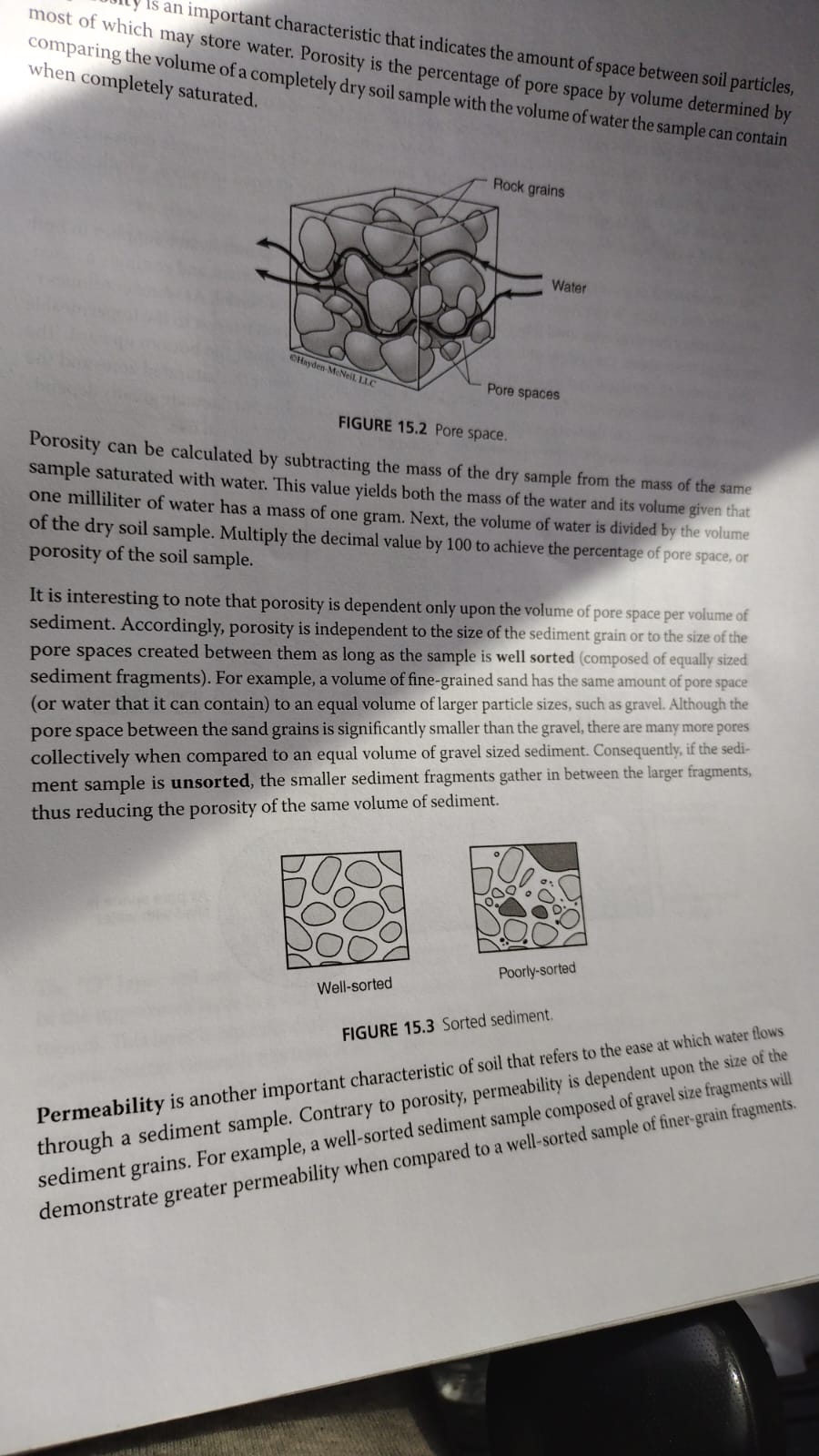
Is an important characteristic that indicates the amount of space between soil particles, most of which may store water. Porosity is the percentage of pore space by volume determined by when completely saturated. comparing the volume of a completely dry soil sample with the volume of water the sample can contain Rock grains Water Hayden-MeNell LLC Pore spaces FIGURE 15.2 Pore space. Porosity can be calculated by subtracting the mass of the dry sample from the mass of the same sample saturated with water. This value yields both the mass of the water and its volume given that one milliliter of water has a mass of one gram. Next, the volume of water is divided by the volume of the dry soil sample. Multiply the decimal value by 100 to achieve the percentage of pore space, or porosity of the soil sample. It is interesting to note that porosity is dependent only upon the volume of pore space per volume of sediment. Accordingly, porosity is independent to the size of the sediment grain or to the size of the pore spaces created between them as long as the sample is well sorted (composed of equally sized sediment fragments). For example, a volume of fine-grained sand has the same amount of pore space (or water that it can contain) to an equal volume of larger particle sizes, such as gravel. Although the pore space between the sand grains is significantly smaller than the gravel, there are many more pores collectively when compared to an equal volume of gravel sized sediment. Consequently, if the sedi- ment sample is unsorted, the smaller sediment fragments gather in between the larger fragments, thus reducing the porosity of the same volume of sediment. Poorly-sorted Well-sorted FIGURE 15.3 Sorted sediment. Permeability is another important characteristic of soil that refers to the ease at which water flows through a sediment sample. Contrary to porosity, permeability is dependent upon the size of the sediment grains. For example, a well-sorted sediment sample composed of gravel size fragments will demonstrate greater permeability when compared to a well-sorted sample of finer-grain fragments

Step by Step Solution

There are 3 Steps involved in it

1 Expert Approved Answer
Step: 1 Unlock blur-text-image

Question Has Been Solved by an Expert!

Get step-by-step solutions from verified subject matter experts

Step: 2 Unlock
Step: 3 Unlock

Students Have Also Explored These Related Business Writing Questions!