







Question: I only need help with the variance analysis section ACC 202 Milestone Three: Actual Costs and Revenue Data Appendix At the end of the first
I only need help with the variance analysis section
ACC 202 Milestone Three: Actual Costs and Revenue Data Appendix
At the end of the first month of opening your business, you calculate the actual operating costs of the business and the income you earned. You also notice and document the difference in what you budgeted for certain materials and labor against the actual amounts you spent on the same.
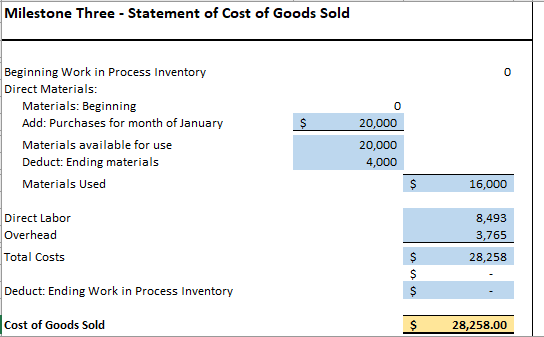
For your statement of cost of goods sold, use the following data regarding the actual costs incurred by the business over the past month:
Materials purchased: $20,000
oConsumed 80% of the purchased materials
Direct labor: $8,493.33
Overhead costs: $3,765
Note: Assume that the beginning materials and ending work in process are zero for the month.
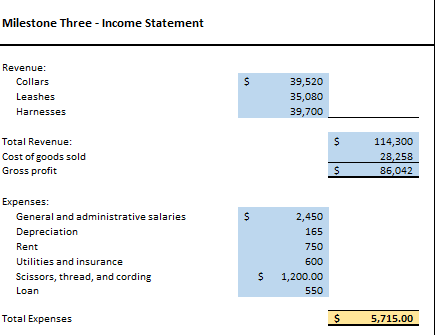
Use the following revenue and cost information for the income statement. Note that the revenue you use will depend on the pricing level options you chose in Milestone Two. Also, assume that after accounting for weekends and other holidays, there were 20 business days in the first month of operation.For example, if you chose a sales price of $20 per collar, the actual number of collars sold in the month was 33 per day or 33 x 20 = 660 per month.
Established Sales Price Number of Items Sold per Day
Collars
$20 33
$24 28
$28 23
Leashes
$22 28
$26 23
$30 18
Harnesses
$25 25
$30 22
$35 20
The other costs incurred by the business include:
General and administrative salaries
oReceptionist: $1,950
oOwner salary: $500
Depreciation: $165
Rent: $750
Utilities and insurance: $600
Scissors, thread, and cording: $1,200
Loan repayment: $550
Variance
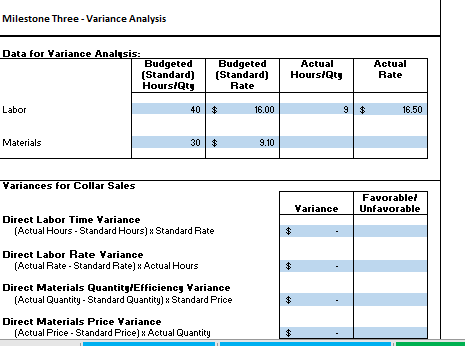
At the end of the month, you find that the labor and materials spent on manufacturing collars was different from what you estimated:
The collar maker had to work nine hours a day instead of eight due to an increased demand for collars.
Because of the increased demand, the hourly rate you paid your employee for making the collars increased to $16.50.
An increase in the cost of raw material led the direct material cost per collar to increase to $10.
However, you also made and sold 60 more collars than you expected to sell in the month.
You now need to determine the variance in the materials and labor cost from what you estimated in Milestone Two based on the market research data..
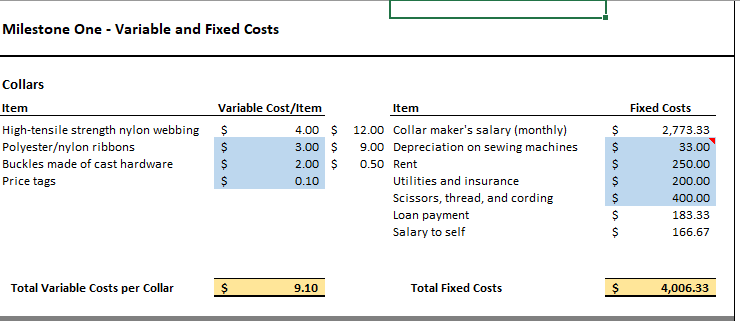
In Milestone 1, you were told you had
- One collar maker, who will be paid $16.00 per hour and work 40 hours per week
In Milestone 2, you made pricing decisions that informed how many items you would sell/make
- Collars
- With pricing at $20 per collar, you can expect to sell 30 collars per day.
Milestone Three - Income Statement Revenue: Collars 5 39,520 Leashes 35,080 Harnesses 39,700 Total Revenue: 5 114,300 Cost of goods sold 28,258 Gross profit 5 86,042 Expenses: General and administrative salaries 5 2,450 Depreciation 165 Rent 750 Utilities and insurance 600 Scissors, thread, and cording 5 1,200.00 807 550 Total Expenses 5,715.00Milestone Three - Statement of Cost of Goods Sold Beginning Work in Process Inventory Direct Materials: Materials: Beginning Add: Purchases for month of January S 20,000 Materials available for use 20,000 Deduct: Ending materials 4,000 Materials Used S 16,000 Direct Labor 8,493 Overhead 3,765 Total Costs 28,258 Deduct: Ending Work in Process Inventory S Cost of Goods Sold $ 28,258.00Milestone Dne - Variable and Fixed Costs Celia rs item Hightensile strength nylcrn webbing Palyesterfnylclun ribbons Buckles made crf cast hardware Price tags Total Variable Casts per Cellar Variable COG\" item 5 4.00 5 3m 5 2m 5 0.10 5 9.10 1|") 12.00 900 0.50 item Cellar maker's salary tmcrnthly] Depreciation an sewing machines Rent Utilities and insurance Scissors, thread, and carding Lean payment Salary to self Total Filed Casts Filed Costs 5 2,333.33 5 33m' 5 250m 5 2mm 5 4mm 5 133.33 5 155.5? Milestone Three - Variance Analysis Data for Variance Analysis: Budgeted Budgeted Actual Actual [Standard] [Standard] Hours/Qty Rate HoursIQty Rate Labor 40 $ 16.00 9 16.50 Materials 30 $ 9.10 Variances for Collar Sales Favorabled Variance Unfavorable Direct Labor Time Variance [ Actual Hours - Standard Hours) : Standard Rate Direct Labor Rate Variance [ Actual Rate - Standard Rate) & Actual Hours Direct Materials Quantity/Efficiency Variance [ Actual Quantity - Standard Quantity) : Standard Price Direct Materials Price Variance [Actual Price - Standard Price) & Actual Quantity
Step by Step Solution
There are 3 Steps involved in it

Get step-by-step solutions from verified subject matter experts
 Study Help