







Question: i upload the documents again please answer in brief without i uplaid the all case study along with its questions please answer in brief.. thanks
i upload the documents again please answer in brief without 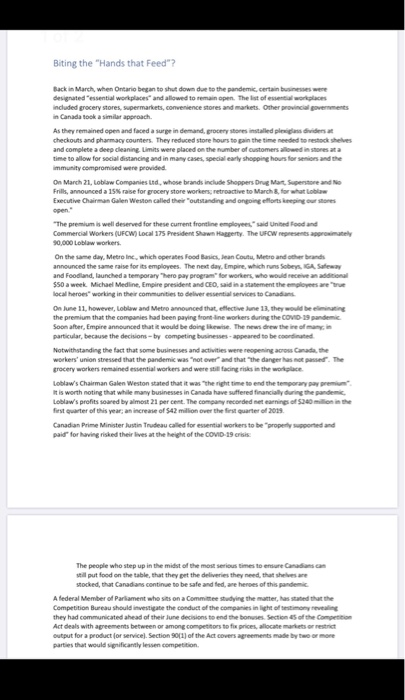
i uplaid the all case study along with its questions please answer in brief.. thanks 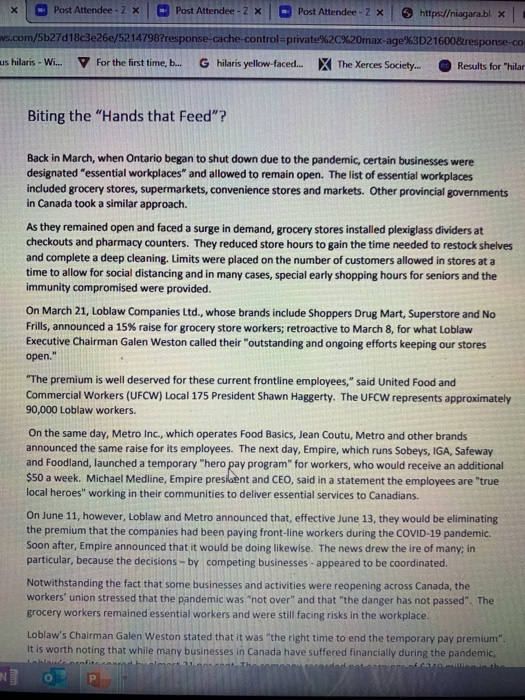
i upload all case study along with question please answer it
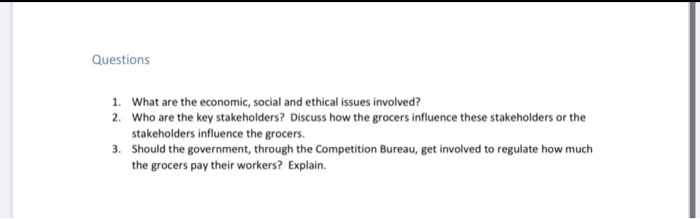
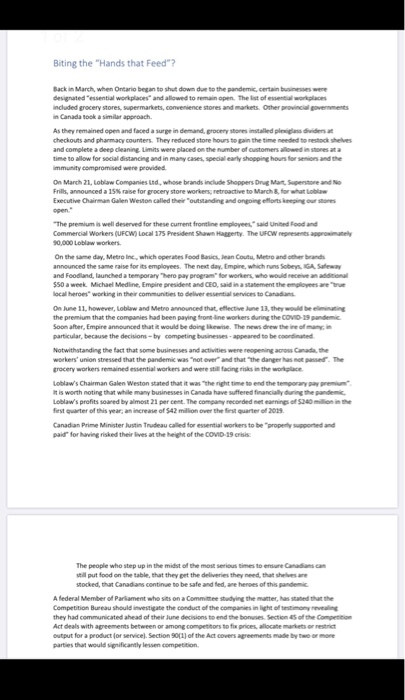
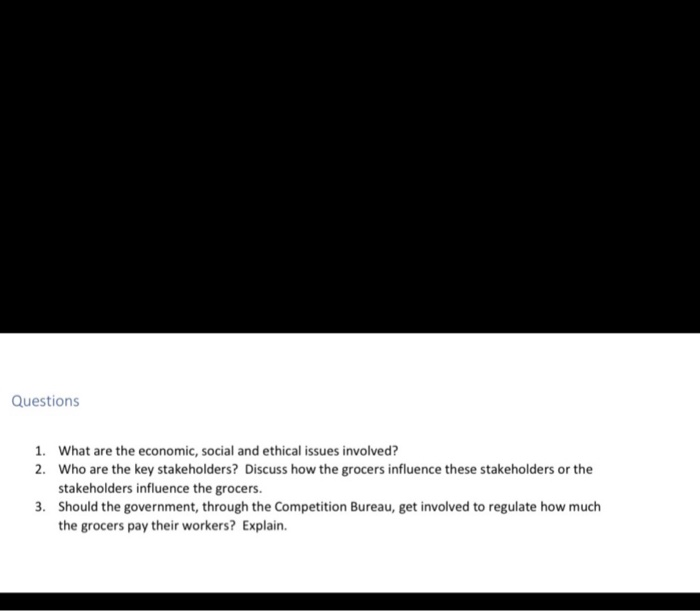
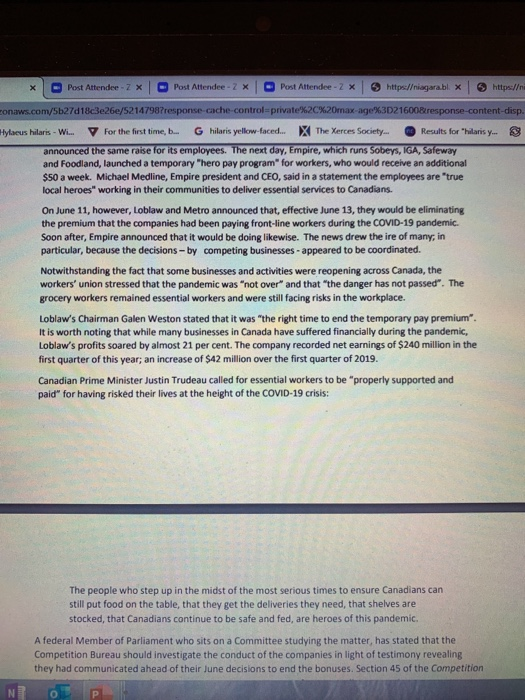
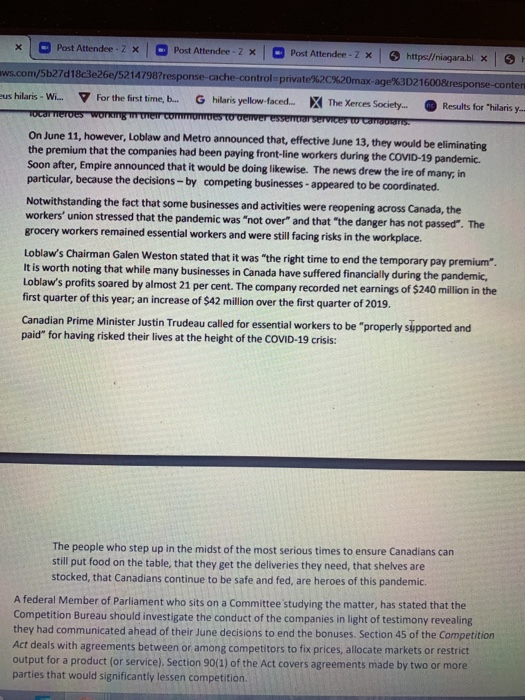
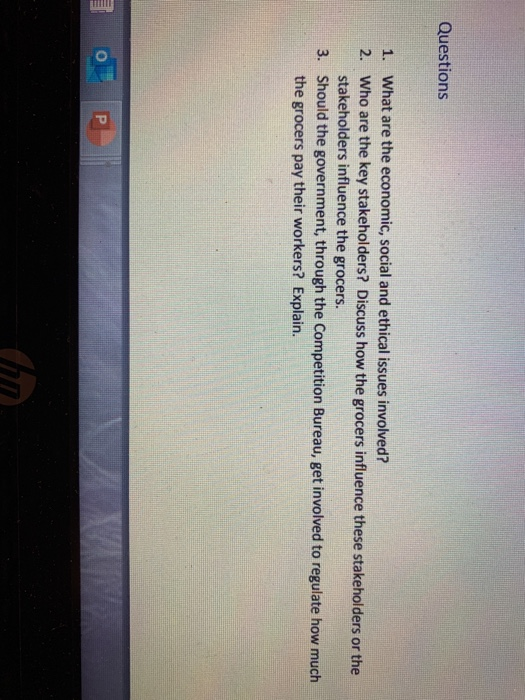
Questions 1. What are the economic, social and ethical issues involved? 2. Who are the key stakeholders? Discuss how the grocers influence these stakeholders or the stakeholders influence the grocers. 3. Should the government, through the Competition Bureau, get involved to regulate how much the grocers pay their workers? Explain. Biting the "Hands that Feed"? Back in March, when Ontario began to shut down due to the pandemic, certain businesses were designated essential workplaces and allowed to remain open. The list of essential workplaces included grocery stores, supermarkets, convenience stores and markets. Other provincial governments in Canada took a similar approach As they remained open and faced a surge in demand, grocery stores installed pleeg dividest checkouts and pharmacy counters. They reduced store hours to gain the time needed to restock shelves and complete a deep cleaning. Limits were placed on the number of customers allowed in stores ata time to allow for social distancing and in many cases, special early shopping hours for seniors and the immunity compromised were provided On March 21, Loblaw Companies Ltd, whose brands include Shoppers Drug Mart, Superstore and No Frills, announced a 15% raise for grocery store workers, retroactive to March 8, for what Low Executive Chairman Galen Weston called the outstanding and ongoing efforts keeping our stores open." "The premium is well deserved for these current frontline employees." said United Food and Commercial Workers (UFCW) Local 175 President Shawn Haperty. The UFCW represents approximately 90,000 Loblaw workers. On the same day. Metro Inc., which operates Food Basics, Jean Coutu, Metro and other brands announced the same raise for its employees. The next day. Empire, which runs Sobeys, IGA Safeway and Foodland, launched a temporary hero pay programs for workers, who would receive an additional $50 a week Michael Medine, Empire president and CEO said in a statement the employees are true local heroes working in their communities to deliver essential services to Canadian On June 11, however, Loblaw and Metro announced that effective June 13, they would be eliminating the premium that the companies had been paying frontline workers during the COVIO 19 pandemic Soon after, Empire announced that it would be doing likewise. The news drew the ireofani particular, because the decisions - by competing businesses appeared to be coordinated Notwithstanding the fact that some businesses and activities were reopening across Canada, the workers' union stressed that the pandemic was not over and that the danger has not passed. The grocery workers remained essential workers and were still facing risks in the workplace Loblaw's Chairman Galen Weston stated that it was the right time to end the temporary pay premis It is worth noting that while many businesses in Canada have suffered financially during the pandem Loblaw's profits soared by almost 21 per cent. The company recorded net earnings of 240 million in the first quarter of this year, an increase of $42 million over the first quarter of 2029 Canadian Prime Minister Justin Trudeau called for sential workers to be properly suported and paid for having risked their lives at the height of the COVID-19 crisis The people who step up in the midst of the most serious times to ensure Canadians.com will put food on the table, that they get the deliveries they need that shelves are stocked, that Canadians continue to be safe and fed are heroes of this pandemic A federal Member of Parliament who sits on a Committee studying the matter, has stated that the Competition Bureau should investigate the conduct of the companies in light of testimony revealing they had communicated ahead of their lune decisions to end the bonuses Section of the competition Act deals with apreements between or among competitors to fix prices, allocate markets or restrict output for a product for service). Section 9011) of the Act covers agreements made by two or more parties that would ficantly lessen competition Biting the "Hands that Feed"? Back in March, when Ontario began to shut down due to the pandemic, certain businesses were designated essential workplaces and allowed to remain open. The list of essential workplaces included grocery stores, supermarkets, convenience stores and markets. Other provincial governments in Canada took a similar approach As they remained open and faced a surge in demand, grocery stores installed plexiglass is at checkouts and pharmacy counters. They reduced store hours to gain the time needed to restock shelves and complete a deep cleaning. Limits were placed on the number of customers allowed in stores ata time to allow for social distancing and in many cases, special early shopping hours for seniors and the immunity compromised were provided On March 21, Loblaw Companies Ltd, whose brands include Shoppers Drug Mart, Superstore and No Frills, announced a 15% raise for grocery store workers, retroactive to March 8, for what Loblaw Executive Chairman Galen Weston called the outstanding and ongoing efforts keeping our stores open "The premium is well deserved for these current frontline employees." said United Food and Commercial Workers (UFCW) Local 175 President Shawn Haperty. The UFCW represents approximately 90,000 Loblaw workers. On the same day. Metro ind, which operates Food Basies, Jean Coutu, Metro and other brands announced the same raise for its employees. The next day. Empire, which runs Sobeys, IGA Safeway and Foodland, launched a temporary Thero pay programs for workers, who would receive an additional $50 a week Michael Medline, Empire president and CEO said in a statement the employees are true local heroes working in their communities to deliver essential services to Canadian On June 11, however, Loblaw and Metro announced that effective June 13, they would be eliminating the premium that the companies had been paying frontline workers during the COVIO 19 pandemic Soon after, Empire announced that it would be doing likewise. The new drew theire of mankin particular, because the decisions-by competing businesses appeared to be coordinated Notwithstanding the fact that some businesses and activities were reopening across Canada, the workers' union stressed that the pandemic was not over and that the danger has not passed. The grocery workers remained essential workers and were still facing risks in the workplace Loblaw's Chairman Galen Weston stated that it was the right time to end the temporary pay premium It is worth noting that while many businesses in Canada have suffered financially during the pandemic Loblaw's profits soared by almost 21 per cent. The company recorded net earnings of 240 million in the first quarter of this year, an increase of $42 million over the first quarter of 2029 Canadian Prime Minister Justin Trudeau called for sential workers to be property Suported and paid for having risked their lives at the height of the COVID-19 crisis The people who step up in the midst of the most serious times to ensure Canadians.com still put food on the table, that they get the deliveries they need that shelves are stocked, that Canadians continue to be safe and fed are heroes of this pandemic A federal Member of Parliament who sits on a Committee studying the matter, has stated that the Competition Bureau should investigate the conduct of the companies in light of testimony revealing they had communicated ahead of their lune decisions to end the bonuses Section of the competition Act deals with apreements between or among competitors to fix prices, allocate markets or restrict output for a product for service). Section 9011) of the Act covers agreements made by two or more parties that would ficantly less competition Questions 1. What are the economic, social and ethical issues involved? 2. Who are the key stakeholders? Discuss how the grocers influence these stakeholders or the stakeholders influence the grocers. 3. Should the government, through the Competition Bureau, get involved to regulate how much the grocers pay their workers? Explain. X Post Attendee - Z X Post Attendee - 2 X Post Attendee - ZX https:/iagara.bl. x ws.com/5b27d18c3e26e/5214798?response-cache-control=private%2C%20max-age%3D21600&response-co us hilaris - Wi... For the first time, b... Ghilaris yellow-faced... The Xerces Society... Results for "hilar Biting the "Hands that Feed"? Back in March, when Ontario began to shut down due to the pandemic, certain businesses were designated "essential workplaces and allowed to remain open. The list of essential workplaces included grocery stores, supermarkets, convenience stores and markets. Other provincial governments in Canada took a similar approach. As they remained open and faced a surge in demand, grocery stores installed plexiglass dividers at checkouts and pharmacy counters. They reduced store hours to gain the time needed to restock shelves and complete a deep cleaning. Limits were placed on the number of customers allowed in stores at a time to allow for social distancing and in many cases, special early shopping hours for seniors and the immunity compromised were provided. On March 21, Loblaw Companies Ltd., whose brands include Shoppers Drug Mart, Superstore and No Frills, announced a 15% raise for grocery store workers; retroactive to March 8, for what Loblaw Executive Chairman Galen Weston called their "outstanding and ongoing efforts keeping our stores open." "The premium is well deserved for these current frontline employees," said United Food and Commercial Workers (UFCW) Local 175 President Shawn Haggerty. The UFCW represents approximately 90,000 Loblaw workers. On the same day, Metro Inc., which operates Food Basics, Jean Coutu, Metro and other brands announced the same raise for its employees. The next day, Empire, which runs Sobeys, IGA, Safeway and Foodland, launched a temporary "hero pay program" for workers, who would receive an additional $50 a week. Michael Medline, Empire president and CEO, said in a statement the employees are "true local heroes" working in their communities to deliver essential services to Canadians. On June 11, however, Loblaw and Metro announced that, effective June 13, they would be eliminating the premium that the companies had been paying front-line workers during the COVID-19 pandemic. Soon after, Empire announced that it would be doing likewise. The news drew the ire of many, in particular, because the decisions - by competing businesses - appeared to be coordinated. Notwithstanding the fact that some businesses and activities were reopening across Canada, the workers' union stressed that the pandemic was "not over" and that "the danger has not passed". The grocery workers remained essential workers and were still facing risks in the workplace. Loblaw's Chairman Galen Weston stated that it was the right time to end the temporary pay premium". It is worth noting that while many businesses in Canada have suffered financially during the pandemic, Post Attendee-7X Post Attendee - 2 X Post Attendee - 2 X https:/iagara.bl. X https:// conaws.com/5b27d18c3e26e/5214798?response-cache-control=private%2C%20max-age%3D21600&response-content-disp. Hylaeus hilaris - Wi... For the first time, b... Ghilaris yellow-faced. The Xerces Society... Results for "hilaris y announced the same raise for its employees. The next day, Empire, which runs Sobeys, IGA, Safeway and Foodland, launched a temporary "hero pay program for workers, who would receive an additional $50 a week. Michael Medline, Empire president and CEO, said in a statement the employees are "true local heroes" working in their communities to deliver essential services to Canadians. On June 11, however, Loblaw and Metro announced that, effective June 13, they would be eliminating the premium that the companies had been paying front-line workers during the COVID-19 pandemic Soon after, Empire announced that it would be doing likewise. The news drew the ire of many, in particular, because the decisions - by competing businesses - appeared to be coordinated. Notwithstanding the fact that some businesses and activities were reopening across Canada, the workers' union stressed that the pandemic was "not over" and that "the danger has not passed". The grocery workers remained essential workers and were still facing risks in the workplace. Loblaw's Chairman Galen Weston stated that it was "the right time to end the temporary pay premium". It is worth noting that while many businesses in Canada have suffered financially during the pandemic, Loblaw's profits soared by almost 21 per cent. The company recorded net earnings of $240 million in the first quarter of this year; an increase of $42 million over the first quarter of 2019. Canadian Prime Minister Justin Trudeau called for essential workers to be "properly supported and paid" for having risked their lives at the height of the COVID-19 crisis: The people who step up in the midst of the most serious times to ensure Canadians can still put food on the table, that they get the deliveries they need that shelves are stocked, that Canadians continue to be safe and fed, are heroes of this pandemic A federal Member of Parliament who sits on a Committee studying the matter, has stated that the Competition Bureau should investigate the conduct of the companies in light of testimony revealing they had communicated ahead of their June decisions to end the bonuses. Section 45 of the Competition X Post Attendee-ZX Post Attendee - 2 X Post Attendee-ZX https:/iagara.bl. X 5 aws.com/5b27d18c3e26e/5214798?response-cache-control-private%2C%20max-age%3D21600&response-conter eus hilaris - Wi... For the first time, b... Ghilaris yellow-faced. The Xerces Society... Results for "hilaris y Tocameroes woning i mer comes to enver essencial services to content On June 11, however, Loblaw and Metro announced that, effective June 13, they would be eliminating the premium that the companies had been paying front-line workers during the COVID-19 pandemic. Soon after, Empire announced that it would be doing likewise. The news drew the ire of many, in particular, because the decisions - by competing businesses - appeared to be coordinated. Notwithstanding the fact that some businesses and activities were reopening across Canada, the workers' union stressed that the pandemic was "not over" and that "the danger has not passed". The grocery workers remained essential workers and were still facing risks in the workplace. Loblaw's Chairman Galen Weston stated that it was "the right time to end the temporary pay premium". It is worth noting that while many businesses in Canada have suffered financially during the pandemic, Loblaw's profits soared by almost 21 per cent. The company recorded net earnings of $240 million in the first quarter of this year, an increase of $42 million over the first quarter of 2019. Canadian Prime Minister Justin Trudeau called for essential workers to be "properly supported and paid" for having risked their lives at the height of the COVID-19 crisis: The people who step up in the midst of the most serious times to ensure Canadians can still put food on the table, that they get the deliveries they need, that shelves are stocked, that Canadians continue to be safe and fed, are heroes of this pandemic. A federal Member of Parliament who sits on a Committee studying the matter, has stated that the Competition Bureau should investigate the conduct of the companies in light of testimony revealing they had communicated ahead of their June decisions to end the bonuses. Section 45 of the Competition Act deals with agreements between or among competitors to fix prices, allocate markets or restrict output for a product (or service), Section 90(1) of the Act covers agreements made by two or more parties that would significantly lessen competition Questions 1. What are the economic, social and ethical issues involved? 2. Who are the key stakeholders? Discuss how the grocers influence these stakeholders or the stakeholders influence the grocers. 3. Should the government, through the Competition Bureau, get involved to regulate how much the grocers pay their workers? Explain. Questions 1. What are the economic, social and ethical issues involved? 2. Who are the key stakeholders? Discuss how the grocers influence these stakeholders or the stakeholders influence the grocers. 3. Should the government, through the Competition Bureau, get involved to regulate how much the grocers pay their workers? Explain. Biting the "Hands that Feed"? Back in March, when Ontario began to shut down due to the pandemic, certain businesses were designated essential workplaces and allowed to remain open. The list of essential workplaces included grocery stores, supermarkets, convenience stores and markets. Other provincial governments in Canada took a similar approach As they remained open and faced a surge in demand, grocery stores installed pleeg dividest checkouts and pharmacy counters. They reduced store hours to gain the time needed to restock shelves and complete a deep cleaning. Limits were placed on the number of customers allowed in stores ata time to allow for social distancing and in many cases, special early shopping hours for seniors and the immunity compromised were provided On March 21, Loblaw Companies Ltd, whose brands include Shoppers Drug Mart, Superstore and No Frills, announced a 15% raise for grocery store workers, retroactive to March 8, for what Low Executive Chairman Galen Weston called the outstanding and ongoing efforts keeping our stores open." "The premium is well deserved for these current frontline employees." said United Food and Commercial Workers (UFCW) Local 175 President Shawn Haperty. The UFCW represents approximately 90,000 Loblaw workers. On the same day. Metro Inc., which operates Food Basics, Jean Coutu, Metro and other brands announced the same raise for its employees. The next day. Empire, which runs Sobeys, IGA Safeway and Foodland, launched a temporary hero pay programs for workers, who would receive an additional $50 a week Michael Medine, Empire president and CEO said in a statement the employees are true local heroes working in their communities to deliver essential services to Canadian On June 11, however, Loblaw and Metro announced that effective June 13, they would be eliminating the premium that the companies had been paying frontline workers during the COVIO 19 pandemic Soon after, Empire announced that it would be doing likewise. The news drew the ireofani particular, because the decisions - by competing businesses appeared to be coordinated Notwithstanding the fact that some businesses and activities were reopening across Canada, the workers' union stressed that the pandemic was not over and that the danger has not passed. The grocery workers remained essential workers and were still facing risks in the workplace Loblaw's Chairman Galen Weston stated that it was the right time to end the temporary pay premis It is worth noting that while many businesses in Canada have suffered financially during the pandem Loblaw's profits soared by almost 21 per cent. The company recorded net earnings of 240 million in the first quarter of this year, an increase of $42 million over the first quarter of 2029 Canadian Prime Minister Justin Trudeau called for sential workers to be properly suported and paid for having risked their lives at the height of the COVID-19 crisis The people who step up in the midst of the most serious times to ensure Canadians.com will put food on the table, that they get the deliveries they need that shelves are stocked, that Canadians continue to be safe and fed are heroes of this pandemic A federal Member of Parliament who sits on a Committee studying the matter, has stated that the Competition Bureau should investigate the conduct of the companies in light of testimony revealing they had communicated ahead of their lune decisions to end the bonuses Section of the competition Act deals with apreements between or among competitors to fix prices, allocate markets or restrict output for a product for service). Section 9011) of the Act covers agreements made by two or more parties that would ficantly lessen competition Biting the "Hands that Feed"? Back in March, when Ontario began to shut down due to the pandemic, certain businesses were designated essential workplaces and allowed to remain open. The list of essential workplaces included grocery stores, supermarkets, convenience stores and markets. Other provincial governments in Canada took a similar approach As they remained open and faced a surge in demand, grocery stores installed plexiglass is at checkouts and pharmacy counters. They reduced store hours to gain the time needed to restock shelves and complete a deep cleaning. Limits were placed on the number of customers allowed in stores ata time to allow for social distancing and in many cases, special early shopping hours for seniors and the immunity compromised were provided On March 21, Loblaw Companies Ltd, whose brands include Shoppers Drug Mart, Superstore and No Frills, announced a 15% raise for grocery store workers, retroactive to March 8, for what Loblaw Executive Chairman Galen Weston called the outstanding and ongoing efforts keeping our stores open "The premium is well deserved for these current frontline employees." said United Food and Commercial Workers (UFCW) Local 175 President Shawn Haperty. The UFCW represents approximately 90,000 Loblaw workers. On the same day. Metro ind, which operates Food Basies, Jean Coutu, Metro and other brands announced the same raise for its employees. The next day. Empire, which runs Sobeys, IGA Safeway and Foodland, launched a temporary Thero pay programs for workers, who would receive an additional $50 a week Michael Medline, Empire president and CEO said in a statement the employees are true local heroes working in their communities to deliver essential services to Canadian On June 11, however, Loblaw and Metro announced that effective June 13, they would be eliminating the premium that the companies had been paying frontline workers during the COVIO 19 pandemic Soon after, Empire announced that it would be doing likewise. The new drew theire of mankin particular, because the decisions-by competing businesses appeared to be coordinated Notwithstanding the fact that some businesses and activities were reopening across Canada, the workers' union stressed that the pandemic was not over and that the danger has not passed. The grocery workers remained essential workers and were still facing risks in the workplace Loblaw's Chairman Galen Weston stated that it was the right time to end the temporary pay premium It is worth noting that while many businesses in Canada have suffered financially during the pandemic Loblaw's profits soared by almost 21 per cent. The company recorded net earnings of 240 million in the first quarter of this year, an increase of $42 million over the first quarter of 2029 Canadian Prime Minister Justin Trudeau called for sential workers to be property Suported and paid for having risked their lives at the height of the COVID-19 crisis The people who step up in the midst of the most serious times to ensure Canadians.com still put food on the table, that they get the deliveries they need that shelves are stocked, that Canadians continue to be safe and fed are heroes of this pandemic A federal Member of Parliament who sits on a Committee studying the matter, has stated that the Competition Bureau should investigate the conduct of the companies in light of testimony revealing they had communicated ahead of their lune decisions to end the bonuses Section of the competition Act deals with apreements between or among competitors to fix prices, allocate markets or restrict output for a product for service). Section 9011) of the Act covers agreements made by two or more parties that would ficantly less competition Questions 1. What are the economic, social and ethical issues involved? 2. Who are the key stakeholders? Discuss how the grocers influence these stakeholders or the stakeholders influence the grocers. 3. Should the government, through the Competition Bureau, get involved to regulate how much the grocers pay their workers? Explain. X Post Attendee - Z X Post Attendee - 2 X Post Attendee - ZX https:/iagara.bl. x ws.com/5b27d18c3e26e/5214798?response-cache-control=private%2C%20max-age%3D21600&response-co us hilaris - Wi... For the first time, b... Ghilaris yellow-faced... The Xerces Society... Results for "hilar Biting the "Hands that Feed"? Back in March, when Ontario began to shut down due to the pandemic, certain businesses were designated "essential workplaces and allowed to remain open. The list of essential workplaces included grocery stores, supermarkets, convenience stores and markets. Other provincial governments in Canada took a similar approach. As they remained open and faced a surge in demand, grocery stores installed plexiglass dividers at checkouts and pharmacy counters. They reduced store hours to gain the time needed to restock shelves and complete a deep cleaning. Limits were placed on the number of customers allowed in stores at a time to allow for social distancing and in many cases, special early shopping hours for seniors and the immunity compromised were provided. On March 21, Loblaw Companies Ltd., whose brands include Shoppers Drug Mart, Superstore and No Frills, announced a 15% raise for grocery store workers; retroactive to March 8, for what Loblaw Executive Chairman Galen Weston called their "outstanding and ongoing efforts keeping our stores open." "The premium is well deserved for these current frontline employees," said United Food and Commercial Workers (UFCW) Local 175 President Shawn Haggerty. The UFCW represents approximately 90,000 Loblaw workers. On the same day, Metro Inc., which operates Food Basics, Jean Coutu, Metro and other brands announced the same raise for its employees. The next day, Empire, which runs Sobeys, IGA, Safeway and Foodland, launched a temporary "hero pay program" for workers, who would receive an additional $50 a week. Michael Medline, Empire president and CEO, said in a statement the employees are "true local heroes" working in their communities to deliver essential services to Canadians. On June 11, however, Loblaw and Metro announced that, effective June 13, they would be eliminating the premium that the companies had been paying front-line workers during the COVID-19 pandemic. Soon after, Empire announced that it would be doing likewise. The news drew the ire of many, in particular, because the decisions - by competing businesses - appeared to be coordinated. Notwithstanding the fact that some businesses and activities were reopening across Canada, the workers' union stressed that the pandemic was "not over" and that "the danger has not passed". The grocery workers remained essential workers and were still facing risks in the workplace. Loblaw's Chairman Galen Weston stated that it was the right time to end the temporary pay premium". It is worth noting that while many businesses in Canada have suffered financially during the pandemic, Post Attendee-7X Post Attendee - 2 X Post Attendee - 2 X https:/iagara.bl. X https:// conaws.com/5b27d18c3e26e/5214798?response-cache-control=private%2C%20max-age%3D21600&response-content-disp. Hylaeus hilaris - Wi... For the first time, b... Ghilaris yellow-faced. The Xerces Society... Results for "hilaris y announced the same raise for its employees. The next day, Empire, which runs Sobeys, IGA, Safeway and Foodland, launched a temporary "hero pay program for workers, who would receive an additional $50 a week. Michael Medline, Empire president and CEO, said in a statement the employees are "true local heroes" working in their communities to deliver essential services to Canadians. On June 11, however, Loblaw and Metro announced that, effective June 13, they would be eliminating the premium that the companies had been paying front-line workers during the COVID-19 pandemic Soon after, Empire announced that it would be doing likewise. The news drew the ire of many, in particular, because the decisions - by competing businesses - appeared to be coordinated. Notwithstanding the fact that some businesses and activities were reopening across Canada, the workers' union stressed that the pandemic was "not over" and that "the danger has not passed". The grocery workers remained essential workers and were still facing risks in the workplace. Loblaw's Chairman Galen Weston stated that it was "the right time to end the temporary pay premium". It is worth noting that while many businesses in Canada have suffered financially during the pandemic, Loblaw's profits soared by almost 21 per cent. The company recorded net earnings of $240 million in the first quarter of this year; an increase of $42 million over the first quarter of 2019. Canadian Prime Minister Justin Trudeau called for essential workers to be "properly supported and paid" for having risked their lives at the height of the COVID-19 crisis: The people who step up in the midst of the most serious times to ensure Canadians can still put food on the table, that they get the deliveries they need that shelves are stocked, that Canadians continue to be safe and fed, are heroes of this pandemic A federal Member of Parliament who sits on a Committee studying the matter, has stated that the Competition Bureau should investigate the conduct of the companies in light of testimony revealing they had communicated ahead of their June decisions to end the bonuses. Section 45 of the Competition X Post Attendee-ZX Post Attendee - 2 X Post Attendee-ZX https:/iagara.bl. X 5 aws.com/5b27d18c3e26e/5214798?response-cache-control-private%2C%20max-age%3D21600&response-conter eus hilaris - Wi... For the first time, b... Ghilaris yellow-faced. The Xerces Society... Results for "hilaris y Tocameroes woning i mer comes to enver essencial services to content On June 11, however, Loblaw and Metro announced that, effective June 13, they would be eliminating the premium that the companies had been paying front-line workers during the COVID-19 pandemic. Soon after, Empire announced that it would be doing likewise. The news drew the ire of many, in particular, because the decisions - by competing businesses - appeared to be coordinated. Notwithstanding the fact that some businesses and activities were reopening across Canada, the workers' union stressed that the pandemic was "not over" and that "the danger has not passed". The grocery workers remained essential workers and were still facing risks in the workplace. Loblaw's Chairman Galen Weston stated that it was "the right time to end the temporary pay premium". It is worth noting that while many businesses in Canada have suffered financially during the pandemic, Loblaw's profits soared by almost 21 per cent. The company recorded net earnings of $240 million in the first quarter of this year, an increase of $42 million over the first quarter of 2019. Canadian Prime Minister Justin Trudeau called for essential workers to be "properly supported and paid" for having risked their lives at the height of the COVID-19 crisis: The people who step up in the midst of the most serious times to ensure Canadians can still put food on the table, that they get the deliveries they need, that shelves are stocked, that Canadians continue to be safe and fed, are heroes of this pandemic. A federal Member of Parliament who sits on a Committee studying the matter, has stated that the Competition Bureau should investigate the conduct of the companies in light of testimony revealing they had communicated ahead of their June decisions to end the bonuses. Section 45 of the Competition Act deals with agreements between or among competitors to fix prices, allocate markets or restrict output for a product (or service), Section 90(1) of the Act covers agreements made by two or more parties that would significantly lessen competition Questions 1. What are the economic, social and ethical issues involved? 2. Who are the key stakeholders? Discuss how the grocers influence these stakeholders or the stakeholders influence the grocers. 3. Should the government, through the Competition Bureau, get involved to regulate how much the grocers pay their workers? Explain. Step by Step Solution
There are 3 Steps involved in it
1 Expert Approved Answer
Step: 1 Unlock

Question Has Been Solved by an Expert!
Get step-by-step solutions from verified subject matter experts
Step: 2 Unlock
Step: 3 Unlock
 Study Help