





Question: Identify which steps apply; outline each paragraph or section with the steps associated with it. Then answer last 2 bullet points. Steps are: Step 1:
Identify which steps apply; outline each paragraph or section with the steps associated with it. Then answer last 2 bullet points.
Steps are:
Step 1: Analyze
- A Needs Assessment is a tool the design team can use to determine whether gaps exist between the desired and actual levels of performance, according to organizational and performance standards.
Step 2: Design
- Define the objective, including the criteria for evaluation.
- Determine the methods, the facilitator, and the techniques.
- Define how the training will be coordinated, tracked, and evaluated.
- In this step, you will accurately outline the objectives, communicate to all involved, and ensure that they are thoroughly understood.
Step 3: Develop
- Develop the lesson plan that identifies the learning outcomes.
- Select a pilot group for feedback and dry-run presentation.
- Incorporate appropriate revisions.
Step 4: Implement
- Schedule the training workshops or interventions
- Work to ensure the support of management and strategies for successful transfer of information
Step 5: Evaluate
- Conduct appropriate evaluations for the training
- Interpret the results and relate them to the findings of the needs assessment to close the loop on the process. This may return to the analysis step when the initiative does not meet objectives.
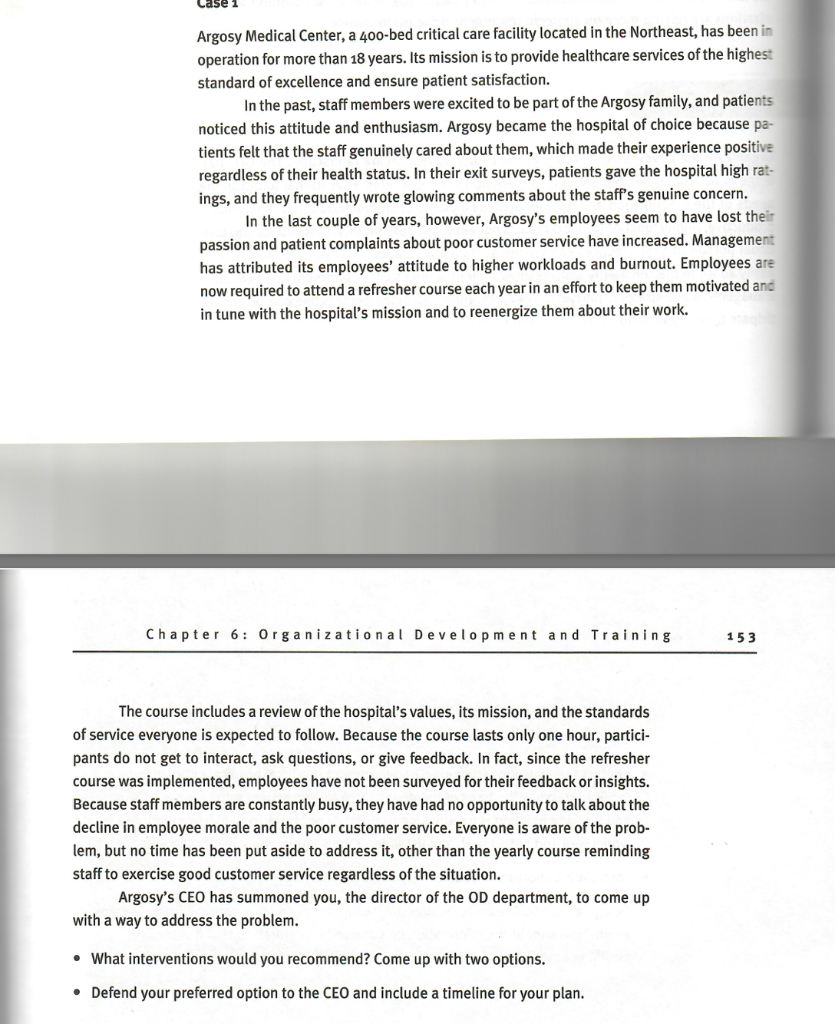
Case Argosy Medical Center, a 400-bed critical care facility located in the Northeast, has been in operation for more than 18 years. Its mission is to provide healthcare services of the highest standard of excellence and ensure patient satisfaction. In the past, staff members were excited to be part of the Argosy family, and patients noticed this attitude and enthusiasm. Argosy became the hospital of choice because pa- tients felt that the staff genuinely cared about them, which made their experience positive regardless of their health status. In their exit surveys, patients gave the hospital high rat- ings, and they frequently wrote glowing comments about the staff's genuine concern. In the last couple of years, however, Argosy's employees seem to have lost their passion and patient complaints about poor customer service have increased. Management has attributed its employees' attitude to higher workloads and burnout. Employees are now required to attend a refresher course each year in an effort to keep them motivated and in tune with the hospital's mission and to reenergize them about their work. Chapter 6: Organizational Development and Training 153 The course includes a review of the hospital's values, its mission, and the standards of service everyone is expected to follow. Because the course lasts only one hour, partici- pants do not get to interact, ask questions, or give feedback. In fact, since the refresher course was implemented, employees have not been surveyed for their feedback or insights. Because staff members are constantly busy, they have had no opportunity to talk about the decline in employee morale and the poor customer service. Everyone is aware of the prob- lem, but no time has been put aside to address it, other than the yearly course reminding staff to exercise good customer service regardless of the situation. Argosy's CEO has summoned you, the director of the OD department, to come up with a way to address the problem. What interventions would you recommend? Come up with two options. Defend your preferred option to the CEO and include a timeline for your plan

