



Question: If an expert can please answer number 4 and 5 from page 37 as well as answer number 8., as well as the Conclusions: question,
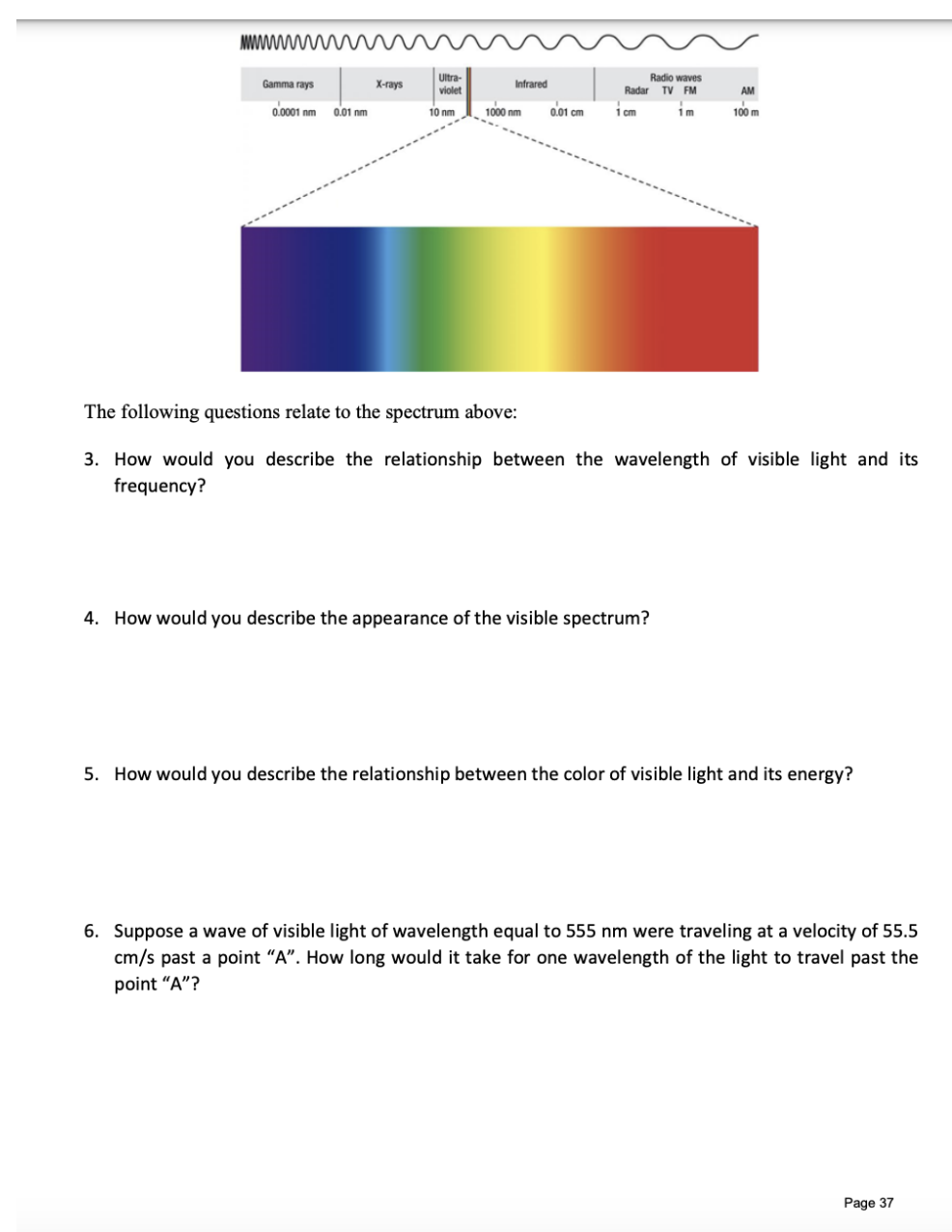
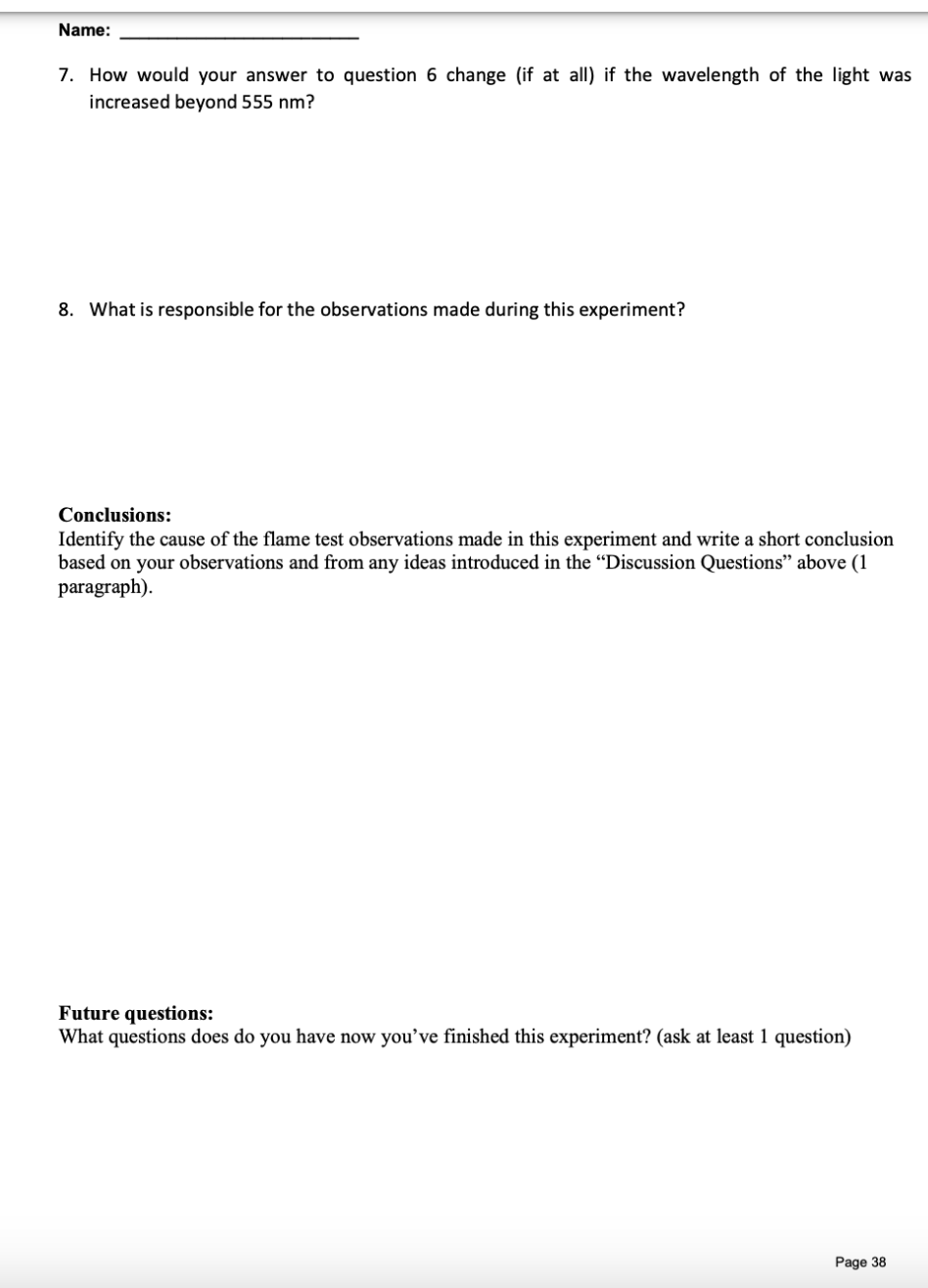
If an expert can please answer number 4 and 5 from page 37 as well as answer number 8., as well as the Conclusions: question, and as well as the Future questions: question from page 38. If an expert can please answer these questions as soon as possible I would really appreciate it. Please and thank you in advance. This is for Chem 65.
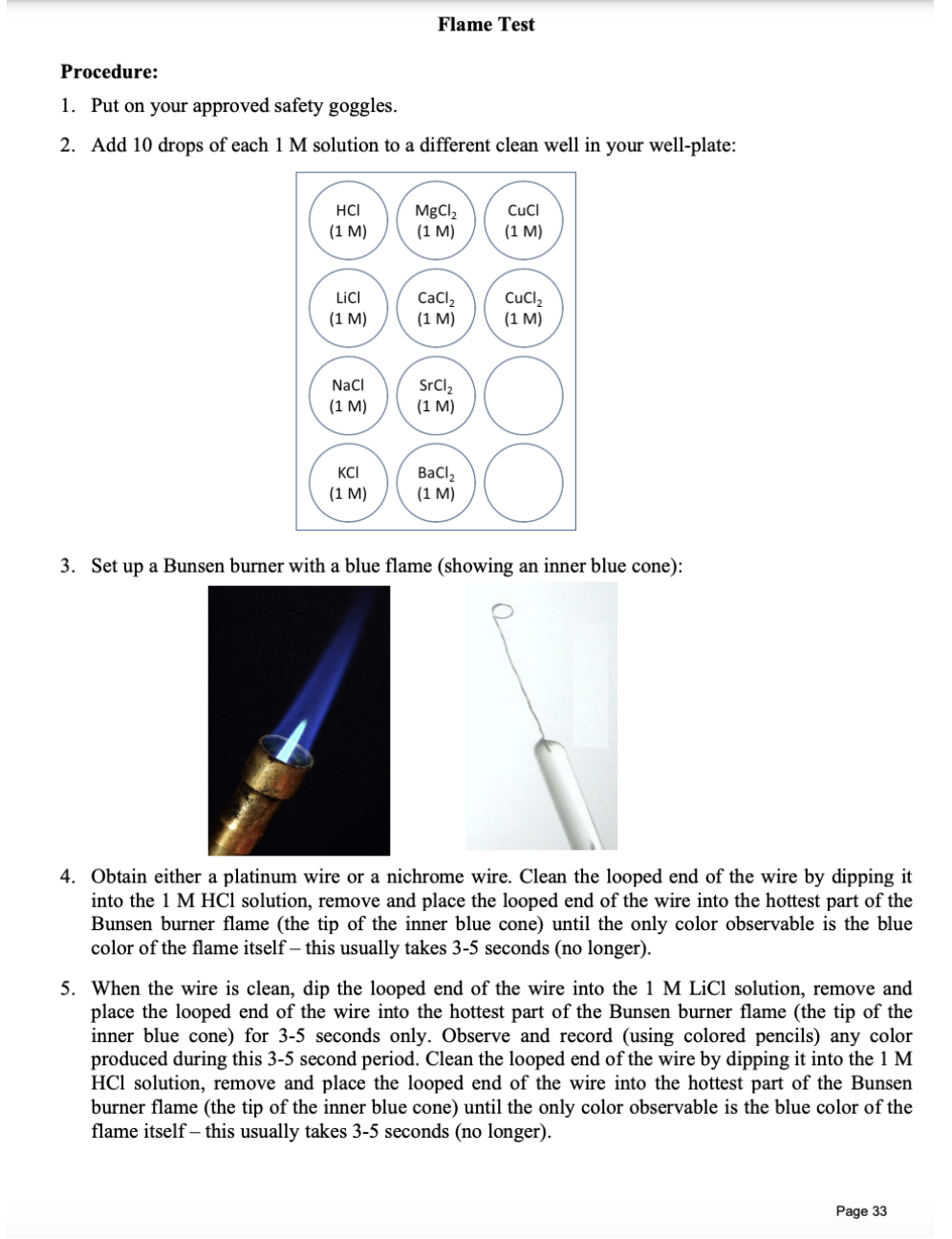
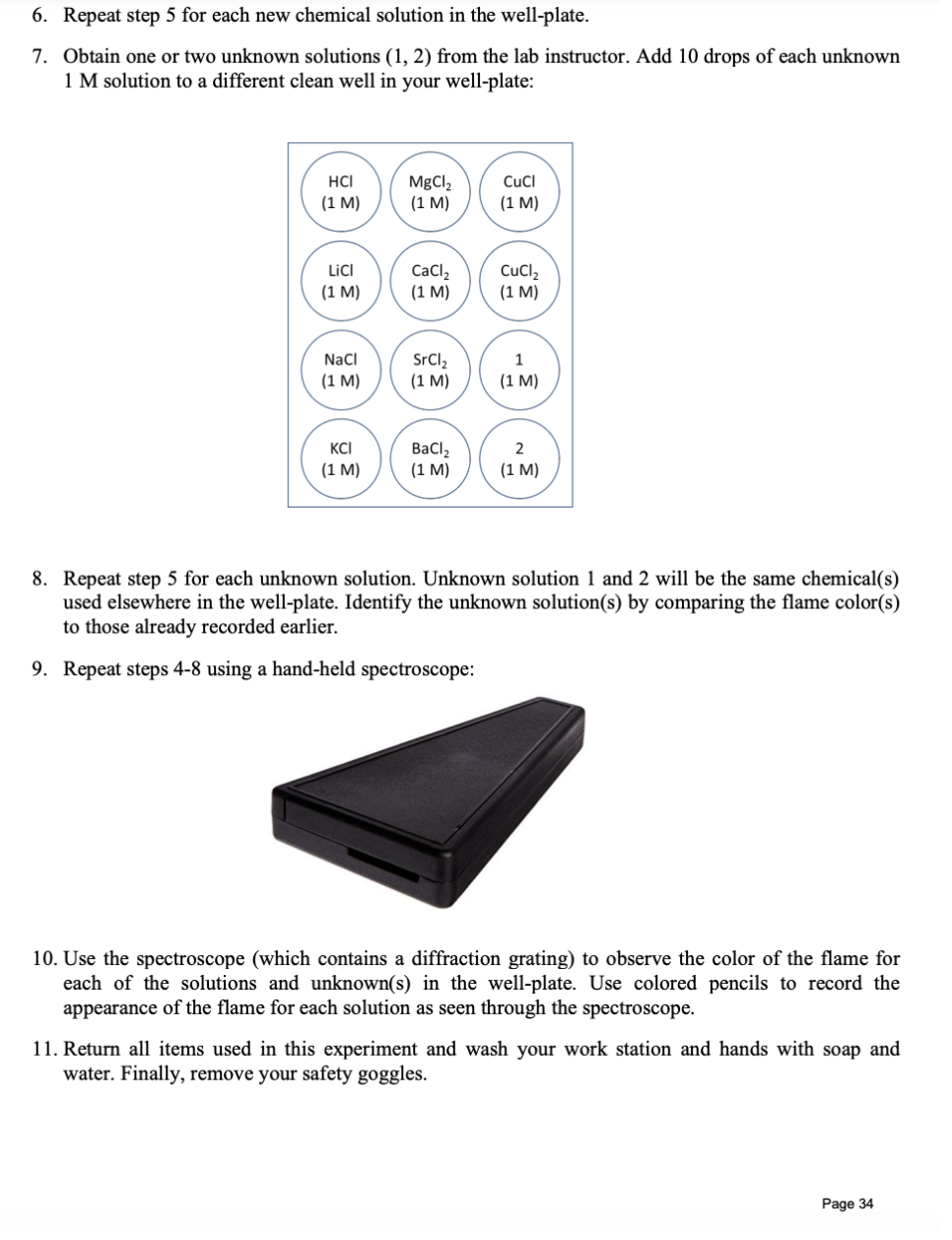
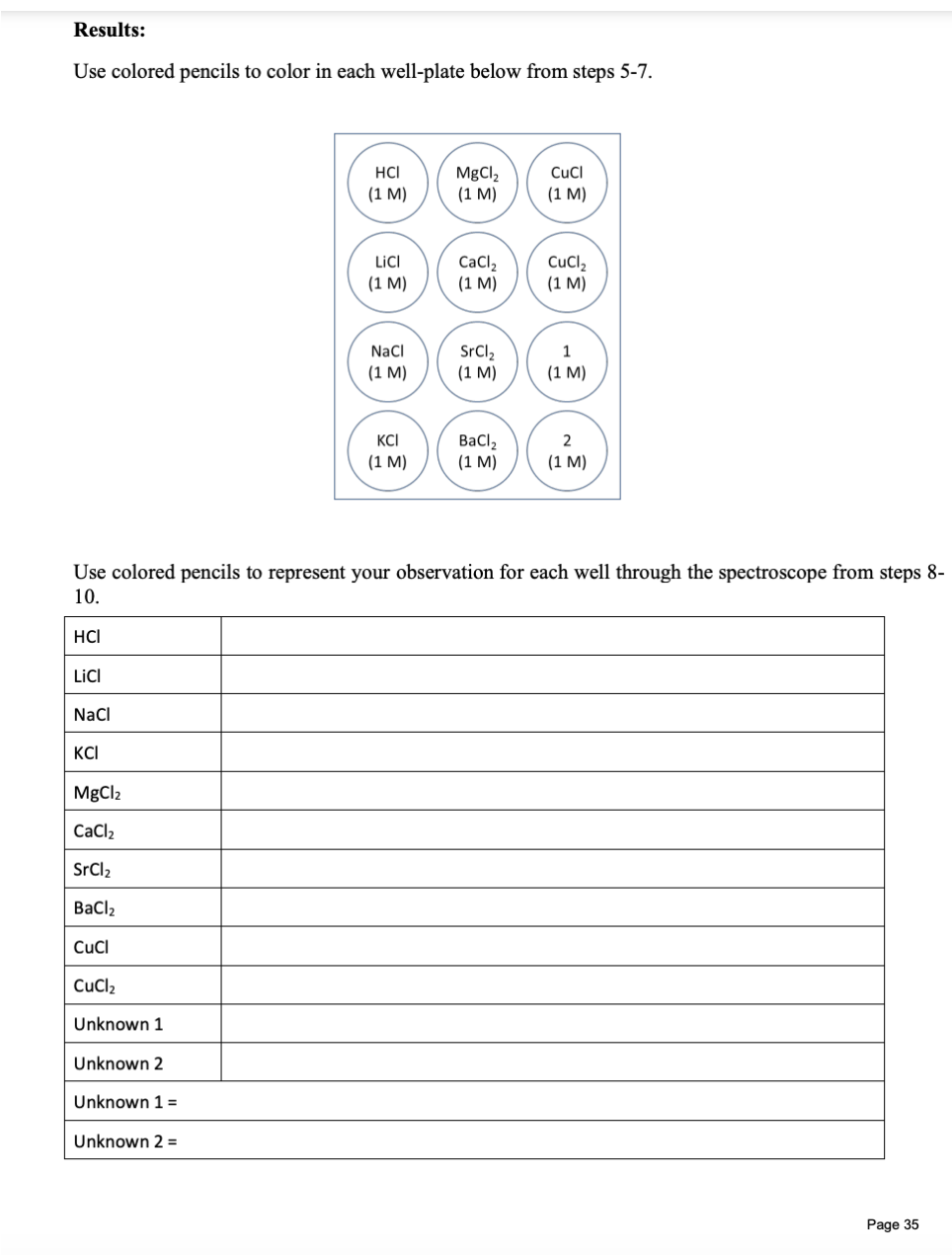
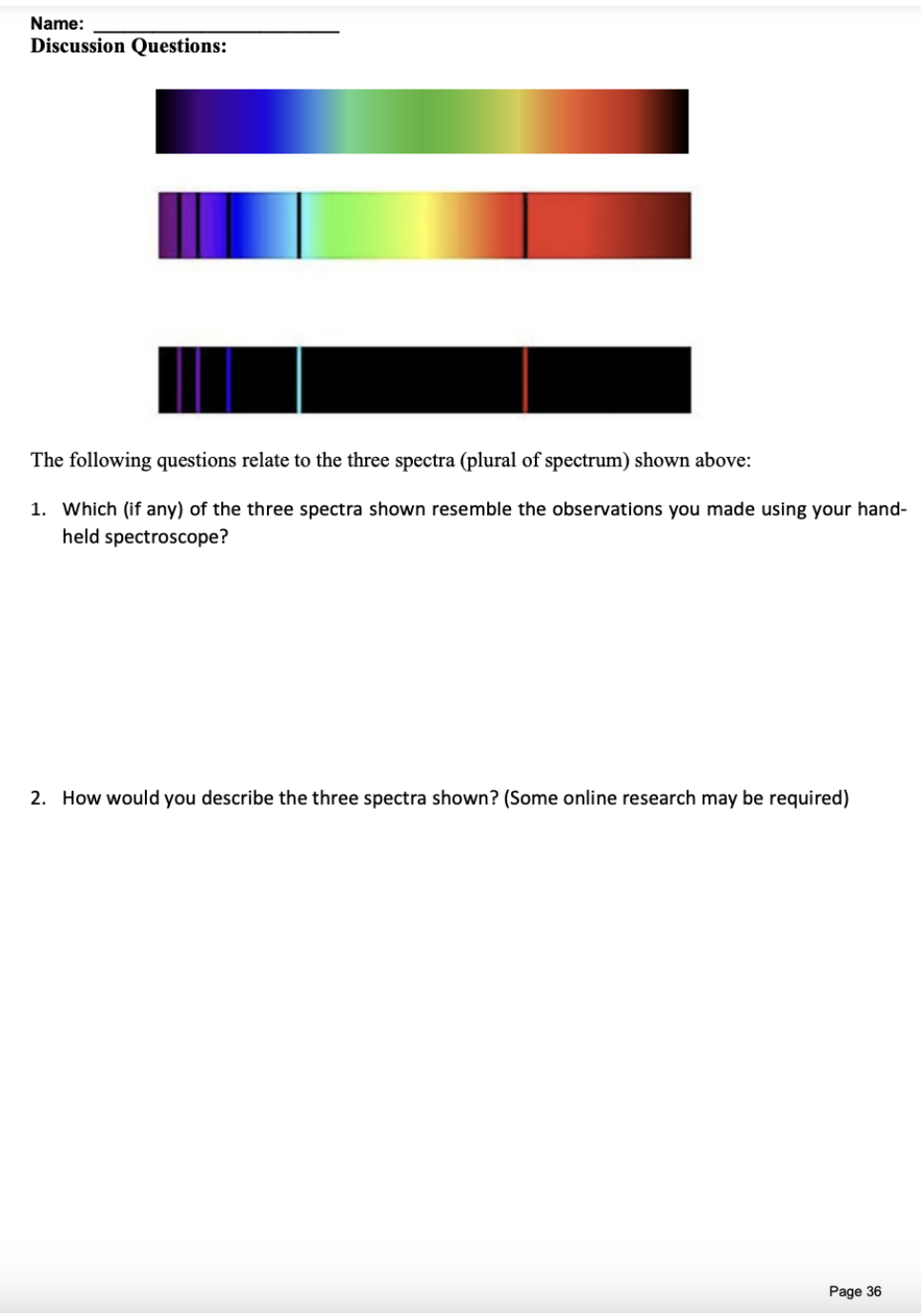
Procedure: 1. Put on your approved safety goggles. 2. Add 10 drops of each 1M solution to a different clean well in your well-plate: 3. Set up a Bunsen burner with a blue flame (showing an inner blue cone): 4. Obtain either a platinum wire or a nichrome wire. Clean the looped end of the wire by dipping it into the 1MHCl solution, remove and place the looped end of the wire into the hottest part of the Bunsen burner flame (the tip of the inner blue cone) until the only color observable is the blue color of the flame itself - this usually takes 3-5 seconds (no longer). 5. When the wire is clean, dip the looped end of the wire into the 1MLiCl solution, remove and place the looped end of the wire into the hottest part of the Bunsen burner flame (the tip of the inner blue cone) for 3-5 seconds only. Observe and record (using colored pencils) any color produced during this 3-5 second period. Clean the looped end of the wire by dipping it into the 1M HCl solution, remove and place the looped end of the wire into the hottest part of the Bunsen burner flame (the tip of the inner blue cone) until the only color observable is the blue color of the flame itself - this usually takes 3-5 seconds (no longer). 7. Obtain one or two unknown solutions (1,2) from the lab instructor. Add 10 drops of each unknown 1M solution to a different clean well in your well-plate: 8. Repeat step 5 for each unknown solution. Unknown solution 1 and 2 will be the same chemical(s) used elsewhere in the well-plate. Identify the unknown solution(s) by comparing the flame color(s) to those already recorded earlier. 9. Repeat steps 4-8 using a hand-held spectroscope: 10. Use the spectroscope (which contains a diffraction grating) to observe the color of the flame for each of the solutions and unknown(s) in the well-plate. Use colored pencils to record the appearance of the flame for each solution as seen through the spectroscope. 11. Return all items used in this experiment and wash your work station and hands with soap and water. Finally, remove your safety goggles. Results: Use colored pencils to color in each well-plate below from steps 5-7. Use colored pencils to represent your observation for each well through the spectroscope from steps 810. The following questions relate to the three spectra (plural of spectrum) shown above: 1. Which (if any) of the three spectra shown resemble the observations you made using your handheld spectroscope? 2. How would you describe the three spectra shown? (Some online research may be required) The following questions relate to the spectrum above: 3. How would you describe the relationship between the wavelength of visible light and its frequency? 4. How would you describe the appearance of the visible spectrum? 5. How would you describe the relationship between the color of visible light and its energy? 6. Suppose a wave of visible light of wavelength equal to 555nm were traveling at a velocity of 55.5 cm/s past a point " A ". How long would it take for one wavelength of the light to travel past the point "A"? 7. How would your answer to question 6 change (if at all) if the wavelength of the light was increased beyond 555nm ? 8. What is responsible for the observations made during this experiment? Conclusions: Identify the cause of the flame test observations made in this experiment and write a short conclusion based on your observations and from any ideas introduced in the "Discussion Questions" above (1 paragraph). Future questions: What questions does do you have now you've finished this experiment? (ask at least 1 question)
Step by Step Solution
There are 3 Steps involved in it

Get step-by-step solutions from verified subject matter experts