







Question: If we use 4 bits IEEE Std 754-1985 similar floating point number representation. We have 1 sign bit, 2 bits for Exponent and 1 bits
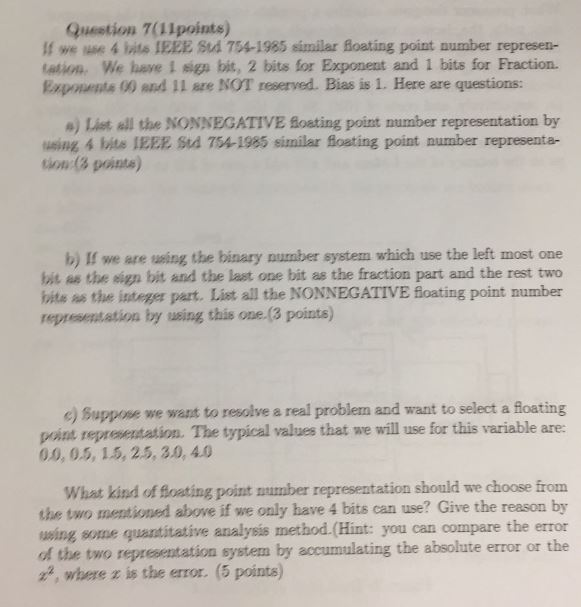
If we use 4 bits IEEE Std 754-1985 similar floating point number representation. We have 1 sign bit, 2 bits for Exponent and 1 bits for Fraction. Exponents 00 and 11 are NOT reserved. Bias is 1. Here are questions: a) List all the NONNEGATIVE floating point number representation by lasing 4 bits IEEE Std 754-1985 similar floating point number representation. b) If we are using the binary number system which use the left most one bit as the sign bit and the last one bit as the fraction part and the rest two bits as the integer part. List all the NONNEGATIVE floating point number representation by using this one. c) suppose we want to resolve a real problem and want to select a floating point representation. The typical values that we will use for this variable are: 0.0, 0.5, 1.5, 2.5, 3.0, 4.0 What kind of floating point number representation should we choose from the two mentioned above if we only have 4 bits can use? Give the reason by using some quantitative analysis method
Step by Step Solution
There are 3 Steps involved in it

Get step-by-step solutions from verified subject matter experts
 Study Help