



Question: IGNORE THE PART 1 & 2 INSTRUCTIONS IN THE CASE STUDY Use the information in the case study provided to elaborate on each section Business
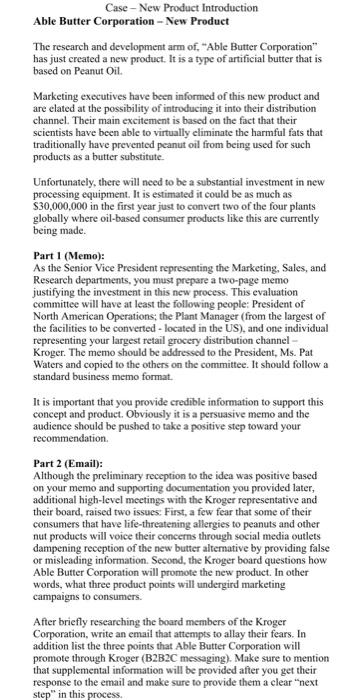
IGNORE THE PART 1 & 2 INSTRUCTIONS IN THE CASE STUDY
Use the information in the case study provided to elaborate on each section
Business Objective (State the overarching company or organization goal or initiative that this communication supports. Do not state the purpose of your specific communication.)
Before you begin developing the communication, use the following to plan the strategy that you want to use in your written document or presentation. Submit the typed or neatly printed worksheet with each assignment. Write your analysis underneath the element and description.
Communication Outcome (State the desired result of the communication, that is, the understanding, response, or action that should occur once your message is received. Do not state your purpose or what you will do.)
Primary Audience (Identify and analyze the primary audience in depth, that is, the person or group of people who can best accomplish the communication outcome. In the analysis, identify the primary audience's knowledge, experience, motivation, needs, and expectations relative to the outcome you want to achieve.)
Main Message (State in one concise sentence the single summary statement or overarching idea that you must get across to the primary audience in order for your communication to get the desired results, or outcome.)
Communicator (Identify the person who should deliver the message to the primary audience. Describe this person's initial credibility regarding the issue and message, factors that influence his or her credibility, and ways the communicator demonstrates a positive leadership ethos relative to the primary audience.)
Secondary Audience (As needed, identify who the communicator should copy or invite to hear the exact communication that is delivered to the primary audience. This may be the communicator's boss or someone who needs to know that the communication has been delivered or who is monitoring communication effectiveness.)
Resistances (List any objections or questions the primary audience may have regarding your message. State what you plan to include in the communication to counter or answer each one.)
Benefits (List the selling points that you can use to convince the primary audience to accept and act on your message. Be specific about what's in it for the primary audience if he or she accepts your message.)
Approach (Describe the best approach tell, sell, consult, or join; direct or indirect; formal or informal. You may also include the organizational device. Consider your audience analysis and your audience's possible resistances to your message.)
Key Points (List the 3 or 4 topics that will structure your communication [see DB's Pyramid Principle]. Be specific and descriptive; do not list your actions or questions. Make sure the sequence of topics is compatible with the approach you identified above.)
Channel (Identify the best single medium or forum for delivering the message to the primary audience. Consider the time-sensitivity, level of resistance, need for feedback, confidentiality issues, appropriateness for the culture and situation, logistics, requirements, and other practical matters.)
Context (Describe the atmosphere and/or environment in which the communication will occur. Consider the situation, culture, timing, and conditions that can affect the way the audience receives your message.)
Step by Step Solution
There are 3 Steps involved in it

Get step-by-step solutions from verified subject matter experts