







Question: III. A standardized test was given to a two groups of seven students who went to high school either in the country or the city;
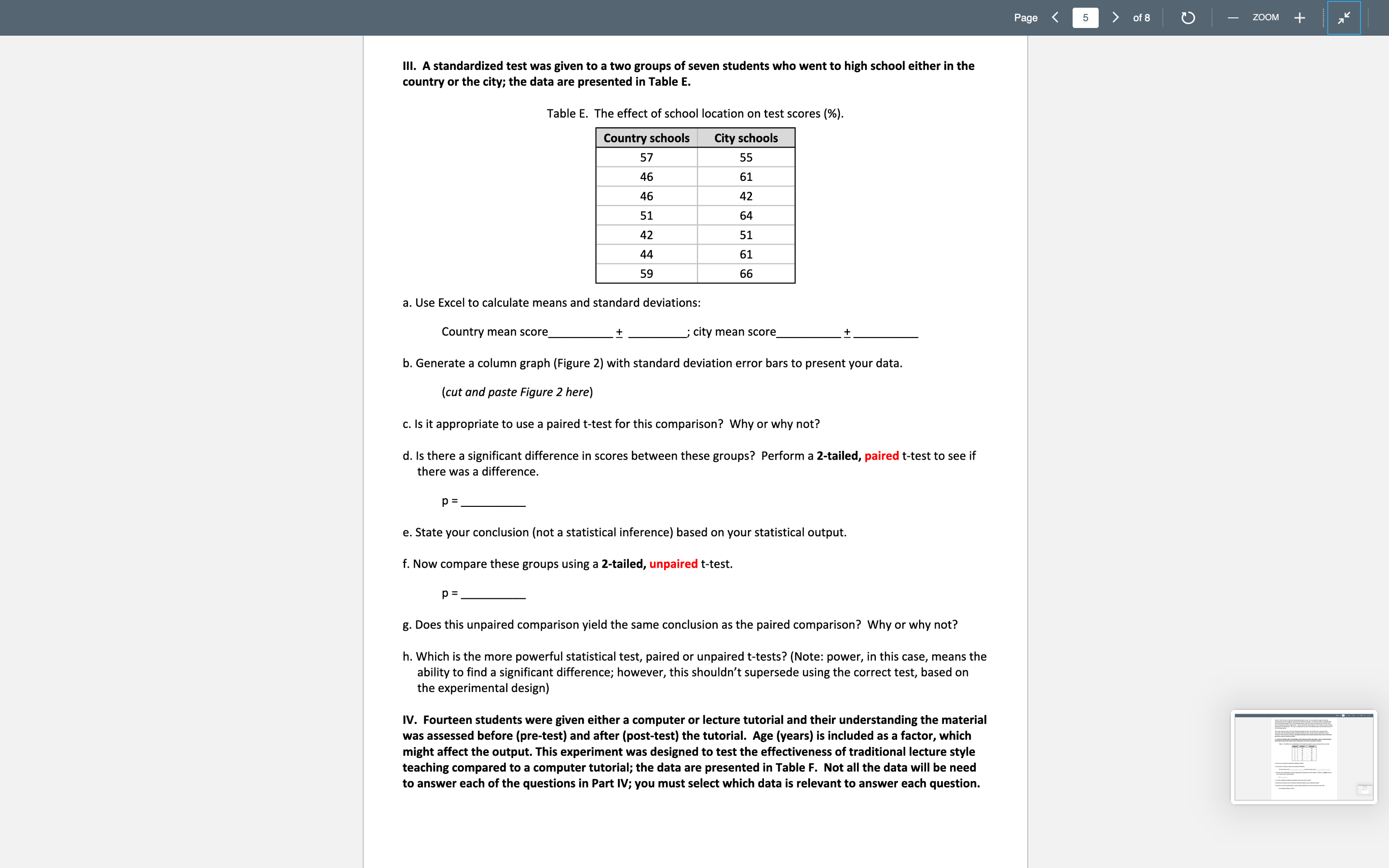
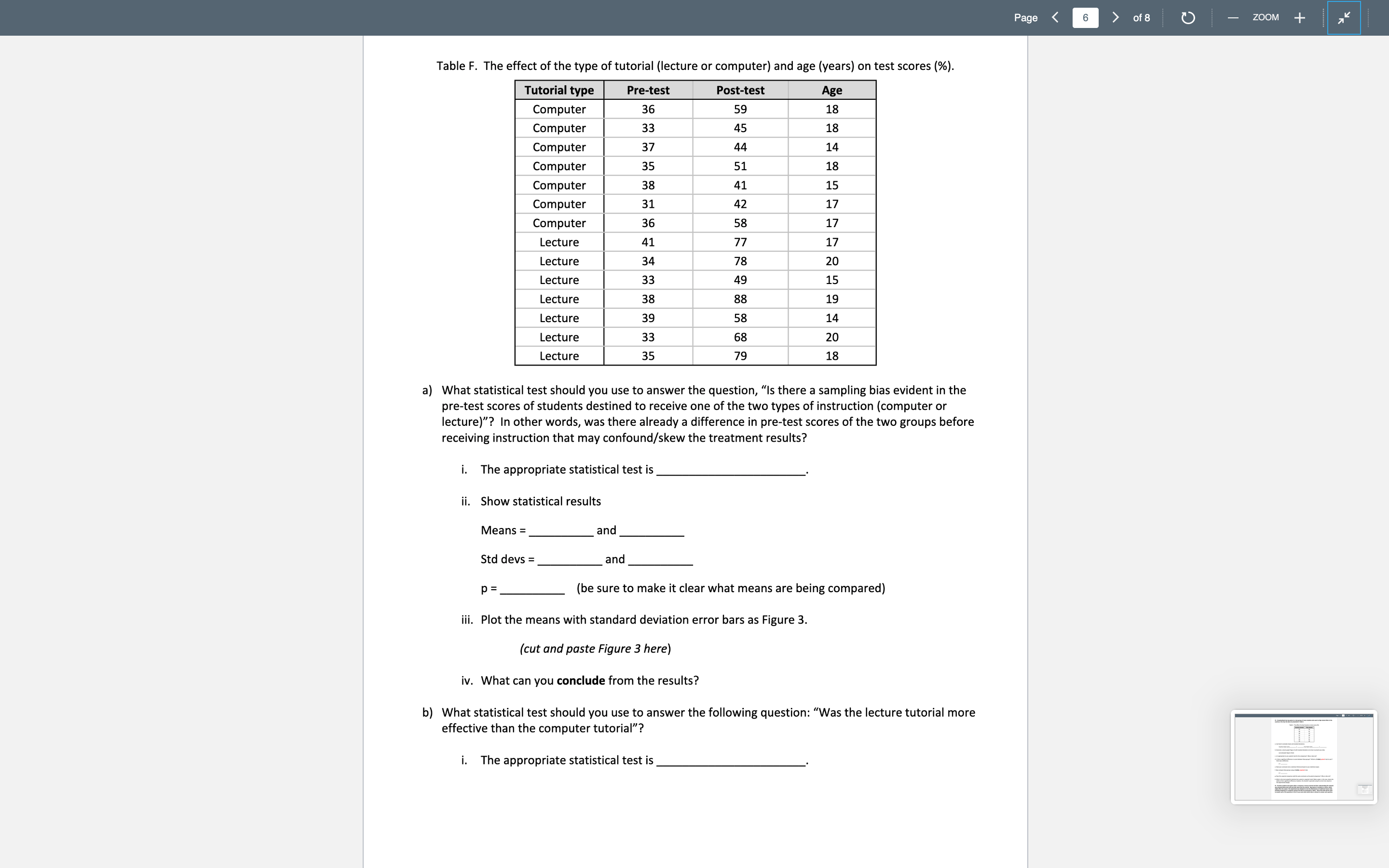
III. A standardized test was given to a two groups of seven students who went to high school either in the country or the city; the data are presented In 'lable E. Table E. The effect of school location on test scores (96). Countryschools Cityschools 57 55 46 61 46 42 571 7 7 e4 7 7 42 51 44 61 579 7 7 (756 7 7 a. Use Excel to calculate means and standard deviations: Country mean score 4 ' city mean score 1 b. Generate a column graph (Figure 2) with standard deviation error bars to present your data. (cut and paste Figure 2 here) c. Is it appropriate to use a paired t-test for this comparison? Why or why not? d. Is there a signicant difference in scores between these groups? Perform a 2-talled, paired t-test to see if there was a difference. p = e. State your conclusion (not a statistical inference) based on your statistical output. f. Now compare these groups using a Z-tailed, unpaired t-test. p = 5. Does this unpaired comparison yield the same conclusion as the paired comparison? Why or why not? h. Which is the more powerful statistical test, paired or unpaired t-tests? (Note: power, in this case, means the ability to nd a signicant difference; however, this shouldn't supersede using the correct test, based on the experimental design) IV. Fourteen students were given either a computer or lecture tutorial and their understanding the material was assessed before (pre-test) and after (post-test) the tutorial. Age (years) Is included as a factor, which might affect the output. This experiment was designed to test the effectiveness of traditional lecture style teaching compared to a computer tutorial; the data are presented in Table F. Not all the data will he need to answer each of the questions In Part IV; you must select which data is relevant to answer each question. Page
Step by Step Solution
There are 3 Steps involved in it

Get step-by-step solutions from verified subject matter experts
 Study Help