







Question: IKEA CASE STUDY At face value IKEA is a household name, popular within culture, and with a long record of creative marketing. But in 2013
IKEA CASE STUDY
At face value IKEA is a household name, popular within culture, and with a long record of creative marketing. But in 2013 a different story was emerging. Sales growth had halved; penetration was declining and IKEA UK looked out of step against the backdrop of rivals angling to claim its market leadership. A new goal from IKEA global management assemble a real sense of urgency; stem the decline. And grow the business by at least +8% YoY to meet 2020 targets. With growth slowing, no new stores opening for 3 years, no plans to hike prices, or to alter an already bountiful range strategy, IKEA focused on marketing communications.
The task being to refresh the role IKEA plays in customers' homes and hearts; changing perceptions from an infrequent destination store out of sync with changing trends in British home life to one culturally tuned-in to all kinds of everyday needs. The answer was a culturally resonant brand platform: The Wonderful Every day.
A new brand articulation that went back to IKEA's founding purpose, delivered with creative excellence and which didn't just meet the business target set, but beat it. Since its launch in January 2014, and with no shift in media share of voice, The Wonderful Everyday has helped IKEA UK to deliver +8% YoY growth for three consecutive years running. It has done this by reimagining the brand; putting IKEA back in the heart of British homes; attracting more people to shop more often across a wider range of IKEA products and delivering the highest ever incremental sales, and ROMI, IKEA has ever experienced from marketing communications. In 2013, the UK Home market was growing. With 19 stores nationwide and 6.5% market share (1.2bn), IKEA was category leader, ahead of John Lewis (5.1%) and Argos (4.4%)3. But it faced two significant challenges. In a growing market, IKEA's rate of growth was in decline. In the 2012 financial year, revenue grew by a healthy 6%.
But in 2013, that had halved to 3%. And the signs predicted that, by 2014, growth would halve again, to just 1.5%. Looking ahead, stagnation, even decline, weren't out of the question. IKEA's rivals were gaining share through investment in their store offers and advertising. John Lewis had set market leadership in its sights. In its MD's words: "We will overtake IKEA. I am not sure exactly when, but I am more than happy to predict it."
In 2013, against this background of falling growth in IKEA's UK business, the company's global management set an ambitious target for its worldwide operations to DOUBLE sales by 2020. This would mean the UK contributing at least 8% sales growth each consecutive year. As things stood, multiple years of +8% growth wasn't going to happen. IKEA describes its audience as 'The Many People'. This translates to ABC1 18-64 adults living within 45 minutes' drive-time of stores. Of 24m households in the UK, nearly 75% are within this catchment. IKEA was famous in Britain for big ticket items: affordably-designed flat-pack versions of things like wardrobes and kitchens. The major items people typically buy when they move home.
But by 2013, fewer people were doing that. Low housing stock, rising house prices, and a tightening of mortgage offers, meant buying a house had never been more difficult, or more expensive, and the new fittings that so often went with a house move had become unaffordable to some, unnecessary to others. Which meant IKEA risked falling out of sync with customers' needs. With 7m customers, IKEA was huge, but its vital signs were struggling:
- Front-of-mind-ness was slipping down 5pts in four years.
- Its flat-packed modernism was stacking up less favorably against competitors (Fig1).
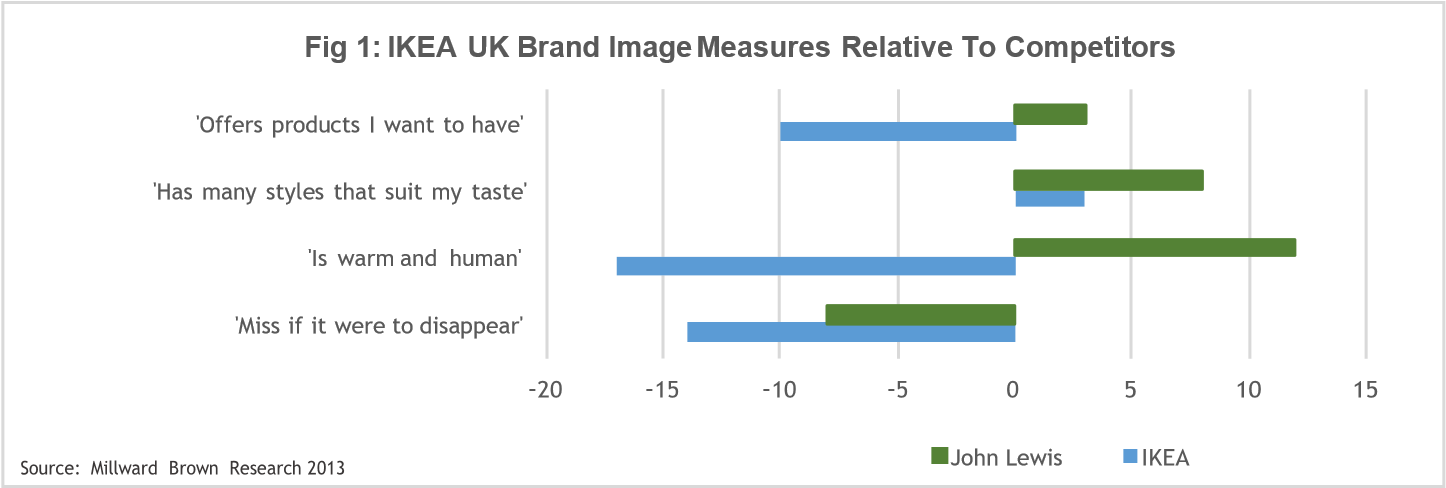
Fig 1: IKEA UK Brand Image Measures Relative To Competitors 'Offers products I want to have' 'Has many styles that suit my taste' 'Is warm and human' "Miss if it were to disappear' -20 -15 -10 -5 0 5 10 15 Source: Millward Brown Research 2013 John Lewis LIKEA
Step by Step Solution
There are 3 Steps involved in it

Get step-by-step solutions from verified subject matter experts
 Study Help