



Question: IMPORTANT INFORMATION: > Inventory is periodic FIFO. *Note: Since Graphix uses a periodic inventory system, you will account for the COGS at the end of
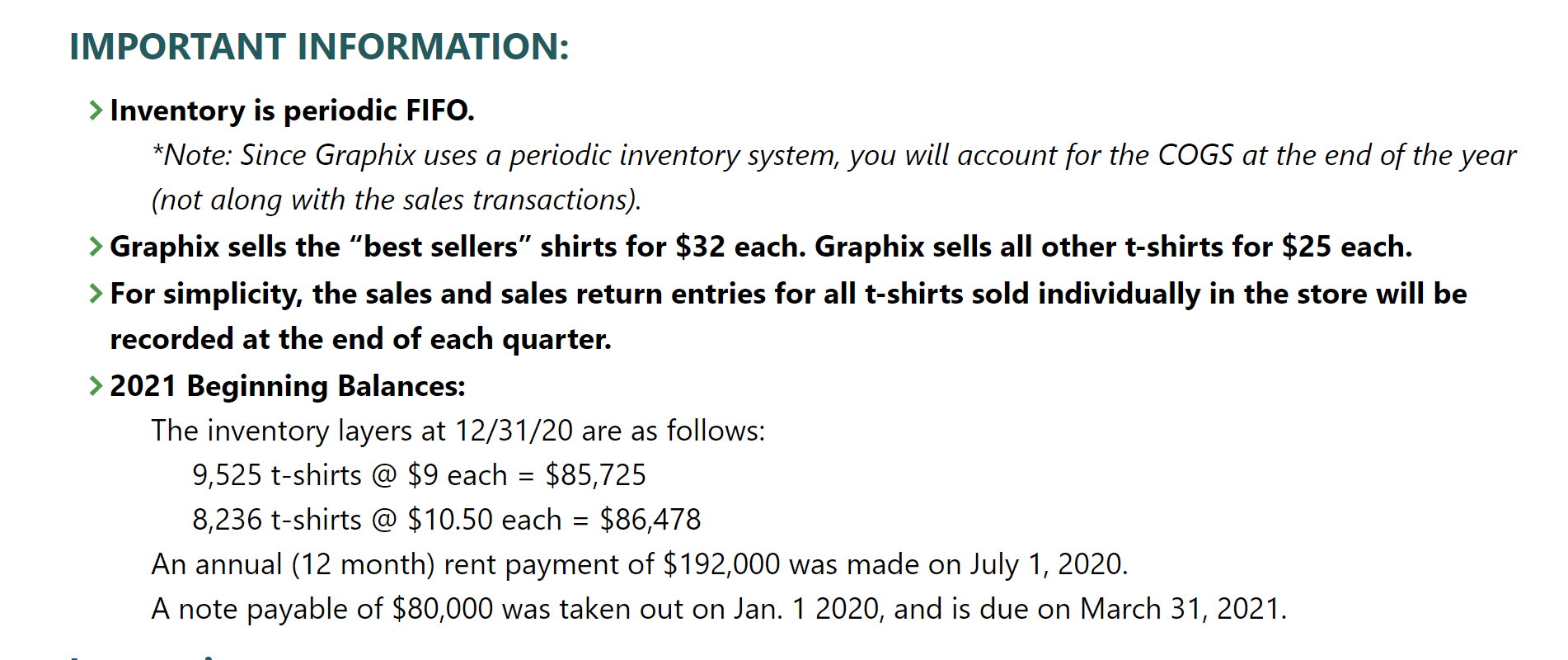
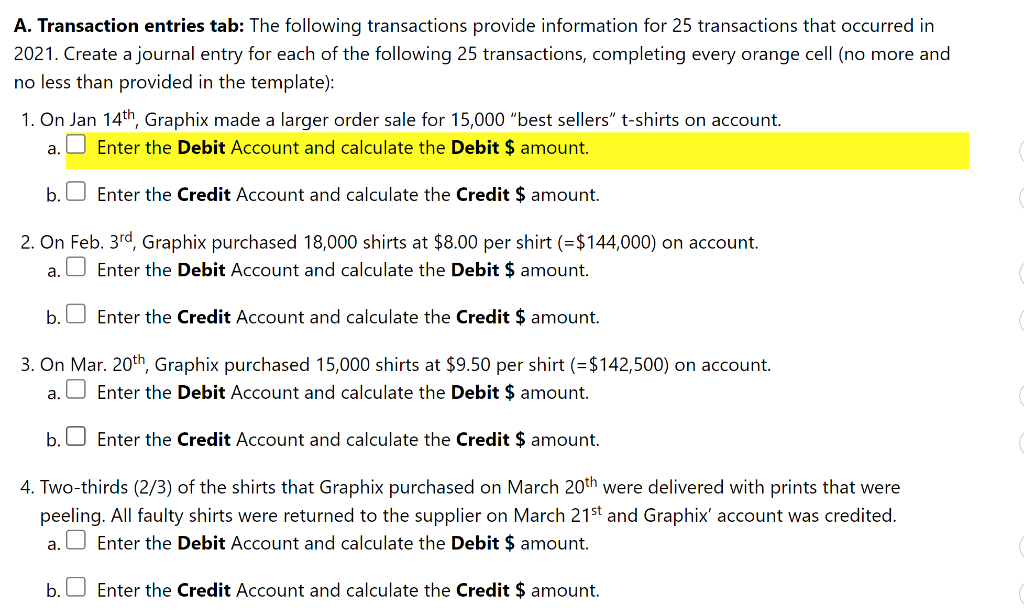
IMPORTANT INFORMATION: > Inventory is periodic FIFO. *Note: Since Graphix uses a periodic inventory system, you will account for the COGS at the end of the year (not along with the sales transactions). > Graphix sells the "best sellers" shirts for $32 each. Graphix sells all other t-shirts for $25 each. > For simplicity, the sales and sales return entries for all t-shirts sold individually in the store will be recorded at the end of each quarter. >2021 Beginning Balances: The inventory layers at 12/31/20 are as follows: 9,525t-shirts@$9each=$85,7258,236t-shirts@$10.50each=$86,478 An annual (12 month) rent payment of $192,000 was made on July 1,2020. A note payable of $80,000 was taken out on Jan. 12020 , and is due on March 31, 2021. A. Transaction entries tab: The following transactions provide information for 25 transactions that occurred in 2021. Create a journal entry for each of the following 25 transactions, completing every orange cell (no more and no less than provided in the template): 1. On Jan 14th, Graphix made a larger order sale for 15,000 "best sellers" t-shirts on account. a. Enter the Debit Account and calculate the Debit $ amount. b. Enter the Credit Account and calculate the Credit \$ amount. 2. On Feb. 3rd, Graphix purchased 18,000 shirts at $8.00 per shirt (=$144,000) on account. a. Enter the Debit Account and calculate the Debit $ amount. b. Enter the Credit Account and calculate the Credit \$ amount. 3. On Mar. 20th, Graphix purchased 15,000 shirts at $9.50 per shirt (=$142,500) on account. a. Enter the Debit Account and calculate the Debit $ amount. b. Enter the Credit Account and calculate the Credit \$ amount. 4. Two-thirds (2/3) of the shirts that Graphix purchased on March 20th were delivered with prints that were peeling. All faulty shirts were returned to the supplier on March 21st and Graphix' account was credited. a. Enter the Debit Account and calculate the Debit \$ amount. b. Enter the Credit Account and calculate the Credit \$ amount
Step by Step Solution
There are 3 Steps involved in it

Get step-by-step solutions from verified subject matter experts