







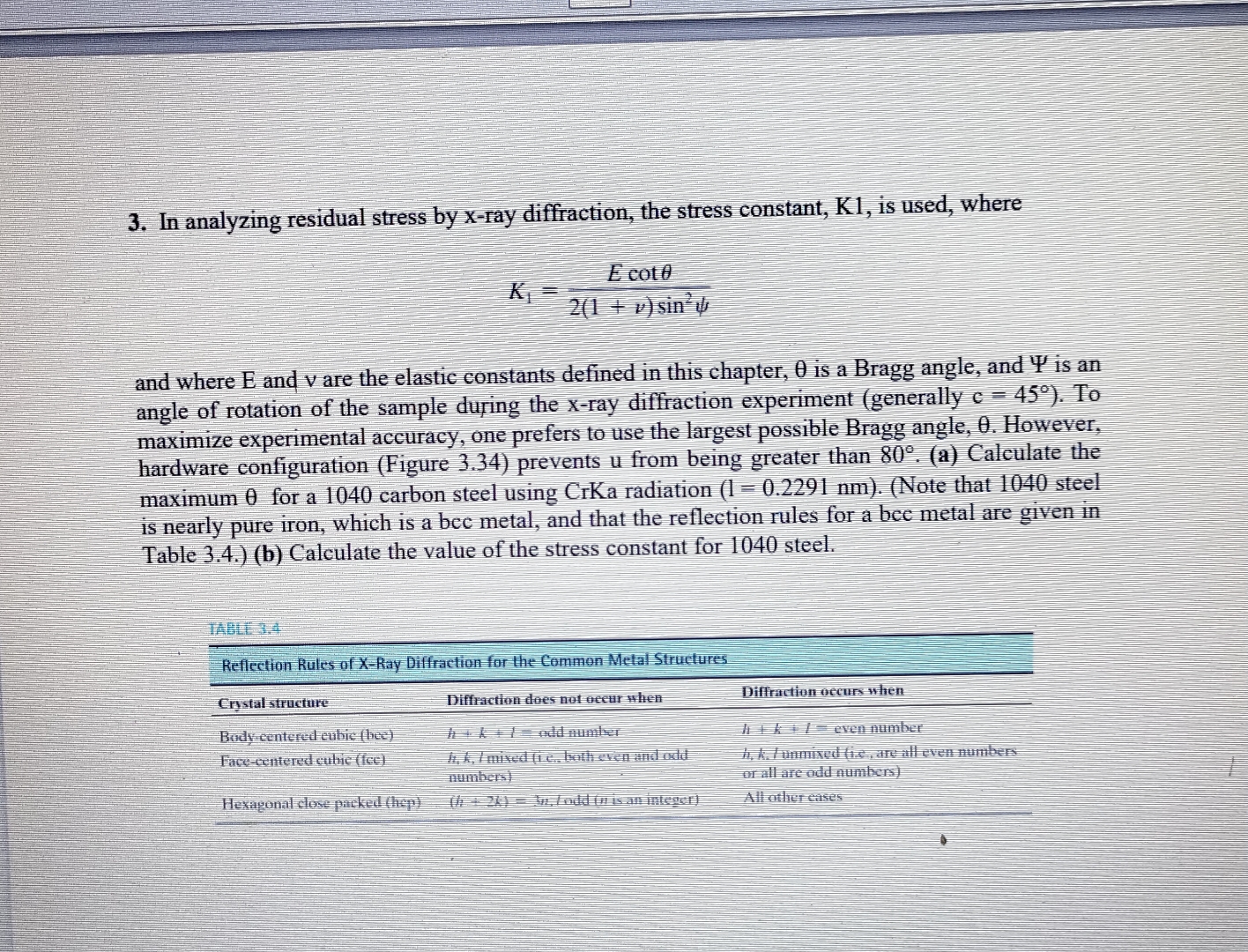
Question: In analyzing residual stress by x - ray diffraction, the stress constant, K 1 , is used, where K 1 = E c o t
In analyzing residual stress by ray diffraction, the stress constant, is used, where
and where and are the elastic constants defined in this chapter, is a Bragg angle, and is an angle of rotation of the sample during the ray diffraction experiment generally To maximize experimental accuracy, one prefers to use the largest possible Bragg angle, However, hardware configuration Figure prevents from being greater than a Calculate the maximum for a carbon steel using CrKa radiation Note that steel is nearly pure iron, which is a bec metal, and that the reflection rules for a bec metal are given in Table b Calculate the value of the stress constant for steel.
TABLE
tableCrystalstruetureDiffraction does not oceur when,Diffraction occurs whenBedyeentered entic herII even numberFactcontierd cultic fcetabletableor all are ond numbersHexagonalclore picked hapi hnoudd intanan integeriAllothereases:
Step by Step Solution
There are 3 Steps involved in it
1 Expert Approved Answer
Step: 1 Unlock

Question Has Been Solved by an Expert!
Get step-by-step solutions from verified subject matter experts
Step: 2 Unlock
Step: 3 Unlock
 Study Help