Question: In April 2014, Japan's Labor Ministry created a program that offered small- and mid-size Japanese companies a financial reward if they promoted female employees into
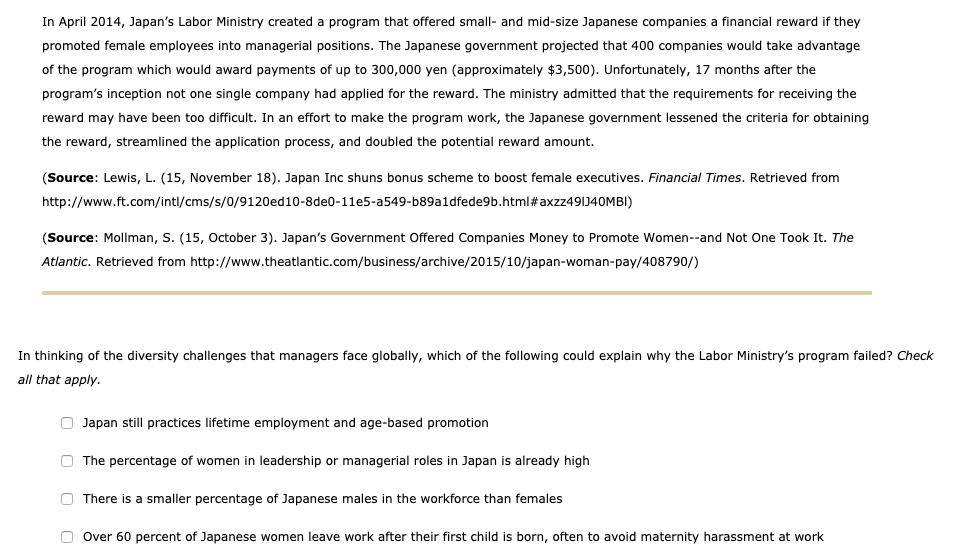
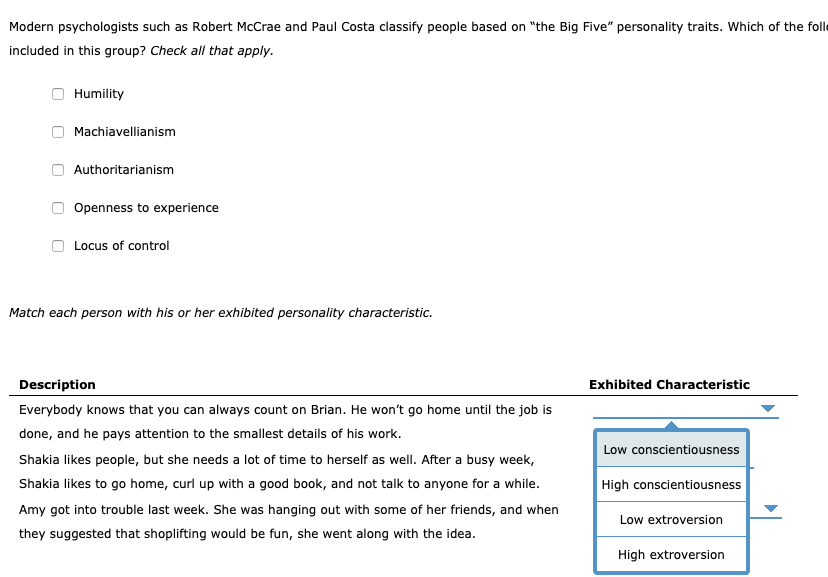
In April 2014, Japan's Labor Ministry created a program that offered small- and mid-size Japanese companies a financial reward if they promoted female employees into managerial positions. The Japanese government projected that 400 companies would take advantage of the program which would award payments of up to 300,000 yen (approximately $3,500). Unfortunately, 17 months after the program's inception not one single company had applied for the reward. The ministry admitted that the requirements for receiving the reward may have been too difficult. In an effort to make the program work, the Japanese government lessened the criteria for obtaining the reward, streamlined the application process, and doubled the potential reward amount. (Source: Lewis, L. (15, November 18). Japan Inc shuns bonus scheme to boost female executives. Financial Times. Retrieved from http://www.ft.com/intl/cms/s/0/9120ed10-8de0-11e5-a549-b89a1dfede9b.html#axzz49134OMBI) (Source: Mollman, S. (15, October 3). Japan's Government Offered Companies Money to Promote Women--and Not One Took It. The Atlantic. Retrieved from http://www.theatlantic.com/business/archive/2015/10/japan-woman-pay/408790/) In thinking of the diversity challenges that managers face globally, which of the following could explain why the Labor Ministry's program failed? Check all that apply. Japan still practices lifetime employment and age-based promotion The percentage of women in leadership or managerial roles in Japan is already high There is a smaller percentage of Japanese males in the workforce than females Over 60 percent of Japanese women leave work after their first child is born, often to avoid maternity harassment at work Modern psychologists such as Robert McCrae and Paul Costa classify people based on "the Big Five" personality traits. Which of the folle included in this group? Check all that apply. Humility O Machiavellianism Authoritarianism Openness to experience Locus of control Match each person with his or her exhibited personality characteristic. Exhibited Characteristic Low conscientiousness Description Everybody knows that you can always count on Brian. He won't go home until the job is done, and he pays attention to the smallest details of his work. Shakia likes people, but she needs a lot of time to herself as well. After a busy week, Shakia likes to go home, curl up with a good book, and not talk to anyone for a while. Amy got into trouble last week. She was hanging out with some of her friends, and when they suggested that shoplifting would be fun, she went along with the idea. High conscientiousness Low extroversion High extroversion In April 2014, Japan's Labor Ministry created a program that offered small- and mid-size Japanese companies a financial reward if they promoted female employees into managerial positions. The Japanese government projected that 400 companies would take advantage of the program which would award payments of up to 300,000 yen (approximately $3,500). Unfortunately, 17 months after the program's inception not one single company had applied for the reward. The ministry admitted that the requirements for receiving the reward may have been too difficult. In an effort to make the program work, the Japanese government lessened the criteria for obtaining the reward, streamlined the application process, and doubled the potential reward amount. (Source: Lewis, L. (15, November 18). Japan Inc shuns bonus scheme to boost female executives. Financial Times. Retrieved from http://www.ft.com/intl/cms/s/0/9120ed10-8de0-11e5-a549-b89a1dfede9b.html#axzz49134OMBI) (Source: Mollman, S. (15, October 3). Japan's Government Offered Companies Money to Promote Women--and Not One Took It. The Atlantic. Retrieved from http://www.theatlantic.com/business/archive/2015/10/japan-woman-pay/408790/) In thinking of the diversity challenges that managers face globally, which of the following could explain why the Labor Ministry's program failed? Check all that apply. Japan still practices lifetime employment and age-based promotion The percentage of women in leadership or managerial roles in Japan is already high There is a smaller percentage of Japanese males in the workforce than females Over 60 percent of Japanese women leave work after their first child is born, often to avoid maternity harassment at work Modern psychologists such as Robert McCrae and Paul Costa classify people based on "the Big Five" personality traits. Which of the folle included in this group? Check all that apply. Humility O Machiavellianism Authoritarianism Openness to experience Locus of control Match each person with his or her exhibited personality characteristic. Exhibited Characteristic Low conscientiousness Description Everybody knows that you can always count on Brian. He won't go home until the job is done, and he pays attention to the smallest details of his work. Shakia likes people, but she needs a lot of time to herself as well. After a busy week, Shakia likes to go home, curl up with a good book, and not talk to anyone for a while. Amy got into trouble last week. She was hanging out with some of her friends, and when they suggested that shoplifting would be fun, she went along with the idea. High conscientiousness Low extroversion High extroversion









 Study Help